The concept of downtown started in New York and spread across North America in the 19th century. It designated the historical core and main business area of the city, (which was called city centre in Britain and Ireland). Throughout the 19th and early 20th centuries, downtown was indeed the place to find all the people, as the song claimed,, along with the best department stores, theatres and clubs. Downtown was where all important business took place. Skyscrapers grew. and shoppers thronged the streets. Transportation in the form of street cars, buses and trains converged near downtown, where most people lived, worked and played.
However, downtown today isn’t what it used to be. By the early decades of the 20th century, decentralization began changing the downtown areas of most cities. People began moving out to the suburbs. Department stores and other shopping venues moved out to malls. Businesses moved to the outskirts where land was cheaper. And museums and other cultural institutions moved away from the historic enter for room to spread out. Many modern downtowns, especially in bigger cities, are now filled with offices for white collar workers.
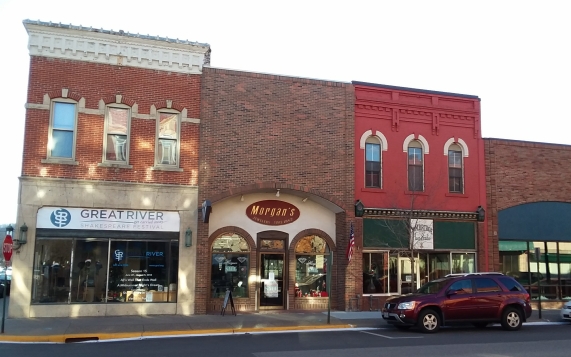
In spite of all these changes, some of the glory of those vibrant downtowns of long ago remain, especially in the architecture. Winona, Minnesota is a case in point. Like most small towns in the midwest, Winona has a downtown area of several blocks which are considered the city center. In the century and a half since its founding, the area has undergone many changes, but it is still possible to find the beauty and craftsmanship of the older city. At least seventeen buildings on 2nd and 3rd streets have been listed on the National Register of Historic places.
It may be cold, but December is a great time to appreciate the downtowns of yesteryear. In Winona the holidays encourage the old-fashioned habit of window shopping. Like stores from the 19th century, many Winona store fronts decorate for Christmas, with displays ranging from the cute and whimsical to to nostalgic.


While many of the 19th and 20th century buildings have been altered at street level, the upper stories retain much of their original characteristics. Year-round, Winona’s downtown can best be appreciated by looking up. Many buildings have the date of construction and the original owner’s name written in ornate lettering.


Upper-story windows often have intricate and ornate brickwork designs. Rooflines design and decoration is another example of quality 19th century workmanship. Though fewer in number, Winona’s rooflines and decorations rival those of bigger cities in the US and Europe.


The Choate building opened in 1888 as a grand department store.
I’m no singer, but like Petula Clark, I urge you to head downtown, wherever you live. Take the time to stroll along the sidewalk, put away the phone and the to-do list, and look up. Who knows what delightful surprises await?
 BRIC-A-BRAC
I so enjoy reading your essays! Both informative and entertaining, they provide a stimulating and welcome bright spot in my day!
LikeLike
Thank you! I’m glad to know you like them.
LikeLike