 To be honest, I would never have gone to Dubai if our daughter hadn’t moved there with her family. And I would have missed a gem.
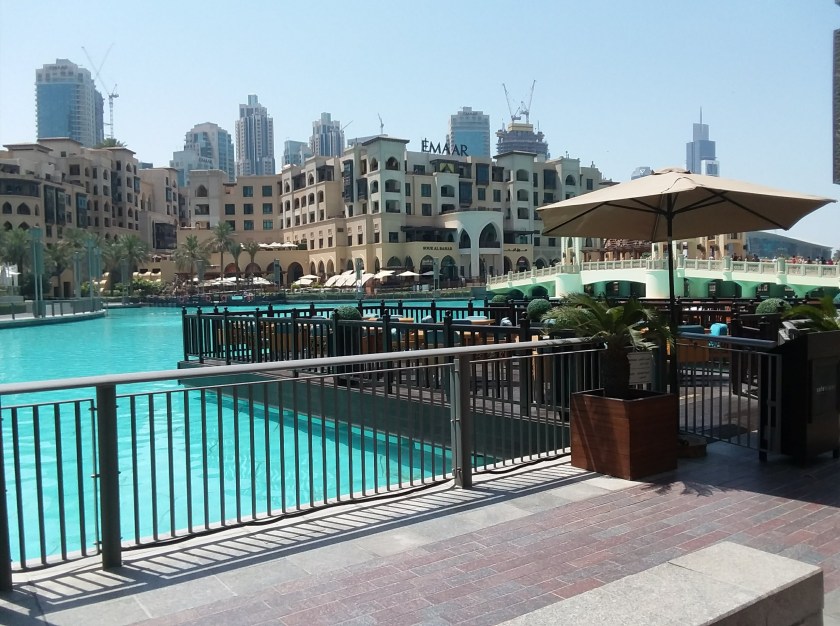
Dubai is one of the seven emirates (think city-state) in the United Arab Emirates. It’s a city of superlatives, built from fantastical imagination: The tallest building. The biggest indoor ski slope. The most unique man-made islands. The world’s only 7 star hotel (Burj al Arab). Dancing fountains pierced with multi-colored laser lights. A city of glitz and glamor, meant to inspire awe in the visitor.
And it does. On my most recent trip to Dubai, I visited the newly erected Dubai Frame, billed as the world’s largest picture frame. At 150 meters high, with a glass floor, the monument offers stupendous views of both Old Dubai and New Dubai. The Frame provides the perfect context to contemplate Dubai’s history, as remarkable as the city itself.


The exhibits at the beginning of the Frame show Dubai’s transformation from a village of pearl divers and pirates to a international city of commerce.
Archeological evidence shows there were people growing date palms in the area since at least 2500 BCE- 4 ½ thousand years ago. But as the area became more desert and less mangrove swamp, population stagnated. It was an important caravan location in the 6th century, but still a small village. In the 7th century the Umayyads introduced Islam to the area and the village became known for fishing and pearl diving. By the 16th century, the village was trade center, catering to expats, with many Venetians working in the pearl industry.
In 1833, the Al Maktoum dynasty took over, and settled 800 members of the Bani Yas tribe at the mouth of the creek, though border disputes with Abu Dhabi continued for more than a century. This settlement is considered the founding of Dubai.
By the late 1800’s, the area was rife with pirates, so the British signed several treaties in an attempt to reduce piracy. In 1892, Sheikh Maktoum signed a business deal with the British, turning the area into a British protectorate which granted full tax exemption for foreign trade. Dubai became a major port of call and trading center, boasting some 20,000 residents by 1930, with ¼ of the population foreign.
When oil was discovered in 1966, Dubai’s ruler, His Highness Sheikh Rashid bin Saeed Al Maktoum, used the increased revenue to begin a frenetic building spree that continues today, developing roads, hospitals, schools, hotels, parks and attractions. In 1971-72 Dubai joined with 6 other emirates (Abu Dhabi, Sharjah, Ajman, Umm Al Quwain, Fujairah and Ras Al Khaimah) to create the United Arab Emirates, which has become one of the richest countries in the world. The current ruler of Dubai, His Highness Sheikh Mohammed bin Rashid Al Maktoum, is considered the inspiration for the modern, forward-thinking city. He says, “We, in the UAE, have no word as ‘impossible’; It does not exist in our lexicon.” It is his vision that has created Dubai not just as a world trade center but also an exquisite tourist destination, with a population of over two million.
For a city to grow so exponentially in less than a 100 years means there are bound to be problems underlying the surface. For all its glitz, Dubai still exists in a desert, with few natural resources other than oil. The city must rely on desalination for all of its water. A dark haze blurs the outline of the city skyscrapers, and dust settles on every surface. Green spaces are all artificial and mostly manicured so that one feels a disconnect from the natural world. And it’s hot. Too hot to spend much time outside, so the city residents rely on air-conditioning. More cars than parking spaces and limited public transportation makes going anywhere a real challenge. Hovering cranes dot the landscape and the sounds of construction vibrate from Sunday morning till Thursday night, pausing only for the weekend.
But there is another side to Dubai, beyond the glamour and the fantasy, beyond the crowds and abuse of natural resources; that is the family side. 90 percent of residents in Dubai are expats–from India, the Philippines, south Africa, Britain, Germany, the United States, and elsewhere.These people look for stores, schools, restaurants and play spaces in their own images, resulting in a curious mix of the familiar and the foreign– English with an Arab veneer (or vice versa).


McDonald’s, Wendy’s, and Starbucks fill the malls, but the menus include McArabia Chicken in pita as well as chicken nuggets. Fancy modern malls and old style souks offer pashminas from India, rugs from Iran, and Dubai souvenirs made in China. In the grocery stores you can find Jello or spaghetti noodles as well as dozens of varieties of olives and dates, and open bins of spice. In the malls, the rich aromas of cardamom, rose, and za’atar spice assault the senses. Perfumes hang in the air: the heavy scent of rosewood, sandalwood, and incense. Women in black abayas, their hair covered with a shayla, stroll alongside their -t-shirt clad children. Arab men in their white dishdashas shake hands with German CEO’s in suit and tie. Tourists in shorts, jeans, or Indian saris amble through the crowds. Strains of music from European and Arabic pop stars mix by the fountains, and overall wafts the periodic call to prayer from the mosques. This is the Dubai where people live and work, not just visit. This is the Dubai our daughter calls home.
Perhaps more than anything else, Dubai offers a vision for the city of the future, a place where cultures mix, imagination soars, and anything is possible.
 BRIC-A-BRAC