
Pillars of the Earth by Ken Follett
Why do people strive for majesty? In some ways, this is really the same questions as why people climb the mountain or why they strive for the gold medal. The answer to any of these questions could be ‘because we can’. But the real answer is much more complex. In his acclaimed novel, Pillars of the Earth, Ken Follett provides a much richer and more nuanced set of answers, exploring our very human desire to achieve and the equally human obstacles to such glory.
 Pillars of the Earth is about building a cathedral in Medieval England. The story follows three generations of stone masons, and the people they love, care for, hate, and work with Follett provides clear, accurate detail of how such a magnificent structure could be built. However, the story is more than just a manual on how to build a cathedral. (For that I suggest reading the excellent book, Cathedral, by David MaCaulay.)
Follett’s story digs into the decisions, twists of fate, and accidents of that span decades of cathedral building. Even more importantly, Follett weaves a tale that explores why people are driven to build majesty. It is a story of faith and politics, which are deftly interwoven into the fabric of society today as much as they were in medieval times.
At its core, Pillars of the Earth is the story of ordinary people doing extraordinary things, of good people reaching and achieving beyond what anyone could imagine, in spite of the naysayers, preachers of doom, and obstacles of fate. The novel shows how these lives interconnect, how actions have ripples, and how people go on living their own daily lives, often unaware of the consequences. To me, this is historical fiction at its best.
As I read about Tom Builder’s arrival in the fictional medieval town of Kingsbridge, Prior Phillip’s vision for a glorious cathedral, and Jack Builders’ quest for poetry in stone, I thought of cathedrals I have seen. Each is different in style and design, yet each is a marvelous example of human aspirations. Each is intended to inspire awe, to force the visitor to look up and contemplate divinity.
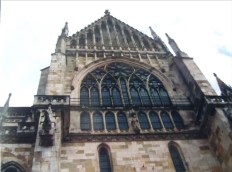
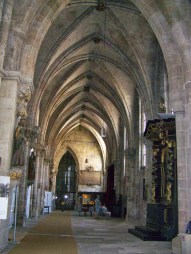
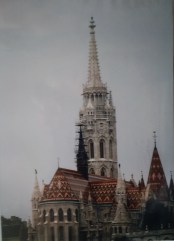


Pillars of the Earth is a long book, (over 1000 pages). In some ways, it is Follett’s own reach for majesty. Like the cathedrals of Europe, the temple of the sun in Machu Picchu, and the Torii Gate of Japan, the book celebrates the very human desire to approach God and touch the sky.


 BRIC-A-BRAC