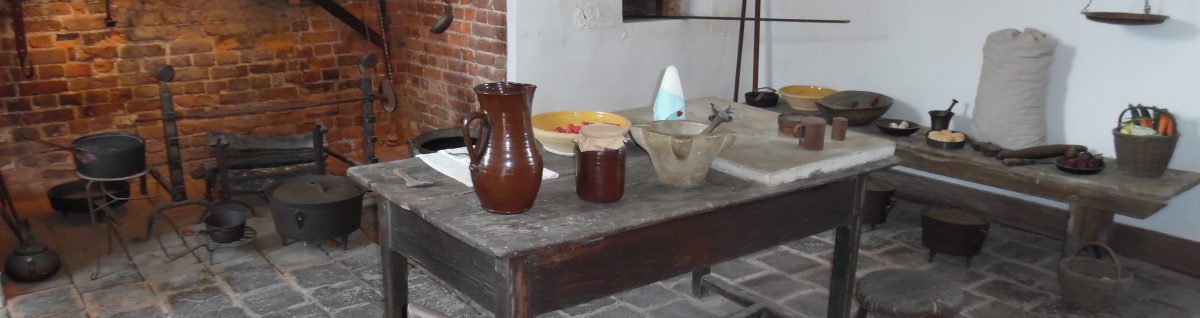
by Mark Meier, guest blogger
(Today we welcome Mark Meier, author of Ebony Sea: Origins. Check out Mark’s blog at Meier-writers.com )
I’d like to thank Terri for the opportunity to blog for her. When I read her message the second time I noticed the word “historic.” Only a surprise that ANYONE asked me to write something that qualifies as “historic.”
Pondering that for a while revealed a couple of interesting points.
1 – I’ve written fantasy. Writing about low-tech people in fantasy novels really isn’t that much of a divergence from historic.
2 – Some of my favorite places to visit would qualify as historic.
The “historic” place I’ve visited most often is the Renaissance Festivalin Minnesota. It usually runs from late August through September and is an absolute blast. I highly recommend going if you have the opportunity.
Terri would be more qualified to comment about the authenticity. Because of that . . . questionable . . . accuracy, my post here isn’t about that festival.
There is also a heritage center near where I live called Norskedalen. I’ve been there more than once, and it’s fairly interesting. Not as much funas Ren Fest, but more historically accurate.
Another destination that fits about half-way between the fun of Ren Fest and the accuracy of Norskedalen is Medieval Times dinner theater. Jousting, swordplay, a torture museum, and a meal without forks and knives. Yep. Eat with your fingers.
The place I’ve visited most that actually qualifies as accurate history is Surgeon’s Quarters. While I’ve been to Ren Fest more often, Surgeon’s Quarters is far more compelling for someone interested in history.
There’s a location in Wisconsin where the watersheds to the Saint Lawrence and the Mississippi is close enough to portage from one to the other. Back in the colonial days people used that portage (which is how the City of Portage got its name) so much it became of strategic importance. Fort Winnebago was established to protect that important area.
The original use of Surgeon’s Quarters was a portage company and fur trading venture. It was sold to the Americans, and eventually became the home for the Fort Winnebago army surgeon. Hence the name, “Surgeon’s Quarters.”
One of the reasons I want to write about this location is to point out how ingenious people were – and are. The simplest example I can give is the multiple uses early pioneers had for things. Take for instance a table at Surgeon’s Quarters. The top is hinged so tipping it up reveals it’s also a chair. With the wide, round back, people could pull it up close to a fireplace and hold in the heat. On the coldest of winter nights that seat would be a relatively warm place to pass the time.
At Surgeon’s Quarters I learned another tidbit of information. The phrase “sleep tight” came from the beds used in that period. Ropes were woven across the wooden frame of the bed, and a tick mattress was placed on top. Occasionally the ropes had to be tightened or a sleeper would sag to the floor. So telling someone to “sleep tight” wished them a good night’s sleep.
On the other side of interesting bits is how people can get history all wrong. There’s a trap door in one of the rooms at Surgeon’s Quarters leading to a dirt hole beneath the building. On one visit the tour guide told my wife and me that it was used to store pelts in a cool place so they wouldn’t “go bad.” On our next visit we were told it was probably used to hide runaway slaves from those hunting them down.
The point of that is what we think we know about history might change. Interpreting what hashappened through the lens of current understanding can lead to inaccurate perceptions. When someone tells you “this definitely happened,” take it with a grain of salt.
I wonder where that aphorism came from.
Terri?
 BRIC-A-BRAC
Take it with a grain of salt: The literal meaning comes from Pliny the Elder, in an antidote for poison. This mixture of walnuts, figs, and rue was to be taken with a grain of salt to protect against all poisons for the day. The figurative use of the phrase, that one ought to be skeptical, wasn’t used in English until the 17th century, in John Tripp’s Commentary on the Old and New Testaments. (It is not clear exactly what he meant by the phrase.) In any case, he was probably influenced by Pliny. The phrase didn’t really become common until early 20th century America.
LikeLike