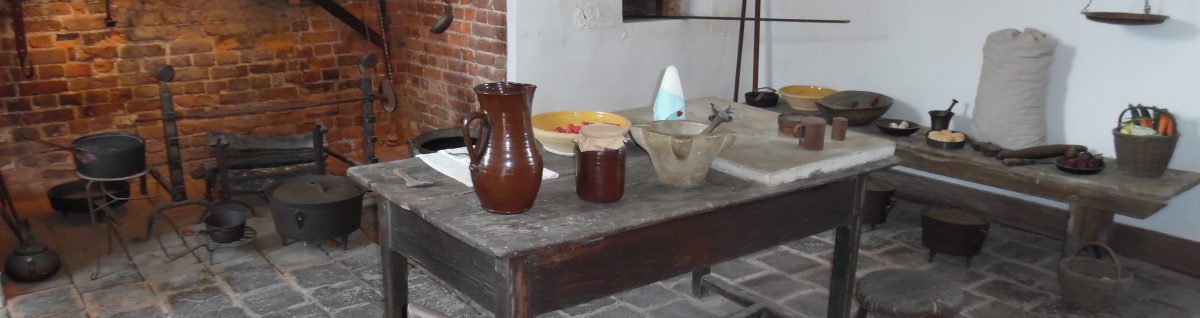
Cahir Castle, Co. Tipperary, Ireland

Safety was, after all, the main purpose of a castle. Cahir Castle, in County Tipperary, is a prime example of just such a defensive castle.
From the earliest times, roving bands of warriors knew that the high ground, with a commanding view of the region, offered the greatest safety because of its defensibility. The site of Cahir Castle on an elevated island in the River Suir offered such a location. Even better, the rocky formation prevented any possible undermining.
In fact, the Irish word ‘Cahir’ comes from the older word, ‘cathair’ which means ‘fortress.’ Even before a castle was built on the huge rock, there was a circular stone fort there. In 1142, Conor O’Brien, Prince of Thomod, built the first castle there atop the earlier fortifications. A medieval town grew up around the castle.
Over the next 200 years, the Norman Invasion changed the political landscape of Ireland. In 1375, James Butler was awarded the new title of Baron of Cahir, and given the castle as a reward for his loyalty to Edward III. Except for a few brief periods, the castle remained in the Butler family until 1961, when the last heir died and the castle became the property of the state.
James Butler and his descendants enlarged and updated the castle defenses for centuries. During all that time, the castle was lost to Butler family on only three separate occasions, only once by force. The first was in 1599 when most of the Butler family threw in their lot with the Irish against the Earl of Essex Army, sent by Queen Elizabeth. Essex took the castle after a three-day siege, The castle garrison tried to escape. Some did, but many more were slain. The English army took over the castle without further resistance. A year later, 60 Irish rebels took the castle back without gunfire, but they had to re-surrender shortly thereafter. Thomas Butler was charged with treason, but later he was acquitted and regained his family castle. The castle fell a second time in the Irish Confederate Wars to Oliver Cromwell. In this case, the family managed to regain favor with the crown and regain their castle once again. The third time the castle was lost was due to bankruptcy in the early 1800’s. The family was able to buy it back in the 1870’s.

- Batter walls: stout outer walls that are thicker at the bottom than the top. These walls deflect rocks thrown from the battlements and help prevent tunnelling under the castle to gain entrance.
- 2nd layer of defense: an inner courtyard, also protected by strong, stone walls. This inner courtyard is only accessible by traversing a long, narrow passageway with a portcullis, making it possible to trap and shoot invaders.
- Crenellations: Regular rectangular spaces in the stonework along the top of the outer walls, allowing archers to have some protection while shooting. A license from the king was required in order to build crenellations.
- Loop windows: Long, narrow slits in the castle walls with splayed inner sides allow two defensive archers to shoot at different angles, thus protecting more of the castle wall.
- Low doors, narrow passages, and stumble steps: all make it more difficult for strangers to navigate the castle.
- Machicolations: These openings in the floors above gates and doorways allow the castle defenders to thrown down rocks or hot liquids on potential intruders.
- Portcullis: a heavy iron grate, often with spiked posts, that can be lowered in a stone gateway to prevent access. The portcullis at Cahir Castle is one of only three working portcullises in Ireland.
- Spiral Stairs: These narrow stone stairways are built for a right handed-swordsman to defend against anyone mounting the stairs.
The development of cannons, gunpowder and other offensive technology, along with a decrease in general warfare, eventually made the defensive technology of castles obsolete. Rich families moved into more comfortable dwellings that were built more for beauty than for strength. Cahir Castle, built over 800 years ago to protect the O’ Brien and Butler familes, is, an impressive yet stark reminder of a dangerous past.

Sources
DoChara: Insiders Guide to Ireland. Irish Place Names:C. 5/14/2019. https://www.dochara.com/the-irish/place-names/irish-placenames-c/
Irish Tourism. Cahir Castle. 5/14/2019. https://www.irishtourism.com/historic-sites-buildings-in-ireland/cahir-castle/1459
Sweeney, Colm and Susanna. Enjoy Irish Culture. 5/14/2019. https://www.enjoy-irish-culture.com/castles-in-ireland-cahir.html
Photo attribution:
Robert Linsdell from St. Andrews, Canada [CC BY 2.0 (https://creativecommons.org/licenses/by/2.0)]
 BRIC-A-BRAC
One thought on “Want to be safe? Build a castle!”