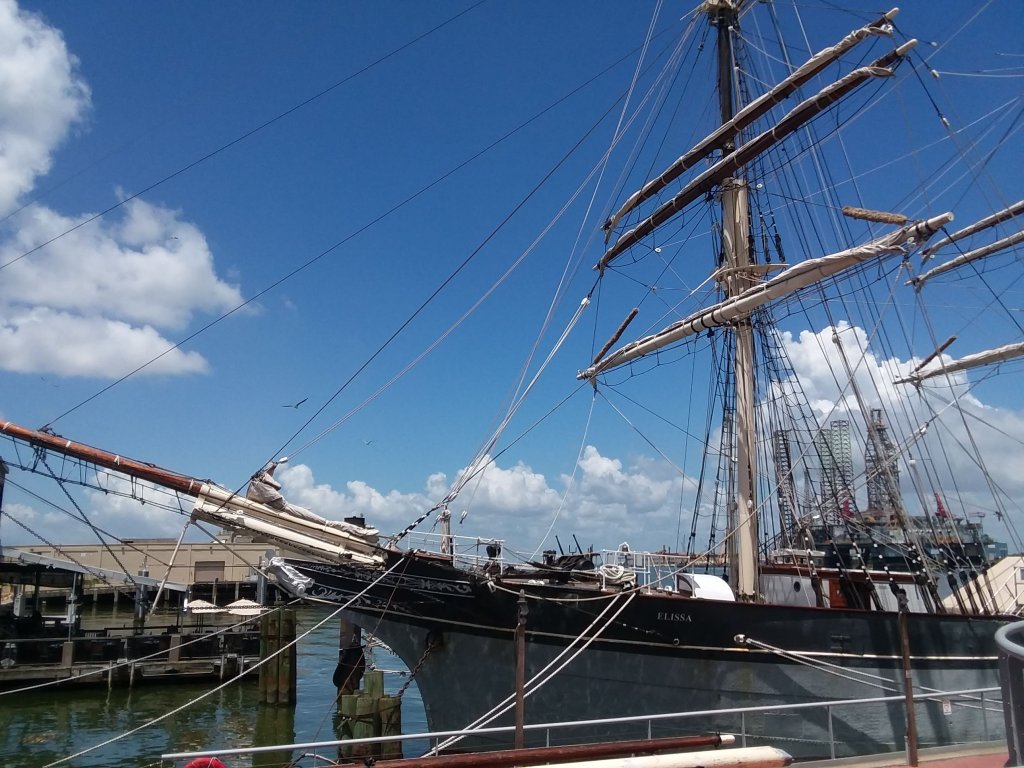
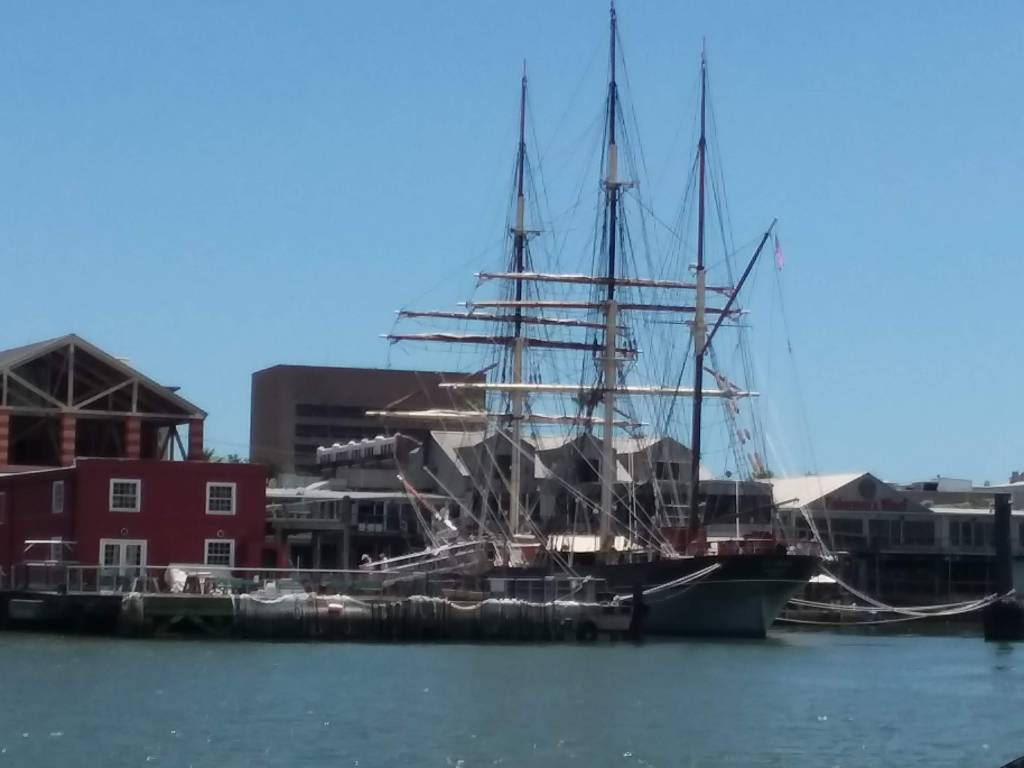
Chances are that if you ate a banana this week, (the most commonly eaten fruit in the world) you participated in a global economy. Though we are more aware of it than we used to be, such worldwide commerce is nothing new. Elissa, an iron-hulled, tall ship moored in Galveston, TX, is a beautiful reminder of such connections. Even her name, Elissa, calls to mind the movement of goods and people. Elissa, the heroine of Virgils’ Aeneid, fled from Tyre to Carthage and changed her name to Dido. With polished teak pin rails and bright work, tall masts for Douglas fir from Oregon, and billowing sails from Maine, Elissa, like Dido, is a testament not only to global shipping, but also to tenacity and the ability to reinvent oneself to meet the demands of the changing world.

Elissa is a barque, so called because of her rigging. Her three masts carry 19 sails. She has square and fore and aft sails on her foremast and mainmast, and fore and aft sails on her mizzenmast. She was built in 1877, just as the sailing era was gradually being taken over by steam-powered vessels. Elissa has truly been a ship of the world. Built in Aberdeen, Scotland, she worked for owners in Norway, Sweden, Finland and Greece before becoming an American vessel. During her shipping years she carried cotton, bananas, and many other cargoes, stopping in Galveston at least twice.


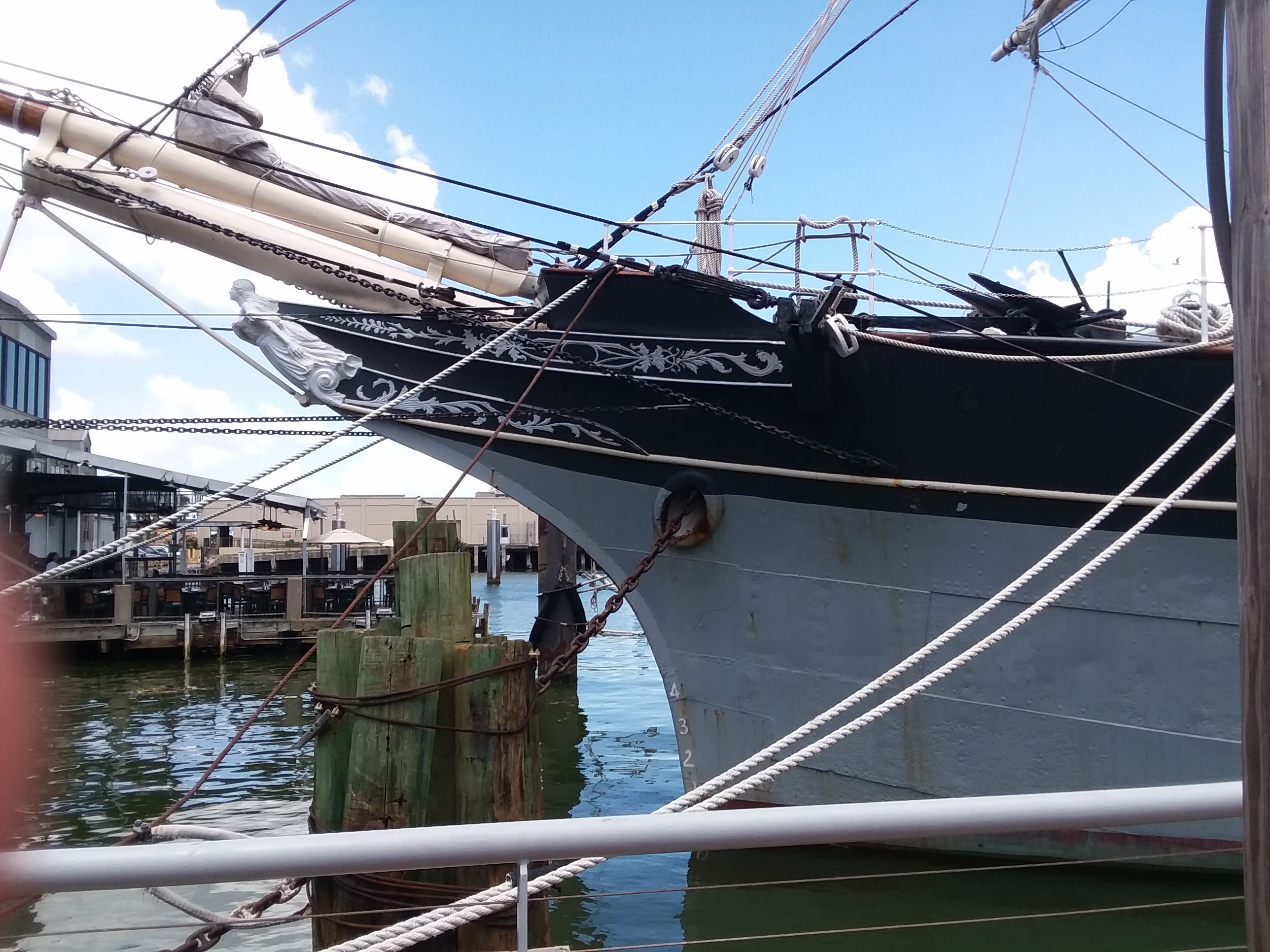
Her story serves as a chronical for changes in world wide shipping. As global shipping changed, Elissa did too.Over her 90 years as a commercial shipping vessel, she was refitted several times, including the addition of an engine. But even steam-power couldn’t bring Elissa into the modern world. In the late 1960’s she was relegated to a salvage yard in Greece. It was ten years before she was rescued, and towed across the ocean to her current home in Galveston, Texas. It took another six years to repair and restore Elissa to her former sailing glory. Now, as one of the oldest sailing ships in America (The Louis R. French is the oldest), she serves as a floating museum at the Texas Seaport Museum, in Galveston, Texas. She sails in competitions and demonstrations, and offers sail training courses each year to keep sailing traditions and knowledge alive.
Remember that banana you ate? Though they are cheap and easy to find today, back in Elissa’s prime, bananas were considered an unlucky cargo. They spoiled easily, risking the chances of profit, and when they rotted, bananas gave off noxious fumes that made the crew sick. (And those huge brown spiders often found on bananas from South America are scary enough to make anyone cringe.) I admit to taking for granted the ease in which we enjoy products from all over the world today. The Elissa evokes a bygone era where even the common banana was a luxury, and I am reminded just how lucky we are.
 BRIC-A-BRAC