The iconic apple- symbol of hearth and home, health and all good things. America’s favorite fruit, right?
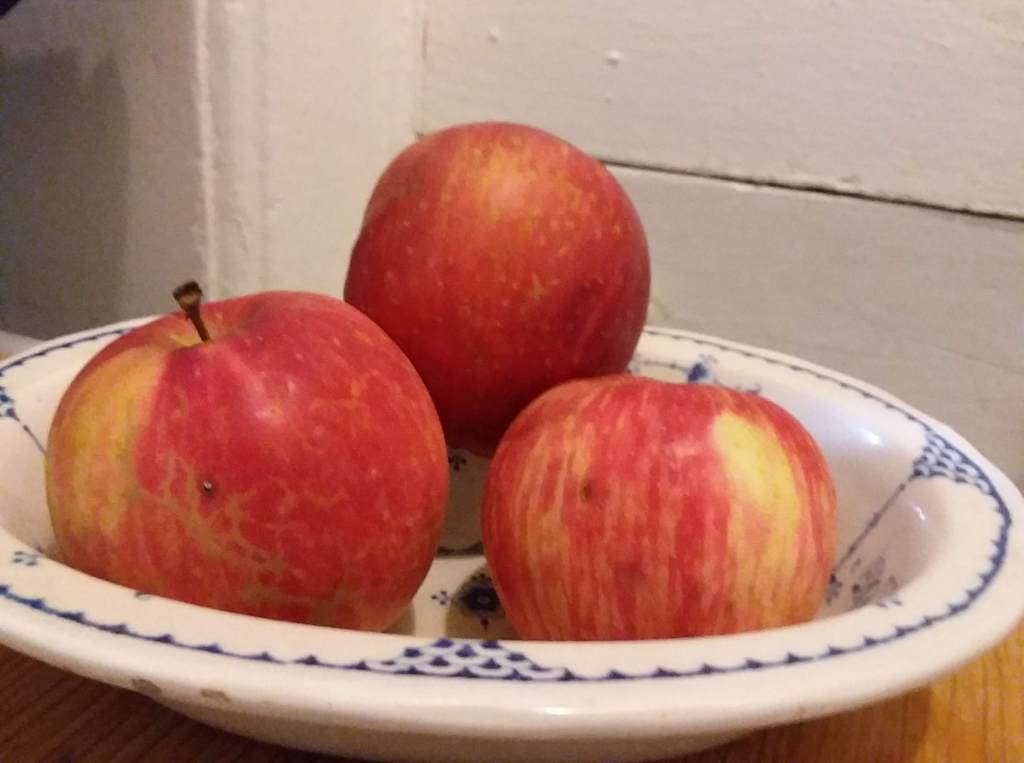
Well, not quite. Americans actually eat more bananas per year than apples, but apples still hold an important place in our food culture.
Indeed, apples have been enjoyed world-wide for thousands of years. They are among the oldest foods cultivated by humans, with more varieties than can be counted. Originally, the apple developed in the Caucasus Mountains. Alexander the Great is said to have found apples in Kazakhstan in 328 BCE. The earliest apple recipe on record is for a pork and apple dish, attributed to Apicius in De Re Coquinaria (written c. 300 CE, some 200 years after Apicius lived).
In fact, the apple has been so widespread in popularity, it is perhaps not surprising that the Old English word aepel meant any fruit (just as the OE word mete meant any food). This is evident in the names of various other medieval foods: fingeraeppla (finger apples or dates), appel of paradis (banana) and eorthaeppla (earth apple or cucumber). The same thing was true of the Latin word pomun, meaning fruit which become pomme meaning apple in French.
Recipes for apples abound. This fall, with apples plentiful in markets, roadside stands, and the neighbor’s back yard, try this medieval recipe for applesauce. In my mind, it’s much better than bananas.
Take a dosen apples and ether rooste or boyle them and drawe them thorowe a streyner, and the yolkes of three or foure egges withal, and, as ye strayne them, temper them wyth three or foure sponefull of damaske water yf ye wyll, than take and season it wyth suger and halfe a dysche of swete butter, and boyle them upon a chaffyngdysche in a platter, and caste byskettes or synamon and gynger upon them and so serve them forthe. (from Dining with William Shakespeare p.172, originally from A Proper newe Booke of Cokerye, 1575)
Translation into modern English:
Take a dozen apples and either roast or boil them. Mash them through a strainer, and add the yolks of three or four eggs. As you strain them, flavor them with three or four spoonfuls of damask water (rosewater) if desired. Then season it with sugar and half a dish of unsalted butter. Boil them in a chaffingdish. Sprinkle with biscuits or cinnamon and ginger and then serve.
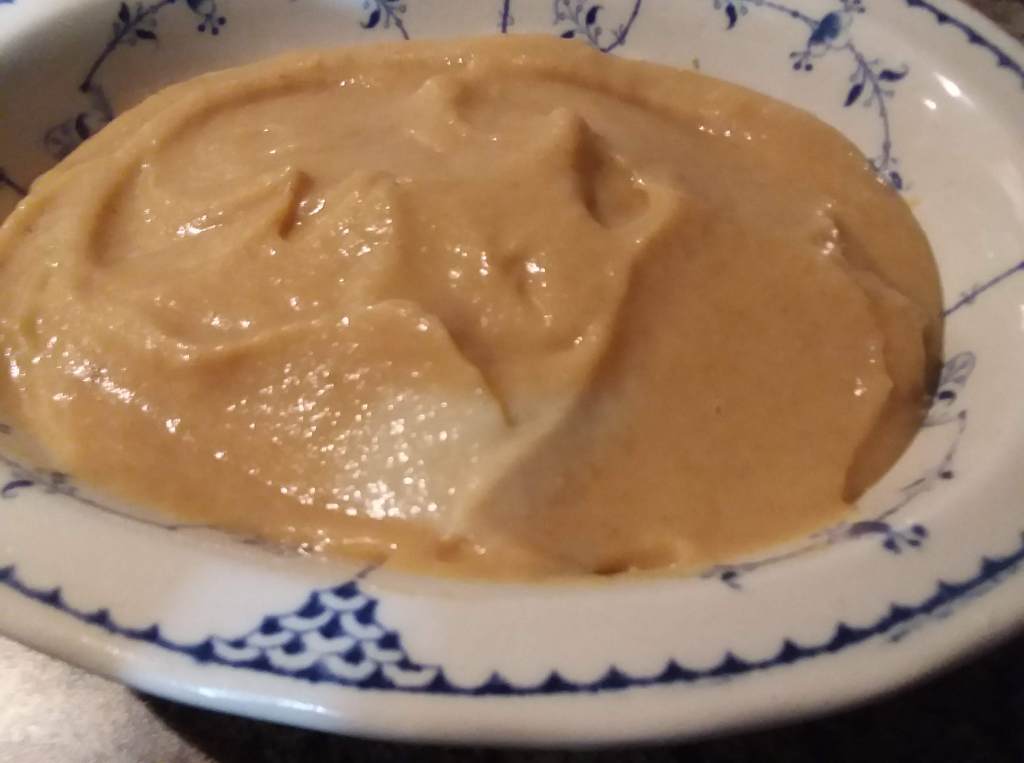
A modern version:
Peel and core 8 apples. Put in a pot with ½ cup water. Simmer until apples are soft. Add ¼ cup brown sugar, 1 t. Ginger, 1 t. Cinnamon and 2 T. rosewater (vanilla may be substituted, but will taste somewhat different). Blend on high speed until smooth. Return to pot and add 2 egg yolks (beaten) and 2 T. butter. Cook on low heat, stirring occasionally, about 10 minutes until butter is melted and egg yolks have had time to cook. Serve warm or cold, with shortbread cookies or Shrewsbury Cakes.
(Note: byskette is an earlier spelling of biscuit, coming the the Latin for ‘twice-baked.’ In medieval times byskettes were generally flat and crisp, like a modern cracker or hard cookie, and may or may not have been sweetened. Look for a discussion of Shrewsbury cakes coming in November.)
References:
A Proper Newe Booke of Cokerye. 1575. Imprinted at London in Fleetstreete, by William How for Abraham Veale.
Lorwin, Madge. Dining with William Shakespeare. New York: Atheneum, 1976
The Compact Edition of the Oxford English Dictionary (OED): Complete text reproduced micro graphically. Oxford University Press, 1971. Volume 1. Pages 101-102, 220.
 BRIC-A-BRAC
One thought on “Applemoyse”