Thoughts on Acre’s Bastard and Acre’s Orphans

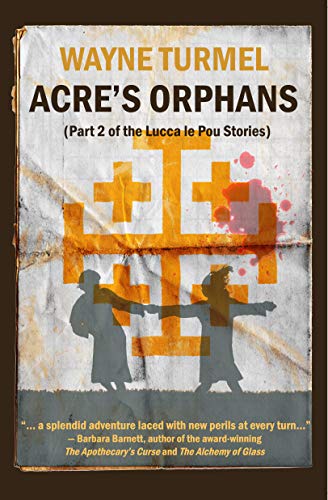
History, especially history of war, is most often told from the winner’s point of view, and the loser’s side is left out of the story. Wayne Turmel’s books, Acre’s Bastard and Acre’s Orphans, are remarkable because Turmel’s protagonist, 10-year-old Lucca, encounters and reflects multiple perspectives. Both books in the series are set in 11th century Acre and surrounding areas at the moment of the fall of the Kingdom of Jerusalem. This Christian kingdom had been established by crusaders nearly a hundred years earlier in 1099, in what is currently Israel, Palestine, and Lebanon. Then in 1187, Saladin’s forces gathered to attack the Kingdom.
The story begins as trouble in the area is brewing. Rumors abound in Acre as everyone fears the coming of Saladin. Enter Lucca Le Pou, (or Lucca the Louse), an insignificant orphan with unknown parentage. He might be the bastard child of a French crusader. His mother might have been a native Christian, or possibly a Muslim, a Jew, or a Samaritan. Acre was very diverse with many ethnicities, languages, and religions interacting. Whatever his heritage, Lucca has been raised in a Christian monastery, and taught to believe Christianity is the only way. Lucca’s ability to blend in with the other natives of the area, and his familiarity with the French rulers, make him an ideal candidate to report on what he sees and hears in the marketplace.
A boy who knows how to find trouble when he’s not even trying, Lucca gets into one mixed up scrape after another. He is observant, but naive, which makes him an ideal person to narrate the events in this story of the Crusades. The adult reader sometimes understands more than Lucca, but like him comes to understand the terrible irony of a conflict in which each side believes theirs is the only right way to believe and live. Worse, each side firmly believes the others are monsters, bent on raping, killing, and destruction. As readers follow Lucca’s journeys, they see not only the great leaders, but the many ordinary people caught up in the tides of drastic change.
With great attention to detail and historical accuracy, Turmel’s stories remind us there is more than one side to any conflict. The European invasion of the Middle East in the Crusades and the centuries long conflicts that ensued brought cruelty and hardship to a great many people. This orphan caught in the middle will need all his wits just to stay alive. In the end, Lucca shows readers that no matter what God we believe in, or who our leader is, we really all want the same things: safety for our friends and a place to call home.
 BRIC-A-BRAC
These stories look really good. Are they available at our library?
LikeLike
Sadly, no. They are both independently published so they have a harder time getting into libraries. They might be available on interlibrary loan, or the library might respond to a suggestion to purchase the books to add to the collection.
LikeLike