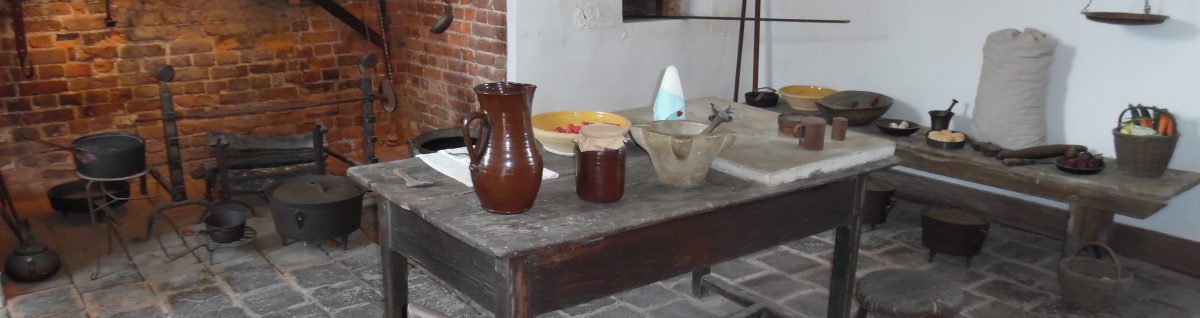

It turns out there are a lot of reasons to create mock foods. Sometimes the new version is cheaper than the original. For instance, imitation crab legs are made out of fish, not crabs. Other times, the mock version is easier to make. My mom had a recipe for mock ravioli that she got from our Italian neighbor. It uses similar ingredients to various ravioli, but layers bowtie pasta with the filling ingredients so no one has to stuff the little ravioli pillows. Another reason for mock foods is scarcity. An example of this is mock apple pie, made with crackers and cinnamon, but not a single apple. Often, mock foods are made to delight and impress. I’ve often served a dish of hedgehogs (see Blog post) or urchins, which contain neither hedgehog nor urchins, but are made of ground beef and pork with almonds for spines. No one is fooled, but the resulting meatballs are cute. Actually, mock foods rarely are meant to deceive. After all, most of us really can taste the difference between a cracker and an apple. In fact, when a food does seem intent on fooling the consumer, we protest. If it doesn’t have peanuts in it, don’t call it peanut butter!
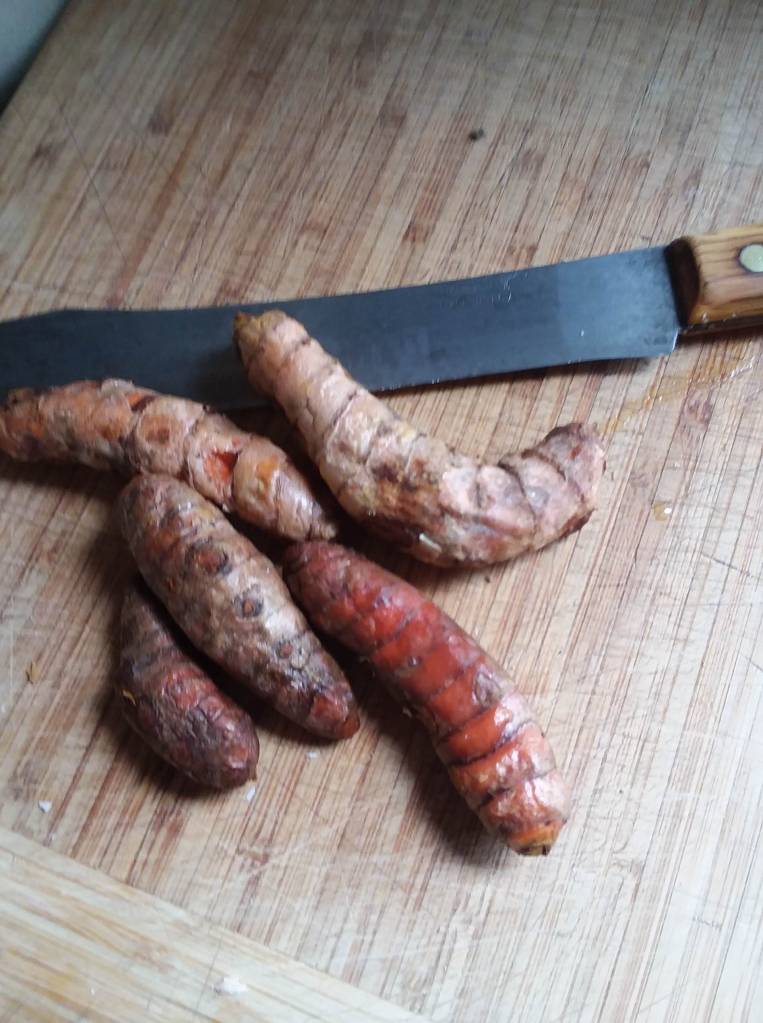
So which of these reasons might lead to pickling mock ginger? I’m not sure. The recipe is really a method for pickling cauliflower. No ginger is involved. It seems the substitute for ginger here is turmeric. Fresh turmeric is not cheaper than ginger, nor easier to use. In colonial times, both turmeric and ginger had to be imported rather than grown locally, so it seems unlikely that scarcity was an issue. Ginger is an ingredient in far more colonial recipes than turmeric is. Like ginger, turmeric is quite fibrous, so it is usually grated or chopped small if intended for consumption. More often either one is used for flavoring.
It could be the flavor is the reason for the substitution. Turmeric is actually related to ginger, and like ginger it has a spicy bite to it. The recipe below makes pickles, using garlic, cloves, mace, and horseradish along with the turmeric, that are not for the faint heart (or weak stomach). I’d put them at four flames on the heat scale.


To Pickle Mock Ginger (based on Hannah Glasse’s recipe)
- 2 Heads of cauliflower
- ½ c. plus 2 T. sea salt
- 14 c. white vinegar
- 2 T. long pepper (This is not the same as black peppercorns.)
- 1 T. mace
- 1 T. whole allspice
- 6 ounces fresh horseradish, peeled and sliced
- 2 whole bulbs of garlic, separated into cloves, and peeled. (cut large cloves in half)
- 1 T. cayenne pepper
- ¼ lb. turmeric, peeling and cut into sections about 1”
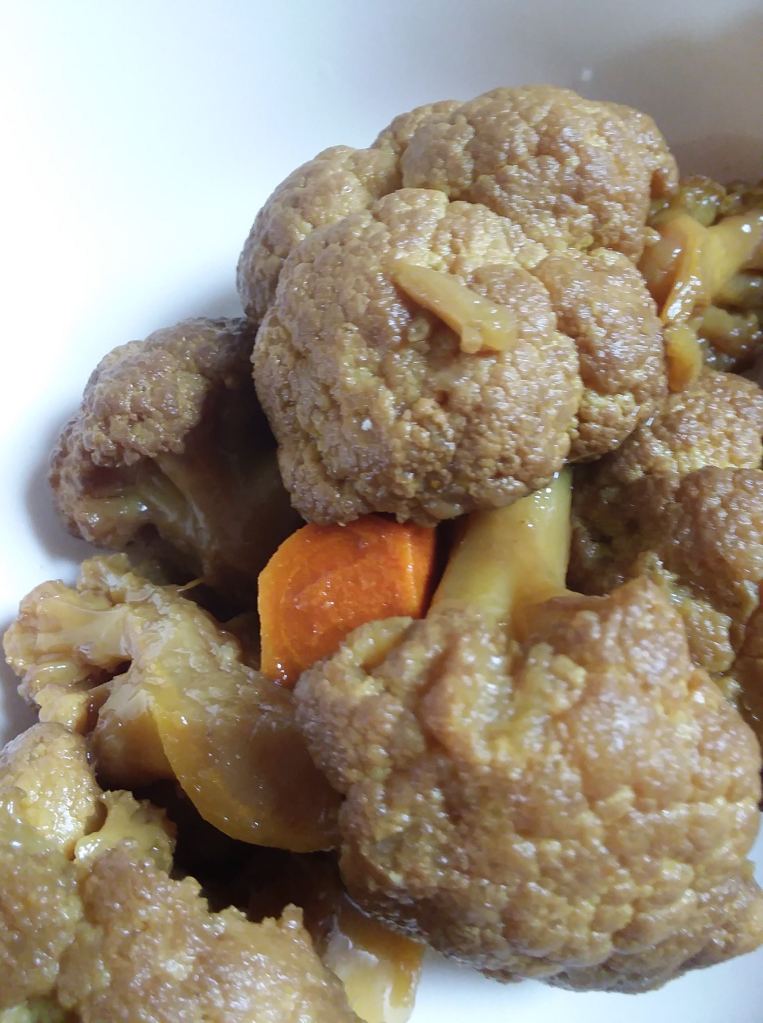
Dissolve the salt in 2 ½ quarts water. Separate the cauliflower into florets and cut to the desired size. Put the cauliflower in the salted water and leave it for three days. On the third day, drain the salt water. Mix the vinegar with the rest of the ingredients in an enamel pot. Bring to a boil. Add the cauliflower and remove from heat. The next day, bring the mixture to a boil again. Repeat once more. Remove the cauliflower, horseradish, garlic, and turmeric pieces from the pickle and put in jars. Strain the pickling vinegar to remove the whole spice, and pour the strained liquid over the vegetables in the jar. Stored in the refrigerator, such pickles should last a long time. Enjoy at your leisure.
Initially, I was suspicious of anything mock, since the mock often implies inferior, but like other mock foods I enjoy, these pickles are surprisingly good. You can eat them straight, if you enjoy spicy hot foods, or chop them up and add them to salads, humus, or dips whenever you want something to wake up those taste buds.
Sources:
Glasse, Hannah. The Art of Cookery Made Plain and Easy: Excelling any Thing of the Kind ever yet published. Alexandria: Cottom and Stewart. 1805. (First Edition publishing in London, 1747. This edition reprint of 1st American Edition, 1805, by Applewood Books, 1997).
 BRIC-A-BRAC
I’m not a fan of spicy/hot, but I learned something today which is interesting. Also, what is long pepper?
LikeLike
Long pepper is a a pepper that comes from Southeast Asia. It is hotter than black pepper. It was mostly driven out of use in Europe and the Americas once Cayenne pepper from the Americas was discovered by Europeans. I’ll have to do a bit more research and write more about it.
LikeLike