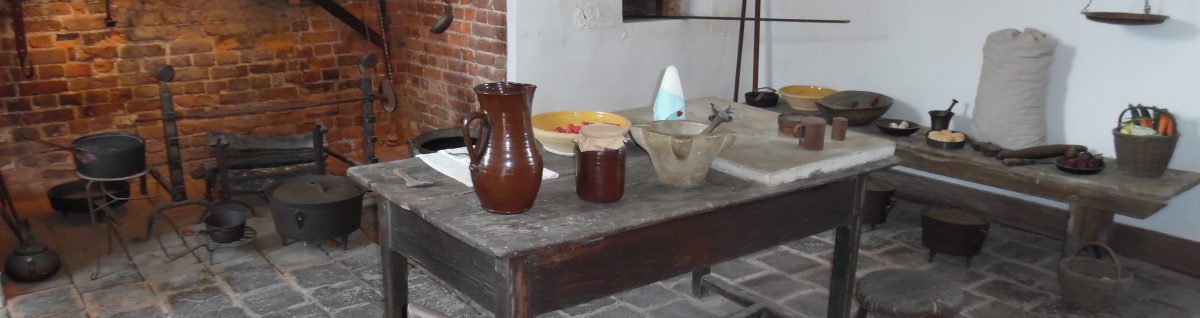

Any American over the age of two has probably tasted ketchup and knows it as a bright red sauce used on just about anything from scrambled eggs to french fries. It might surprise you to know the convoluted, international journey ketchup has made to get where it is today.
Although linguists do not agree on the origin of the word, it seems most likely the sauce now known as ketchup* was originally a Chinese sauce, made from brined fish or shellfish. References to this concoction of fermented fish guts and soybeans date from as early as 300 BCE. (This Chinese /keo-cheup/ might have been similar to the common Roman fish sauce known as garum.) Because the salty paste kept well and was easily transported, it was spread by Chinese sailors and merchants along their regular trade routes to the Philippines and Indonesia. The British adopted the sauce by the early 18th century, but began replacing the fish with other ingredients. Common ketchup recipes from the 18th century often feature mushrooms or oysters, with mushrooms being most common. Various Southeast Asian spices, including mace, nutmeg, allspice, and cloves, were added to the mixture. When the British colonized North America, they brought this spicy mushroom condiment with them.
Throughout the 18th century, the ketchup that was added to many sauces and other dishes was made of mushrooms and/or oysters. Early American cookbooks such as Hannah Glasse’s The Art of Cookery, has two recipes for ‘catchup’, both with mushrooms as the primary ingredient (216-217). John Townshend’s The Universal Cook, has a recipe for English ‘katchup’ that includes vinegar, spices, and anchovies, adding at the end of the recipe, “you may add to it the clear liquor that comes from mushrooms” (226).
So how did ketchup become the tomato-based condiment it is today? Tomatoes, of course, are a new world fruit (or vegetable, depending on your perspective.) Tomato plants were domesticated in South and Central America at least by 500 BCE. The Aztecs cultivated many different varieties of tomatoes. When the Spaniards invaded South America in the 16th century, they ‘discovered’ this tasty fruit and introduced it to Europe and Spanish colonies in the Caribbean and the Philippines. From there it spread to China (where it was called ‘barbarian eggplant’).
Spain took to eating tomatoes fairly quickly (recipes for cooking tomatoes can be found as early as the 1540’s). It was another hundred years or so before Italy followed Spain with tomatoes appearing in cookbooks in Naples by 1692. Other European countries were even more hesitant. Some thought the tomato was poisonous, perhaps because it is a member of the deadly nightshade family or perhaps because the acidity of the tomato leached lead from the pewter plates of the wealthy. Some thought the tomato was an aphrodisiac, calling them ‘love apples’. Whatever the reason, the rest of Europe and English settlers in North America were slow to accept the tomato as anything other than an ornamental plant. According to Walter Staib, in The City Tavern Cookbook, it wasn’t until Thomas Jefferson championed tomatoes that they became popular (114). Jefferson had discovered tomatoes in France, and began growing them at his home in Monticello, where he regularly served them to guests. Apparently he even ate a tomato in public to demonstrate once and for all that they were safe to eat (Staib, 114).
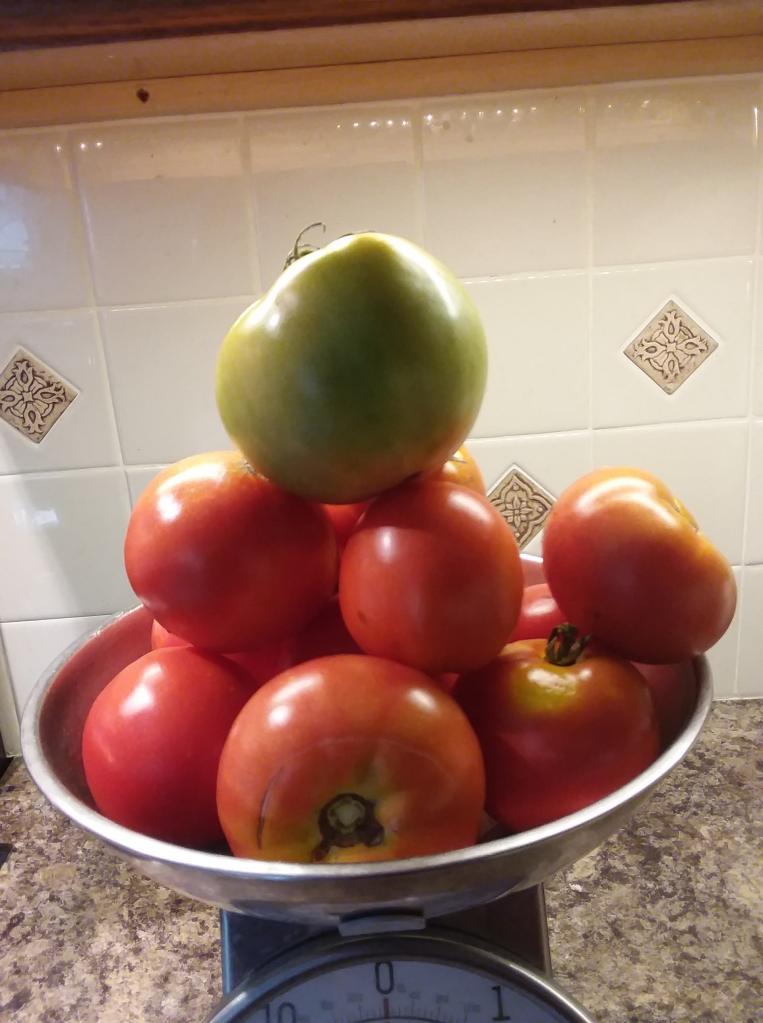
Once tomatoes were accepted as edible, they slowly made their way into recipes for ketchup. The earliest tomato catsup recipe I know of is from the 1824 edition of Mary Randolph’s The Virginia Housewife (cited in Martha Washington’s Book of Cookery, 174). In the 1844 edition of Mary Randolph’s book, she included recipes for tomato catsup, tomato Marmalade,tomato sweet marmalade, and tomato soy, all of which are fairly similar (162-163). In 1833, Mrs. Child declared in The American Frugal Housewife, “The best sort of catsup is made from tomatoes” (35).
Mrs. Child’s words resonated within the culinary community and by the 20th century, everyone assumed ketchup would be tomato based. Thus a Chinese concept meshes with a South American fruit, then melds with European mushroom sauces, and becomes the ubiquitous ketchup of North America. If that’s not international exchange, I don’t know what is.
Recipes for ketchup from the 19th century vary a great deal in the method of preparation and seasoning ingredients. Mrs. Child recommends salting the mashed tomatoes and letting them sit for 24 hours before putting the mash through a sieve and adding cloves, allspice, pepper, mace, garlic and mustardseed (35). Three of Mary Randophe’s recipes are simpler, requiring only an hour or so of stewing before adding the spices. She uses onion, mace, salt and pepper for catsup, but adds cloves and garlic for marmalade (162).
The recipe below reflects Mary’ Randolph’s methods, but adds the greater variety of spices recommended by Mrs. Child. According to the practical Mrs. Child, ketchup is best made in August, when it is not raining (35), and coincidentally, when tomatoes are fresh and abundant. This recipe makes a very spicy and salty condiment, an excellent accompaniment to burgers. The high quantity of salt recommended in period recipes may have been added as a preservative in an era without refrigeration. For a less pungent mixture, adjust the salt and mace as desired. The original recipe also called for a peck of tomatoes, which is about 13 pounds. My version only requires 3 ½ to 4 pounds of tomatoes and makes about 1 ¼ cups of ketchup.
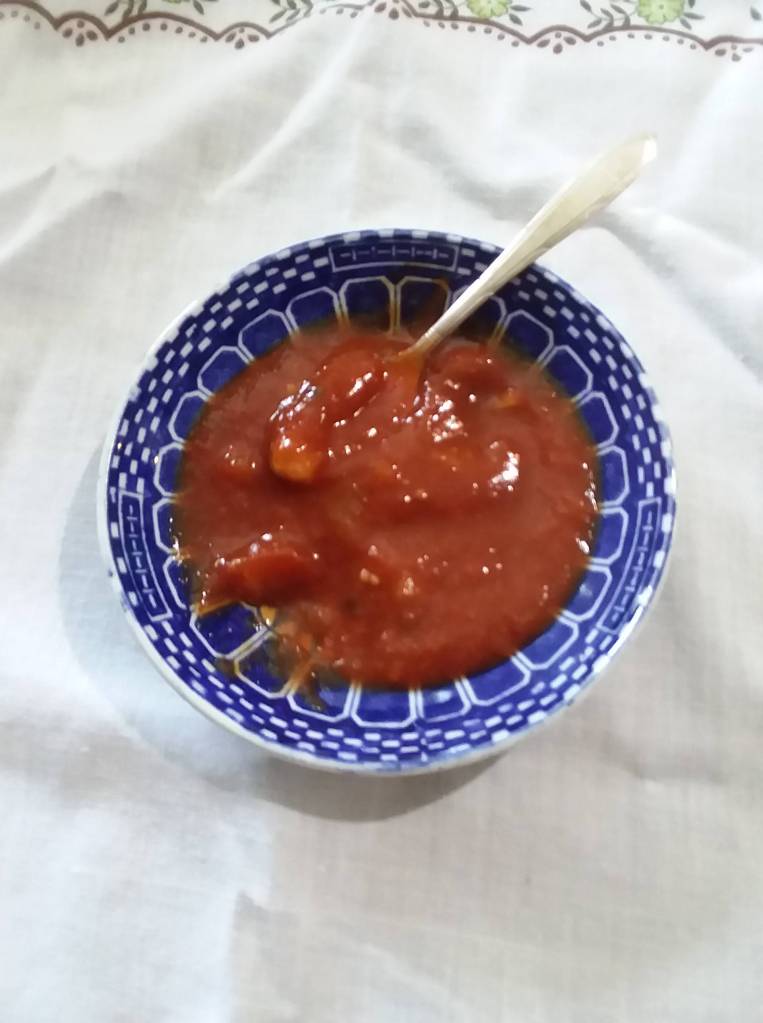
19th Century Tomato Catsup for modern cooks
- 3 ½ -4 lbs. Tomatoes
- 1 T. salt
- ¼ c. chopped onion
- ¼ t. ground allspice
- ¼ t. ground cloves
- ¼ t. whole mustard seed
- ¾ t. whole black pepper
- ½ t. chopped garlic
- ¼ t. ground Mace
Remove the stems from the tomatoes. Cut them into chunks and stew them with salt for about an hour. Mash and strain the mixture through a sieve to remove the skins and seeds.
Add the remaining ingredients and simmer for 20 to 30 minutes until thick.
Note:
*ketchup has been spelled in many different ways over the years. Variations include catchup, catsup, and katchup, among others. It wasn’t until the mid-1950’s that ketchup became the preferred spelling, in part because ‘ketchup’ was recognized as a vegetable for school lunches, while ‘catsup’ was not.
Sources:
- —–. Martha Washington’s Booke of Cookery and Booke of Sweetmeats. (A Family Manuscript, Hand written circa 17th century. Transcribed and annotated by Karen Hess, New York: Columbia University Press, 1995).
- Child, Lydia Marie. The American Frugal Housewife. Dedicated to those who are not ashamed of economy. 12th Edition. Boston: Carter, Hendee, and Co. 1833. (First published 1828)
- Glasse, Hannah. The Art of Cookery Made Plain and Easy: Excelling any Thing of the Kind ever yet published. Alexandria: Cottom and Stewart. 1805. (First Edition publishing in London, 1747. This edition reprint of 1st American Edition, 1805, by Applewood Books, 1997).
- Randolph, Mary. The Virginia Housewife Or, Methodical Cook. Philadelphia: E. H. Butler & Co., 1860. (Facsimile by Dover Publications, 1993, with introduction by Janice Bluestein Longone).
- Staib, Walter. The City Tavern Cookbook: Recipes from the Birthplace of American Cuisine. Philadelphia: Running Press, 2009.
- Townshend, John. The Universal Cook or Lady’s Complete Assistant. S. Bladon: LOndon, 1773 (facsimile).
 BRIC-A-BRAC
Very interesting! I may try making it!
Diane
Sent from my iPad
LikeLike
I love to hear how it turns out if you do.
LikeLike