Oats and Beans* and Barley Grow
Oats and Beans* and Barley Grow
But you nor I nor anyone know
How Oats and Beans and Barley Grow
(Children’s rhyme and circle game first mentioned in Joshua Cushing’s The Fifer’s Companion (1790)
*In some versions peas or wheat is substituted for beans.
We don’t hear a lot about barley these days, but it is, in fact, one of the oldest grains, first cultivated around 9000 BC in the Fertile Crescent. From there, barley diverged and spread through Asia, Europe and Africa with different varieties thriving in different places. I came across one such variety on a recent visit to Orkney.
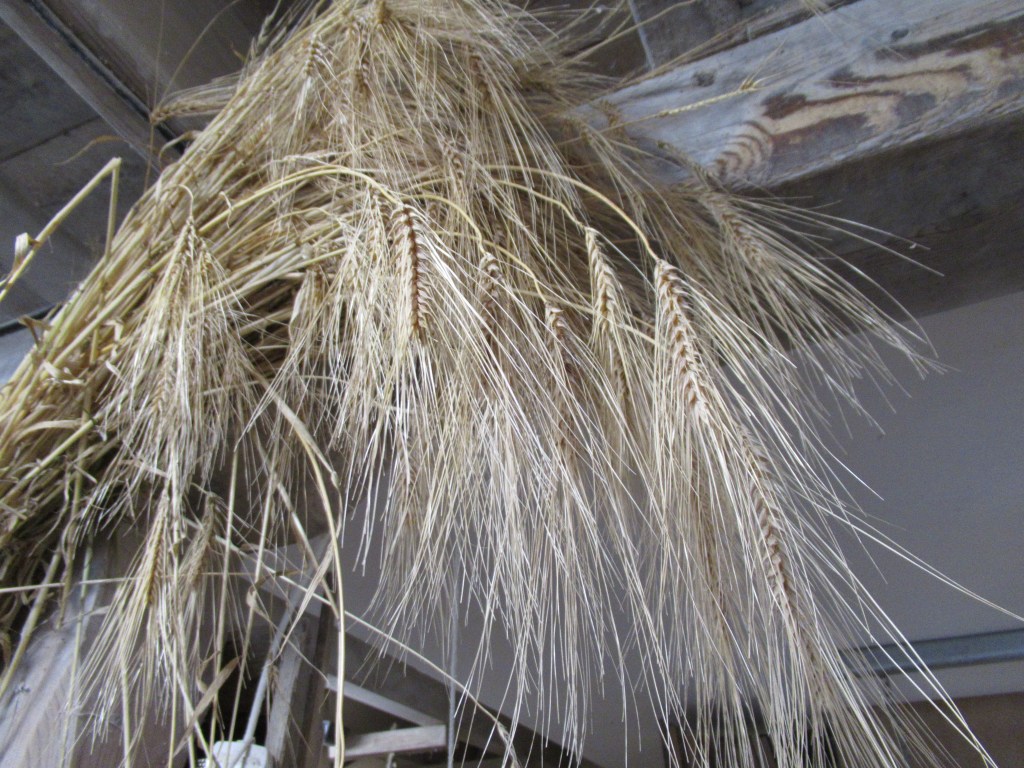
Bere (pronounced close to bear or bare) is a six row barley variety that has been grown in the Orkney Islands of Scotland, for around 5000 years. It is a fast growing barley, sometimes called 90 day barely, well suited to the long summer days and longer winters in Northern climates. Besides growing well in the Orkneys, bere is very nutritious, having more protein than modern two row barleys.
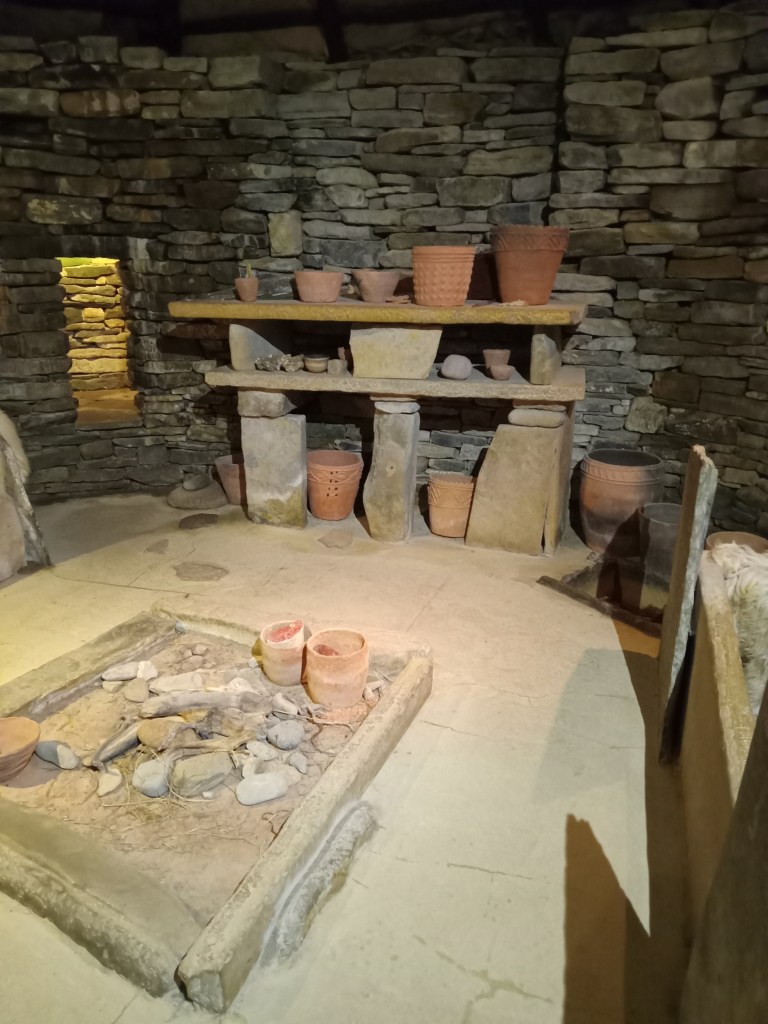
Early neolithic sites in Orkney include evidence of bere cultivation and processing. Centuries later, Pictish farmers grew bere. When the Nore came, the discovered bere was very similar to their barely variety which they called bygg.
A conversation with my son, an archeologist, leads me to hypothesize that the neolithic farmers did not bake bread or bannocks with bere, but made a grain porridge, either boiling bere meal and water in a clay pot on the hearth fire, or adding hot stones to the water and meal in the clay pot. It is likely they added other things to this porridge also, probably berries, seaweed, small rodents, fish, or anything else they planned to cook and eat. My son also reminded me that a pot of grain porridge left unrefrigerated ferments. These fermented porridges were mildly alcoholic and led to some of the first beers produced. I find it interesting to note that beer, potion, and poison probably all come from the same proto-indoEuropean root *po(i) to drink.
Neolithic people used a saddle quern to grind the grain. The grinder, probably a woman, would kneel, and rub a stone back and forth over the grain in the bowl of a larger stone. The oldest saddle quern found in the Orkeneys was dated to 3,600 BC and found at Knap of Howar on Papa Westray.
By the iron age, the saddle quern was replaced by a pair of flat mills stones, in which the upper one rotates. And then by the viking era, some mills were converted or built to use water power .
Nowadays, the Barony Mill, run by the Scottish Heritage Trust in Birsay, Orkney is the only mill still processing bere. The mill here has been in operation for over 300 years using an overshot waterwheel. I learned it takes two and a half days to process a load of bere. It must be dried, then ground through 3 wheels to remove the husk, crush the grain, and finally grind it into flour.
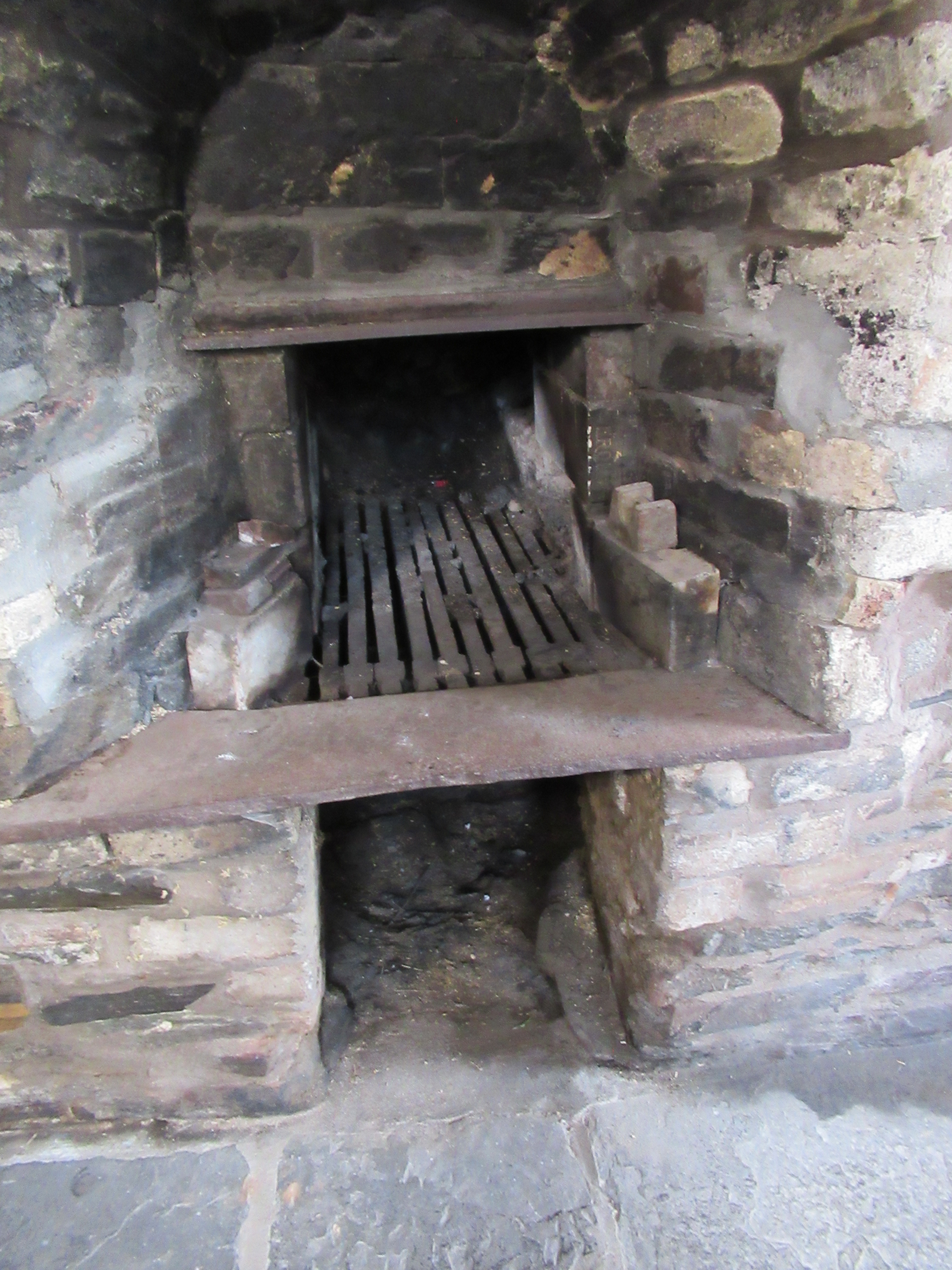
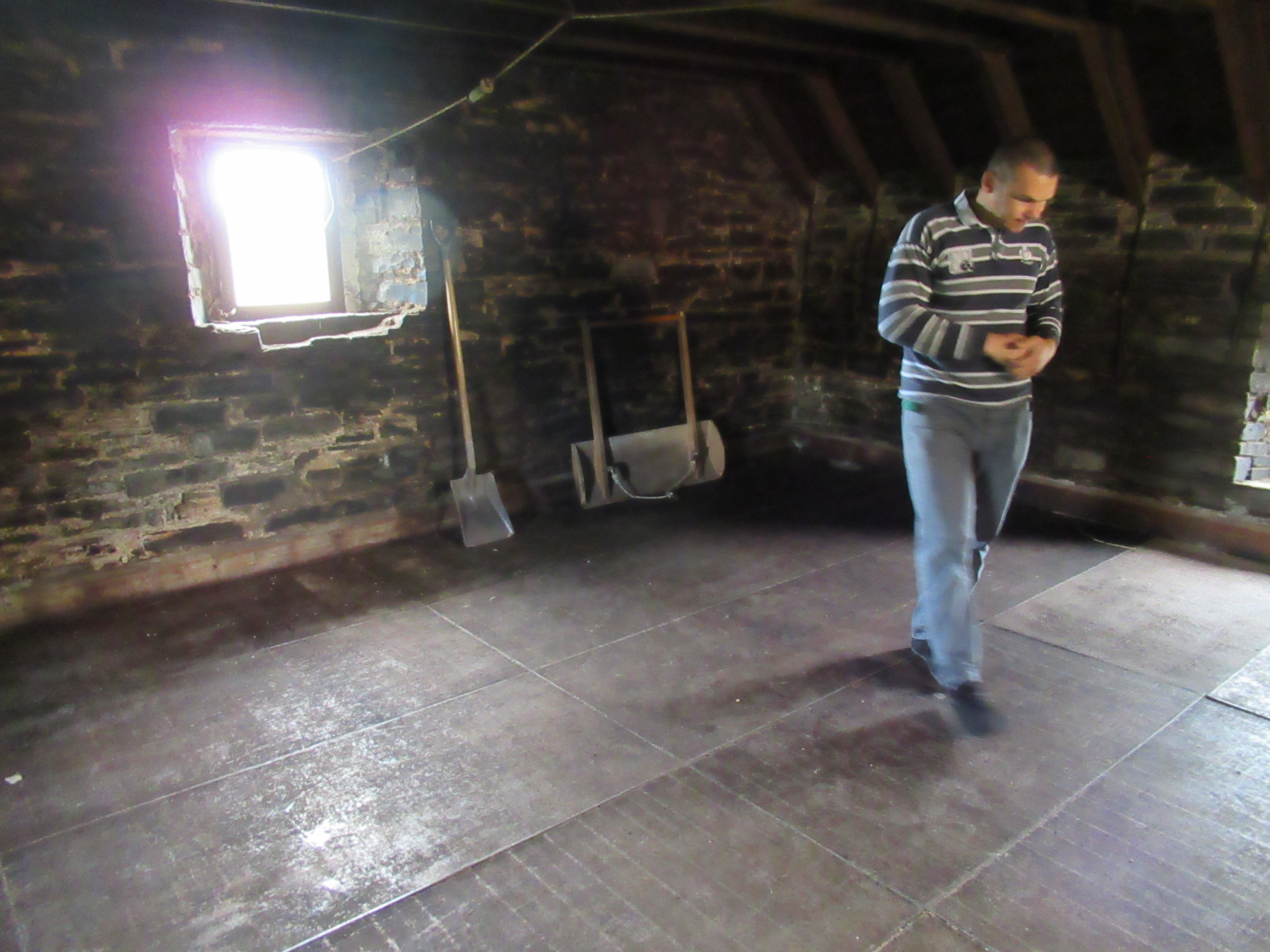
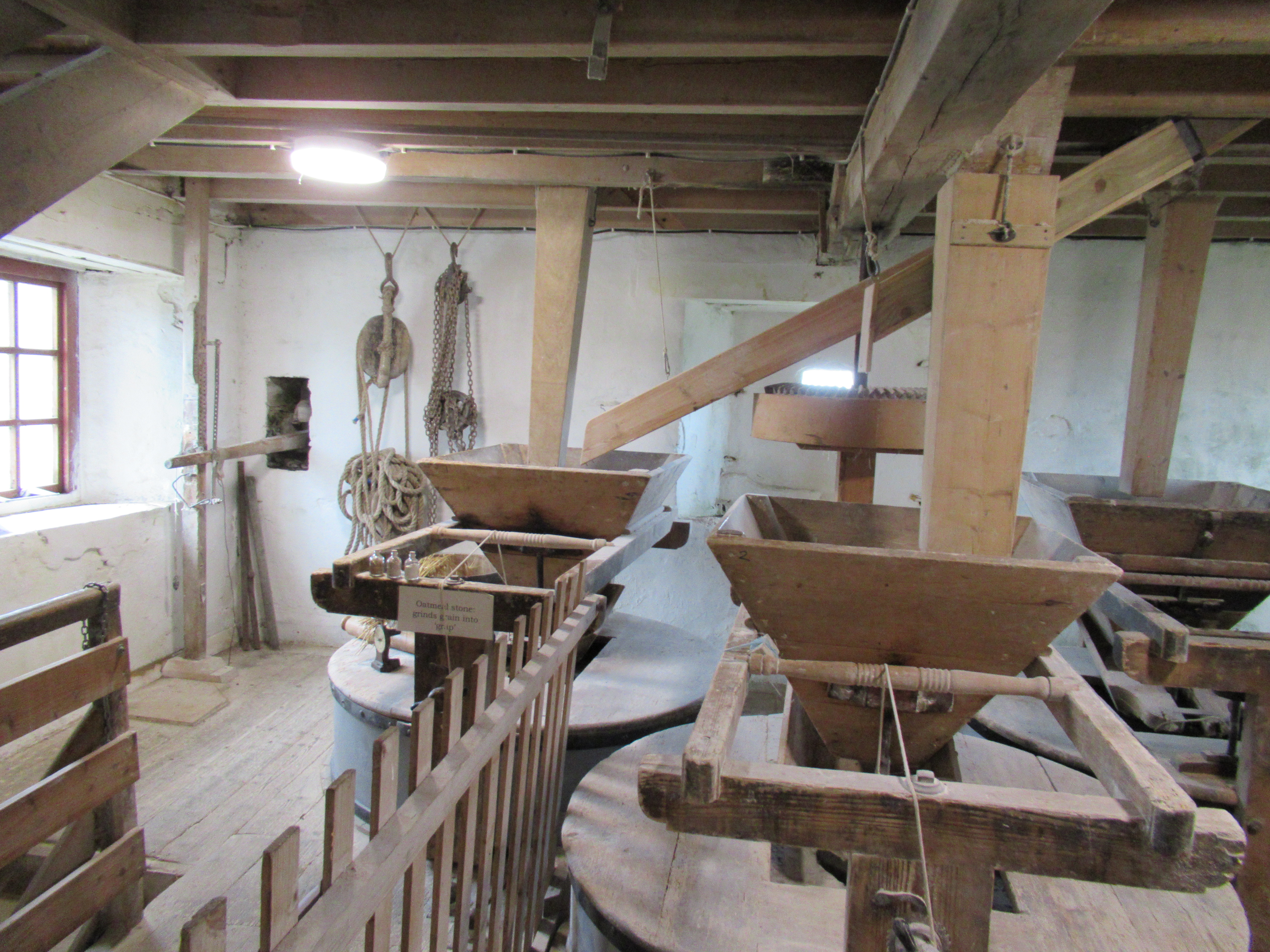
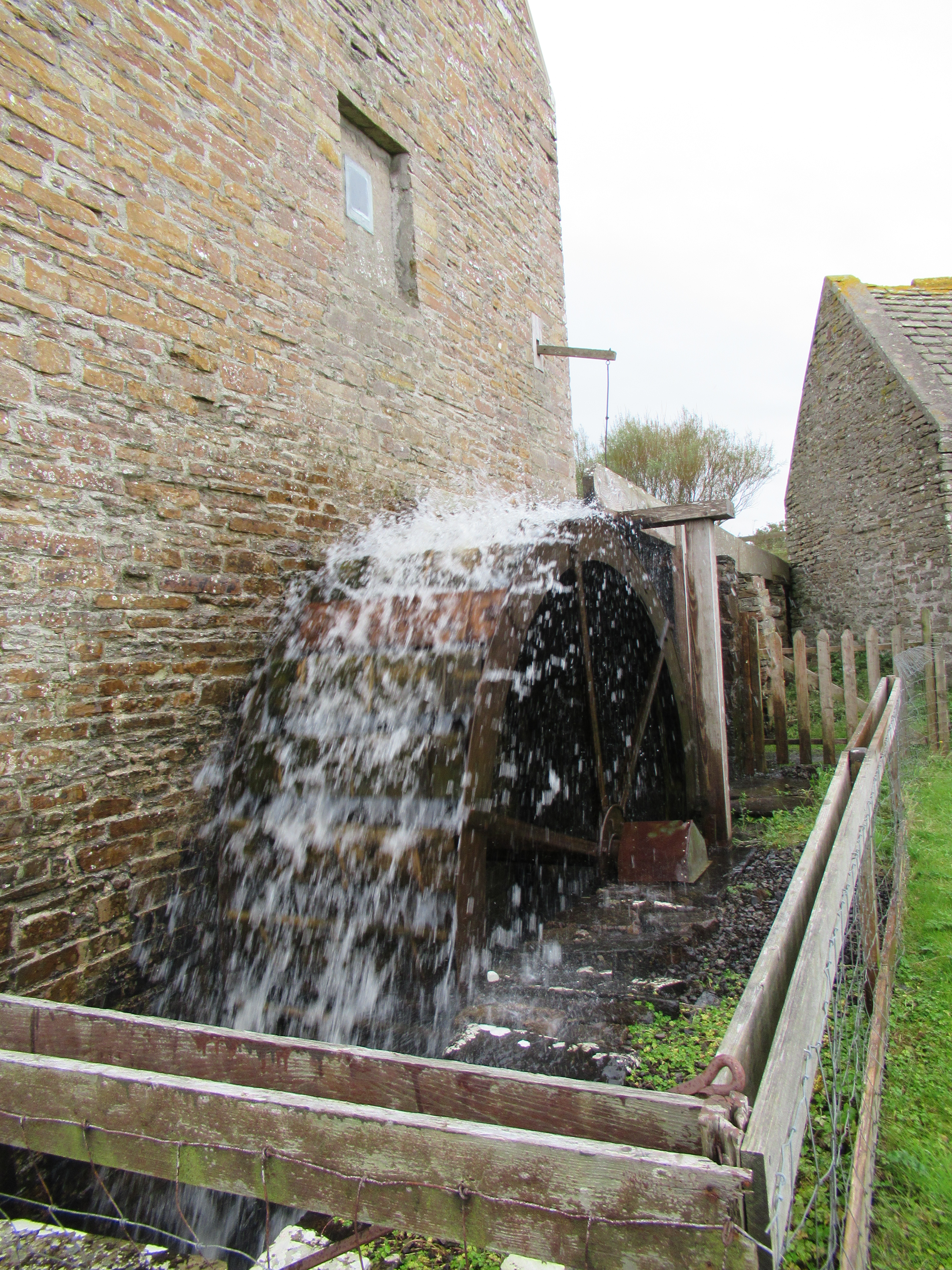
Views of Barony Mill: Drying oven, drying floor, grinding wheels, water wheel
Of course, I had to buy some bere flour, and bring it home to try out. So far I’ve made an apple cake and several types of bannocks. Bannocks, originally unleavened, flat cakes of barley or oat baked like pancakes on a flat stone, that had been heated in the fire.(later a griddle was used)
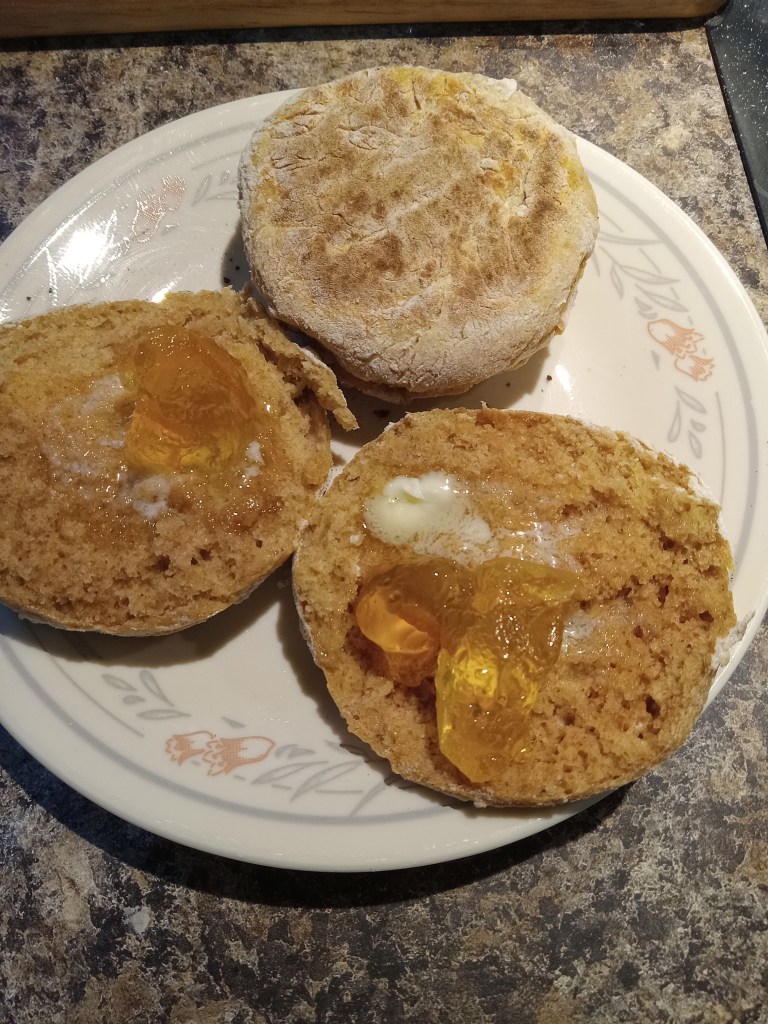
Early 1800’s unleavened bannocks:
- 300 ml (½ pt.) milk
- 25 gr. (1 scant oz) butter
- 230 gr. 8 oz. bere meal
- 1/4t. Salt.
Heat the milk and butter, add salt and meal to make a soft dough. Knead lightly, roll out about ¼” thick. Fry in a lightly oiled pan or griddle. Flip to finish. Makes 2 small bannocks
After baking soda and cream of tartar came into common use in the middle of the19th century, bannocks, along with all other quick breads, underwent a major revolution. Bere Bannocks made today are light and airy like a scone. There are several recipes available for bere bannocks, One of the best sources is Barony Mills: https://baronymill.com/orkney-bere-bannocks/
Unfortunately, as far as I know, bere meal is unavailable in the United States as it is only sold in the UK. Perhaps that’s one more good reason for a trip to Scotland.

Sources: Ashworth, Liz. Book of Bere. Berlin LTD, Edinburgh, 2017.
 BRIC-A-BRAC