Salmon: The Fish of Knowledge 

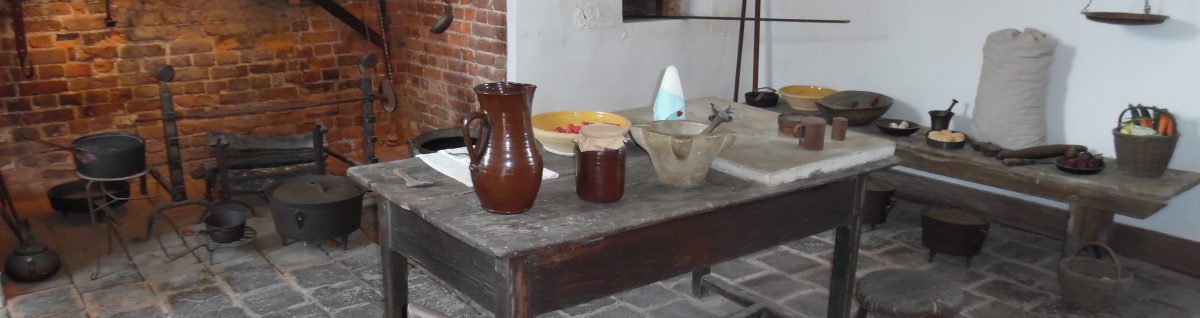
An Irish Salmon

Salmon is probably the most celebrated fish worldwide.  From the ‘divine fish’ of the Ainu in Japan to the stone carvings left by the Picts in Northern Scotland, salmon have represented many powerful qualities. In the Amur River region of China, salmon are thought to be the progenitor of humanity when a salmon transformed himself into a young man and married a young girl. Across the Pacific in Northwest North America, the salmon motif is found in the art and culture of many indigenous people, including the Haida and Kawkiutl, among others. In these stories the salmon symbolizes fertility, abundance, prosperity and/ or renewal. Some stories claim salmon are immortal people living beneath the sea. They put on the salmon disguise in the Spring to offer themselves as food for humans.

My favorite stories come from Irish legends. Here it is the salmon, not the more well-known owl, that symbolizes wisdom and knowledge. These stories feature Ireland’s greatest heroes: Cuchulain and Fionn mac Cumhail (Finn McCool). In the Irish epic,  Táin Bó Cúailnge, one of Cuchulain’s major feats in the war against Queen Medb  is called the mighty salmon leap. (In fact the word ‘salmon’ comes from Laitn ‘salire’ meaning ‘to leap’.)

Fionn’s story puts even greater emphasis on the fish’s power. It is said the salmon of knowledge swims  in the Well of Wisdom (also known as the Well of Segais, and the source of the River Boyne). This salmon gained the knowledge of all the world by eating nine magical hazel huts from the nine trees surrounding the well. The great poet and teacher, Finegas spent seven years trying to catch this fish. When he finally succeeded, he had his apprentice, Fionn, roast it, warning the boy not to eat any of it. Fionn did as he was instructed, but in turning the fish over the fire, he burned his thumb. Without thinking, he popped his thumb into his mouth to ease the pain. When Finegas saw the light of wisdom in the boy’s eyes, he asked what happened. He realized Fionn had acquired the Salmon’s power and knowledge. So he gave Fionn the rest of the fish to eat. For the rest of his life, Fionn had only to suck on his thumb to know the future. This power and knowledge gave Fionn the ability to become the leader of the Fianna and a great hero.

It’s not really surprising that salmon take such an important place in the stories. Their dramatic  life journey is amazing as young salmon, born in freshwater, swim out to the ocean, returning at the end of their life to their home river to spawn and die. They are one of the few creatures that live in both fresh and saltwater. In days past, before overfishing has put some wild salmon on the endangered species list, salmon filled the rivers. It has been said, with only slight exaggeration, that a person could walk across the river on the backs of the salmon during the run. 

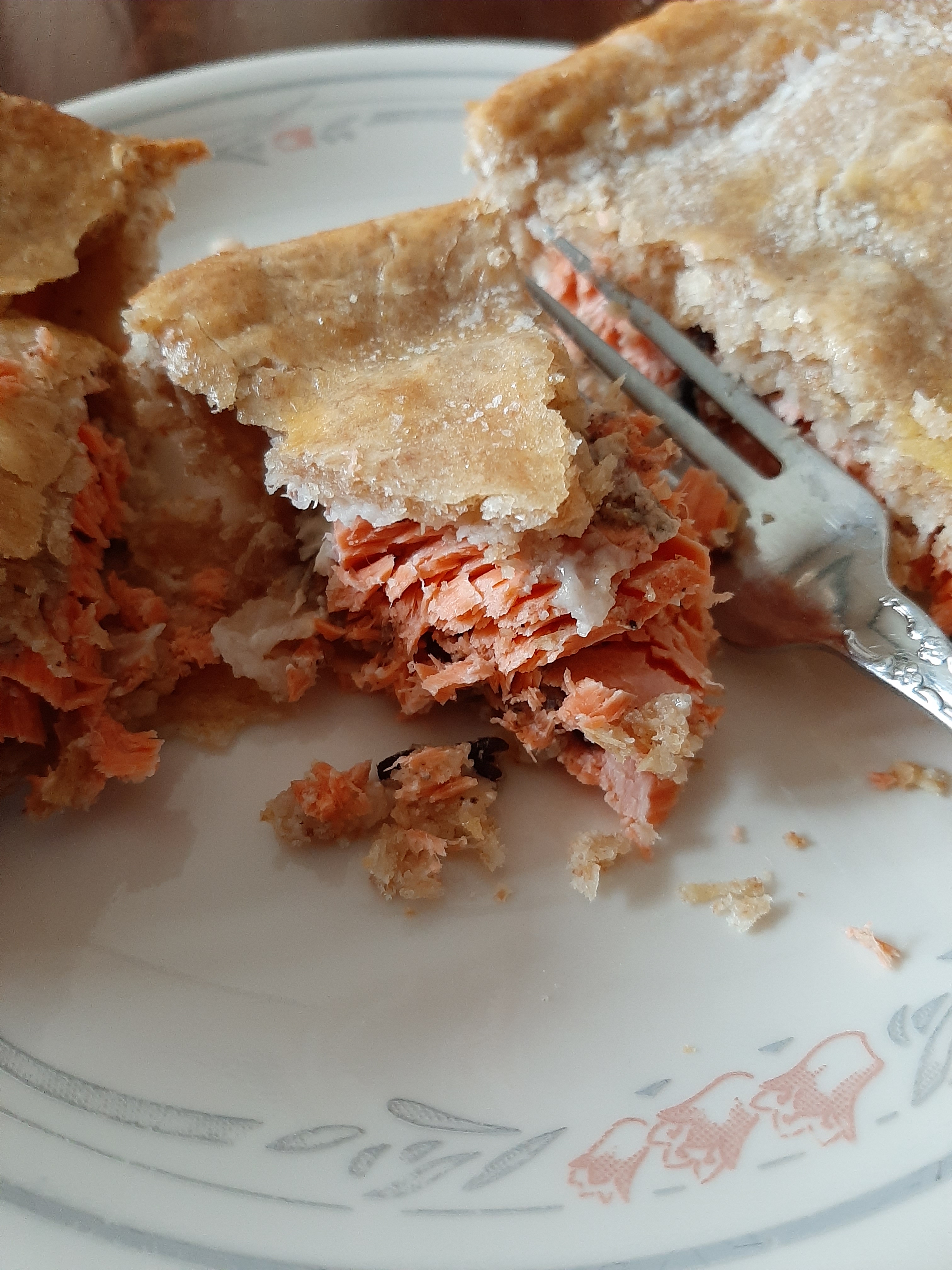
Of course, all this abundance meant that for many people throughout history, salmon was an important, even crucial, part of their diets. Though British colonists in America  didn’t rely on salmon to the extent other cultures had, colonial and early Americans enjoyed their share of salmon, as evidenced by the recipes that can be found. Because they didn’t have refrigeration available, cooks had to find ways to prepare the fish that would prevent spoilage. In last month’s blog I talked about pickling fish. This month’s recipe bakes the salmon in a pie, with a thick crust and clarified butter to keep it from spoiling. The result may not give you all the knowledge of the world, but it is delicious!

Colonial American recipe:

Paste for a Pasty

Lay down a peck of flour, work it up with six pounds of butter and fours, with cold water (Townshend, 165).
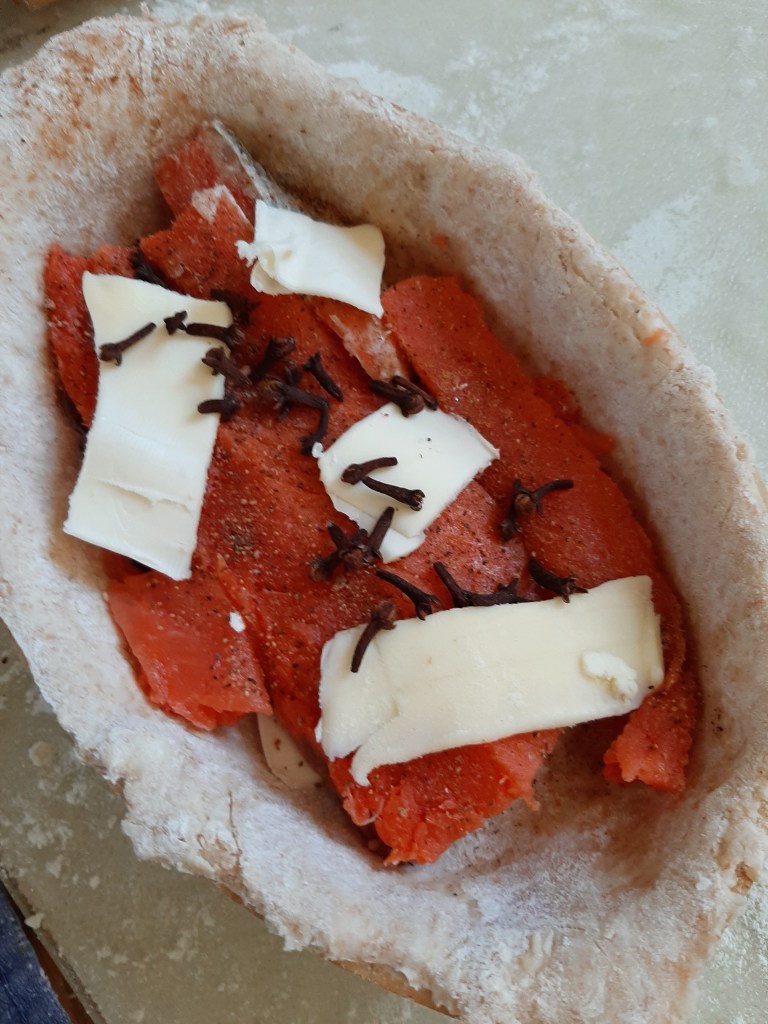
Filling the pie

A Salmon Pye

Take a fresh salmon, …season it with salt, pepper, and nutmeg; butter the bottom of the pye, lay in some whole cloves, and some of the seasoning; then lay in the salmon, lay some whole cloves upon it, and nutmeg sliced, and also pieces of butter; then close it up, and baste it over with eggs or saffron-water, and bake it; when it is baked fill it up with clarified butter. Let your pye be made in the form of your fish. This pye is to be eat cold, and will keep some time. (Townshend, 180)

My recipe for modern cooks

The first step in modernizing this recipe is to reduce the quantity of pie crust to be made since a peck of flour is about 14 pounds, far too much for a family meal.  Also, I made it as stated, with whole cloves, but I’d recommend substituting ground cloves. It can be a bit difficult to eat around the whole cloves. This paste or crust is meant to be thick enough to help preserve the pie.

  • CRUST
    • 3 c. flour
    • 1/2 c. butter
    • 1 egg (divided
    • 1/2 c. cold water
  • FILLING
    • Salmon (about 1-1 ½ pounds)
    • Salt, pepper, nutmeg and cloves to taste
    • 1/4 c. clarified butter
    • 1/4 c. butter, sliced thin

Cut ½ c. butter into the flour. Beat the egg separately. Add 1 T. of the beaten egg to the flour mix, along with the water. (Use the remaining egg for the egg wash.) Gently mix and gather into a large ball. Add additional water if needed to hold the dough together.

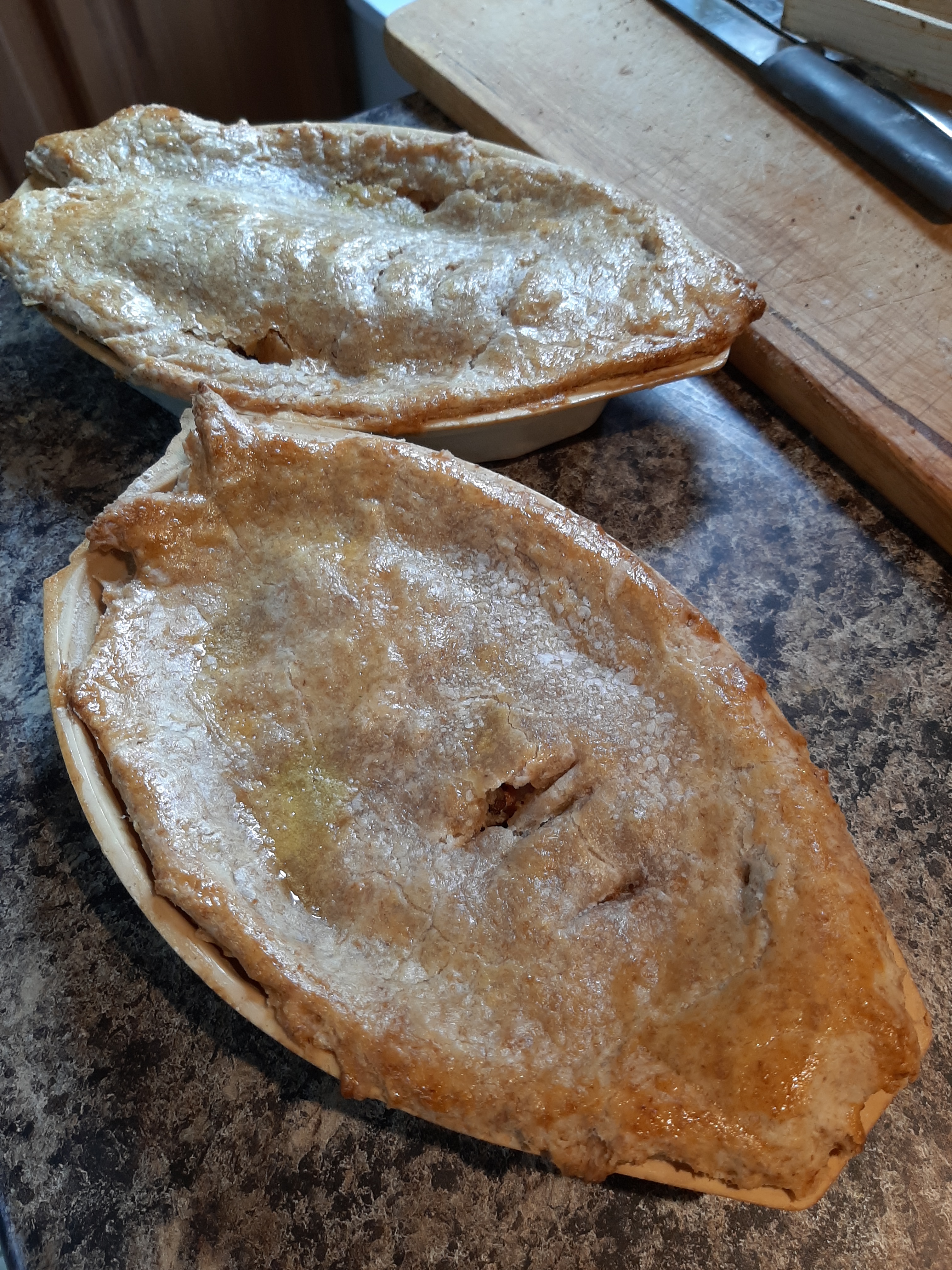
Roll out half of the dough for the bottom crust  (Use ¼ of the dough if you plan to make two smaller pies.) Line the bottom and sides of a pie pan or mold with the rolled out crust. Sprinkle the salmon and the bottom of the pie with salt, pepper, nutmeg, and cloves. Put some of the sliced butter in the pie, then lay the salmon on top. Put the remaining sliced butter on top of the salmon. Brush the top edges of the crust with water. Then roll out the remaining dough and cover the pie. Pinch the edges to help seal it. Cut slits in the cover to vent. Brush with beaten egg. Bake at 375 for about 30 minutes. Lift a corner of the top crust and pour in ½ c. clarified butter.  Serve cold. (Note: This recipe made enough crust for two fish-shaped pannikins of pie, plus enough extra crust for four small tarts.)
Sources: 

Townshend, John. The Universal Cook or Lady’s Complete Assistant. S. Bladon: London, 1773 (facsimile).
Friday Fish Day

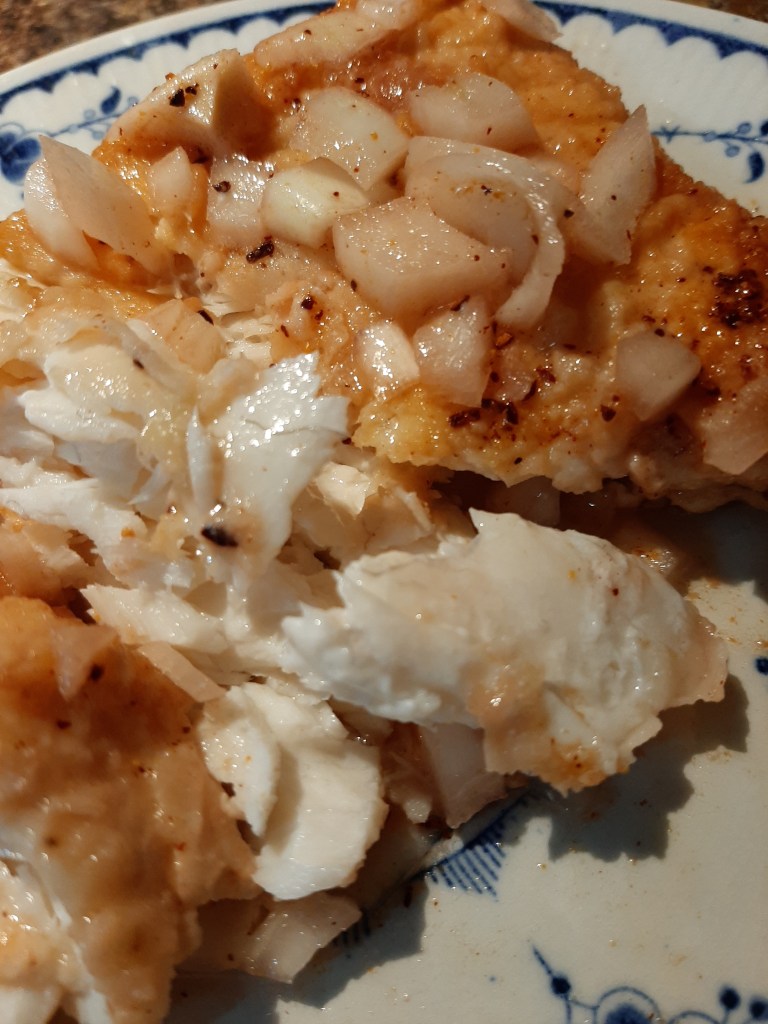
A Fish Caveach

In my mind, Friday has always been the day to enjoy eating fish. I suppose that growing up Catholic has a lot to do with that feeling, although sometime before my teen years, the Catholic church changed fasting on all Fridays to only fasting on Fridays in Lent. Of course, ‘fasting’ actually meant not eating red meat. 

The religious symbolism of a fish actually predates Christianity. Many Pre-Christian groups in Europe, Africa, and Asia variously associated the fish with female sexuality, the womb, resurrection, and life. In Egypt, the goddess Isis came to be seen as the Great Fish of the Abyss. In some places, the  fish  was seen as the Great Mother. The Greek word delphys, meaning womb, became dolphin, or ‘fish with a womb’. Pisces is one of the oldest signs of the Zodiac, and may represent the rescue of Aphrodite and her son Cupid by a fish. The Scandinavian Goddess, Freya, whose name gives us Friday, is also associated with fish. All these stories show just how widespread the fish symbol actually was.

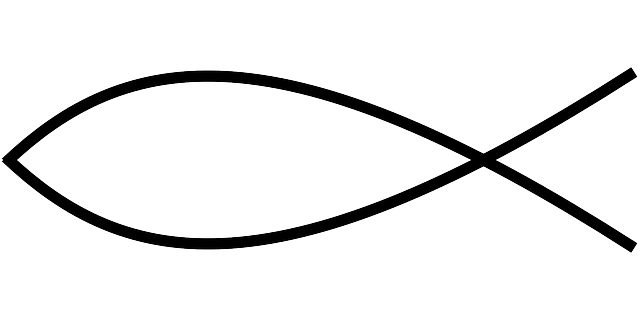
Traditional Fish Symbol

Early Christians adopted the fish symbol, made of two overlapping crescent moons (which in ancient times may have represented a woman’s cycle). Gradually the sexual overtones of the symbol were lost, and the fish came to represent Christ, the son of god. (The Greek word, Icthys, was seen as an acronym, with the Greek letters standing for Jesus Crhist, Son of God, Savior.) Early Christians also used the fish symbol as a sort of secret sign of where they might meet during the times when Christians were persecuted. It has been said that if a Christian met another person, he might draw one half of the symbol. If the stranger drew the second half, they could trust each other as true believers. 

I was surprised to learn that the Catholic church’s rule of fish Fridays actually had political and economic origins in conjunction with the religious stricture. As the Christian calendar filled up with fast days, the fishing industry grew. Then Henry VIII broke with the Catholic church over his divorce of Catherine of Aragon and marriage to Anne Boleyn. He established the Church of England, and put himself as the head of it. Eating fish on fast days was seen as ‘popish’ or following the now disdained Pope, head of the Catholic Church. It was no longer popular or politically correct to eat fish, and the fishing industry suffered.

Then Henry’s son, Edward, became king in 1547. He reestablished the eating of fish on certain days as law, to benefit the nation and the fishing industry. The practice of eating fish on Fridays became so ingrained in Western culture that even in the twentieth century, school lunches offered a fish or meatless option on Fridays. Even today, community fish fries are always on Fridays.

Whether you eat fish on Friday (or any other day) for religious, political, or economic reasons or simply because fish is good for you, there are numerous recipes for preparing fish throughout the ages. 

The following recipe is from Colonial America. All the original thirteen colonies had coastlines. Therefore, the fish industry and consumption of fish was a strong tradition throughout, though not often associated with Fridays.

To Caveach Fish

Cut the fish in pieces the thickness of your hand, wash it and dry it in a cloth, sprinkle on some pepper and salt, dredge it with flour, and fry it a nice brown: when it gets cold, put it in a pot with a little chopped onions between the layers, take as much vinegar and water as will cover it, mix it with some oil, and stop the pot closely.This is a very convenient article, as it makes an excellent and ready addition to a dinner or supper. (Randolph, 64)

Note: Caveach comes from the Spanish escabeche, which means pickled fish. Caveach, unlike the possibly related ceviche, cooks the fish before pickling, whereas ceviche is raw fish  marinated in lemon or lime juice. 

Modern Recipe:

  • Approximately 2 lbs fish, cut in 2-4 inch chunks (I used haddock. The colonial recipe does not specify what kind of fish.)
  • 1/2c. Flour, seasoned to taste with salt and pepper.
  • Oil or butter for frying

Marinade:

  • 2 c. vinegar
  • 1 t. Cinnamon
  • 2 T. long black pepper (peppercorns may be substituted)
  • 1 t. Ground mace
  • 1 onion, chopped
  • Enough water to cover the fish

Dredge the fish in flour and fry just until done. Mix the vinegar, cinnamon, pepper and mace. Put the fish, layered with the onions in a sealable container. Cover with the marinade, adding up to one cup of water. If more water is needed to cover the fish, add half water and half vinegar. The more vinegar to water you have, the stronger the pickle.

Chill for at least 4 hours. The taste improves if the fish is left in the pickle left overnight, or up to several days. Serve cold or warm. (Don’t heat the pickled fish in a microwave, since that will make it tough. The best way to reheat it is to fry it gently, covered, with some of the pickle to keep it moist.

The Orphan Collector–a review

A novel of love and resilience in the face of tribulation and despair

Fear and grief, two of the most powerful emotions we face, can lead desperate people to despicable acts.  Set during the 1918 Flu Epidemic in Philadelphia, The Orphan Collector by Ellen Marie Wiseman gives readers a glimpse of this overwhelming desperation. The story follows Pia Lange, the child of German immigrants, and Bernice Groves, a bereft mother and widow. In the opening scene, Pia, her mother, and her baby brothers attend the Liberty Loan Parade, a gathering of some 200,000 shortly before the end of World War I. Pia and her family feel compelled to show their patriotism because of the prejudice they have faced as German immigrants. But as she endures the crowded streets, Pia feels something very wrong. Although she doesn’t know it, the gathering served to spread the Spanish Flu (as it was then called) throughout the city. Within a week, 4,500 people had died from this influenza, and 47,000 were sick. By the end of the month, some 12,000 people had died, among them Pia’s mother and Bernice’s baby son. Thirteen year old Pia is left to care for her twin baby brothers. When she inevitably runs out of food, she makes the difficult choice to leave the relative safety of their small apartment to find something for the boys to eat. But the babies are toddling now, and she is afraid they will hurt themselves in her absence. So she waits until they are napping and locks them in a cupboard. She expects to be right back.

Meanwhile, Bernice, suffering from overwhelming grief at the loss of her own baby, sees Pia, a hated immigrant, leave, and hears the babies crying. She takes them and pretends they are her own.

Thus begins the intertwined lives of Pia, desperate to find her brothers, and Bernice, equally desperate to replace her lost child. The contrast between the two is remarkable. Pia is imprisoned in an orphanage, and suffers hunger, neglect, and beatings. Through it all, she maintains her courage and her sense of right. She always helps other unfortunate orphans whenever she can. Bernice, on the other hand, lets her prejudice and grief reshape her into a woman who will do anything, even steal and sell babies, to keep her secret safe.

In this emotionally fraught novel, readers learn of the devastation caused by the Influenza Pandemic, and of the inadequate and abusive institutions charged with caring for the overwhelming number of orphans left behind. Readers will also see the enduring power of love and the healing capacity of kindness.

I give this book a 5 star rating, for the powerfully drawn characters, the skillfully woven plot, and the fascinating historic details. There are many lessons to be learned from this gripping novel of dark times and human cruelty. In spite of the sobering truths this book reveals, chief among those lessons is one of hope. In all the trials and tribulations one may face, resilience and fortitude matter. Love can overcome fear, and kindness can ameliorate grief. These are lessons the world today would do well to remember.

Remember the Alamo!

Examining the Legend

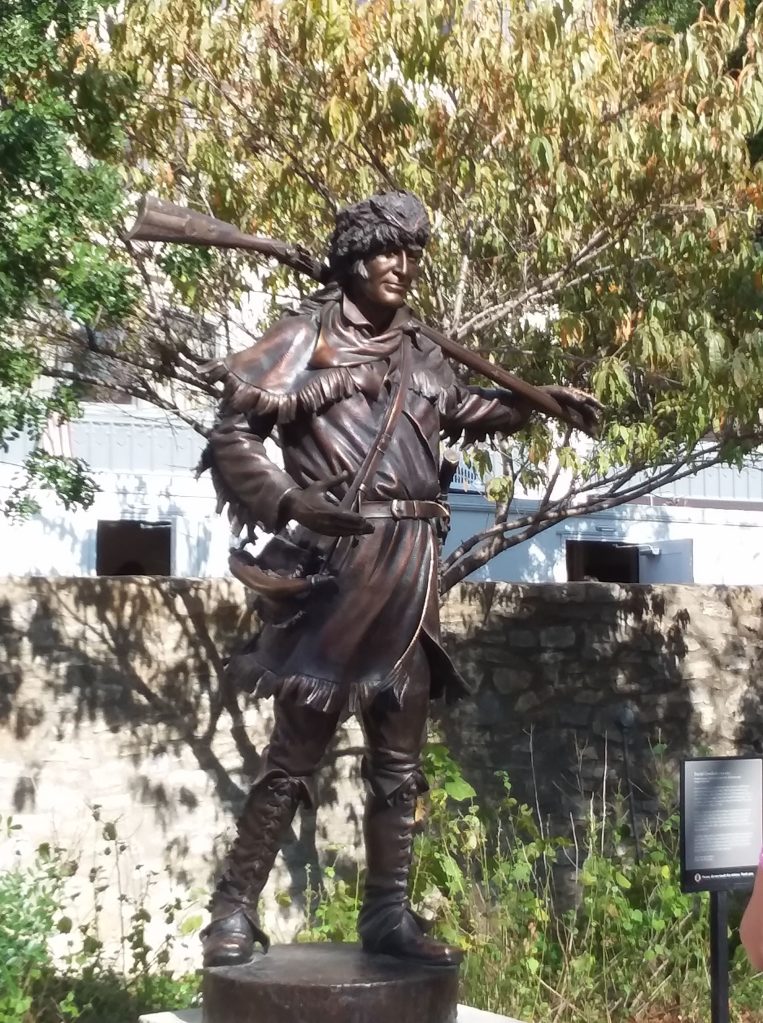
Davy Crockett at the Alamo

As a child I idolized Davy Crockett and Daniel Boone, especially as portrayed by Fess Parker on television and transformed into legend by American Frontier lore and tall tales.

In my mind, they lived at the same time (the ‘old days’) Both wore coonskin caps, alternately fought and befriended Indians, and lived on the wild frontier (which I thought was somewhere vaguely west).  In reality, Boone (1734-1820) was born almost fifty years before Crocket (1786-1836) and died sixteen years earlier. Both were politicians as well as frontiersmen. Daniel Boone fought in the Revolutionary War, and lived to tell the tales. Davy Crockett fought in the Texas War for Independence, and died at the Alamo.

Back then, Crockett’s death always struck me as particularly tragic– a young adventurer struck down in his prime. I read of his exploits as a legendary hero, killed fighting for liberty. It was romantic (in the Byronic sense). And because of my interest (obsession?) with Davy Crockett, I became fascinated by the stories of the Alamo, the site of the most famous battle for Texan independence. I read of the heroic stand made by a handful of American heroes who all died protecting Texas from the cruel Mexican army invaders. Like Crocket’s own larger-than life tale, the stories I heard of the Alamo stretch the truth into more legend than fact.

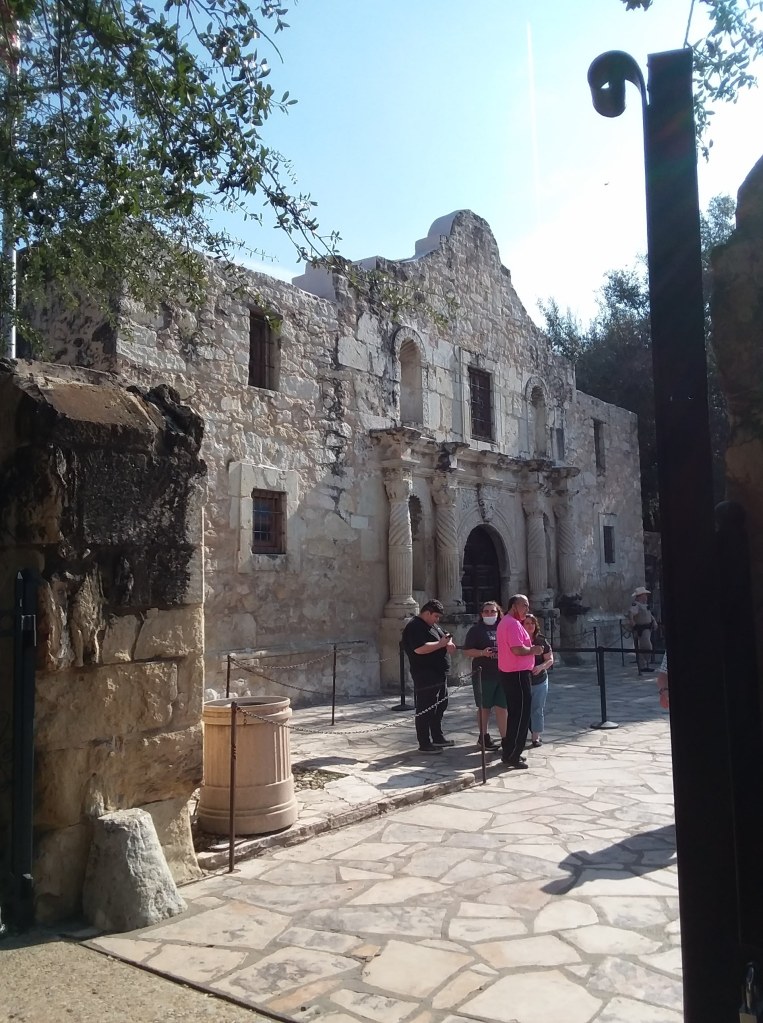
The Alamo

I had an opportunity in December to visit the Alamo in San Antonio, Texas.  On a warm sunny day, I stood in line with a couple hundred people for a timed entrance ticket. The place was crowded, in spite of Covid-19 restrictions limiting access. As I wandered through the well-laid out exhibit hall, the shaded gardens, and the white, limestone church, I learned more of the true history of the place.

What is now known as the Alamo was built in 1744-1758, as a Spanish mission (Mision San Antonio de Valero) with the purpose of ‘educating’ (converting) the Indians. Much of the building collapsed before it was finished.Still, it was used as a mission and church until 1793, when it was abandoned. In 1803, ten years later, the compound became a fortress which came to be known as the Alamo, meaning ‘cottonwood’ in Spanish. This fairly small, fairly obscure, place gained its fame from the battle fought there in 1836.

The early 1800’s were a time of great upheaval for Mexico, which included Texas at that time. Mexico’s war to separate from Spain lasted for years, with Spain only recognizing Mexico’s independence in 1836. Because of the riches in Mexico (ie silver), the opportunities for trade and good lands, many Anglo-Americans moved out of the United States and into Texas during this period.

Susanna Dickinson and daughter Angelina survived the Battle of the Alamo

Mexico’s government grew less and less tolerant of these Anglo immigrants (called Texians). Texians, in turn, chafed under Mexican rule. One among many grievances was that Mexico had abolished slavery in 1830. The Texians did not want to give up their ‘property’. Throughout 1835, the Texians, along with many volunteers from the United States, and some ‘Tejanos’ (Mexican citizens of Texas), defeated several small Mexican garrisons in Texas. But the resulting government was disorganized and ineffective. General Santa Ana vowed to defeat these rebels once and for all. With a huge army, Santa Ana met the Texian contingent at the Alamo and defeated them, killing nearly all of the Alamo defenders. (The women, children, some Mexican citizens, and slaves were released. Survivors who surrendered were executed.)

This battle served to rally the Texian Army, and they went on to soundly defeat Santa Ana. The winners declared the land was now independent, the Republic of Texas. However, Mexico, enraged at what they saw as U.S. interference in their land, refused to recognize the Republic of Texas.  The U.S. annexation of Texas as the 28th state in 1845 led to the Mexican-America War.

In spite of the legends proclaiming their heroism, the defenders of the Alamo could be considered an immigrant take-over of Mexican land, not the heroic last stand of a people fighting invaders. History is often the stories told by the winners. In this case, although the Texians lost at the Alamo, they later won the war, giving them the power to reshape the telling to their advantage. The story of the Alamo should probably be taken as a cautionary tale: legends can lie.

The Lure of the Light

A few lighthouses along Michigan’s shore

I am a pharophilo. For as long as I can remember, lighthouses have fascinated me. I’m not sure why. Maybe it’s the romanticized drama of a secluded tower shining a light to aid travelers. Maybe it’s the association with wild storms and crashing seas. Maybe it’s the thrill of climbing round and round to the top and stepping out on the balcony to feel the wind. Whatever the reason, I make it a point to visit lighthouses whenever I have a chance. The summer of 2021, I spent a week with my siblings in Manistee, Michigan. With shoreline on four of the five Great Lakes (Superior, Michigan, Huron, and Erie), Michigan has at least 120 lighthouses, more than any other state. During my stay in Manistee, I managed to visit five of them.

Manistee North Pierhead Lighthouse

The north pierhead light in Manistee is cast iron, built in 1927. Shown here is the catwalk used to access the light in rough weather. It is one of only four such catwalks still existing in Michigan.

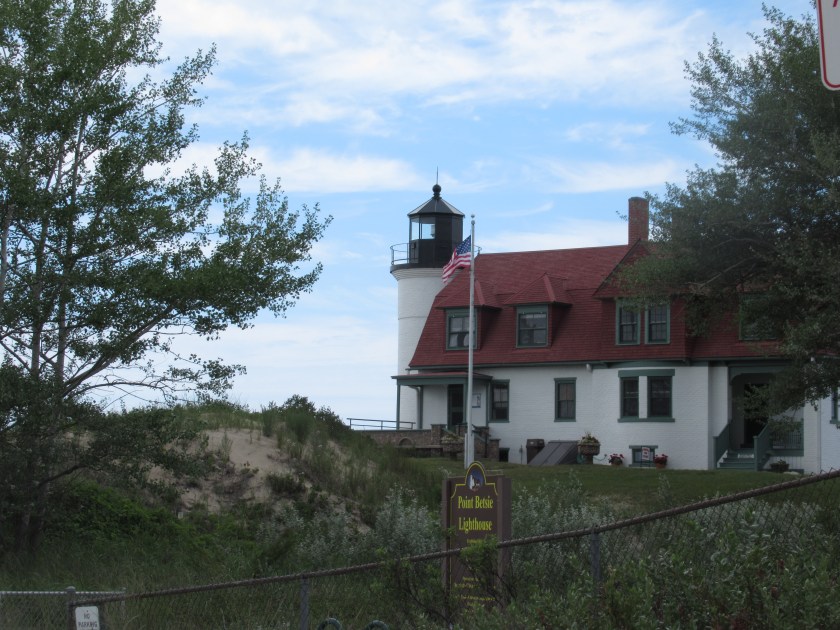
Point Betsie Light

Point Betsie’s Lighthouse and keeper’s residence were built in 1858. The name comes from the French translation of the native name of a nearby river. In French, the name was Pointe Aux Becs Scies (meaning Sawbill Point). Later speakers modified the ‘Becs Scies’ to Betsie. Originally, the tower was a cream-colored brick, but it was painted white in 1900 to help make it visible by day.

Big Sable Point

Petite pointe au sable

Petite Pointe au Sable (or Little Sable) Lighthouse was built in 1874 amid the towering sand dunes of the area south of Luddington. Like the Big Sable tower north of Luddington, this tower is also over 100 feet tall. It still has its original third order Fresnel lens.

Luddington North Breakwater Light

The Luddington North Breakwater light, built in 1924, features an unusual design of steel and reinforced concrete. It is 57 feet tall. The light can be accessed by a half-mile walk along the concrete pier. It was fully automated in 1972.

The Sweetness at the Bottom of the Pie: a review of Alan Bradley’s book

I have a soft spot for precocious children, both in real life and in books. With their unconventional interests and peculiar perspectives, they often delight and amaze me. 

Eleven-year-old Flavia de Luce is no exception, the protagonist of The Sweetness at the Bottom of the Pie, by Alan Bradley. A self-proclaimed chemist, with a particular interest in poisons, Flavia’s insatiable curiosity inevitably gets her into some serious scrapes. Her intelligence, quickwittedness and daring usually get her out again.

This cozy murder-mystery iis set in an iconic British village in 1950, after World War II. The historical setting provides a backdrop for Flavia’s adventures, and back-story for the characters, but in this historical fiction, it is the characters who really stand out. Flavia lives with her widowed father and two older sisters. Her father is still lost in mourning for his wife,who died in a mountain climbing accident when Flavia was only a year old. To say Flavia does not get on with her older sisters is putting it mildly. The rivalry is constant and entertaining. Daphne (Daffy) is obsessed with books, and Ophelia (Feely) is obsessed with looks (and boys), both passions that Flavia finds boring and insipid. When they tie her up and lock her in the closet, she plans a revenge using poison to cause a rash. 

There is also a housekeeper/cook who comes in the daytime. She is a pleasant lady given to some cockamamie and superstitious notions, but she has her own duties and little time for or understanding of Flavia. The only other member of the household is Dogger, the valet/gardener, who understands and even sympathizes with Flavia, but suffers from debilitating shell-shock. Thus Flavia has a great deal of freedom to do as she pleases.

In a cast full of well-developed, thoroughly envisioned, characters, Flavia stands out as a remarkable individual. While the other members of her family pursue their own eccentric passions, Flavia discovers the chemistry lab of one of her ancestors. Ensconced in this remarkably complete laboratory, she delights in conducting bizarre experiments (most of which work) with some rather surprising and illuminating results. But Flavia is not limited to her lab. With her trusty bicycle, Gladys, Flavia manages to show up all over the county, asking questions and interpreting the answers. An accomplished liar herself, Flavia can usually tell when the answers she gets are more fabrication than truth. 

In the end, Flavia really just wants to be recognized for her skill; or even just acknowledged as a valuable person; as someone to be taken seriously; as someone who matters. However,  she knows full well that no one pays close attention to the knowledge of children and that asking too many questions of the wrong people will get her freedom curtailed. So in spite of the limitations an eleven-year-old child faces in investigating a crime, Flavia blithely carries on. Using her knowledge of chemistry, the results of her experiments, her persistence in chasing after clues and scraps of knowledge, she manages to stump the grown-ups and come to the right answers, though surviving to tell the tale is more challenging.

This introduction to young Flavia is bound to leave the reader wanting more. Not to worry: there are 10 more books in the series, giving everyone ample opportunity to get to know her even better.

Books in order:

1.The Sweetness at the Bottom of the Pie (2009)
2, The Weed That Strings the Hangman’s Bag (2010)
3. A Red Herring Without Mustard (2011)
4. I Am Half-Sick of Shadows (2011)
5. Speaking from Among the Bones (2012)
6. The Dead in Their Vaulted Arches (2014)
6.5 The Curious Case of the Copper Corpse (2014)
7. As Chimney Sweepers Come to Dust (2015)
8. Thrice the Brinded Cat Hath Mew’d (2016)
9. The Grave’s a Fine and Private Place (2017)
10. The Golden Tresses of the Dead(2019)

Getting to the Other Side: Menor’s Ferry

Teton National Park

Ready to Launch

Although many of us can swim, water is not the natural habitat for humans. But for people, like for the proverbial chicken faced with a road, the urge to cross is overwhelming. A restless bunch, we humans are forever trying to get to the other side, where the grass just might be greener.

Rivers pose a particular difficulty in the face of this insatiable desire to go on, travel forth, get to that other side (and often back again.) Instrumental for long distance transportation and as a source of water, rivers offer ideal places to settle. Soon, homes and work, food and safety can develop on opposite banks. Short of swimming, there are only a limited number of ways one can cross. If a place that is shallow and smooth bottomed can be found, the river might be forded, which means wading, riding, or driving a wagon across. Rougher rivers require a bridge or a ferry. Bridges take time, money, and skill to build. That means that from ancient times and in countless tales, the ferry is of utmost importance.

For instance, Charon of Greek mythology, ferries the dead across the River Styx. Urshanabi is the Mesopotamian equivalent, ferrying the dead across the River Huber.

Far more recent, and much less lethal, is Menor’s Ferry, built in 1894 to cross the Snake River in Jackson Hole, Wyoming. William (Bill) Menor took advantage of the Homestead Act of 1862 to ‘squat’ on 149 acres on the west side of the river. (He secured legal title in 1908.) Most settlers, including Bill Menor’s brother, Holiday Menor, settled on the east side of the river. The  Snake River had a few fords, but these became impassable whenever the water was high. Menor’s Ferry soon became the most reliable way to cross, allowing residents of Jackson Hole to hunt, forage, and cut lumber in the mountain foothills on the west side. A wagon and team cost fifty cents for the crossing, while a horse and rider cost half that. Menor didn’t charge pedestrians, as long as there was a wagon crossing. 

Menor’s Ferry is an ingenious design. The platform, large enough for a wagon and team, floats on two pontoons. The ferry is attached to a  cable overhead to prevent it being carried downstream by the strong current of the river. The ferry can be angled toward the opposite bank by means of the pilot wheel, which tightens the rope to point the pontoons in the right direction. The force of the current pushes against the pontoons, driving the ferry across the river, much like a sailboat angling the sails to take advantage of the pressure of the wind. Although Charon’s Ferry is usually depicted as being poled across the river, the type of ferry Menor built was known in ancient times and in many places.

The Snake River can be wild and erratic at times, but at other times the level of the untamed river dropped too low to operate the ferry. Menor rigged up a suspended platform from his cable system, and transported up to four passengers across in this makeshift cable car. In winter, Menor and his neighbors cooperated to build a temporary bridge for crossing. The bridge was taken down each spring.

Menor operated the ferry until 1918, when he sold it to Maude Noble. An astute business woman, she  immediately doubled the prices. By this time, cars were bringing more and more tourists into Jackson Hole. In another bid for increased revenue, she charged $1.00 for cars with Wyoming license plates, and $2.00 for out of state plates. Maude operated the ferry for almost 10 years, until 1927 when a steel truss bridge was built. Although the urge to get to cross never went away, Menor’s Ferry became obsolete with the completion of the bridge.

Bill Menor’s ferry and homestead are now a part of Grand Teton National Park, a tribute to the men and women who made it possible to get to the other side.

Two Puddings:

Diverse ways to enjoy apples

This fall my son’s mother-in-law gifted me with a bagful of apples, a tart, crisp variety ideal for eating fresh or cooking. Apples are an immensely versatile fruit with a myriad of recipes for enjoying them. While I never get tired of apple pie, apple crisp, apple pancakes, or even applesauce, this unexpected abundance of apples gave me the opportunity to try a couple of new recipes: apple puddings, from The American Frugal Housewife, from 1833. At this time, pudding does not always refer to the modern, creamy concoction we know in America, but refers to a variety of dishes both savory and sweet, not necessarily reserved for dessert. (See the link below for more about puddings).

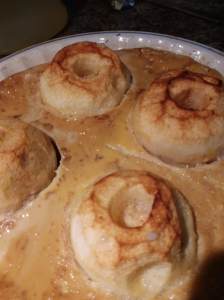
The first recipe I tried is a Bird’s Nest Pudding, which is also called Crow’s Nest Pudding. As with so many apple recipes, there are a great many variations of this popular 19th century dish. Laura Ingalls Wilder describes a dish of baked apples served with cream as ‘birds nest pudding’  in Farmer Boy published in 1933. The earliest recipe I have found so far is from 1833 (though I believe it was included in an earlier -1830- edition of the same book.) Mrs. Child seems confident that her readers will know what to expect from a bird’s nest pudding. Her recipe calls for cored and peeled apples to be baked in a custard. Depending on how sweet you make the custard, this pudding makes a lovely dessert or a delicious accompaniment to pork.

Mrs. Child’s recipe:If you wish to make what is called ‘bird’s nest pudding’ prepare your custard, — take eight or ten pleasant apples, pare them, and dig out the cores, but leave them whole, set them in a pudding dish, pour your custard over them, and bake them about thirty minutes.”(63)

Mrs. Child tells us that puddings good enough for common use need only five eggs for a quart of milk. She suggests sweetening the pudding with brown sugar and seasoning it with cinnamon, nutmeg, or peach leaves (62). In my version I opted for cinnamon.

Modern Recipe

Pare and core four apples. Put these in a 10 inch pie pan or 8 inch square pan. Mix 3 eggs with 2 cups of milk. Add ¼ cup of brown sugar (more if you want it sweeter) and2 teaspoons of ground cinnamon. Stir well. Pour the mixture over the apples. Bake at 350 for 30 minutes.  (Note baking time will vary depending on the variety of apples.)

The second pudding I made wasquie a bit more challenging, primarily because it is the first boiled pudding I’ve tried.

 Mrs. Child calls this “a plain, inexpensive pudding” (63.) Her recipe calls for apples tied up in a common crust and boiled, like dumplings. Her variations include quartering the apples into one crust or wrapping a single cored and peeled apple in a crust and tying each one up separately (63).  Her common crust calls for a quarter pound of butter for a half pound of flour, and she advises, “Always roll away from you. Pie crust should be made as cold as possible, and set in a cool place, but be careful it does not freeze. Do not use more flour than you can help in sprinkling and rolling. The paste should not be rolled out more than three times; if rolled too much it will not be flaky” (69). Using her method, I rubbed most of the butter into most of the flour, added water, then rolled it out. She tells us to dot the crust with butter, sprinkle with flour, and roll again, repeating until all the butter and flour is mixed in. I’ve never had much success with this method of making crust. The dough tends to crumble and is tough, not flaky.  However, since this crust is meant to be boiled, not baked, a thicker, tougher crust works. 

Modern Recipe

Set out ½ cup and 2 Cups os flour. Rub together  ⅔ cup of the butter into 1 ½ cups of the flour. Mix until crumbly. Add 5 T. water and gather into a ball. Roll out thick (½ “). Dot with half of the remaining butter and sprinkle with half of the remaining flour. Gather and roll out again. Repeat until all the butter and flour have been used. Roll out the dough to about ⅛ inch thick. Peel and core 4 apples. Cut the crust into squares large enough to wrap each of the apples. Tie each wrapped apple in a section of cheesecloth. Bring a large pot of water to boil. Drop the wrapped apples in the water. Boil about 30 minutes.

The resulting apple dumpling is best served warm. Modern diners may prefer sprinkling the dumpling with cinnamon sugar.

Source: Child, Lydia Marie. The American Frugal Housewife. Dedicated to those who are not ashamed of economy. 12th Edition. Boston: Carter, Hendee, and Co. 1833. (First published 1828)

Hear the School Bell Ring!

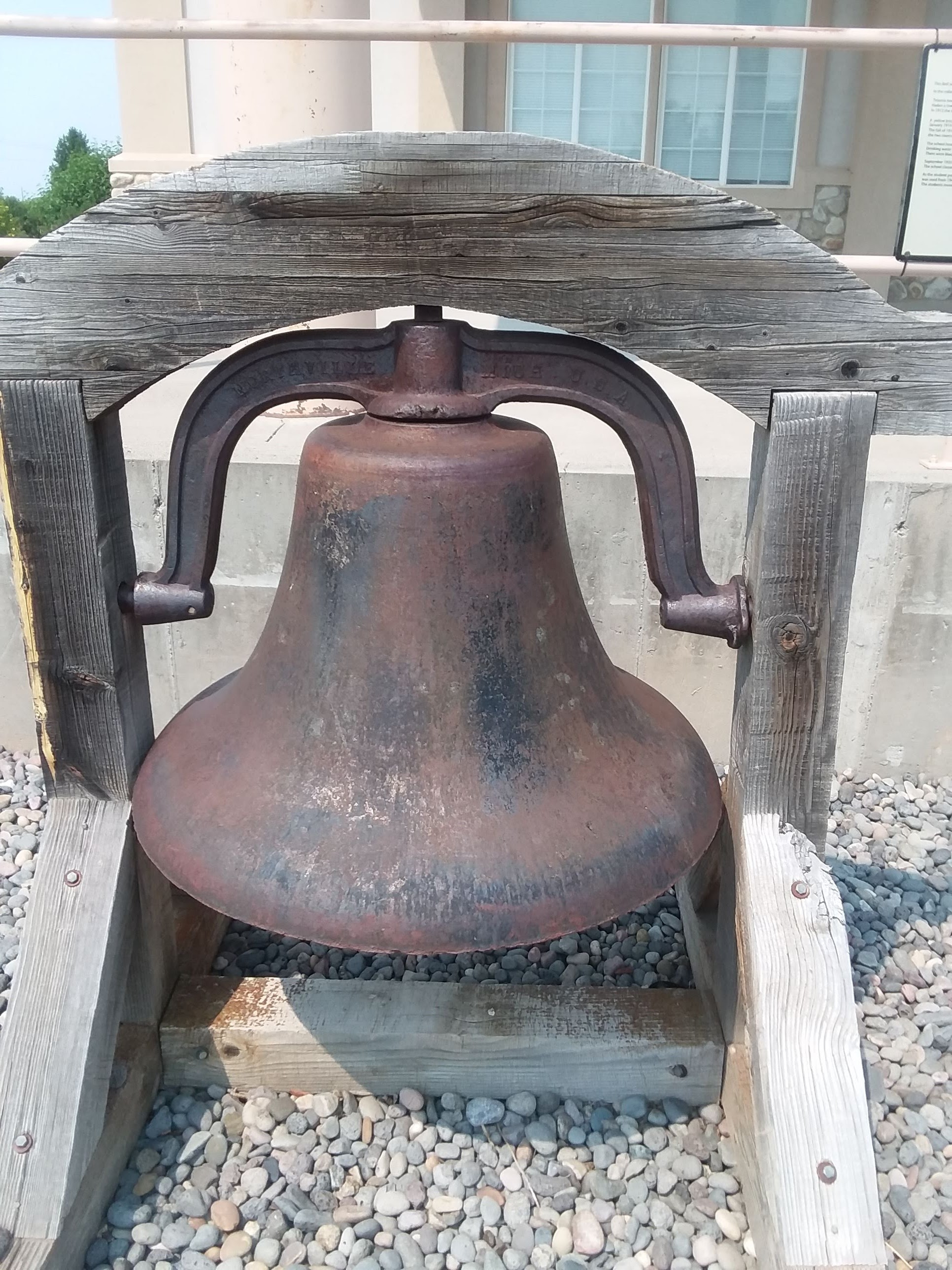
The Tetonia School Bell, currently housed at the Teton Valley Museum in Driggs, ID. The three room school house, operating from 1919 to 1953, was a consolidation of schools from Victor, Driggs, and Tetonia.

For almost my whole life, I think of the beginning of the year in September, not January. Not surprising, since from the time I was 5 years old, I’ve either been a student, a parent of young children, or a teacher, and so it seems natural to think in terms of the school year. Although many local schools start in August, September has always been the month I associate with the beginning of the academic year. But it hasn’t always been that way. In the late 1800’s, rural kids often only went to school for 5 months of the year. They had a short winter and a short summer session, and helped at home in spring and fall. In 1891 in Haden, ID, a school was required to be in session at least three months of the year. Urban students at this same time attended school much longer, in what was essentially year round school. However, event though the schools were open year round, attendance was not compulsory.  During the hot summer months, many students did not attend because any family that could afford to do so left the city. Without air-conditioning, the school buildings were sweltering. Toward the end of the nineteenth century, rural and urban schools worked to make schooling more uniform. To that end, the typical 9-10 month school year, with time off in the summer gradually became the norm. (States also began passing laws that made elementary education compulsory.) 

This year, 2021, the start of the school year is fraught with challenges. Covid-19 cases are on the rise again, and children under 12 are not yet eligible for a vaccine. School administrators are once again struggling with decisions about masks, social distancing, and virtual learning. I applaud all the teachers who survived the last year and a half, and are showing up again this year to face the challenges. As a former teacher, I can only imagine their struggles to work effectively in such a chaotic and ‘flexible’ environment.

Of course, teaching has never been an ‘easy’ job. It can be amusing to look at various ‘rules for teachers’ from the 19th century. (Although these ‘rules’ have not been verified as actually accurate or authentic.) One such ‘rule’ forbids teachers from loitering in ice cream shops. Another says women teachers could not ride in a carriage or motor car with any man except a father or brother. Whether or not these rules were really put in place, the challenges teachers have faced are very real. Consider trying to teach twenty or more people, ranging in age from five to twenty, all in one room.

The one-room school house was the norm in the decades before improved transportation made it possible for schools to consolidate. In the 1930’s, my mother attended a one room school house in Kansas. When she started, she was the only first grader in the school. With less work to do than the older kids, she had to go outside alone for longer recess breaks. Mom attended this one room schoolhouse through sixth grade, at which time she went to a consolidated school. This ‘big’ school had two rooms for first through eighth grades.

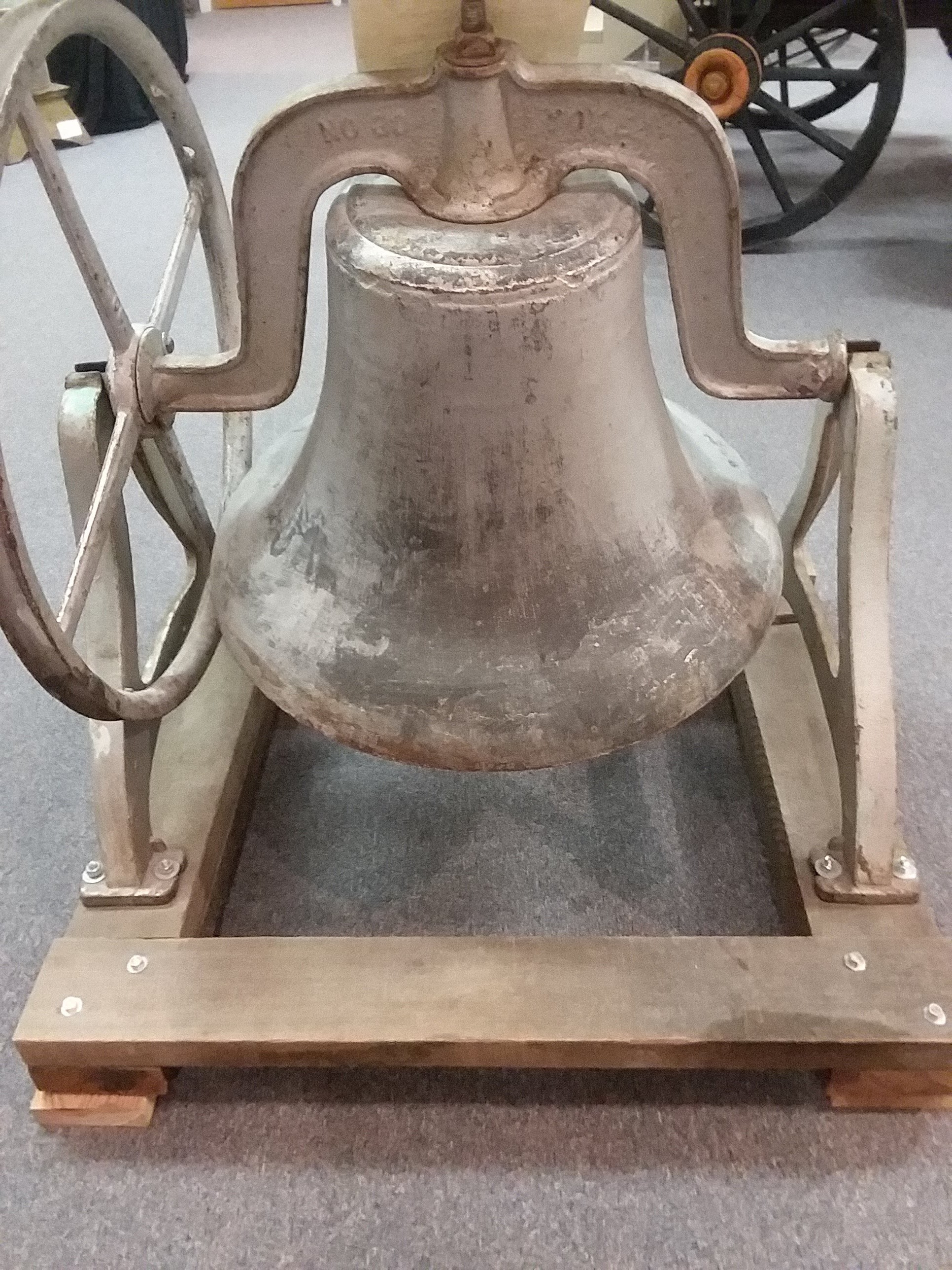
In September, the geese begin gathering to fly south, the leaves start to turn colors, and the school bells ring. (Although many school bells today are really buzzers that mark the beginning and end of each period.) For me, this is the beginning of a new year.

The Haden School Bell. The first permanent school in Haden, ID was opened Jan. 1892 and had 54 students by the spring of 1900. The town of Haden was formally dedicated three years later.

Ketchup: A Demonstration of International Exchange

Any American over the age of two has probably tasted ketchup and knows it as a bright red sauce used on just about anything from scrambled eggs to french fries. It might surprise you to know the convoluted, international journey ketchup has made to get where it is today.

Although linguists do not agree on the origin of the word, it seems most likely the sauce now known as ketchup* was originally a Chinese sauce, made from brined fish or shellfish. References to this concoction of fermented fish guts and soybeans date from as early as 300 BCE. (This Chinese /keo-cheup/ might have been similar to the common Roman fish sauce known as garum.) Because the salty paste kept well and was easily transported, it was spread by Chinese sailors and merchants along their regular trade routes to the Philippines and Indonesia. The British adopted the sauce by the early 18th century, but began replacing the fish with other ingredients. Common ketchup recipes from the 18th century often feature mushrooms or oysters, with mushrooms being most common. Various Southeast Asian spices, including mace, nutmeg, allspice, and cloves, were added to the mixture. When the British colonized North America, they brought this spicy mushroom condiment with them. 

Throughout the 18th century, the ketchup that was added to many sauces and other dishes was made of mushrooms and/or oysters. Early American cookbooks such as Hannah Glasse’s The Art of Cookery, has two recipes for ‘catchup’, both with mushrooms as the primary ingredient (216-217). John Townshend’s The Universal Cook, has a recipe for English ‘katchup’ that includes vinegar, spices, and anchovies, adding at the end of the recipe, “you may add to it the clear liquor that comes from mushrooms” (226).

So how did ketchup become the tomato-based condiment it is today? Tomatoes, of course, are a new world fruit (or vegetable, depending on your perspective.) Tomato plants were domesticated in South and Central America at least by 500 BCE. The Aztecs cultivated many different varieties of tomatoes. When the Spaniards invaded South America in the 16th century, they ‘discovered’ this tasty fruit and introduced it to Europe and Spanish colonies in the Caribbean and the Philippines. From there it spread to China (where it was called ‘barbarian eggplant’).

Spain took to eating tomatoes fairly quickly (recipes for cooking tomatoes can be found as early as the 1540’s). It was another hundred years or so before Italy followed Spain with tomatoes appearing in cookbooks in Naples by 1692. Other European countries were even more hesitant. Some thought the tomato was poisonous, perhaps because it is a member of the deadly nightshade family or perhaps because the acidity of the tomato leached lead from the pewter plates of the wealthy. Some thought the tomato was an aphrodisiac, calling them ‘love apples’. Whatever the reason, the rest of Europe and English settlers in North America were slow to accept the tomato as anything other than an ornamental plant. According to Walter Staib, in The City Tavern Cookbook, it wasn’t until Thomas Jefferson championed tomatoes that they became popular (114). Jefferson had discovered tomatoes in France, and began growing them at his home in Monticello, where he regularly served them to guests. Apparently he even ate a tomato in public to demonstrate once and for all that they were safe to eat (Staib, 114).

Once tomatoes were accepted as edible, they slowly made their way into recipes for ketchup. The earliest tomato catsup recipe I know of is from the 1824 edition of Mary Randolph’s The Virginia Housewife (cited in Martha Washington’s Book of Cookery, 174). In the 1844 edition of Mary Randolph’s book, she included recipes for tomato catsup, tomato Marmalade,tomato sweet marmalade, and tomato soy, all of which are fairly similar (162-163). In 1833, Mrs. Child declared in The American Frugal Housewife, “The best sort of catsup is made from tomatoes” (35).

Mrs. Child’s words resonated within the culinary community and by the 20th century, everyone assumed ketchup would be tomato based. Thus a Chinese concept meshes with a South American fruit, then melds with European mushroom sauces, and becomes the ubiquitous ketchup of North America. If that’s not international exchange, I don’t know what is.

Recipes for ketchup from the 19th century vary a great deal in the method of preparation and seasoning ingredients. Mrs. Child recommends salting the mashed tomatoes and letting them sit for 24 hours before putting the mash through a sieve and adding cloves, allspice, pepper, mace, garlic and mustardseed (35). Three of Mary Randophe’s recipes are simpler, requiring only an hour or so of stewing before adding the spices. She uses onion, mace, salt and pepper for catsup, but adds cloves and garlic for marmalade (162).

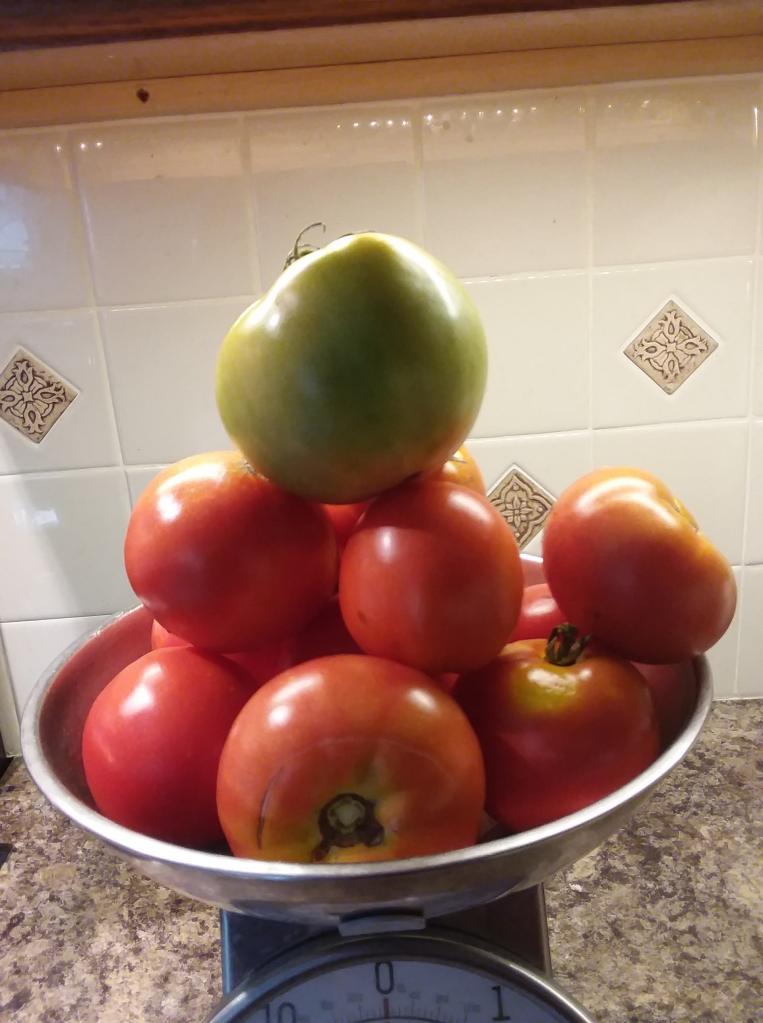
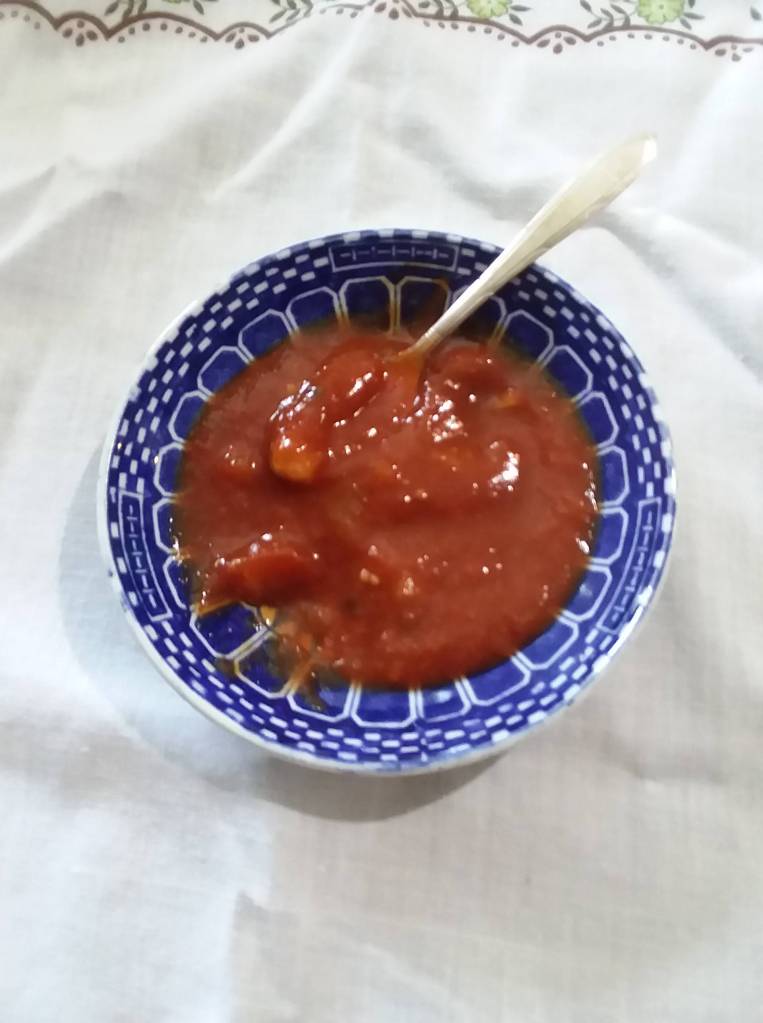
The recipe below reflects Mary’ Randolph’s methods, but adds the greater variety of spices recommended by Mrs. Child. According to the practical Mrs. Child, ketchup is best made in August, when it is not raining (35), and coincidentally, when tomatoes are fresh and abundant. This recipe makes a very spicy and salty condiment, an excellent accompaniment to burgers. The high quantity of salt recommended in period recipes may have been added as a preservative in an era without refrigeration. For a less pungent mixture, adjust the salt and mace as desired. The original recipe also called for a peck of tomatoes, which is about 13 pounds. My version only requires 3 ½ to 4 pounds of tomatoes and makes about 1 ¼ cups of ketchup.

19th Century Tomato Catsup for modern cooks

  • 3 ½ -4 lbs. Tomatoes
  • 1 T. salt
  • ¼ c. chopped onion
  • ¼ t. ground allspice
  • ¼ t. ground cloves
  • ¼ t. whole mustard seed
  • ¾ t. whole black pepper
  • ½ t. chopped garlic
  • ¼ t. ground Mace

Remove the stems from the tomatoes. Cut them into chunks and stew them with salt for about an hour. Mash and strain the mixture through a sieve to remove the skins and seeds.

Add the remaining ingredients and simmer for 20 to 30 minutes until thick.

Note:

*ketchup has been spelled in many different ways over the years. Variations include catchup, catsup, and katchup, among others. It wasn’t until the mid-1950’s that ketchup became the preferred spelling, in part because ‘ketchup’ was recognized as a vegetable for school lunches, while ‘catsup’ was not.

Sources:

  • —–. Martha Washington’s Booke of Cookery and Booke of Sweetmeats. (A Family Manuscript, Hand written circa 17th century. Transcribed and annotated by Karen Hess, New York: Columbia University Press, 1995).
  • Child, Lydia Marie. The American Frugal Housewife. Dedicated to those who are not ashamed of economy. 12th Edition. Boston: Carter, Hendee, and Co. 1833. (First published 1828)
  • Glasse, Hannah. The Art of Cookery Made Plain and Easy: Excelling any Thing of the Kind ever yet published. Alexandria: Cottom and Stewart. 1805. (First Edition publishing in London, 1747. This edition reprint of 1st American Edition, 1805, by Applewood Books, 1997).
  • Randolph, Mary. The Virginia Housewife Or, Methodical Cook. Philadelphia: E. H. Butler & Co., 1860. (Facsimile by Dover Publications, 1993, with introduction by Janice Bluestein Longone).
  • Staib, Walter. The City Tavern Cookbook: Recipes from the Birthplace of American Cuisine. Philadelphia: Running Press, 2009.
  • Townshend, John. The Universal Cook or Lady’s Complete Assistant. S. Bladon: LOndon, 1773 (facsimile).