
Salmon is probably the most celebrated fish worldwide. From the ‘divine fish’ of the Ainu in Japan to the stone carvings left by the Picts in Northern Scotland, salmon have represented many powerful qualities. In the Amur River region of China, salmon are thought to be the progenitor of humanity when a salmon transformed himself into a young man and married a young girl. Across the Pacific in Northwest North America, the salmon motif is found in the art and culture of many indigenous people, including the Haida and Kawkiutl, among others. In these stories the salmon symbolizes fertility, abundance, prosperity and/ or renewal. Some stories claim salmon are immortal people living beneath the sea. They put on the salmon disguise in the Spring to offer themselves as food for humans.
My favorite stories come from Irish legends. Here it is the salmon, not the more well-known owl, that symbolizes wisdom and knowledge. These stories feature Ireland’s greatest heroes: Cuchulain and Fionn mac Cumhail (Finn McCool). In the Irish epic, Táin Bó Cúailnge, one of Cuchulain’s major feats in the war against Queen Medb is called the mighty salmon leap. (In fact the word ‘salmon’ comes from Laitn ‘salire’ meaning ‘to leap’.)
Fionn’s story puts even greater emphasis on the fish’s power. It is said the salmon of knowledge swims in the Well of Wisdom (also known as the Well of Segais, and the source of the River Boyne). This salmon gained the knowledge of all the world by eating nine magical hazel huts from the nine trees surrounding the well. The great poet and teacher, Finegas spent seven years trying to catch this fish. When he finally succeeded, he had his apprentice, Fionn, roast it, warning the boy not to eat any of it. Fionn did as he was instructed, but in turning the fish over the fire, he burned his thumb. Without thinking, he popped his thumb into his mouth to ease the pain. When Finegas saw the light of wisdom in the boy’s eyes, he asked what happened. He realized Fionn had acquired the Salmon’s power and knowledge. So he gave Fionn the rest of the fish to eat. For the rest of his life, Fionn had only to suck on his thumb to know the future. This power and knowledge gave Fionn the ability to become the leader of the Fianna and a great hero.
It’s not really surprising that salmon take such an important place in the stories. Their dramatic life journey is amazing as young salmon, born in freshwater, swim out to the ocean, returning at the end of their life to their home river to spawn and die. They are one of the few creatures that live in both fresh and saltwater. In days past, before overfishing has put some wild salmon on the endangered species list, salmon filled the rivers. It has been said, with only slight exaggeration, that a person could walk across the river on the backs of the salmon during the run.
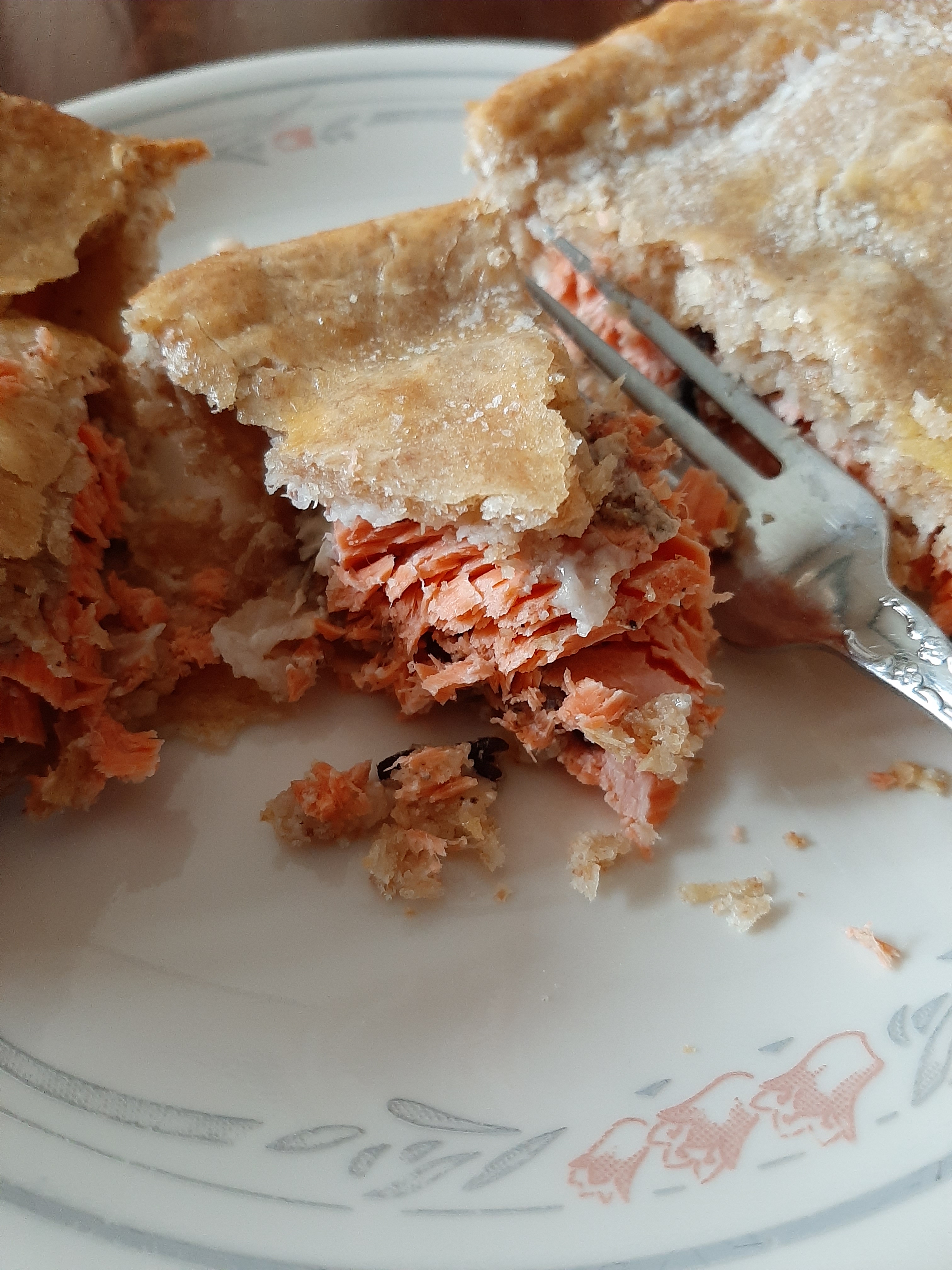
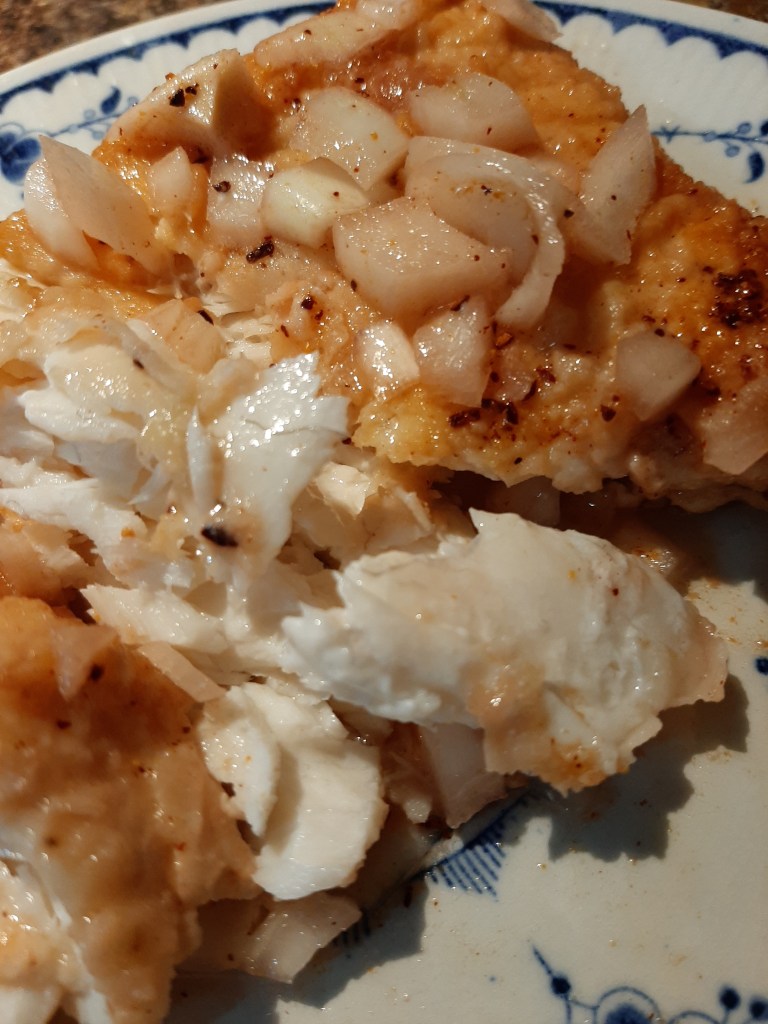
Of course, all this abundance meant that for many people throughout history, salmon was an important, even crucial, part of their diets. Though British colonists in America didn’t rely on salmon to the extent other cultures had, colonial and early Americans enjoyed their share of salmon, as evidenced by the recipes that can be found. Because they didn’t have refrigeration available, cooks had to find ways to prepare the fish that would prevent spoilage. In last month’s blog I talked about pickling fish. This month’s recipe bakes the salmon in a pie, with a thick crust and clarified butter to keep it from spoiling. The result may not give you all the knowledge of the world, but it is delicious!
Colonial American recipe:
Paste for a Pasty
Lay down a peck of flour, work it up with six pounds of butter and fours, with cold water (Townshend, 165).
A Salmon Pye
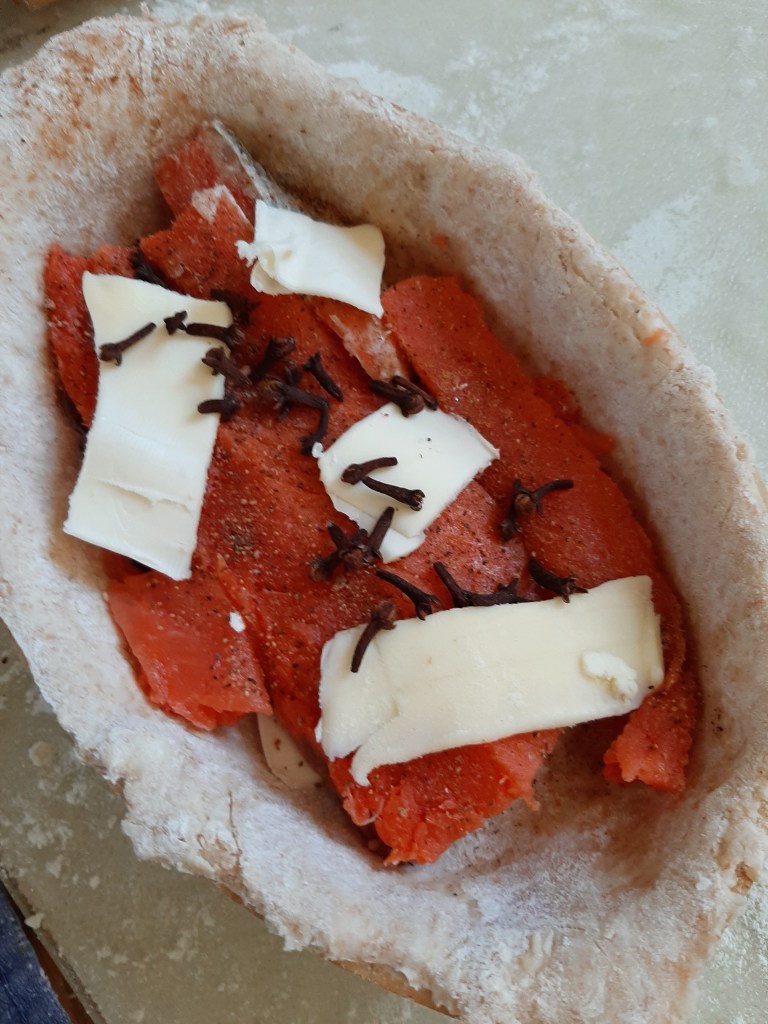
Take a fresh salmon, …season it with salt, pepper, and nutmeg; butter the bottom of the pye, lay in some whole cloves, and some of the seasoning; then lay in the salmon, lay some whole cloves upon it, and nutmeg sliced, and also pieces of butter; then close it up, and baste it over with eggs or saffron-water, and bake it; when it is baked fill it up with clarified butter. Let your pye be made in the form of your fish. This pye is to be eat cold, and will keep some time. (Townshend, 180)
My recipe for modern cooks
The first step in modernizing this recipe is to reduce the quantity of pie crust to be made since a peck of flour is about 14 pounds, far too much for a family meal. Also, I made it as stated, with whole cloves, but I’d recommend substituting ground cloves. It can be a bit difficult to eat around the whole cloves. This paste or crust is meant to be thick enough to help preserve the pie.
- CRUST
- 3 c. flour
- 1/2 c. butter
- 1 egg (divided
- 1/2 c. cold water
- FILLING
- Salmon (about 1-1 ½ pounds)
- Salt, pepper, nutmeg and cloves to taste
- 1/4 c. clarified butter
- 1/4 c. butter, sliced thin
Cut ½ c. butter into the flour. Beat the egg separately. Add 1 T. of the beaten egg to the flour mix, along with the water. (Use the remaining egg for the egg wash.) Gently mix and gather into a large ball. Add additional water if needed to hold the dough together.
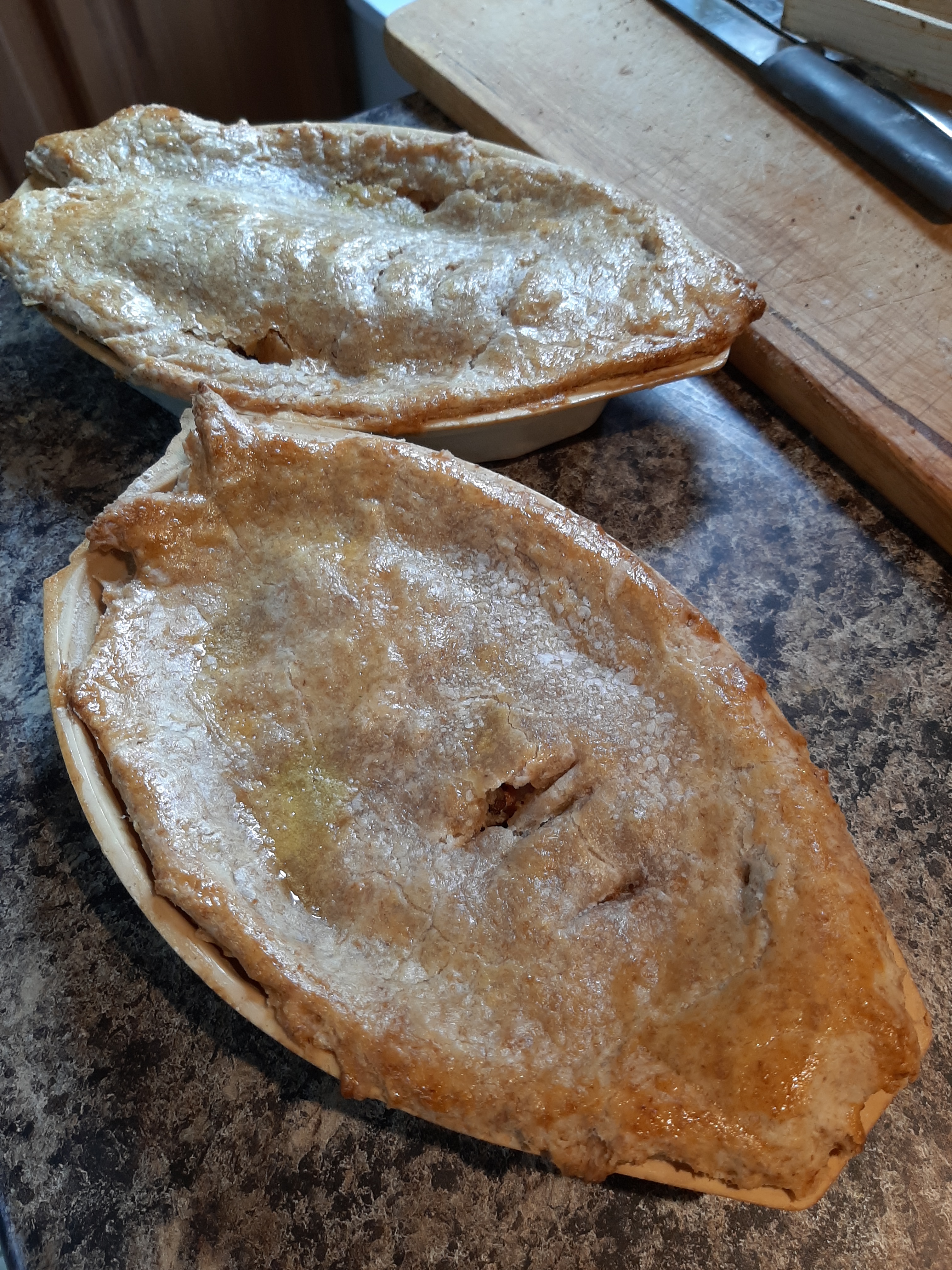
Roll out half of the dough for the bottom crust (Use ¼ of the dough if you plan to make two smaller pies.) Line the bottom and sides of a pie pan or mold with the rolled out crust. Sprinkle the salmon and the bottom of the pie with salt, pepper, nutmeg, and cloves. Put some of the sliced butter in the pie, then lay the salmon on top. Put the remaining sliced butter on top of the salmon. Brush the top edges of the crust with water. Then roll out the remaining dough and cover the pie. Pinch the edges to help seal it. Cut slits in the cover to vent. Brush with beaten egg. Bake at 375 for about 30 minutes. Lift a corner of the top crust and pour in ½ c. clarified butter. Serve cold. (Note: This recipe made enough crust for two fish-shaped pannikins of pie, plus enough extra crust for four small tarts.)
Sources:
Townshend, John. The Universal Cook or Lady’s Complete Assistant. S. Bladon: London, 1773 (facsimile).












 BRIC-A-BRAC