On Hedgehogs and Subtleties

Whether you call them hérisson (Fr.) or igel (German), sündiznó (Hungarian) ,or yrchouns (Middle English), hedgehogs are terribly cute. Of course, they haven’t always been regarded as such. Like guinea pigs and rabbits, this enchanting little creature has been considered a delicacy for the table. In fact, some evidence points to 8000 years ago, when roast hedgehog was served to the rich. In medieval times, the cook was advised to put a reluctant hedgehog in hot water to make it unroll so it could be properly cut open, cleaned and roasted.

That has changed. Perhaps it was because hedgehogs are so prickly, or perhaps it was that the medieval cooks loved subtleties (foods cooked to look like something else, serving also as table decorations). In any case, roasting actual hedgehogs became less popular among the elite, and hedgehog-themed foods took the animal’s place on the table.

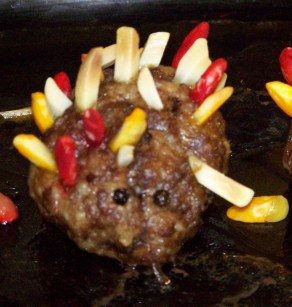
My first encounter with a hedgehog subtlety was years ago, cooking for a medieval feast in the Society for Creative Anachronisms.  The recipe, called hedgehogs or yrchouns was a sort of glorified meatloaf/meatball stuck all over with almonds.

The original recipe:  Yrchouns. Take Piggis mawys, and skalde hem wel; take groundyn Porke, and knede it with Spicerye, with pouder Gyngere, and Salt and Sugre; do it on the mawe, but fille it nowt to fulle; then sewe hem with a fayre threde, and putte hem in a Spete as men don piggys; take blaunchid Almaundys, and kerf hem long, smal, and scharpe, and frye hem in grece and sugre; take a litel prycke, and prykke the yrchons, An putte in the holes the Almaundys, every hole half, and eche fro other; ley hem then to the fyre; when they ben rostid, dore hem sum wyth Whete Flowre, and mylke of Almaundys, sum grene, sum blake with Blode, and lat hem nowt browne to moche, and serue forth                 (Harleian Manuscript 279, c. 1430)

This recipe seems to be a variation from the French cookbook, Le Viandier de Taillevent. In that recipe, no almond spikes are included. Rather the rounded, stuffed sausage looks like a hedgehog without spines.  (Yrchoun is an anglicization of the French hérisson.)
hedgehop crop

My version:

2 lb. ground meat 
2 t. Ginger
1 t. mace
1 t. Salt
½ c. breadcrumbs
1 egg
Slivered almonds, raisins, food coloring

Mix the first 6 ingredients  and 
form into oval shaped balls. 
Color some of the almonds red and 
yellow with food coloring.Stick the almonds into the balls to resemble spines. Add 2 raisins for eyes. 
Bake 350 degrees about 30 minutes. 

Notes: Other recipes for hedgehogs suggest other meats,(ie mutton) which is why I use a mixture of pork and beef. I add breadcrumbs and egg to hold the mixture together more like a meatball, though neither is suggested in the original. (The French recipe calls for soft cheese for binding.) Spicerye just means spices, so which spices are added is up to the cook. I use mace as fairly common medieval spice added to ginger in meats. I leave out the sugar since it really isn’t necessary. Raisin eyes are not documented as period correct, but the French recipe does include raisins in the mixture.

Having enjoyed medieval meatball hedgehogs for years,  was recently astounded to see a completely different sort of hedgehog recipe in colonial and early American cookery. In the 1805 version of The Art of Cookery Made Plain and Easy, by Hannah Glass, there is a recipe for an almond paste hedgehog (a dish which in my mind is neither plain nor easy if the ‘marzipan’ is done by hand.)

Take two pounds of blanched almonds, beat them well in a mortar, with a little canary and orange-flower water, to keep them from oiling. Make them into stiff paste, then beat in the yolks of twelve eggs, leave out five of the whites, put to it a pint of cream sweetened with sugar, put in a half pound of sweet butter melted, set it on a furnace or slow fire, and keep it constantly stirring, till it is stiff enough to be made in the form of a hedgehog, then stick it full of blanched almonds, slit and stuck up like the bristles of a hedgehog, then put it into a dish; take a pint of cream, and the yolks of four eggs beat up, sweetened with sugar to your palate. Stir them together over a slow fire till it is quite hot; then pour it round the hedgehog in a dish, and let it stand till it is cold, and serve it up. Or a rich calf’s-foot jelly made clear and good, poured into the dish round the hedgehog; when it is cold, it looks pretty, and makes a neat dish; or it looks pretty in the middle of a table for supper .     (Glass, 185)

For modern cooks, a half recipe should suffice and still allow you to serve an impressive, delicious and decorative dish to the table.I kept the full amount of custard since it is such a delicious addition to the hedgehog. My adaptation for modern cooks is as follows

hedgehogs in custard
‘Marzipan’ Base:
1 lb almonds
1/2 c. Sherry
1 T orange extract
¼ c. sugar (more if you like a sweeter confection)
3 whole eggs
3 egg  yolks
¼ lb butter
½  pint cream
Decorations:
Slivered almonds
Raisins 
Custard sauce:
1 pt. Cream
4 egg yolks
¼ c. brown sugar

Blanch the almonds (Put raw, whole almonds in boiling water. Boil for 2 minutes. Drain and cool.  Squeeze or rub the almonds to pop them 
out of their skins.) and crush them to paste, adding the sherry and 
orange extract gradually. Put the almond mixture and remaining base 
ingredients in a saucepan. Cook over medium heat until it is stiff 
enough to mold.
Make into small oval shapes resembling hedgehogs- approximately ½ c. mixture for each one.
Set each in a custard dish or plate with a lip. Add raisins for eyes, and slivered almonds for spines.

To make the custard,
Mix the cream, egg yolks, and brown sugar. Cook over medium heat, 
stirring constantly, until thickened. Do not boil.

Pour the warm custard into each dish with the hedgehogs. Serve warm 
or chill and serve cold.

Notes:

Hannah Glass’s recipe is obviously designed for a wealthy home, with a large kitchen staff. Pounding the almonds in a mortar is difficult and time consuming. Whole blanched almonds are as slippery as real hedgehogs, and are as likely to pop out of the mortar and go flying as they are to be crushed.  I found chopping them first made it much easier. But crushing them is still time consuming. The modern cook can use a food processor to get the same effect. I ended up with a sort of crunchy paste, similar to crunchy peanut butter, but drier and finer. More pounding or processing may have made a smoother paste, but I was running out of time. For a smoother dish, the modern cook could purchase marzipan paste.

It is possible to get or make orange flower water (distilled from orange petals) but I substituted orange extract.

Canary is a sweet wine from the Canary Islands. I used sherry as a reasonable alternative.

Not surprisingly, hedgehogs continue to inspire. Pinterest boards abound with ideas for hedgehog crafts, cards, and cakes.  In fact, I made a hedgehog cake for my daughter-in-law’s baby shower.

hedgehog-cake.jpg

Though thoroughly modern in taste and ingredients, this hedgehog unwittingly carries on the medieval tradition of the subtlety. Food for show? Absolutely. We’re not so far from those lords and ladies of old trying to impress their guests. And who doesn’t like hedgehogs?
On Pumpkins

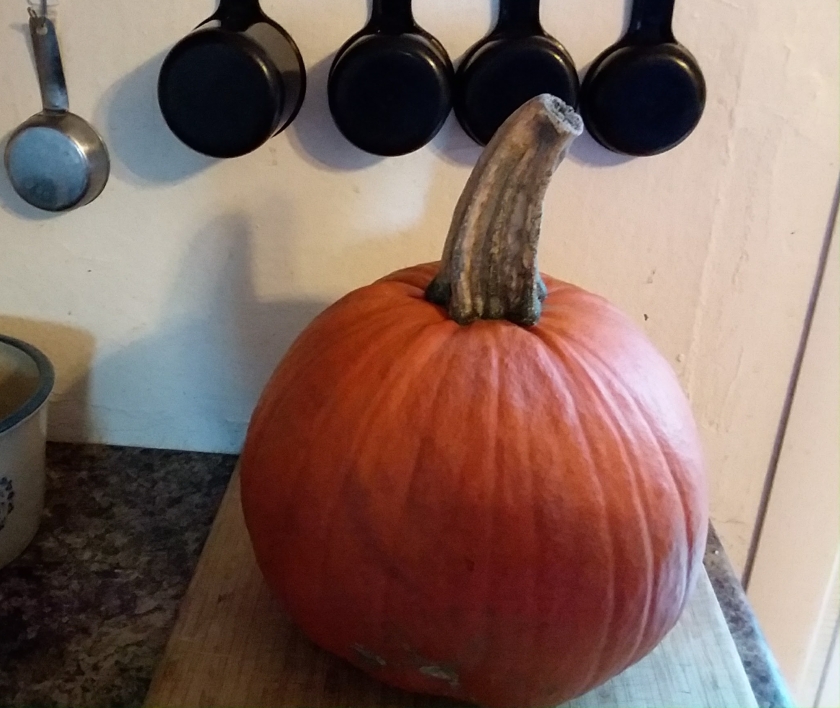
pumpkin-raw.jpgEven more than apple pie, the pumpkin is symbolic of early America. Before Europeans landed, Native Americans used pumpkins for both food and medicine. Indeed, early colonists from England found pumpkins so important that one of the earliest folk songs from the colonies satirizes the ubiquitous pumpkin in the oft-quoted pilgrim verse from c. 1630.
…Instead of pottage and puddings and custards and pies, Our pumpkins and parsnips are common supplies; We have pumpkin at morning and pumpkin at noon; If it was not for pumpkins we should be undone. If barley be wanting to make into malt We must be contented and think it no fault For we can make liquor, to sweeten our lips, Of pumpkins and parsnips and walnut-tree chips…” (1).

Of course, the neither the Native Americans nor the first settlers had wheat flour or sugar for making the familiar pumpkin pie. Pumpkins were baked, boiled, or roasted sometimes stuffed. These earliest pumpkins were not always the round, orange pumpkin we see today, but a variety of shapes and colors, much like other squash varieties.

By the 18th century, many of the traditional food stuffs from Europe were readily available and so were incorporated into pumpkin usage. Samuel Peters, writing in 1781, talks about marigold-colored pumpkins as large as 60 pounds. He writes,

The pumpkin or pompion is one of the greatest blessings… Each pumpkin contains 500 seeds which, being boiled to a jelly are the Indian infallible cure for the strangury. Of its meat are made beer, bread, custards, sauce, molasses, vinegar, and on thanksgiving days, pies, as a substitute for what the Blue Laws brand as antichristian minced pies” (2).

Peters also claimed the pumpkin shell was good for making a cap by which to cut hair and also good for making lanterns. (3)

In spite of Peters’s glowing praise for the pumpkin, by the eighteenth and early nineteenth century it seems to have settled into the role of pie more than anything else. Cookbooks from the period often contain receipts for pumpkin pie, but rarely other ways of preparing pumpkin. The standard puimpkin pie, a custard made with mashed pumpkin, eggs., milk and seasoning, is much like the pie we know it today. Receipts for pumpkin pie or pudding from the late colonial and early revolutionary period differ primarily in proportion and the exact variety of spices recommended.

For instance, Hannah Glasse uses  1 pint of stewed pumpkin to 1 pint of milk, 1 glass of malaga wine, 1 glass of rose-water,  7 eggs, ½ pound of butter, one small nutmeg, and salt and sugar to taste (4).

Amelia Simmons has receipts for two versions of a pumpkin pie. The first uses 1 quart mashed pumpkin, 3 pints cream, 9 eggs, sugar, mace, nutmeg and ginger in a crust, with bits of pastry on top. Her second recipe calls for 1 quart of milk, 1 pint of pumpkin mash, 4 eggs, molasses, ginger and allspice (5).

Simmons does have a variation using both apples and pumpkin for a pudding thickened with breadcrumbs and a bit of flour and seasoned with rose-water, wine, sugar, nutmeg and salt. She says to use 1 large squash and 6 apples to ½ pint cream  and 5 or 6 eggs. (5)

Mary Randolph’s pumpkin pudding adds 6 eggs to ½ pint of milk, with nutmeg, ginger wine for seasoning, sugar to taste and baked in a crust with bits of crust on top (6).

Am anonymous lady of Phildadelphia only offers one pumpkin recipe in her seventy five receipts. She directs cooks to use 1 quarter pound of stewed pumpkin with 3 eggs, a quarter pound of butter or cream, a quarter pound of sugar, a half glass of wine and brandy mixed, a half glass of rose water, and a teaspoon of mixed cinnamon, nutmeg and mace, poured in a pastry lined dish and sprinkled with sugar before baking (7).

Mrs. Child’s recipe assures cooks that 3 eggs to 1 quart of milk works very well for a common family pie, though even one egg will do. She says to remove the seeds but not scrape the pumpkin before stewing. The pie can be sweetened with molasses or sugar, and seasoned with salt, cinnamon, and ginger, and perhaps a bit of lemon peel. Ginger alone will suffice if there is enough of it.  She does say the more eggs used, the better the pie (8).

Surpisingly, only Mrs. Randolph offered a recipe for fixing pumpkin in a different way.Her recipe for ‘Potato pumpkin’ makes a striking dish to bring to any fall table. (I have no idea why she calls it potato pumpkin. The recipe has no potatoes whatsoever.)

Potato Pumpkin

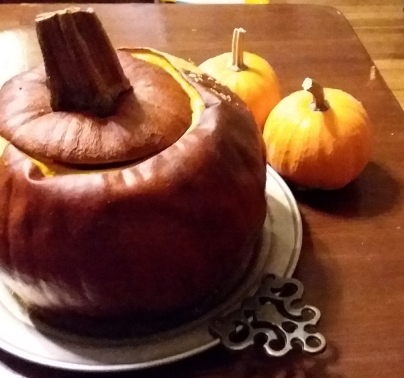
Get one of a good colour, and seven or eight inches in diameter; cut a piece off the top, take out all the seeds, wash and wipe the cavity, pare the rind off, and fill the hollow with good forcemeat–put the top on, and set it in a deep pan, to protect the sides; bake in a moderate oven, put it carefully in the dish without breaking, and it will look like a handsome mould… (6).

To modernize this recipe, I first had to research forcemeat. I found several receipts using veal, pork, or even fish, all bound with suet. Because veal and suet are hard to get in my town (make that impossible), I used a combination of ground pork and ground beef, seasoned with the spices suggested by Mary Randolph. Since paring a pumpkin is quite difficult, I pared only half the pumpkin before cooking to see if that step was necessary. The pared side developed a thicker outer surface that I found too dry. The unpared side was easier to scoop and held its shape better. The end result was quite tasty and made a great dinner center-piece.

Here is the modernized version of Potato Pumpkin.

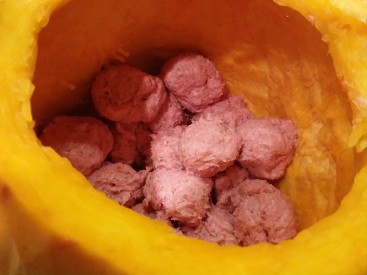
pumpkin hollow with raw meat
Before cooking
  • 1/2lb. ground pork
  • ½ lb. ground beef
  • ⅓ c. shortning
  • 1/1 t. nutmeg
  • 1 t. salt
  • ¼ t. mace
  • ½ t. pepper
  • 2 t. lemon rind, grated
  • 1 T. parsley
  • 1 t. dried basil, crushed
  • 1 egg.
  • 1 small to medium pumpkin

Put all ingredients except the pumpkin in a food processor and grind to a smooth paste. (This can be done in a mortar, but that takes a  long time.)

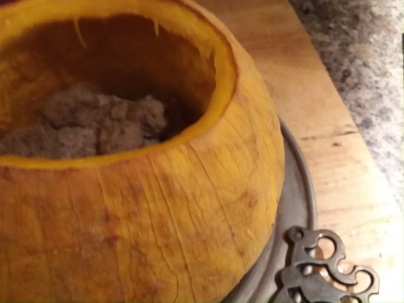
Cut off the top of the pumpkin. Remove seeds, scrape out the hollow, and rinse it. Form the forcemeat into small balls the size of walnuts, and place inthe cavity. Put the top back on the pumpkin and bake at 350 degrees. When it is done, a fork will easily puncture the pumpkin, and a meat thermometer placed in the center of a meatball will register 170 degrees. This took two hours for an eight inch pumpkin. 

best cooked picture

To serve, scoop out a portion of the pumpkin along with the meatballs. This makes a great conversation piece, as well as a very tasty meal for four.whole-pumpin-to-serve-e1512158763701.jpg

Notes: 

  1. Forefather’s Songs: New England’s Annoyances…Source: The Annuals of America: 1493-1754, Discovering a New World. Vol. I. Mortimer Adler, Ed. London: Encyclopedia Britannica, Inc., 1976. Print Retrieved from  Masterpieces of American Literature
  2.  Peters, Samuel. A General History of Connecticutt by Samuel Peters, 1781 republished new Haven, D. Clark  and Co. ,1829  Retrieved from google books
  3. Strangury is a painful blockage of the bladder
  4. Glasse, Hannah. The Art of Cookery. First published in England in 1747, 1st American edition Alexandria: Cottom and Stewart, 1805. 138.
  5. Simmons, Amelia. American Cookery. 1796. 27-28.
  6. Randolph, Mary. The Virginia Housewife Or, Methodical Cook. Washington, 1824. 127, 109, 91.
  7. A Lady of Philadelphia. Seventy-five receipts. Boston: Munroe and Francis: 1828. 21-22.
  8. Mrs. Child. The American Frugal Housewife. Boston: Carter, Hendee and Co., 1833 (12th edition, first published 1828) 66-67.

Dead Cakes

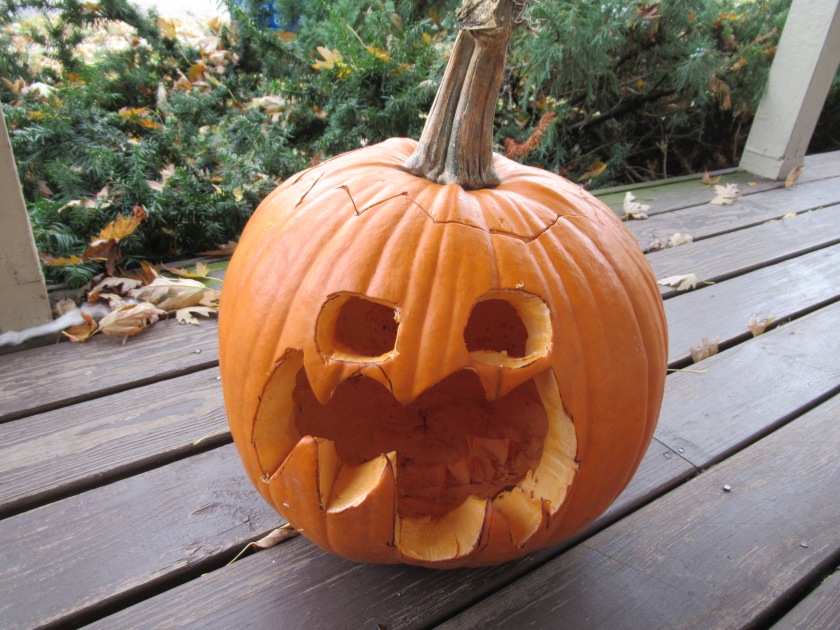
jack o lanternAs fall gave way to winter this week, children all over the country dressed in funny, scary or highly marketed costumes, and went out begging for candy. With colorful decorations and ubiquitous advertising on all sides, it is easy to lose track of the main theme of this week, which is death.

The idea of Halloween with Jack 0’ Lanterns, ghosts, and tricks, stems from Celtic tradition of Samhain.  This celebration marks the end of the harvest and the beginning of the dark half of the year. From sunset on October 31 to sunset on November 1st, this is the time of year when the gate between this world and the next is at its most flexible. The concept of contact between this world and the next gave rise to what we currently think of as Halloween or the evening before All saints or All souls or All hallows (hallow means holy or saint, or more recently holy or mystical relic). Halloween, therefore, is a good example of the Christian church absorbing earlier traditions.

The point is that whether we are ancient Celts or modern consumers or anything in between, this is a time of year when summer dies and the dead of winter looms. We may sidestep the theme of death with fanciful costumes and trick-or-treat games, but the reality of death lurks behind the fun. The mystery of what happens next has haunted humans across time and culture, so this is a good week to discuss some of the research I did for a colonial mystery I’m writing. For the novel, I needed to find out more about specific funeral customs in Colonial Pennsylvania.

Of course, colonial customs varied by religious teachings, resources, and circumstances just as funeral customs do today, but a surprising number of traditions cross cultures. For instance, laying coins on eyes of the deceased developed in Greece to provide for paying the ferryman to cross the river styx.  Preparing the corpse for burial, a process called laying out, follows specific procedures including washing the body, and closing or covering the eyes.

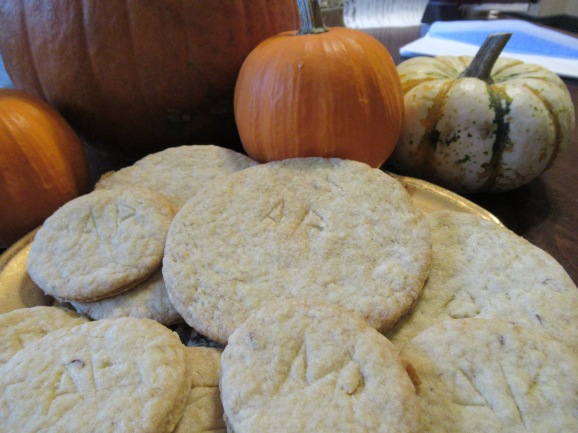
One of the most intriguing customs I found is the idea of dead cakes I found dead cakes listed in various places as a Dutch or German or English custom in which cakes or cookies were marked with the initials of the deceased and either sent out by rider  as a funeral invitation or sent home with the mourners. Such cakes might be eaten as part of the funeral feast or kept, sometimes for years as a memento of the  dead person.

In spite of the historical references to dead cakes, none of my 18th and early 19th century cookery books have a specific recipe specifically for them. Several sources suggest that dead cakes were a sort of caraway flavored shortbread. I found that 18th century recipes for caraway or seed cakes vary greatly, ranging from a drop cookie to more of a cake batter. Several require eggs and/or yeast (or emptins) for leavening.   Since the point of the dead cakes is to commemorate the deceased with the carved initials, I opted for a recipe without any eggs or yeast, since detail like letters is usually lost when dough rises.

One recipe for dead cakes comes from Alice Morse Earle’s Colonial Days in Old New York. She quotes a recipe from Mrs. Ferris  as: “Fourteen pounds of flour, six pounds of sugar, five pounds of butter, one quart of water, two teaspoonfuls of pearl ash, two teaspoonfuls of salt, one ounce of caraway seeds. Cut in thick dishes, four inches in diameter” (306).  Earle doesn’t give a date or reference for Mrs. Ferris’s recipe, but the use of pearl ash suggests an 18th century origin. Earle also asserts that these dead cakes were advertised in 18th century newspapers (citing an ad for burial cakes in 1748 from a Philadelphia newspaper), but were also often baked at home.  (306-307)

I experimented with two recipe variations–a scaled down version of Mrs. Ferris’ recipe   and a recipe for apees– a caraway cookie apparently named for Ann Page, who sold the cookies in Philadelphia around the time of the Revolutionary War. She marked her cookies with ‘AP’ so customers could tell which were her’s. The original recipe for apees that I used comes from Seventy-Five Receipts for Pastry, Cakes and Sweetmeats, published in Boston in 1828.

The two recipes have some significant differences. Mrs. Ferris’ recipe calls for pearl ash, though so little that it made no difference in either taste or rise. Her recipe also has considerably fewer caraway seeds (3 Tablespoons as opposed to 1 teaspoon). The apees recipe calls for wine instead of water, and adds nutmeg, cinnamon and mace. I left out these extra spices to better compare the flavors of the finished products.

The recommended size of the finished cake also differed. Mrs. Ferris suggested cutting cakes four inches in diameter, while the Lady of Philadelphia calls for cutting circles with a tumbler. It seems to me the four inch cookie is a better memento, but the smaller cookie is more practical for serving at a funeral meal. The initials of the deceased are also more easily seen with fewer caraway seeds in the dough.

Taking all these variations into consideration, I ended up with the following recipe for modern use:best finished

Dead Cakes

  • 3 ⅓ c. flour
  • 1 c. sugar
  • ¼ t. Salt
  • 1 T. caraway seed
  • ½ lb. butter
  • ½ c. water or wine

Mix the dry ingredients. Cut in the butter as for pie crust (until it resembles coarse meal). Add the water or wine and press into a ball. Roll out on a floured surface about ¼ inch. Cut the cakes to the desired size and shape. Cut the initial you want into the cookies. Bake at 350 degrees for 20 -25 minutes (depending on the thickness.)  Cool and enjoy.  

In spite of the somber name and original purpose, these sweet treats are surprisingly good. Perfect for a modern Halloween celebration.

Sources

Earle, Alice Morse. Colonial Days in Old New York. New York: Charles Scribner’s Sons, 1896. Digitized by Google.

Lady of Philadelphia. Seventy-five receipts for Pastry, Cakes, and Sweetmeats. Boston: Munroe and Francis, 1828. 56.

Levitt, Alice. Funerary Feasts From Around the World. Vermont’s Independent Voice: 7 Days. October 29,2014.

Rogak, Lisa. Death Warmed Over. Berkeley: 10 Speed Press, 2004


Beautiful Beets: Pink Pancakes

Beets_with_greensBeets are prettier than potatoes, more colorful than turnips and easier to pronounce than rutabagas. So why do so many of my friends and family say they hate beets? Some even say the lovely purple root tastes like dirt. (They are probably reacting to the high levels of geosmin in beets, which is the element that gives a garden a rich smell after a rain.)


People have been eating beet greens for centuries, possibly as early as Babylonian times. Romans brought the beet to England. A 14th century manuscript calls for chopping and boiling the greens, then stir-frying them with pork fat, saffron and pepper, but warn insufficient cooking may harm the ‘wombee’ (stomach) (Cury on Inglysch, 1985, 53)

Beet roots took longer to become popular. At first, beet roots were used for medicinal purposes. Both the Greeks and the Romans considered beets to be an aphrodisiac. Aphrodite supposedly ate beets to enhance her already considerable appeal, and beet juice was used at least until the 19th century to redden cheeks and lips to make women more attractive. Both the health claims and carnal claims have some basis in  chemistry. Beets contain  betalains which are thought to fight cancer. They also contain tryptophan and betaine (natural mood enhancers) and boron, a trace  element said to increase human sex hormones.

At least by the middle ages, recipes for beet roots can be found. In the 16th century John Gerard wrote that the beetroot was both more beautiful and better than the leaves.  Another cookbook, The good Huswifes handmaide for the kitchin,  has this recipe for a beet pie.


To make Lumbardy tartes.

Take Beets, chop them small, and put to them grated bread and cheese, and mingle them wel in the chopping, take a few Corrans, and a dish of sweet Butter, & melt it then stir al these in the Butter, together with three yolks of Egs, Synamon, ginger, and sugar, and and make your Tart as large as you will, and fill it with the stuffe, bake it, and serue it in. (The good Huswifes Handmaide for the Kitchin. London 1594, 1597 Digital text and notes by Sam Wallace)


Even with such marvelous recipes, beets have never been popular with everyone. There is no mention of beets in Martha Washington’s Booke of Cookery. Amelia Simmons’ American Cookery (1796) doesn’t tell how to cook them, but says red are richest and better than white, which many people dislike as having a ‘sickish sweetness” (11). Although Thomas  Jefferson grew beets in his garden, Mary Randolph, an in-law and The Virginia Housewife or Methodical Cook (1824) has a recipe only for pickled beets. Indeed, most colonial cookbooks recommend pickled beets.

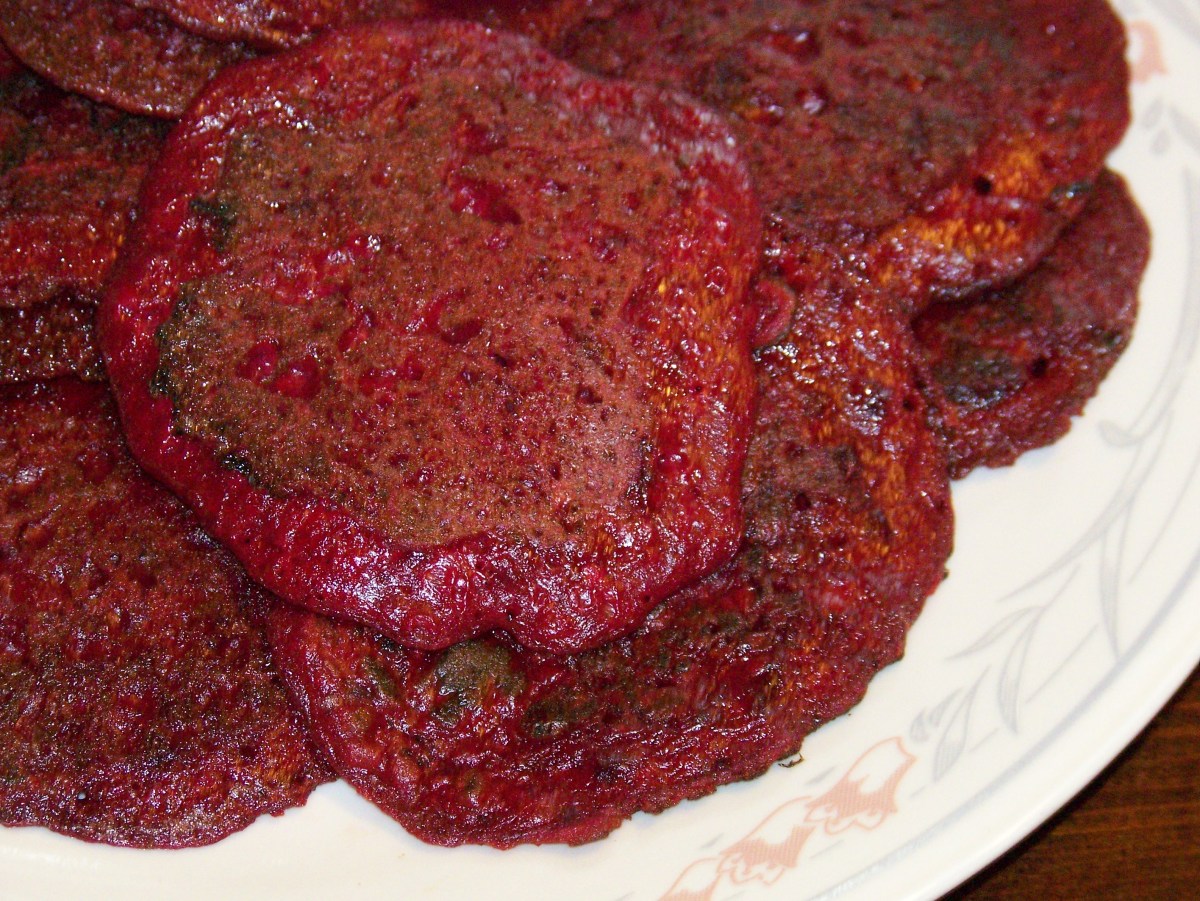
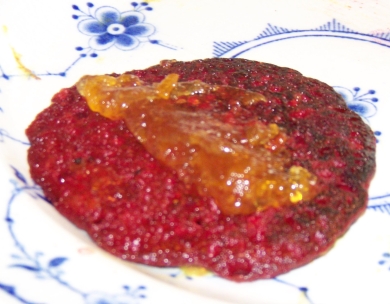
However the versatile root is surprisingly delicious in soups, stews, tarts and cakes. My favorite is beet pancakes served as a side dish. Colonial Williamsburg Foodways  (add link) cites Hannah Glasse’s  (18th century) recipe for pink pancakes. Colonial Williamsburg Historic Foodways

   Boil a large beet-root tender, and beat it fine in a marble mortar, then add the yolks of four eggs, two spoonfuls of flour, and three spoonfuls of good cream, sweeten to your taste, and grate in half a nutmeg, and put in half a glass of brandy; beat them all together half an hour, fry them in butter, and garnish them with green sweet-meats, preserved apricots, or green sprigs of myrtle. It is a pretty corner dish for either dinner or supper.                                   Glasse, Hannah. The Art of Cookery Made Plain and Easy, p. 220.

For modern cooks I suggest the following;

1-2  red beets
4 egg yolks 
¼  c. sugar (more or less depending on your taste)
¼ c. brandy
½ t. Nutmeg
3 T.  cream 
2 rounded tablespoons of flour
   Butter for frying
   Apricot jam or pistachios for garnish

Remove the beet top and stem, then boil until tender. (Test with a 
fork. Cool the beets enough to peel them. The skins should slip off  easily when rubbed.

Chop the beets, then mash them in a mortar (or use a food processor).

Add the remaining ingredients (except for the butter and garnish) a 
little at time to make a smooth batter. (I did not find it necessary to beat it for half an hour.)

Melt butter in a heavy skillet. ( I always use an iron skillet.) 
Pour in about 1/4 cup of batter and fry gently on both sides.

Serve hot with apricot jam for a delicious breakfast or side dish.

with-jam.jpg These days, beets turn up in salads, added to brownies or burgers or even in hummus. So many delicious ways to serve beets! What’s your favorite?
Quidony of Plums

A colonial recipe for modern cooks

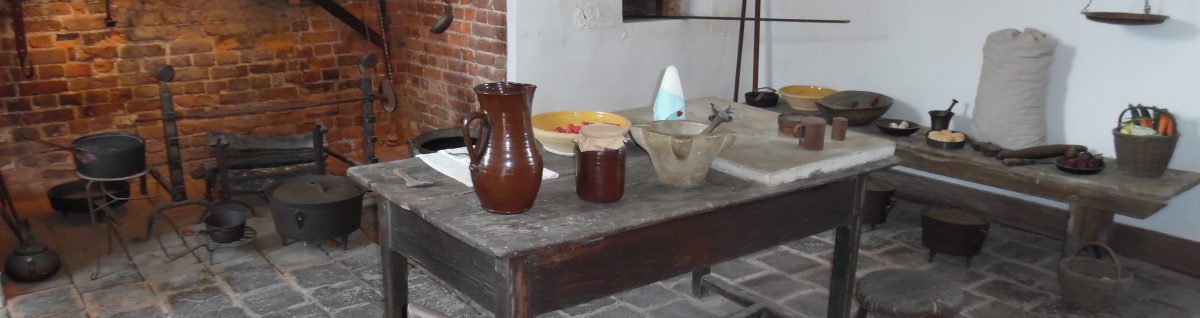
There is no better way to understand the past than to explore what and how people ate. Trying out old recipes is an exercise in alchemy: a little bit of science and a little bit of art to transform ingredients into something better.

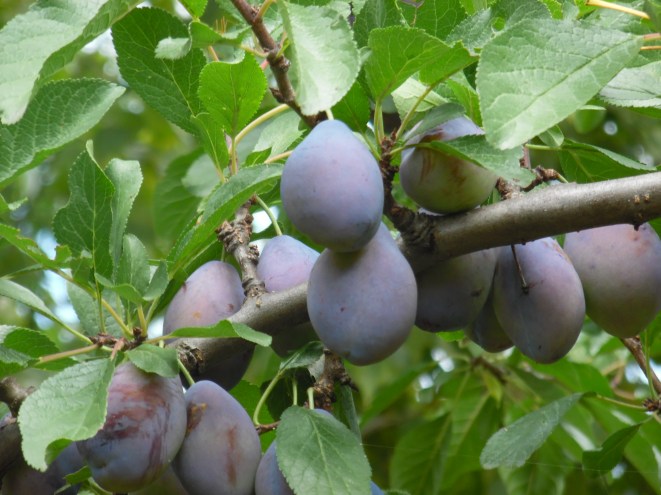
Martha Washington’s family recipe for Quidony of Plums is a good example. This year my small plum tree produced great quantities of small, hard purple and green plums.

SAM_4653.JPG

The plums were too hard and sour to eat raw. Those I left on the tree or brought in to ripen didn’t get sweeter. They rapidly turned from unripe to brown mush. But the plums were lovely, and I hate seeing food go to waste. To transform these hard, inedible plums into something delicious, I turned to Martha Washington’s Booke of Cookery (transcribed and annotated by Karen Hess.)

The first challenge was to figure out what ‘quidony’ means. Martha’s book has ten recipes for quidony made of different fruits. According to the Oxford English Dictionary, quidony (also spelled quiddony, quiddany, quidenie, and quiddeny) is a “thick fruit syrup, originally and properly, one made of quinces.” By the 18th century and even earlier, quidony was not restricted to quinces. Martha had two different recipes for quidony of quinces.

Following the recipe  also takes a bit of sleuthing. The cook is instructed to boil plums in a posnet with water and sugar until they break. A posnet is a three-legged pot with a handle. Since the fruit and then the pulp must boil for a long time, I suspect specifying a three-legged pot is so the cook can keep the pot raised off the coals and maintain a more even heat during the process.  

SAM_4650.JPG

The recipe continues with directions to run the mixture through a strainer and boil it again until “it comes to its full thikness.”  The cook is not told how much force to use in staining the fruit pulp, or how thick to cook it. The only clue is the final direction to print it with molds, suggesting the quidony is thick enough to hold a shape.

The quidony I made was the consistency of apple butter, which goes along with the definition of quidony, and will hold a print (though not a shape like jello does.).  The final result was delicious on toast or pancakes, mixed into yogurt, or used as an ice cream topping.

Quidony of Plums for the Modern CookIMG_0057

1 gallon hard sour plums

3 ½ cups brown sugar

2 cups of water

Wash the plums and put them into a heavy, enameled pot with the water. (I cut them in half just to make sure there were no worms.) Bring to a boil, them simmer until the plums are soft and the flesh of the fruit separates from the skin and pit. Stir frequently.

Pour the pulp mixture into a strainer lined with cheesecloth. Let drain for an hour. Take up the ends of the cheesecloth and squeeze out as much of the soft pulp as desired. (The more you squeeze out, the more your quidony will resemble preserves rather than jelly.)

Discard the pits and skins. Put the remaining pulp back into the pot. Add sugar to taste. Bring the mixture to a full, rolling boil. Boil hard until the mixture reaches at least 200 degrees on a candy thermometer, stirring constantly. Pour your quidony into jars or jelly dishes and enjoy. Yield: 2 ½ pints (Yield will vary depending on how long you boil it, and how much pulp you squeeze out.)

References:

__. Martha Washington’s Booke of Cookery. Transcribed and annotated by Karen Hess, New York: Columbia University Press, 1995. p. 355.

“Quiddany.” The Compact Edition of the Oxford English Dictionary. New York: Oxford University Press, 1971. p. 2393.