On the quest for majesty

Pillars of the Earth by Ken FollettUnknown

Why do people strive for majesty? In some ways, this is really the same questions as why people climb the mountain or why they strive for the gold medal. The answer to any of these questions could be ‘because we can’. But the real answer is much more complex. In his acclaimed novel, Pillars of the Earth, Ken Follett provides a much richer and more nuanced set of answers, exploring our very human desire to achieve and the equally human obstacles to such glory.

Unknown-1Pillars of the Earth is about building a cathedral in Medieval England. The story follows three generations of stone masons, and the people they love, care for, hate, and work with Follett provides clear, accurate detail of how such a magnificent structure could be built. However, the story is more than just a manual on how to build a cathedral. (For that I suggest reading the excellent book, Cathedral, by David MaCaulay.)

Follett’s story digs into the decisions, twists of fate, and accidents of that span decades of cathedral building. Even more importantly, Follett weaves a tale that explores why people are driven to build majesty. It is a story of faith and politics, which are deftly interwoven into the fabric of society today as much as they were in medieval times.

At its core, Pillars of the Earth is the story of ordinary people doing extraordinary things, of good people reaching and achieving beyond what anyone could imagine, in spite of the naysayers, preachers of doom, and obstacles of fate. The novel shows how these lives interconnect, how actions have ripples, and how people go on living their own daily lives, often unaware of the consequences. To me, this is historical fiction at its best.

As I read about Tom Builder’s arrival in the fictional medieval town of Kingsbridge, Prior Phillip’s vision for a glorious cathedral, and Jack Builders’ quest for poetry in stone, I thought of cathedrals I have seen. Each is different in style and design, yet each is a marvelous example of human aspirations. Each is intended to inspire awe, to force the visitor to look up and contemplate divinity.

20180518_104311
St. Peters Cathedral, Regensburg, Germany
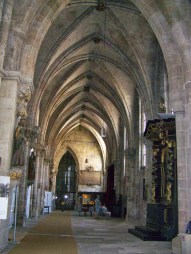
St. Sebolds Nurnberg.jpg
St. Sebold, Nürnberg, Germany
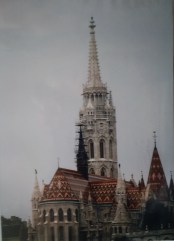
St. Matthias Budapest
Matthias Church, Budapest


Pillars of the Earth is a long book, (over 1000 pages). In some ways, it is Follett’s own reach for majesty. Like the cathedrals of Europe, the temple of the sun in Machu Picchu, and the Torii Gate of Japan, the book celebrates the very human desire to approach God and touch the sky.


Thoughts on Remembering

Children’s Crusades and the Impact of Historical Fiction

My enchantment with historical fiction goes way back. The first real chapter book I remember reading was called A Boy of the Lost Crusade by Agnes Danforth Hewes. It was a long book, very long for a second grader–279 pages. It had a reddish brown hard-cover and a picture of a boy in a ragged tunic with a red crusader’s cross on it. Inside were just words, no pictures. In fact, my teacher told me it was too hard for me, which made me want to read it all the more.  And read it I did, starting a lifelong interest in the genre.

There is a lot I don’t remember about the book. The main character’s name is gone. The details of where in France (or was it Germany?) he started, exactly when the crusade occurred, and how the story ended have all slipped my mind in the 50+ plus years since I first read it. Actually, I even mis-remembered the title, thinking for years it was called Children of the Lost Crusade. (Perhaps because in my mind, I always became the main character in the book I was reading, and so I subconsciously remembered it as the story of a girl.)

What is more amazing is how much I do remember from this very first real book.  I remember being fascinated with the idea of children going on a crusade, and realizing it had really happened. I remember wondering why it was so important to ‘take back’ the Holy Land. I remember seeing slavery in a new light, understanding for the first time that many different people had been enslaved in many different places. In the parts of plot I do remember, the main character was headed toward the holy land toward a port in Italy with hundreds of children from all over Europe.They were cheated by a ruthless ship captain who sold them into slavery. The leaky ship wrecked somewhere in the Mediterranean, maybe Northern Africa or the shores of Jordan perhaps. At age 7, I had no idea these places even existed before  reading this book. Most of all I remember being carried away on that ship, agonizing over the boy’s fate, and feeling totally immersed in another time and place.

I’m not sure I would still like the story. The style of writing from 1923 is slower and less culturally sensitive than styles today. But in second grade, the story fascinated me–so much so that I remember the the book (or at least parts of it) decades later.  I began a quest to find out more about the past and the people who lived in it. My first novel (A Mistake of Consequence) explores the idea of forced indenture in the American colonies. A different time period, to be sure, but still another look at how people throughout history have forced others to work for them. I am still intrigued by how people lived and what they thought. I see so many connections between what happened ‘back then’ and what happens now. People of long ago fought over religious issues (some of the same ones) and struggled for power both in their personal lives in the political world. Mothers and fathers worried about caring for their children. Children got into mischief. Everyone needed to find food and shelter and avoid the bad guys, whoever they were. The solutions to the problems of long ago differ from today, but the problems are much the same. Both the solutions and failures of our forebears can help us learn to navigate the complexities of life today.

This all goes to say, historical fiction is valuable. For me, it opened new ways of looking at the world. With historical fiction, I do indeed live in interesting times…a lot of interesting times.

SNOW FALLING ON CEDARS: A Review

20180125_160746On a bleak winter’s day in January, nothing beats curling up with a cup of hot tea and a good book. Snow Falling on Cedars, by David Guterson, is a perfect choice for metaphorically shivering in your cozy chair.

The story takes place in the ironically named town Amity, on an island in Puget Sound off the coast of Washington in 1954, nine years after the end of World War II. It soon becomes apparent that the war and its consequences still haunt the islanders. Kabuo Miyamoto, an American of Japanese ancestry, is on trial for the murder of his fellow veteran and neighbor, Carl Heine. The trial, held during a December blizzard, reveals deep prejudice between the islanders of European/ German descent and those of Japanese descent. Their scars barely hide the festering wounds and smoldering resentments from war-time activities.

Through flashbacks skillfully woven into the trial narrative, Guterson takes readers back to the war years when the Japanese American citizens were rounded up and sent to Manzanar. Gradually we learn how Kabuo’s and Carl’s lives intertwined around seven acres of disputed strawberry fields. And we watch with sympathy as their high school classmate, Ishmael, an embittered, one-armed war hero-turned-journalist, struggles with his demons from the past, including his never-forgotten love for Kabuo’s wife, Hatsue. Suspenseful, poetic and well-plotted, Snow Falling on Cedars, is at its heart, also a love story, where love and hate  are two sides of the same coin.

With superb, evocative writing, Guterson takes us on a roller coaster ride, making us question our own convictions and prejudices as we consider Kabuo’s guilt or innocence. Guterson’s vividly portrayed characters reveal a community deeply divided by cultural rifts and mutual suspicions. Like To Kill A Mockingbird, another famous novel revolving around a trial, Snow Falling on Cedars examines  themes of prejudice, justice and personal integrity, with a deep understanding of the human heart and its weaknesses. It “portrays the psychology of a community, the ambiguities of justice, the racism that persists even between neighbors, and the necessity of individual moral action despite the indifference of nature and circumstance”(from dust jacket blurb), and makes us realize that love, chance, and accident all play a part in the universe of humanity.

This is historical fiction at its best, with solid research backing the story and nuanced characters so real they could be our own neighbors. Even though 1954 and WWII were before I was born, even though I’ve never gone gill-netting in the Pacific Northwest, or dug goeducks on a beach, or sheltered in a cedar tree in the rain, Guterson’s writing transported me to another time and place. This is a book is bound to be a classic, well worth reading and re-reading.

Crocodile on the Sandbank: A Discussion

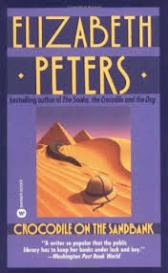
UnknownOne of the best gifts  is a good book. The trouble is, picking a book for a fellow reader can be tough. It’s hard enough to keep track of what I’ve read, let alone remembering what my sisters, my children and my friends have on their shelves.  One option is to buy new, just-published works. That’s a great idea, but if I take time to read the new book to make sure it is what the recipient would like, it’s not new any more.

So another option is to share great books from the past. One such book, well worth re-reading is Elizabeth Peters’ Crocodile on the Sandbank, first published in 1975.

This delightful historical mystery is the first in Peters’ Egyptian series. Set in the Victorian Era, the novels follow the adventures of the formidable Amelia Peabody, a woman firmly  grounded in the expectations of her day, but so full of self-confidence that she blithely disregards any convention not suited to her own ideas.

Readers first meet Amelia Peabody in Crocodile on the Sandbank. Having inherited  a surprising fortune when her father died, Amelia decides it is high time she travels to all the places her father had studied.  In Rome, she meets, and rescues a young woman, Evelyn.

Together the two women travel to Egypt and eventually arrive at an archeological site where the Radcliffe brothers, Emerson and Walter are working.  While Walter and Evelyn begin falling in love, Amelia and Emerson seem determined to out-shout each other. Meanwhile, several accidents and a wandering mummy threaten Evelyn’s safety.

Told in the witty, sardonic voice of Amelia, who is never wrong and unfailingly ready to act, the story is not only a great mystery, but also a romantic romp into the straight-laced Victorian world. Peters pokes fun at the stereotypes of Victorian England at the same time she present fully rounded, memorable characters.Amelia considers herself the very model of a perfect gentlewoman, the equal, or rather the superior to any man. With her sturdy umbrella and her unfailingly self confidence, Amelia is equally at home  serving tea or fighting villains. And Emerson, blustering, full of life, a character to rival Indiana Jones, is equally lovable.

One thing I really appreciate in historical fiction is accuracy. Peters is a master at showing the British empire in the late 19th century and is a respected Egyptologist in her own right. She weaves details of real people into the narrative and accurately presents the state of museums, artifacts and archeology in Egypt at the turn of the last century. Although her writing never feels like a textbook, I always come away with the satisfaction of having learned a great deal.

There are twenty books about Amelia Peabody, with the most recent and unfortunately last in the series, A Painted Lady, just published. Though the characters age throughout the series, each one works as a stand-alone mystery. So whether your friends and family go in for old books or new, Elizabeth Peter’s Amelia Peabody series makes a great gift.

Historical Fiction–What makes it good?

A discussion of The Silver Pigs, by Lindsey Davis

first published 1989, republished 2006
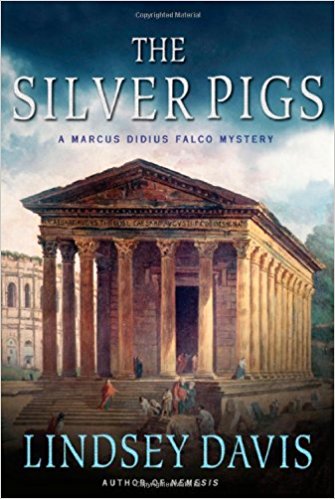
51Yu9jklKWL._SX333_BO1,204,203,200_ I’m an eclectic reader, reading almost anything from English canon literature to urban fantasy and many types of non-fiction as well. In this space I will highlight some examples of my favorite genre- historical fiction, starting off with an old favorite, The Silver Pigs. This book opens the series with Marcus Didius Falco, an informer (think- detective) in first century Rome. His efforts to figure out who killed a young girl he was trying to protect and how her death was connected to stolen silver ingots takes Falco to the farthest reaches of the Roman Empire and back to his hometown, Rome.

There are a lot of things to like about The Silver Pigs, including the humor,  the complex relationships among the characters, and the well-developed back-story.  But I’d like to talk about The Silver Pigs as an fine example of the three things I look for in quality historical fiction: character, plot and setting.

In all fiction, character is one of the most important aspects of story. I want the main character to be developed and likable enough that I want to spend time with this person, He or she does not have to be perfect, but must seem real. Especially in historical fiction, the protagonist must represent the times accurately and be believable in the context of the period.

Marcus Didius Falco fits the bill well. He is a Roman citizen and knows his rights as such. Though he acts tough and pretends not to care, he’s a guy I’d want on my side. He’d never admit it, but he is what I’d call a gentleman– not the kind with polished manners, a high class education, land or wealth, but the kind who is gallant and  protective of those who are weak. Falco is not a Byronic hero, outside of society. No he’s firmly planted in the middle of Rome, dodging his landlord, watching over his own relatives, and hobnobbing with laundresses, guards, vigiles and senators alike. Though fictional, Falco, and his friends, family, clients, and even his enemies have become just as reall as the historical figures Davis includes, like Vespasian and his sons.

The second characteristic of good historical fiction is a plot that is interesting. Fun characters aren’t enough to make a good story. Something has to happen to keep me turning the pages. This is true of any fiction really, but the plot of historical fiction ought to also provide insight into life in the time it’s portraying. Characters can’t do things that don’t fit. I love the way Davis includes such bits as the carts waiting outside the city gates because carts weren’t allowed in before dark. This very accurate detail is key to helping Falco figure out who had access to a key piece of news that helps him identify the killer. Of course the main plot in the story revolves around the mines in Roman Britain and the smuggling of silver ingots. Falco’s adventures give readers great insight into the brutal life of the slaves working the mines

The most important aspect of good historical fiction is the setting. I read historical fiction so I can travel to a different time and place, so I want the details of that time and place to be accurate and developed enough to carry me into the world. I want to learn about the time and place, but I don’t want a textbook lesson.  Davis gives wonderful detail about life in Rome, but never stops the story to lecture. For instance, we learn about the chaotic period shortly after the year of four emperors and the change from a republic to empire through Falco’s very strong opinions and the actions of the characters.  

Even more than textbook history, I like learning about everyday life. DAvis does an excellent job here also. For instance Falco lives next door to a laundry.  It seems that laundry in Rome was bleached with urine collected from public latrines and obliging neighbors. Not only is this an interesting bit of trivia, Lena’s vat of ‘bleach’ plays a key role in solving the murder.

Davis reveals Rome as a surprisingly modern urban area from its seamy side to its posh neighborhoods and everything in between, with as much detail as if she had actually lived there.

The story also takes readers out of the city of Rome to the cold, misty edge of the Roman Empire, Britain.This is a place Falco hates, for the weather, the lack of urban comforts, and the provincial attitudes.  Davis give a fascinating look into how centers of civilization saw the fringes of empire as backward, dull, and uncivilized. (At attitude that is unfortunately still common in many parts of the world.)

So here we have a fun read that meets all of my criteria for good historical fiction; a likeable if gruff protagonist, an array of fully developed supporting cast, a plot dependent on the history of the time and place, and a setting that evokes the time and place so well I feel transported to Ancient Rome.

Best of all in this case, is that Lindsey Davis has written a whole series of mysteries following set in first century Rome. Readers can look forward to spending a lot of time with Marcus Didius Falco.