City of 100 Spires

Powder Tower Stairs

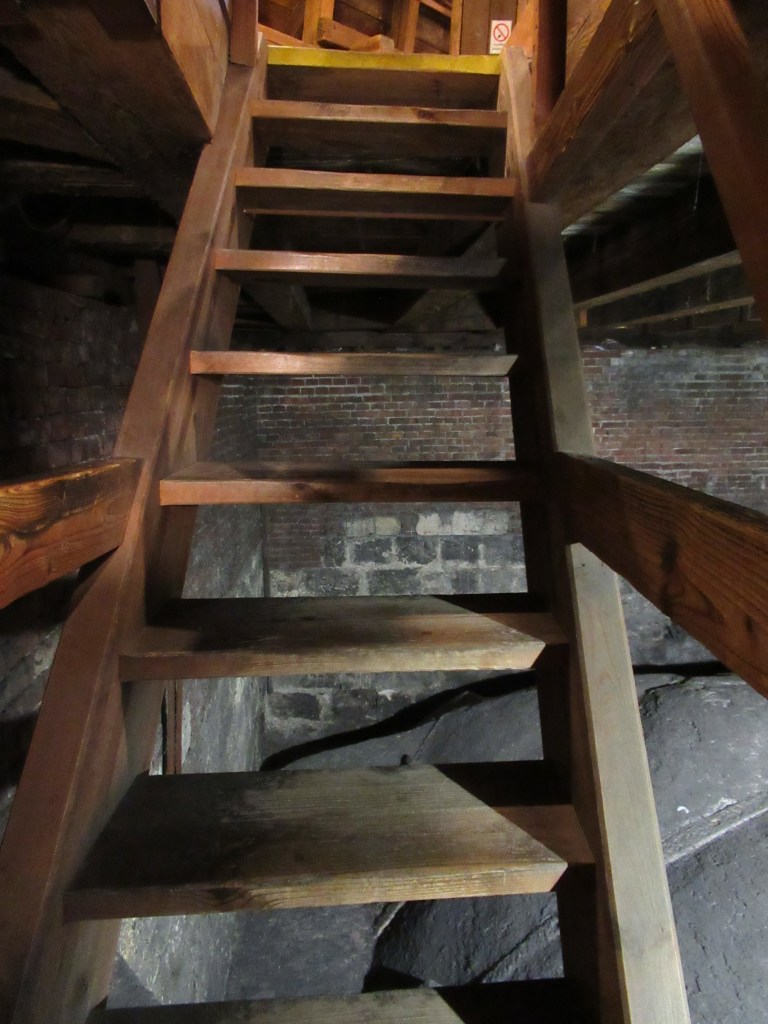
In my mind, few things are more delightful than climbing an old tower, winding up narrow, spiral steps, treading on stones, hundreds of years old, scrambling up creaking wooden staircased , all to reach the top platform and the amazing view spread out below. For centuries, people have built upward, both for better protection from enemies, and for the desire to feel closer to God. Whatever the original purpose, these monuments lure me to them, beg me to climb. And if you, like me, delight in such heights, Prague is the ideal place to visit. 

Nicknamed the city of 100 spires, Prague actually has over 500 such steeples and towers reaching toward the skies. Since my recent visit to Prague was only a few days, I can’t claim to have climbed all, or even most of these. Instead, I managed these few.

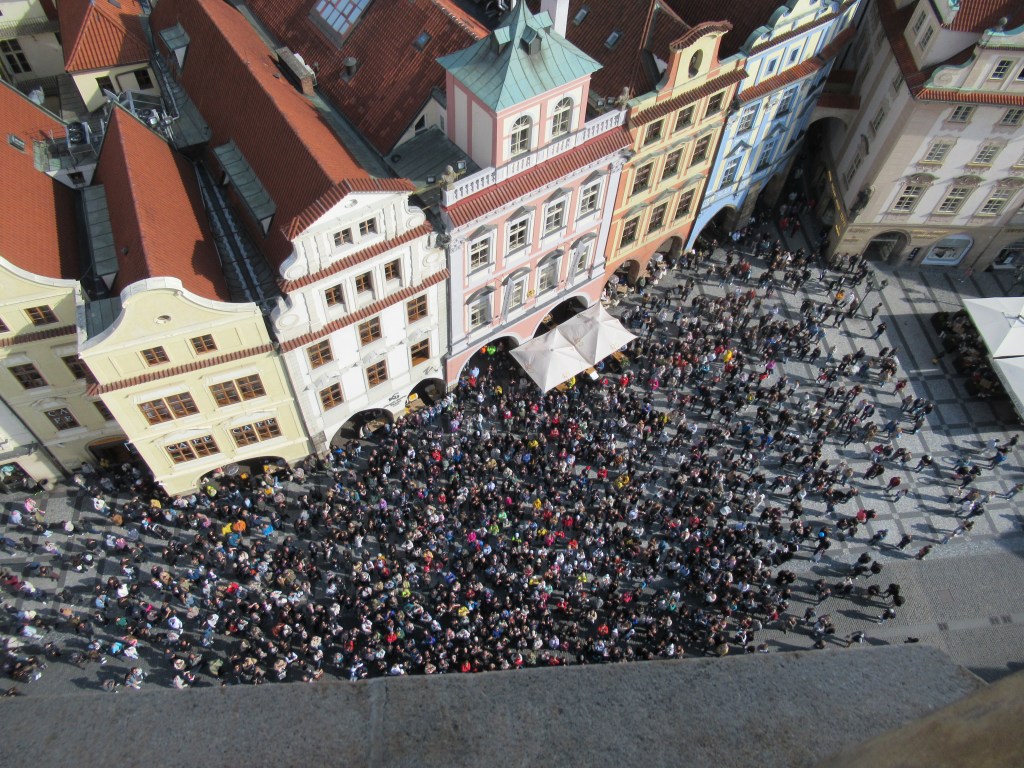
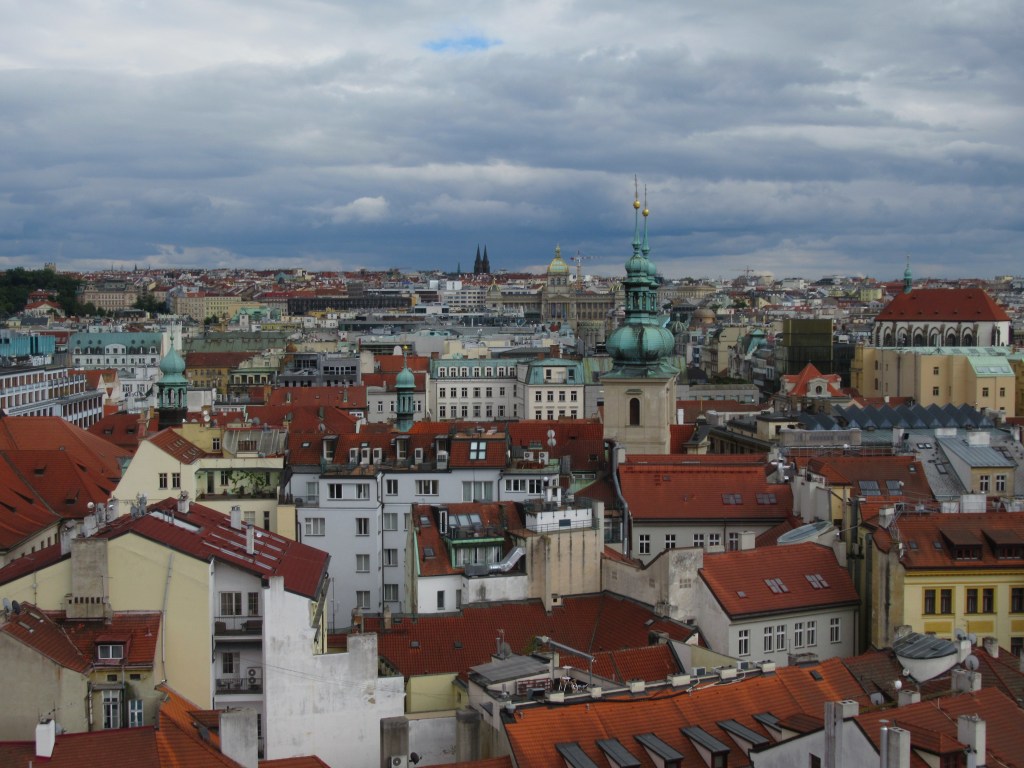
The Old Town Hall is best known for the Astrological Clock, which puts on a show every hour. This tower was built in the 14th century and is about 230 feet tall. The clock, built in the 15th century, is amazing, but the show is rather anticlimatic, lasting only a few minutes. We took a series of elevators to reach the top in time to look down upon the crowd gathered to watch the twelve apostles rotate. The picture on the right is a view of the city from the tower.
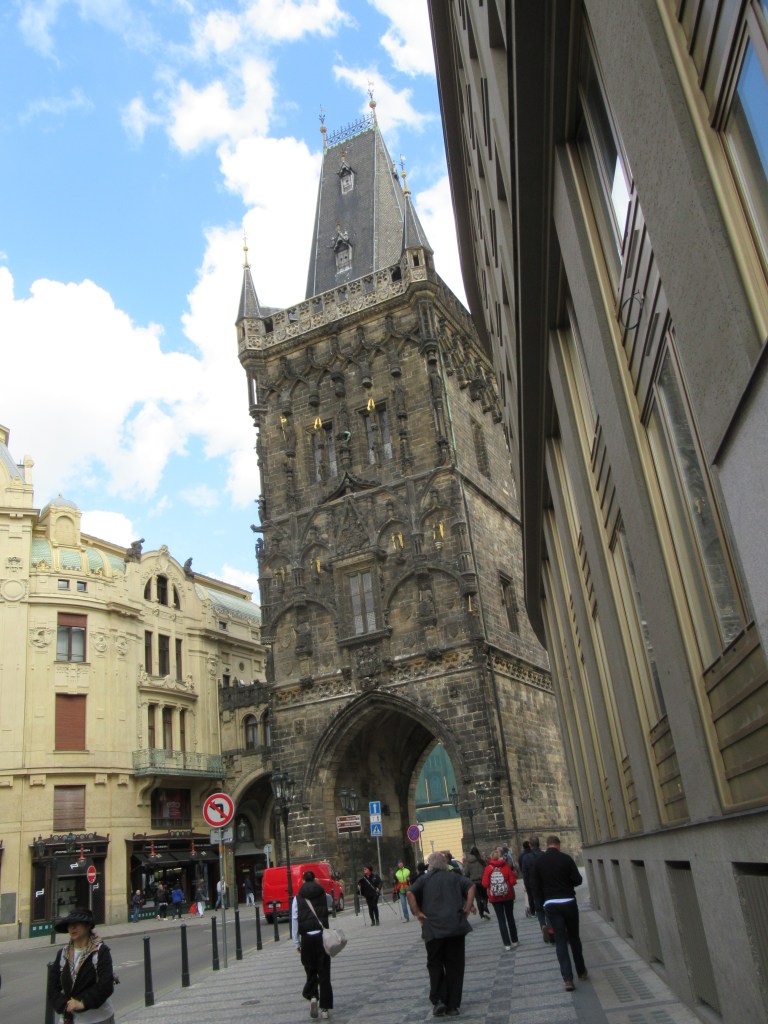
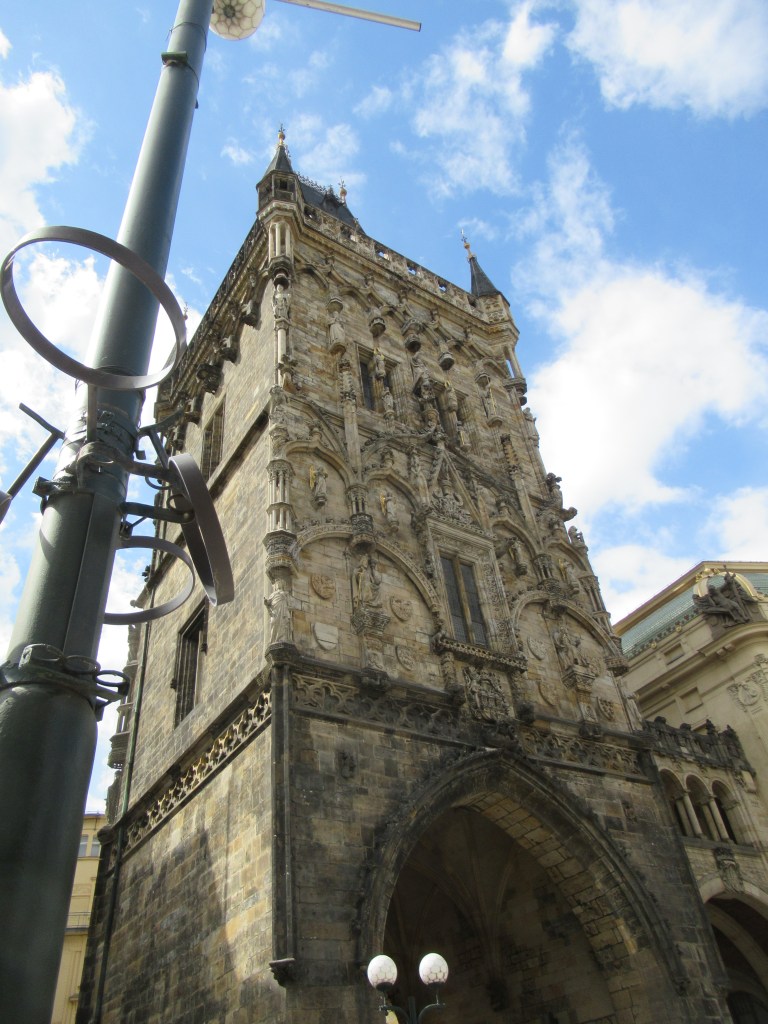
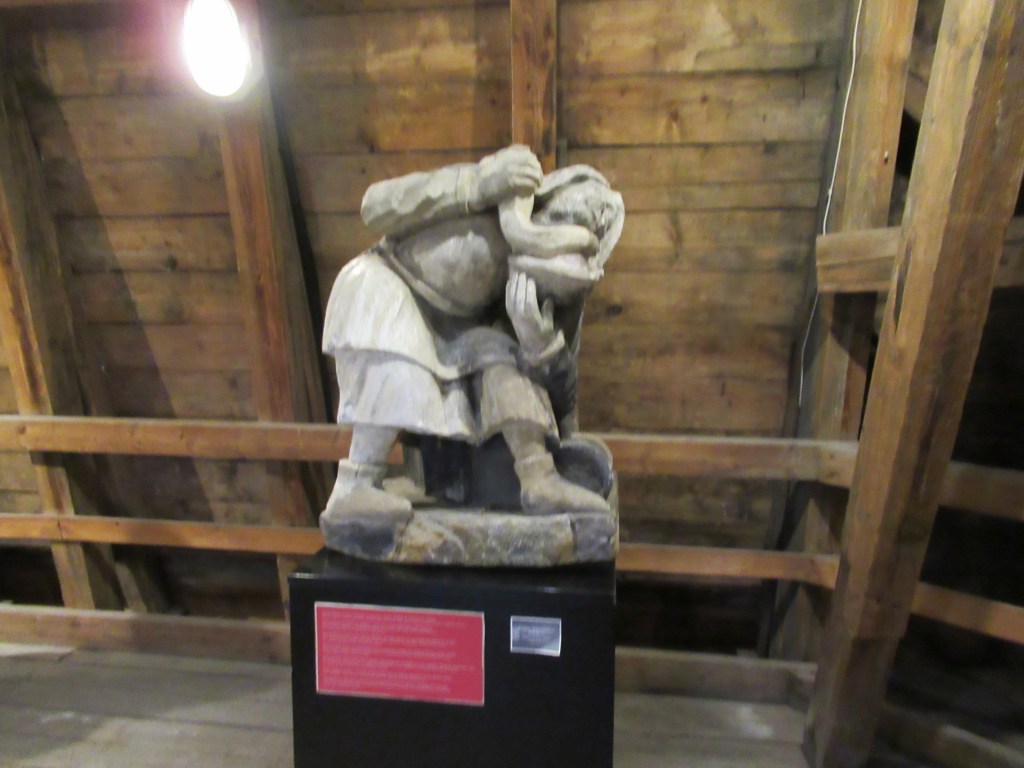
The Powder Tower is one of my favorites. The entrance is a tiny door leading to a spiral stone staircase which you must climb to reach the first floor, where there is a guard/guide to check your ticket. The tower was built in the late 15th century. It stands as the entrance to the Royal Route, leading to Prague Castle. The tower includes wooden stairs as well as the stone steps. Inside there are several unusual statues. The view at the top is magnificent. Pictured here is a view including the Old Town Hall on the left, Our Lady of Tyn Church in the center, and St. Vitus Church at Prague Castle in the distance on the right.
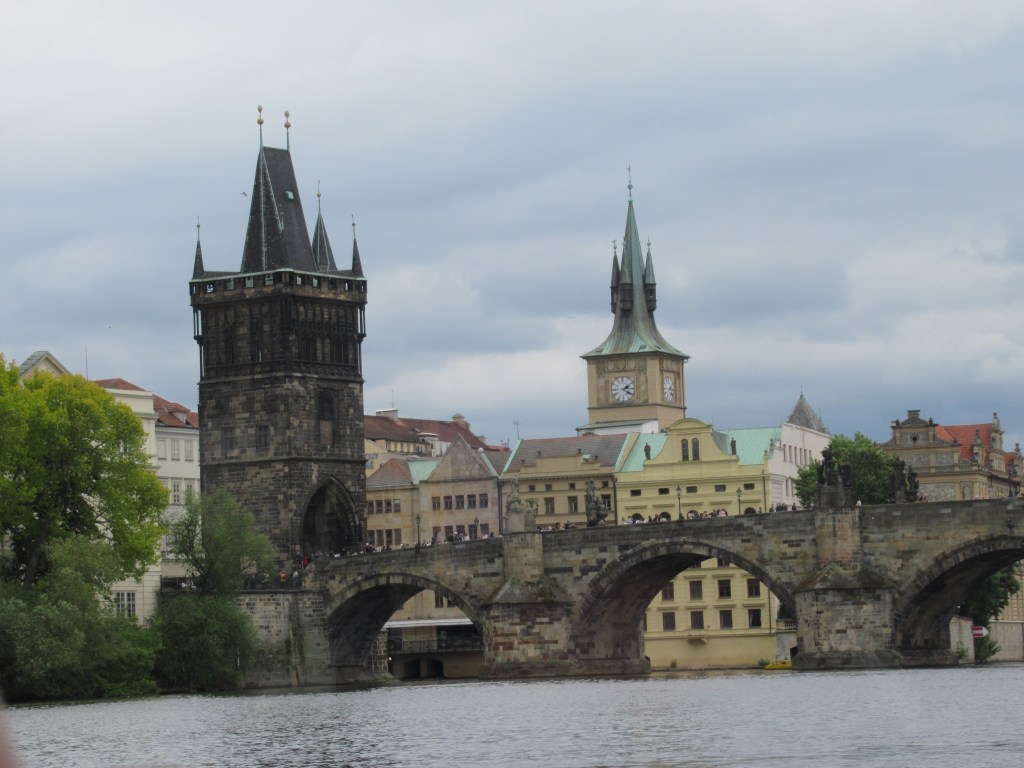
Old Town Bridge Tower

Old Town Bridge Tower is a magnificent Gothic tower from the 14th century at one end of the Charles Bridge. It served as a triumphal arch for the Royal Route and as part of the city’s fortifications. Partway up there is a room decorated with the coats of arms of lands of the Holy Roman Empire. The mysterious statue of an old man, possible a warden is found near the top of the climb up to the viewing platform.

Lesser Town Bridge

At the opposite end of Charles Bridge is the Lesser Town Bridge Towers. This is a set of two towers, joined by a gallery and battlements. The smaller tower (the Judith Tower) was built in Romanesque style in the 12th century, and remodeled for a Renaissance look in 1591. The taller tower is late Gothic. It originally built in 1464. Together the two towers served as part of the town fortifications until the whole town was encircled by bastion fortifications in the 17th century.

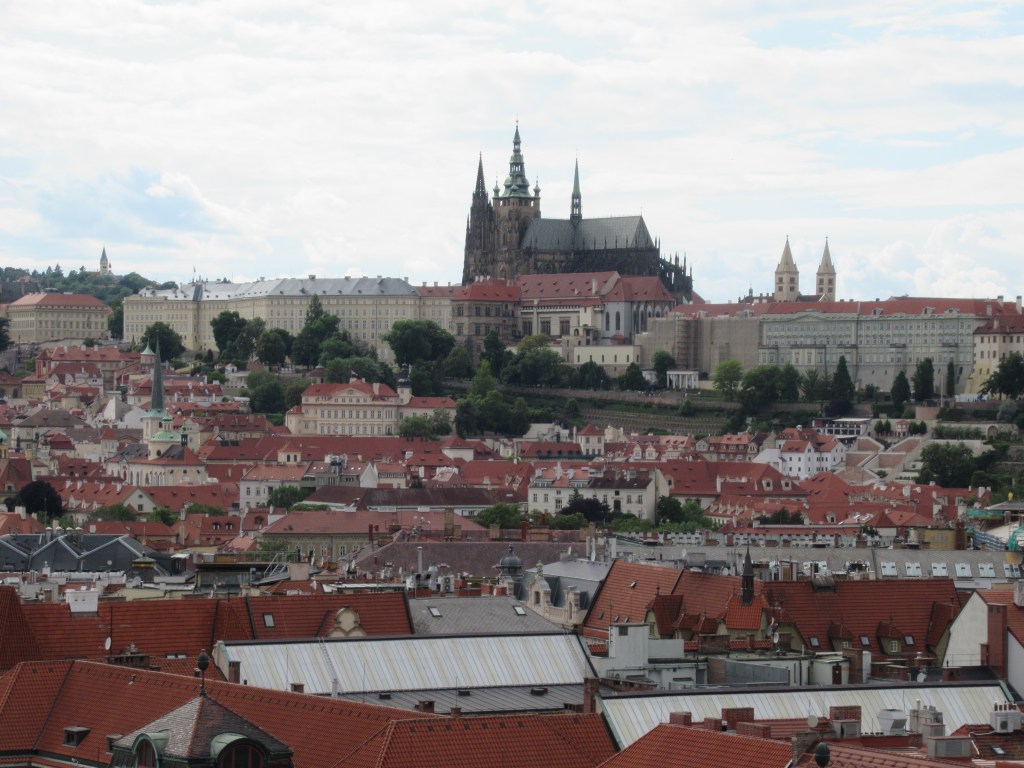
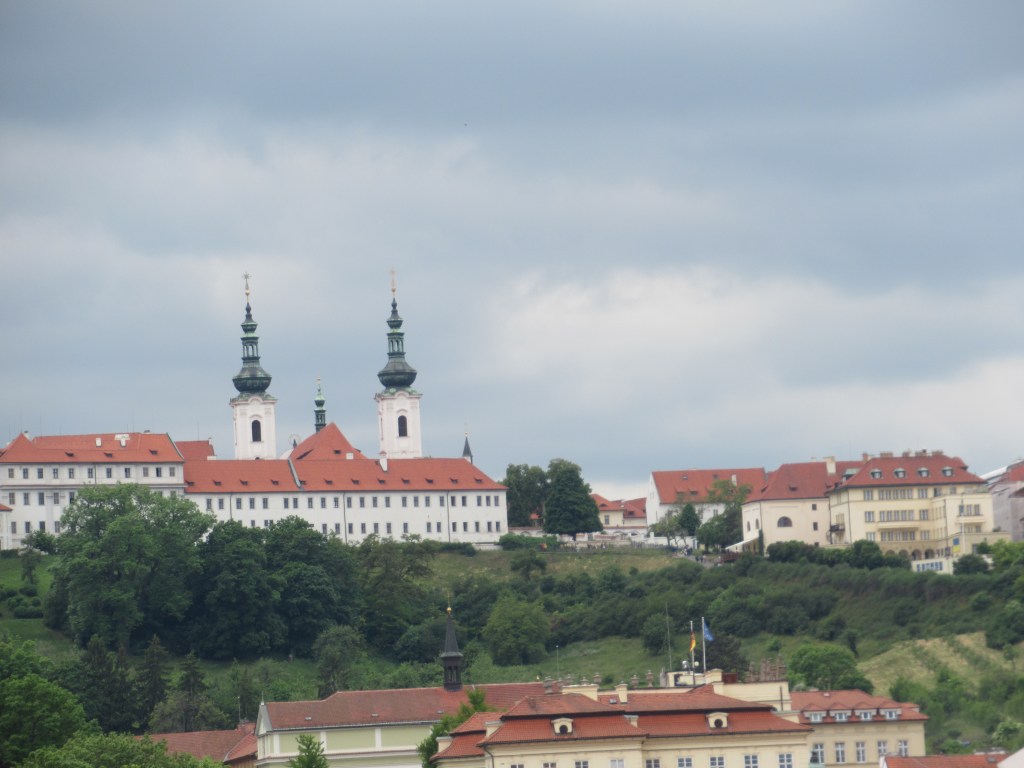
I didn’t climb these towers, but they are visible from almost any other tower in the city. On the left is Our Lady before Tyn, right on the Old Town Square. The church was built in the Gothic style from the 14th to the 16th century. The interior was remodeled in the Baroque style in the 17th century. On the right is St. Vitus Cathedral in the Prague Castle complex. It is the largest and most important religious building in Prague. It was built starting in 1344 in the Gothic style. The main tower is 337 feet tall.
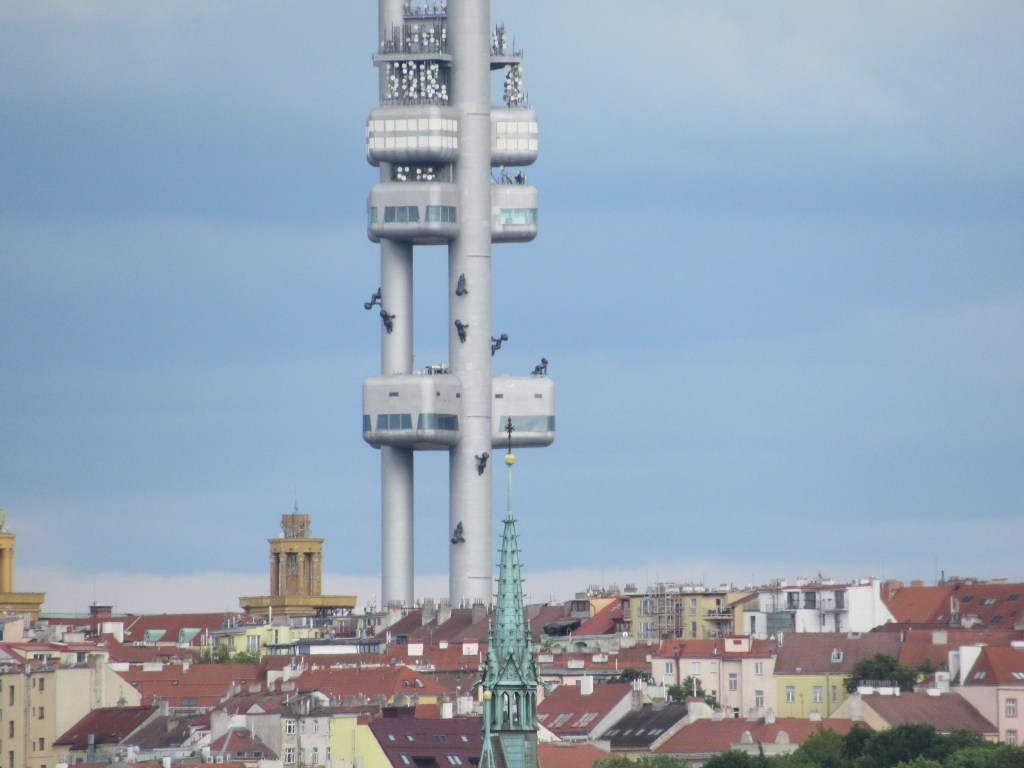
And finally, lest one think all the towers in Prague are centuries old, here is the  Žižkov Television Tower, built between 1985 and 1992. At one time it was voted the ugliest building in Prague. In 2000, ten fiberglass babies by the sculptor, David Černý were added. These babies have a bar code instead of a face. The babies were replaced with identical, more permanent sculptures in 2017.

Obviously, these are just a few of the hundreds of spires and towers in Prague. Perhaps I’ll have a chance to go back someday and climb a few more. Afterall, didn’t Robert Browning say, “Ah, but a man’s reach should exceed his grasp, Or what’s a heaven for?”
Remember the Raisin! (All of it)

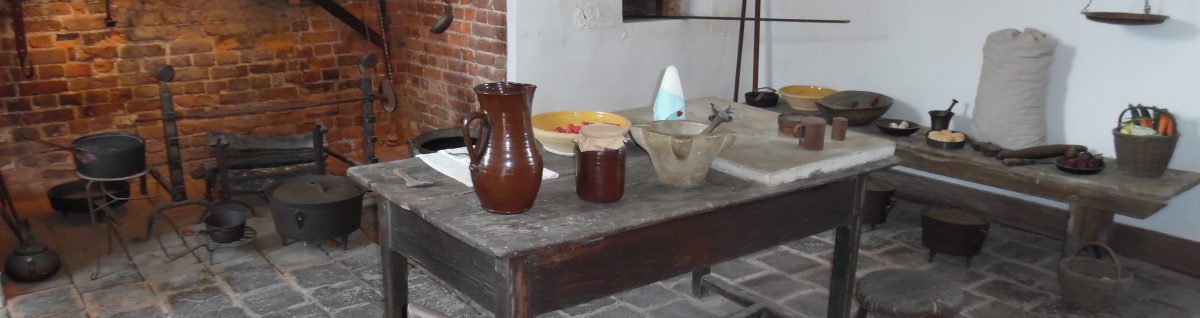
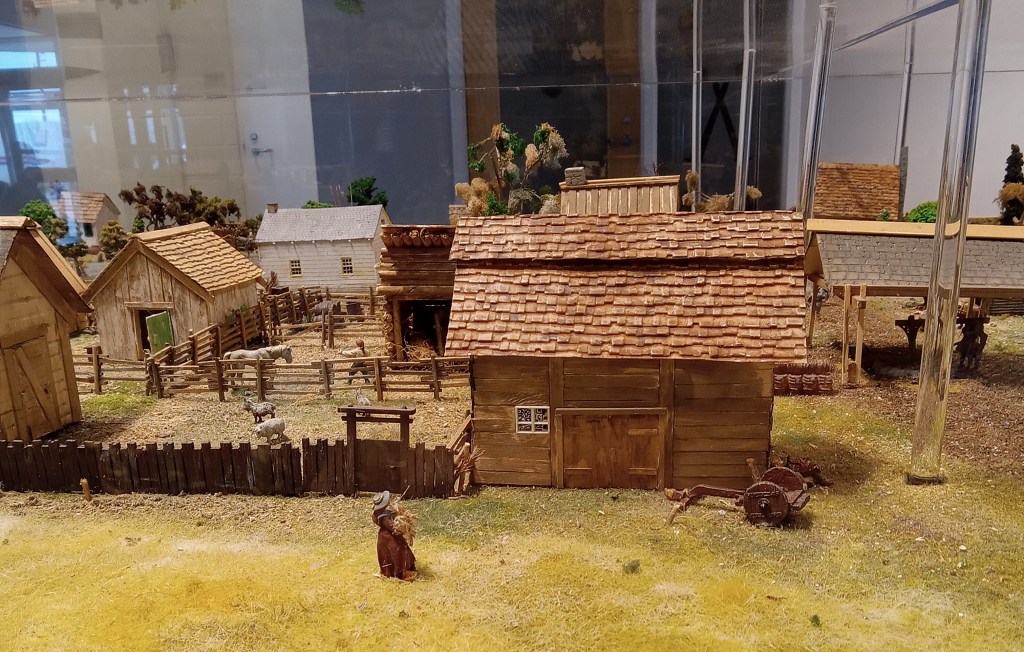
Diorama at River Raisin National Battlefield Park

Most, perhaps all, American high schools have required American history classes. In fact, when I was curriculum director for a small rural school, American history was taught in elementary, middle, and high school. In all those classes, the progression was the same. A nod to the pilgrims, time spent on the revolutionary war and the civil war, The world wars were covered, and often the Vietnam war was squeezed into the end. No matter the grade level, the high points were the same. In all this study of American wars, the War of 1812 was barely mentioned. We might hear about Dolly Madison and the burning of the white house, but little of the far-reaching consequences of this conflict.

And yet, in some ways the war of 1812 was one of the most consequential and darkest of wars, especially for the indigenous population, with brutal and horrific acts perpetrated on all sides.

This war was fought on many fronts, from the Eastern seaboard to New Orleans to the Great Lakes. In the area around Detroit, British, Indigenous, and United States forces struggled for the control of the Great Lakes, a crucial area for trade and commerce. In 1812, war was declared. In August, US General Hull surrendered Detroit and the Michigan territory to the British. Soldiers from the Native and British alliance occupied the River Riasion settlement, a small village established by land grants from the Potawatomi to the French. 

Less than a year later, on Jan. 18 1813, US forces attacked the village and retook it in the first brutal battle of the River Raisin.  Four days later, the alliance of British and Native troops defeated the Us forces, in what was the deadliest defeat of the War of 1812. Of the nearly 1000 US soldiers holding the town, only 33 escaped capture or death. Even after the battle, the killing went on, with Native warriors taking revenge on the wounded prisoners, killing scores and burning homes and crops.

Throughout the United States, people were horrified by this ‘massacre’. “Remember the Raisin” became a battle cry, and a political slogan fueling violence and outrage  toward Native people and helping put William Henry Harrison in the White House.

But the defeat and slaughter  of the American forces only tells half of the story, the winner’s half. The battle cry does not ask listeners to remember the first battle of the River Raisin, where  American forces were equally inhumane and savage, firing on the wounded and committing other heinous war crimes. American history books call the first battle a ‘victory’ but it was just as much a massacre as the second, only a ‘massacre’ perpetrated by the winners of the war. The cry does not ask us to remember that the Native people were fighting against a vicious, inexorable invader. They were fighting for their homes, their lives.

The real tragedy of the Battle of the River Raisin is in the aftermath. In the years following, this fight was used as justification for the removal of Native peoples from their homeland. Native nations were forced to cede more and more land. Any hope for stopping US expansion disappeared. 

In 2010, the River Raisin National Battlefield park was established. With the cooperation of many Tribes, nonprofit groups, and government organizations, the park works to tell the story,  the full story of the Battle of the River Raisin, not just the ‘winners’ side. 

So we should indeed Remember the Raisin, all of it, not as the heroic winners of a long ago battle, but as a warning against the inhumanity of war, and a reminder that the victors in any war are not always the ‘good guys.’

Imagining Life at Skara Brae

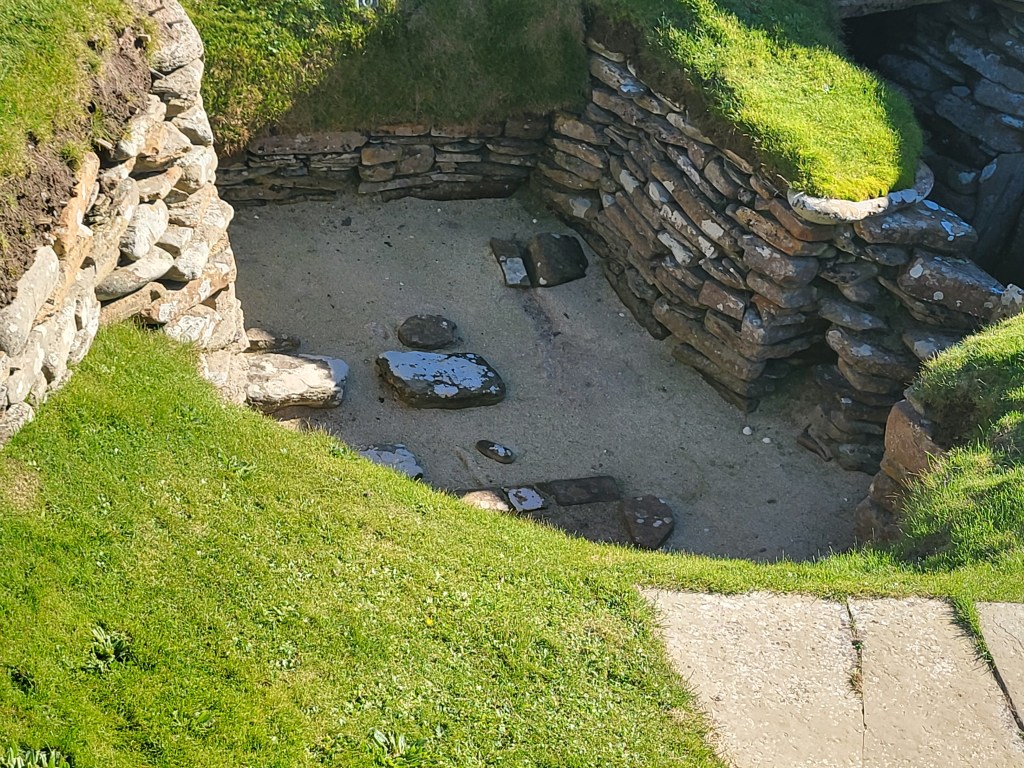
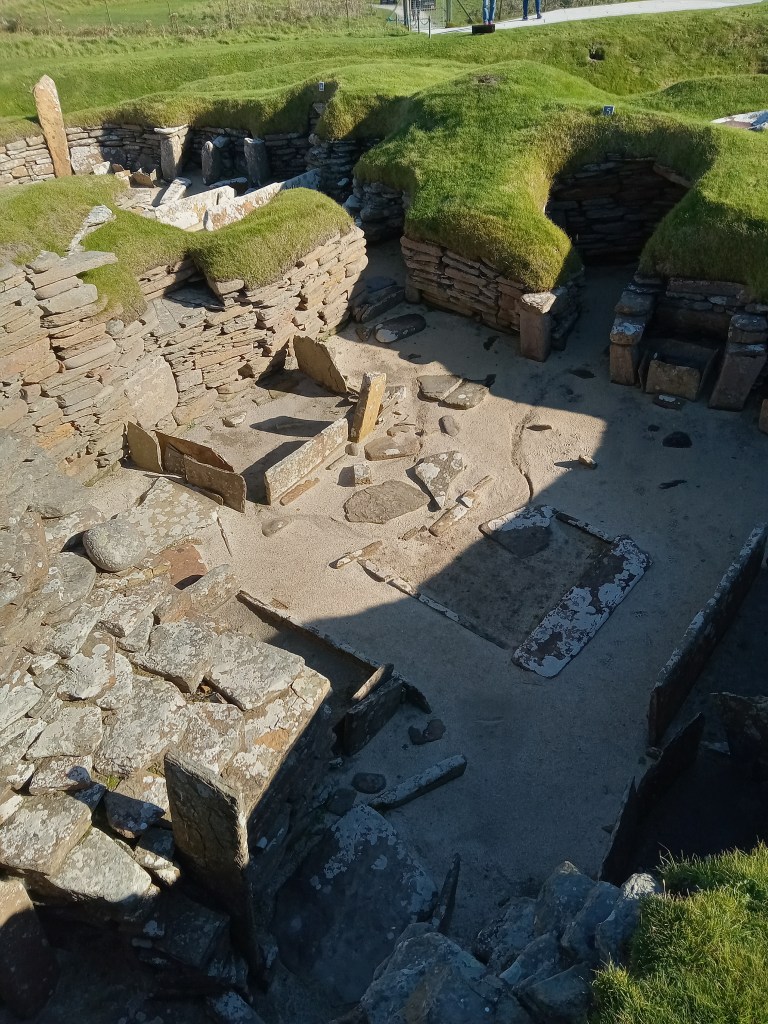
overview of a house

Almost 5000  years ago, before the pyramids were built in Egypt, before Stonehenge was erected on the Salisbury Plains, a group of farmers settled in a village on the coast of Orkney, not far from the crashing waves of the ocean. It might seem strange to establish their community on this wind swept, treeless island in the North Atlantic, but at the time Orkney was an important power center in Europe. There is ample evidence of extensive trade of goods and ideas between the nearby islands and the mainland of Scotland, England and the continent. Orkney Island was strategically located for trade back then. (And the island was equally important in World Wars I and II.) 

Skara Brae is by far the best preserved Neolithic village in Northern Europe. It has been designated as a World Heritage Site. The exhibition hall, the replica house, and the site itself all help us understand what life was like for the people living here so long ago. 

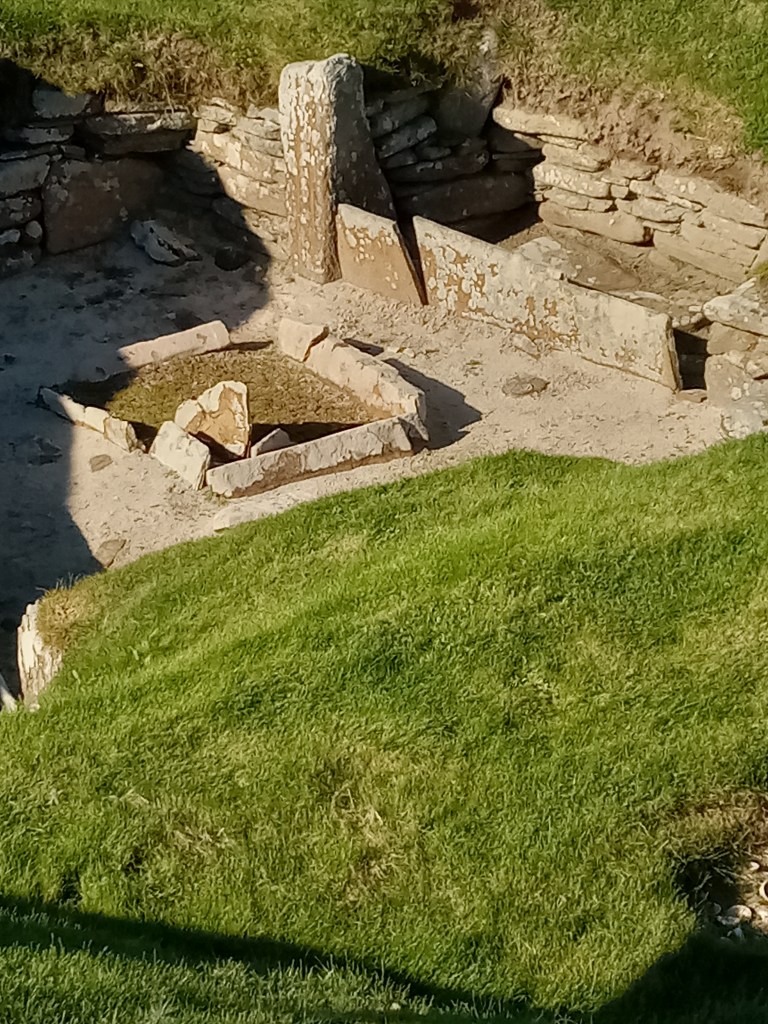
Much has been learned from studying this remarkable place, but much still remains unknown, and perhaps, unknowable. Though the roofs are long gone, we can see the layout of the stone furniture, the hearths and bed boxes, the latrines and live catch basins, all of which offer clues to life here. However, much of the ‘stuff’ that makes life comfortable is perishable–the food, the clothing, the bedding, …the list goes on. For a writer, Skara Brae provides an ideal setting to let the imagination soar.

Using facts gleaned from archeologists’ studies and reasonable guesses, here is one version of a day in the thriving village of Skara Brae. I imagine…

Bed box and hearth

A young mother, we’ll call her Lin, wakes early to nurse her baby. Sleepily, she crouches in the stone bed box alongside her two older children, her old father, her husband, and her sister. The stone floor of the bed is cushioned by bracken and skins, and Lin is comfortable surrounded by her family.

The room is dark and smoky.. There are no windows. The hearth fire has burned low overnight, but thick stone walls with piles of midden surrounding them keep out the chill wind and deaden the sound of  the sea.

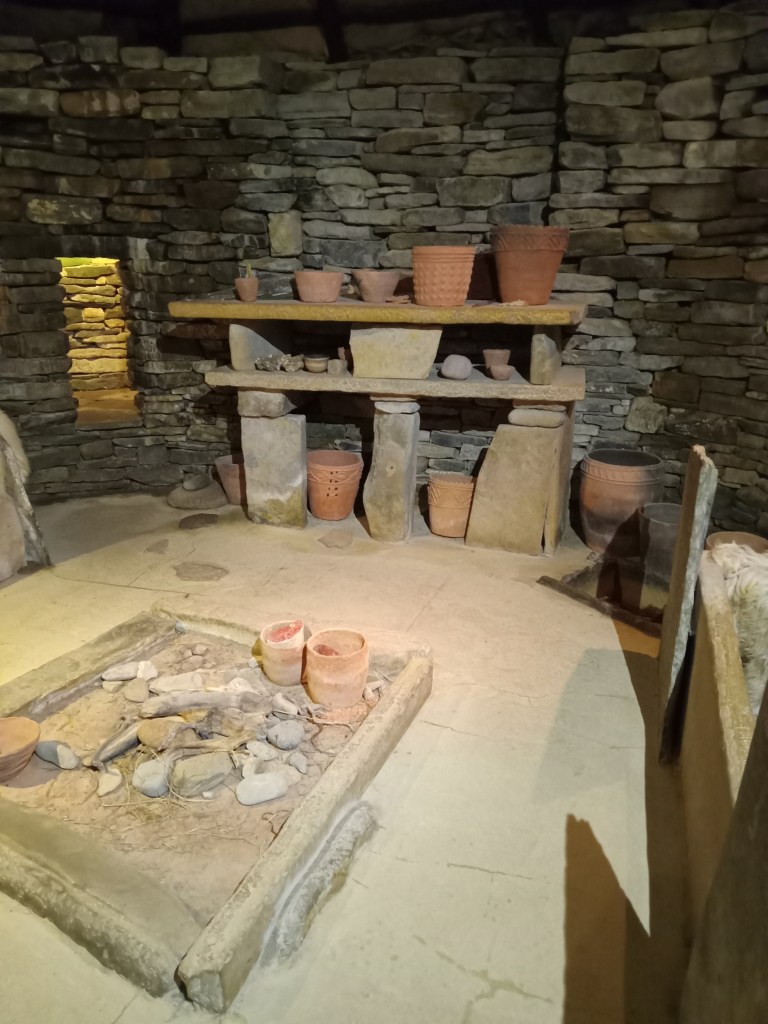
Shelf unit and door to latrine

Lin rises and settles the baby in her sister’s arms. After a quick visit to the corner latrine with its drain under the settlement, she builds up the hearth fire, burning dried seaweed and animal bones. As the rest of the family wakens and joins her by the hearth, she prepares a meal to break their fast. She heats stones in the fire and drops them in a pottery jar containing a pottage of grain and berries, along with some limpets the children gathered yesterday. Her oldest son cracks some hazel nuts to add to the meal. The mixture has fermented slightly, giving it a tangy, earthy taste. It’s fall so food is plentiful and the family will eat well today.

After eating the family scatters to their chores. Lin’s father-in-law is a master carver. He’ll spend the day in the workroom at the far end of the passage connecting the houses in this village. As he carves the walrus tusks into pins and cattle teeth into beads, he’ll teach the craft to the older children of the village. They expect to trade these carvings with visitors before winter closes them off for a time.

Lin’s husband goes outside to inspect the corbelled stone roofs of his and his neighbors’ houses to make sure the last storm did not cause any damage. He’s the best builder in this community, with knowledge and practice of fitting the stones together. Many of the men will fish today, but he and a few others have planned a hunt for red deer which roam the island.

One of the old grandmothers of the village takes the younger children to the beach. She’ll guide them in gathering limpets, and other shellfish. Carrying her baby in a deerskin sling, Lin goes with her friend to milk the sheep clustered in a pen not far from the village. They’ll use the milk to make cheese which can be smoked and saved for use all winter. Later she’ll join the other women of the village to harvest the crop of bere (an ancient type of barley) they have planted a little way from the village. 

Days have been growing shorter as winter approaches. After working all day with their neighbors, the family gathers again in their one room house. Lin’s daughter has found a handful of white feathers from the sea birds on the beach. Lin carefully arranges them in a display on the stone shelf opposite the doorway. In the soft light of the fire, the family eats the evening meal enjoying the remains of the same pottage that they had in the morning and will add to again the next day. Lin takes the set of dice her father-in-law carved from the shelf, and they enjoy a lively game. The grownups laugh and joke with each other while the children fall asleep.

Finally Lin banks the hearth fire and they all settle into the bracken lined bed box, happy and cozy after their productive day.

Workroom

Skara Brae was inhabited for 300 or 400 years, and then the place was abandoned. We don’t know why people stopped living there, whether it was a sudden departure, or a gradual one. Perhaps a terrible storm brought too much sand or perhaps the younger generations gradually moved away, looking for a better place. What we do know is that after the village was abandoned, it was buried by the blowing sand and forgotten. Until centuries later, in 1850 another storm revealed part of the hidden village. So much that is unknown… so much for the visiter to imagine.

An Ancient Grain

Oats and Beans* and Barley Grow
But you nor I nor anyone know
How Oats and Beans and Barley Grow
(Children’s rhyme and circle game first mentioned in Joshua Cushing’s The Fifer’s Companion (1790)
*In some versions peas or wheat is substituted for beans.

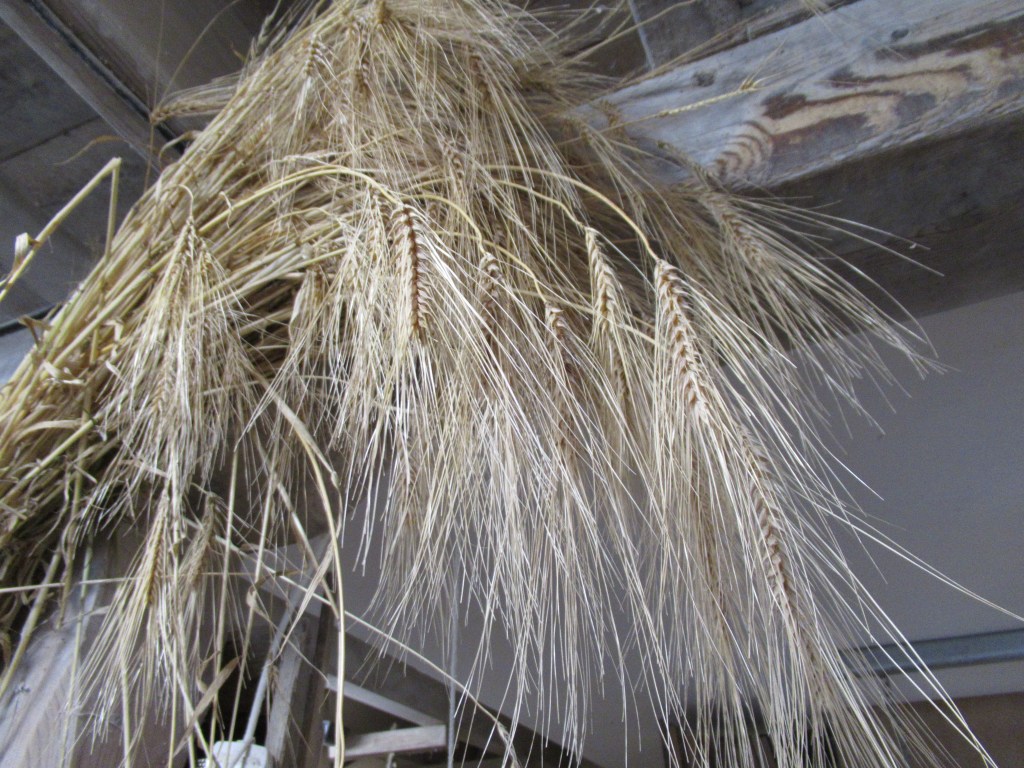
We don’t hear a lot about barley these days, but it is, in fact, one of the oldest grains, first cultivated around 9000 BC in the Fertile Crescent. From there, barley diverged and spread through Asia, Europe and Africa with different varieties thriving in different places. I came across one such variety on a recent visit to Orkney.

Bere (pronounced close to bear or bare) is a six row barley variety that has been grown  in the Orkney Islands of Scotland, for around 5000 years. It is a fast growing barley, sometimes called 90 day barely, well suited to the long summer days and longer winters in Northern climates.  Besides growing well in the Orkneys, bere is very nutritious, having more protein than modern two row barleys.

Reconstructed neolithic house in Skara Brae

Early neolithic sites in Orkney include evidence of bere cultivation and processing. Centuries later, Pictish farmers grew bere. When the Nore came, the discovered bere was very similar to their barely variety which they called bygg. 

A conversation with my son, an archeologist, leads me to hypothesize that the neolithic farmers did not bake bread or bannocks with bere, but made a grain porridge, either boiling bere meal and water in a clay pot on the hearth fire, or adding hot stones to the water and meal in the clay pot. It is likely they added other things to this porridge also, probably berries, seaweed, small rodents, fish, or anything else they planned to cook and eat. My son also reminded me that a pot of grain porridge left unrefrigerated ferments. These fermented porridges were mildly alcoholic and led to some of the first beers produced. I find it interesting to note that beer, potion, and poison probably all come from the same proto-indoEuropean root *po(i) to drink. 

Neolithic people used a saddle quern to grind the grain. The grinder, probably a woman, would kneel, and rub a stone back and forth over the grain in the bowl of a larger stone. The oldest saddle quern found in the Orkeneys was dated to 3,600 BC and found at Knap of Howar on Papa Westray.

By the iron age, the saddle quern was replaced by a pair of flat mills stones, in which the upper one rotates. And then by the viking era, some mills were converted or built to use water power .

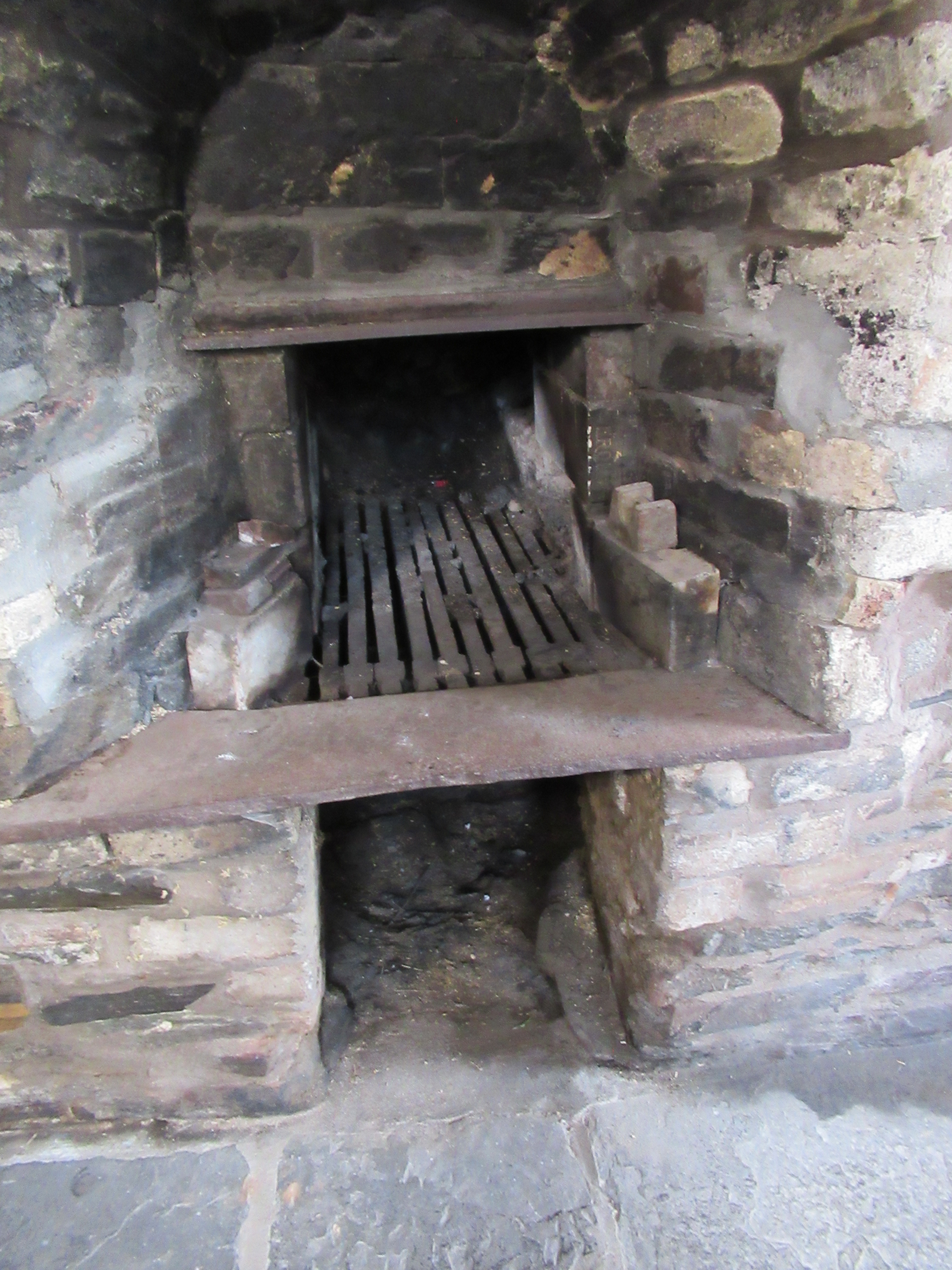
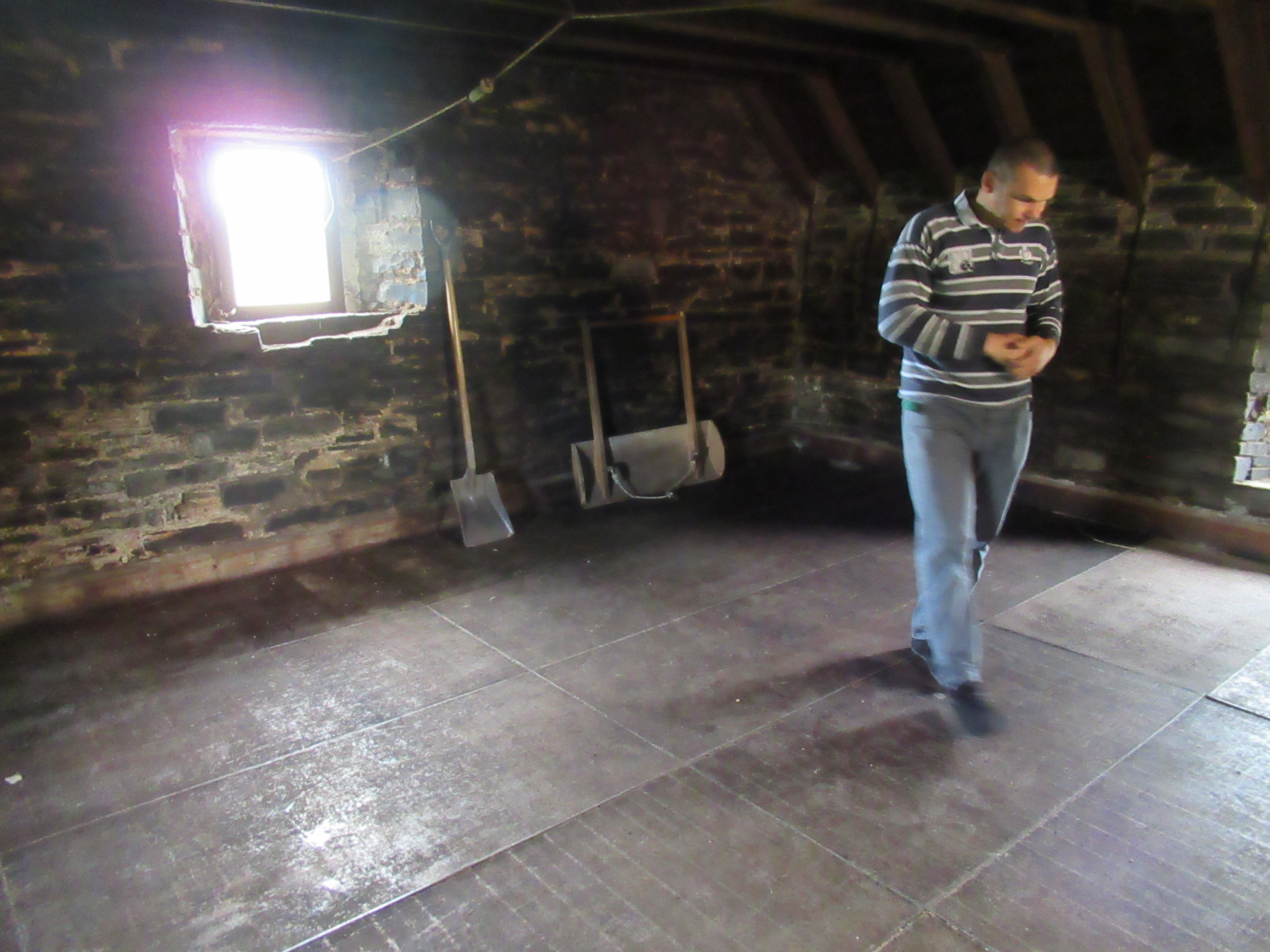
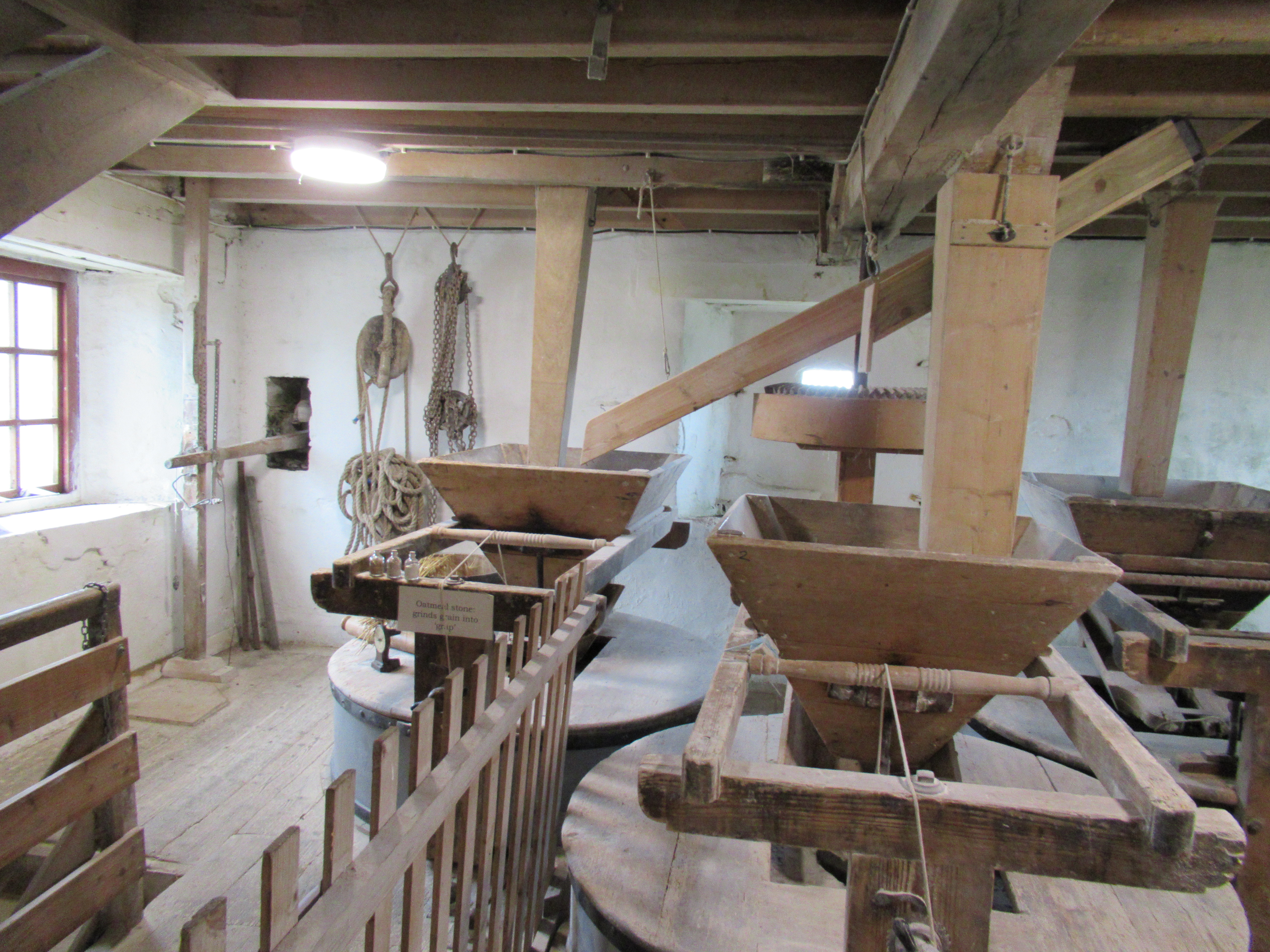
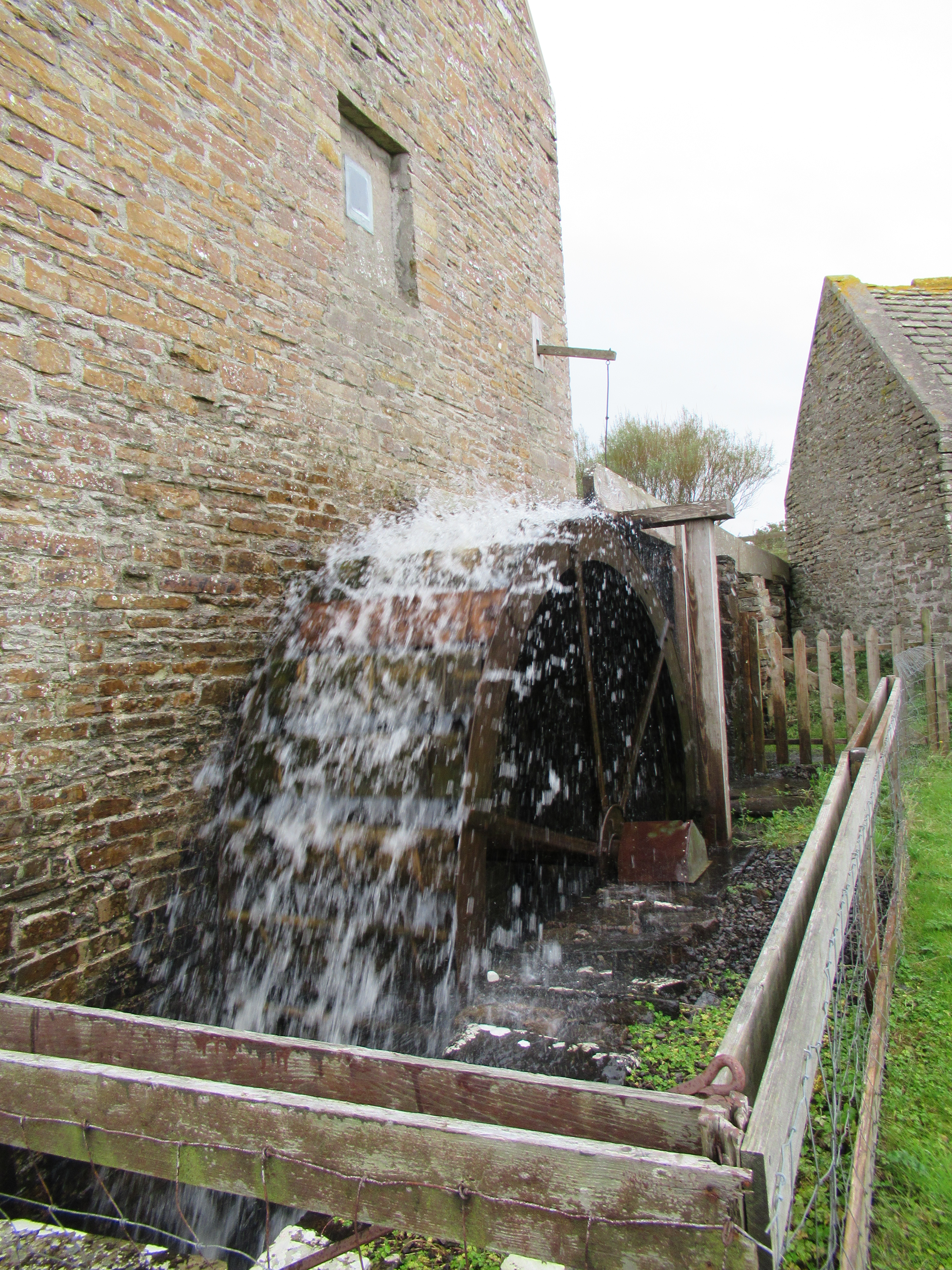
Nowadays, the Barony Mill, run by the Scottish Heritage Trust in Birsay, Orkney is the only mill still processing bere. The mill here has been in operation for over 300 years using an overshot waterwheel. I learned it  takes two and a half days to process a load of bere. It must be dried, then ground through 3 wheels to remove the husk, crush the grain, and finally grind it into flour.

Views of Barony Mill: Drying oven, drying floor, grinding wheels, water wheel

Of course, I had to buy some bere flour, and bring it home to try out. So far I’ve made an apple cake and several types of bannocks. Bannocks, originally unleavened, flat cakes of barley or oat baked like pancakes on a flat stone, that had been heated in the fire.(later a griddle was used)

Early 1800’s unleavened bannocks:

  • 300 ml (½ pt.) milk
  • 25 gr. (1 scant oz) butter
  • 230 gr. 8 oz. bere meal
  • 1/4t. Salt.

Heat the milk and butter, add salt and meal to make a soft dough. Knead lightly, roll out about ¼” thick. Fry in a lightly oiled pan or griddle. Flip to finish. Makes 2 small bannocks

After baking soda and cream of tartar came into common use in the middle of the19th century, bannocks, along with all other quick breads, underwent a major revolution. Bere Bannocks made today are light and airy like a scone. There are several recipes available for bere bannocks, One of the best sources is Barony Mills: https://baronymill.com/orkney-bere-bannocks/

Unfortunately, as far as I know, bere meal is unavailable in the United States as it is only sold in the UK. Perhaps that’s one more good reason for a trip to Scotland.

Sources: Ashworth, Liz. Book of Bere. Berlin LTD, Edinburgh, 2017.

Dragon’s Nest?

A Peak at House on the Rock

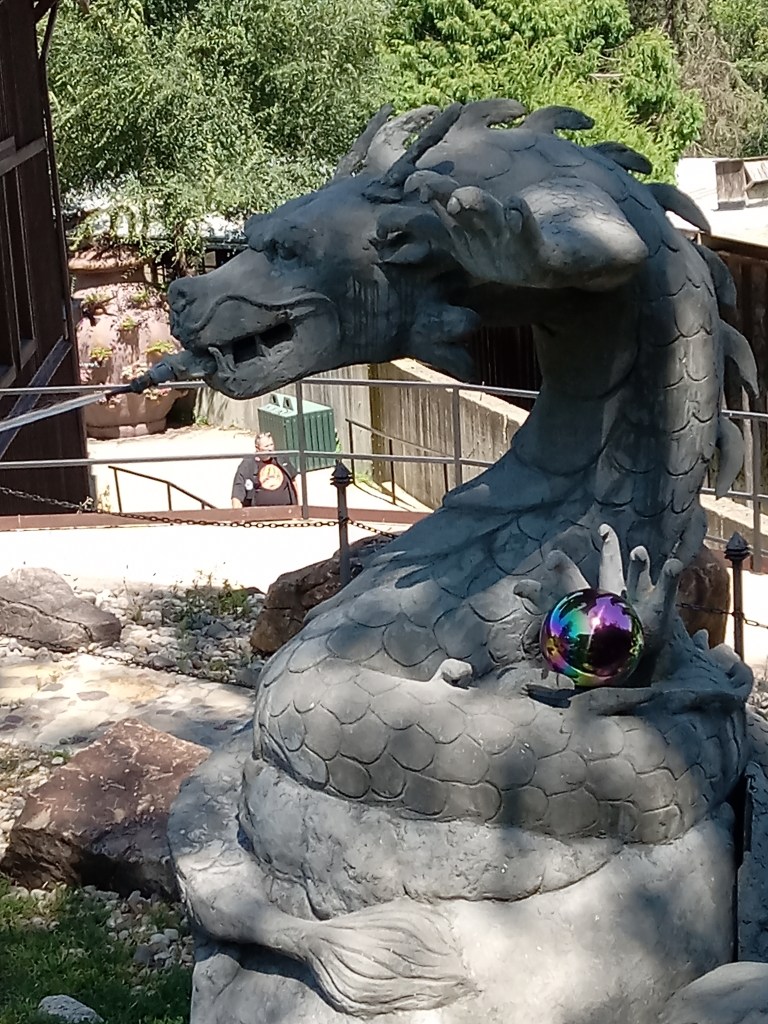
a dragon to welcome visitors

Anyone living in Southwest Wisconsin or Southeast Minnesota is likely to have heard of The House on the Rock. The place was even featured in Neil Gaimon’s American Gods. Not exactly museum, not quite an art gallery, this one-pf-a-kind house is an architectural wonder, full of …things. All kinds of things. Ships models and doll houses, Automated musical instruments, clocks and gears. Crown jewels and weapons of all types. The largest carousel in the world.

And dragons.

The house is built on a chimney of rock in rural Wisconsin. It features incredible views from cozy rooms using the natural rock to guide the size and shape of the structure. Alex Jordan, creative architect and collector extraordinaire began building it in 1945. It was opened to the public in 1960 and has attracted millions of visitors since then. Until his death in 1989, Alex kept adding onto the complex. The items within are a unique, and often unlabeled, collection of antiques and reproductions, a curious mix illustrating the wide-ranging interests of the creator. 

To me , the most surprising feature is the vast number of dragons within the complex. Not a separate ‘dragon’ section, but the ubiquitous inclusion of dragons and dragon themed objects.

Though I suppose I really shouldn’t be surprised. After all, if a dragon were to find itself in Southwest Wisconsin, what better place to perch and build a nest than the quirky house on a rock, overlooking the vast fields and woods of the surrounding valleys?

The Pinery: A stage stop in the old West

Before the modern roads and cars criss-crossed the country, before the railroad connected the east and west, even before the famed Pony Express dashed across the deserts,  there was the Butterfield Overland Stage route, a series of stations linking the two halves of the nation. The Pinery is one such station in what is now Northern Texas.It is located at the top of Guadalupe Pass, in what is now Guadalupe Mountain National Park, with a view of Guadalupe Peak, the highest point in Texas. 

 The crumbling stone building is not much to look at now, but for a brief time, this place was an important stop on the Butterfield Overland Stage route. John Butterfield set up the route to skirt south of the Rocky Mountains, so that mail could be delivered year-round. The Route, from St. Louis to San Francisco, opened in 1858 and ran until the start of the Civil War. It was some 2,800 miles long, with about 200 stations along the way. This station here at the Pinery  was closed in 1859, only a year after opening because of the constant danger of raids from the Mescalero Apaches living in the area.

The site had been used previously as a military camp. When the place was repurposed as a stage stop, a corral and station house were built. The corral, at 2,211 square feet, was nearly as big as the station house, which was 2,337 square feet. The station had three rooms, a fire place, and stone walls that were 30 inches thick, in the vain hope they would offer protection from the Natives. Within a few months, a high-walled rock enclosure protected a wagon repair shop and a black smith shop, in addition to the station house and corral. Including the station master, seven or eight men worked full time at the station.

The only thing left today is a partial stone wall, buttressed by wood braces. But the sight still evokes images of that rattling coach blasting into the yard in a cloud of dust. No overnight stop or meal service was offered. With just a quick change of horses, the driver took off again, trying, and usually succeeding, in making the entire journey in 25 days. This was almost miraculous, considering before the Butterfield Overland Coach, mail to California was sent by ship around the tip of South America, a journey of four to eight months. Delivering the mail was the primary purpose of the stage, but the occasional passenger braved the trip as well. Such travel was far from comfortable. In fact, one passenger compared the trip to hell.

Today we take communication for granted. We carry cell-phones in our pockets to talk or write instantly to friends, family, and businesses world wide. Packages can be sent across the country in days. But the world of 150 years ago was incredibly different. As young men and women moved westward, a good-bye to a parent or sibling might be forever. People left behind might never learn the fate of those who had gone away.  

Over the years, telegraphs replaced the pony express. Then telephones replaced telegraphs. Roads and rails were built and the vast wildernesses crossed. In the modern age of constant connection, I think it’s worth remembering the self-reliance and independence of those who forged ahead, tetherless, without a ‘lifeline’ to ask for help.

Thoughts on University: Salamanca

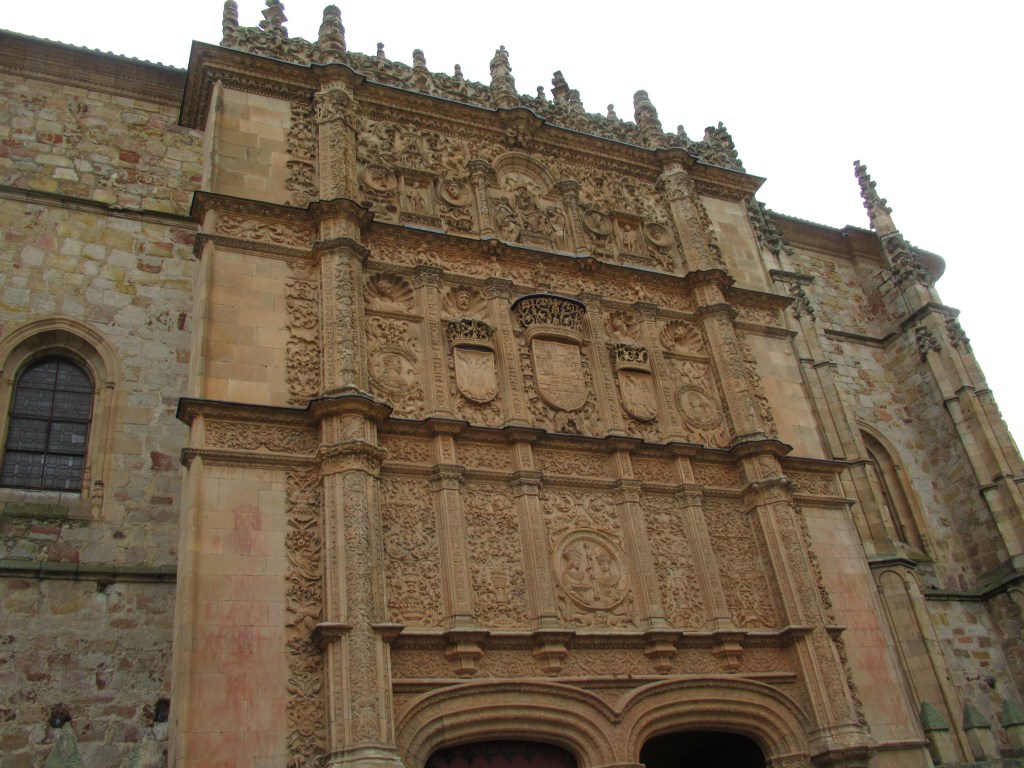
Salamanca University, Spain

I have alway loved education and dreamed of going to college from the time I was about ten years old. I have happily pursued that dream in many different places. Years ago, I attended classes at the Sorbonne University in Paris, France. At the time, I learned that the Sorbonne was one of the first established universities in the world. Founded between 1160 and 1250, it is certainly among the oldest in Europe. However,  since the university suspended operation during the French revolution and the upheaval following, the Sorbonne is not the longest-running university in Europe.


In fact, the title for ‘oldest university’ is in dispute, partly because there are different interpretations of what constitutes a university. Currently, a university is considered to be an institute of higher learning offering degrees in multiple, diverse programs. The word ‘university’ comes from the Latin phrase, universitas magistrorum et scholarium ” meaning community of masters and scholars’. By that definition we would have to consider the scholars of ancient Greece, China, and the Middle East as constituting ‘universities,’ and predating anything else in Europe, Asia, or Africa.

Perhaps it is the idea of continuous operation that  determines which university is oldest. However even with this definition, we still have multiple contenders for the title. Most often, the University of Bologna in Italy, founded in 1088 with a focus in law studies is listed as the first. However, nearly 200 years earlier, the university of Al-Quarawiynn was begun in Morocco. The founder was a woman named Fatima al-Fihri, and the center offered differing degrees in varying subjects. Both of these institutions are still in existence.

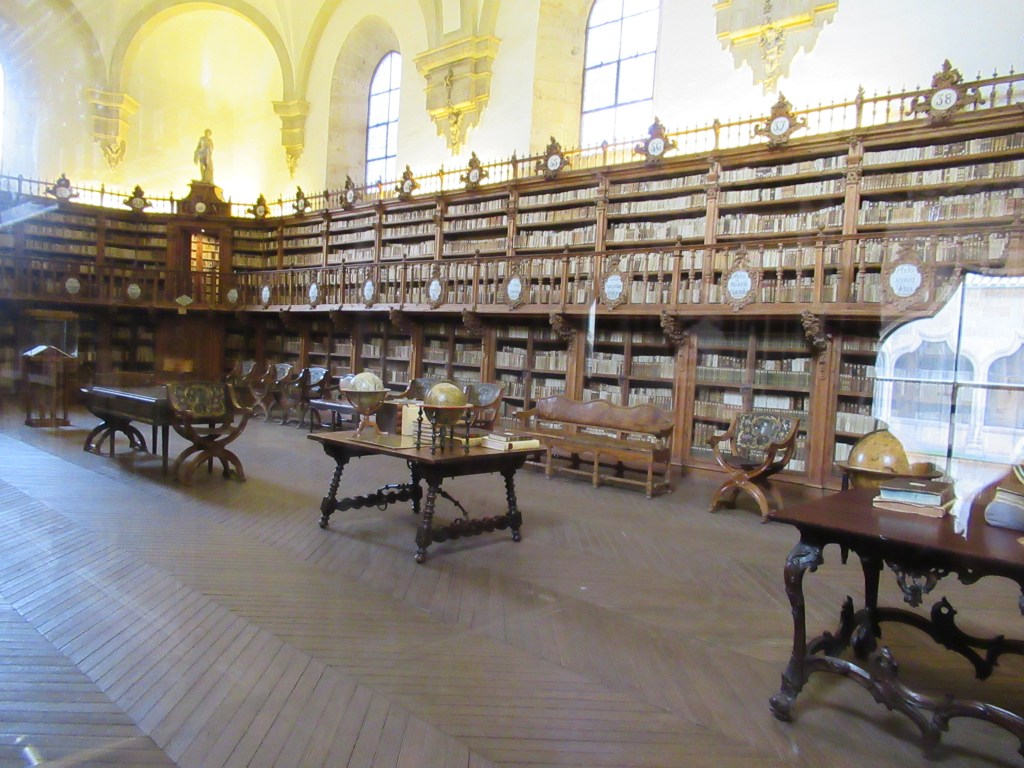
Salamanca University Library

Recently I visited Salamanca University, founded in 1134, and receiving a royal charter in 1218. This institution legitimately lays claim to the title ‘oldest University in Spain.’ Among the many famous and infamous students are Christopher Columbus, Hernando Cortez, Miguel de Cervantes, and the first Grand Inquisitor of Spain, Tomás de Torquemada.

However, de Alava’s message to 16th century viewers was probably quite different. What we call a frog is more likely a toad, which was a symbol of female sexuality. The creature is perched on a skull, symbolizing death. The message to the medieval (male) students was clear: Don’t dally with women and give in to carnal lusts or you are doomed.

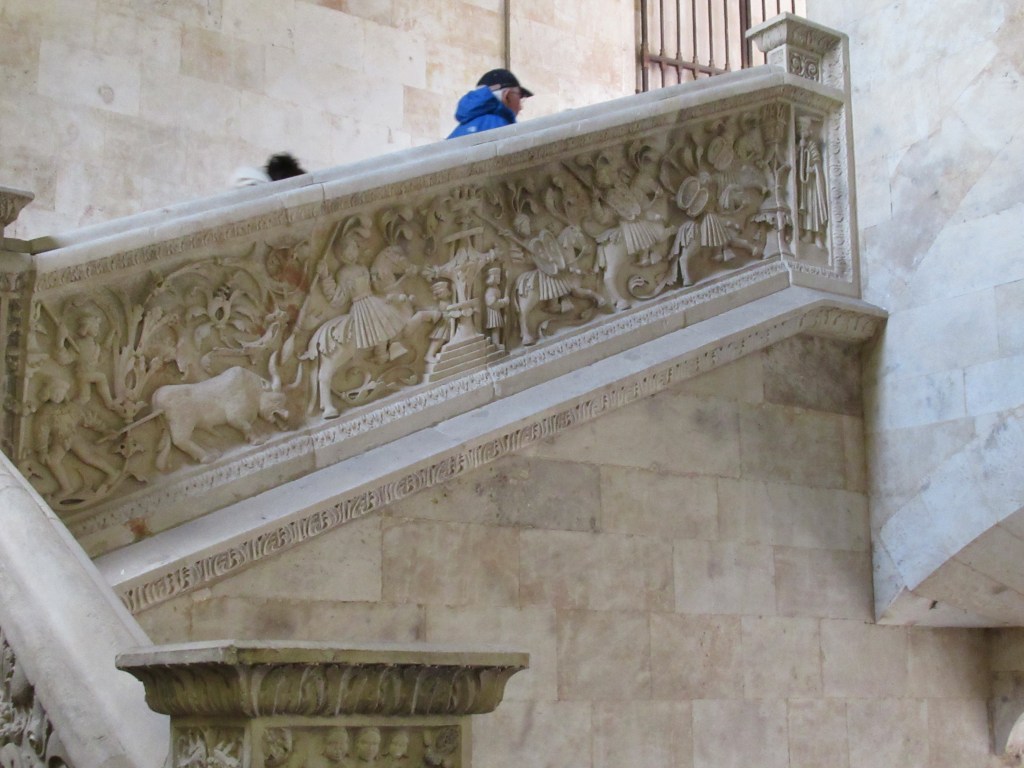
Regardless of the university’s title or its former students, the buildings housing the University of Salamanca are breathtakingly beautiful. Staircase banisters are made of elaborately carved stone. The library, one of the oldest in Europe, is a scholar’s dream. I visited on a rain-soaked day in late fall. Standing under dripping umbrellas, my companions and I found the legendary stone frog perches on a stone skull near the entryway. The elaborate work of this entry was designed by Juan de Alava and completed in the 16th century. According to the current legend, any students who cannot find the frog are bound to fail in their studies.

In the end, it doesn’t really matter which university is oldest, first, or longest running. The University of Salamanca is certainly on my list of great places for learning.

An ornate staircase within the university

Muir Woods: Ancient Beauty

Most historic places I write about are manmade, created by human efforts. Muir Woods is a different kind of place, a natural wonder, preserved, but not created, by people.

Many of the majestic trees in this old growth redwood forest are over 600 years old, surviving floods, fires, and the logging booms of the 19th century. People have lived among these ancient trees for thousands of years. For centuries, California natives, such as the Coast Miwok, managed the land they called home. European settlers drove the natives out or enslaved them, and cut many of the redwood forests down for forts, houses, stores, and other buildings. The canyon along Redwood Creek escaped such demolition only because the owners had protected it.

Elizabeth and William Kent donated their holdings to the public in 1908. That same year, the area was designated a national monument, and named for John Muir. Muir was renowned for his writings about both the beauty of and the need for old growth forests. He led efforts to preserve Yosemite Valley and Sequoia National Park.

Though few remain, coast redwoods are the tallest living trees on the planet. They can grow to be over 375 feet tall. In Muir Woods, the tallest tree reaches over 250 feet. (That compares to a 23 story skyscraper.) Though not the oldest type of tree, redwoods can live for thousands of years.

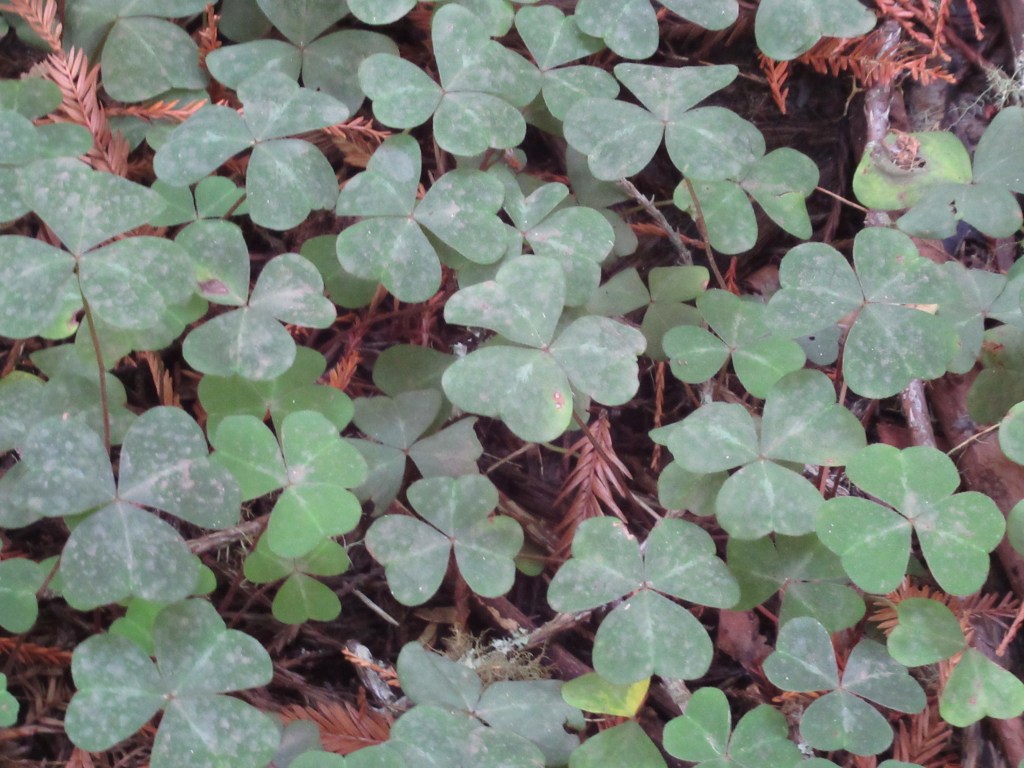
A hike among the trees in Muir Woods is humbling and inspiring. A soft layer of needles underfoot deadens the sound of footfalls, and the grounds around the trees are carpeted with ferns and redwood sorrel.

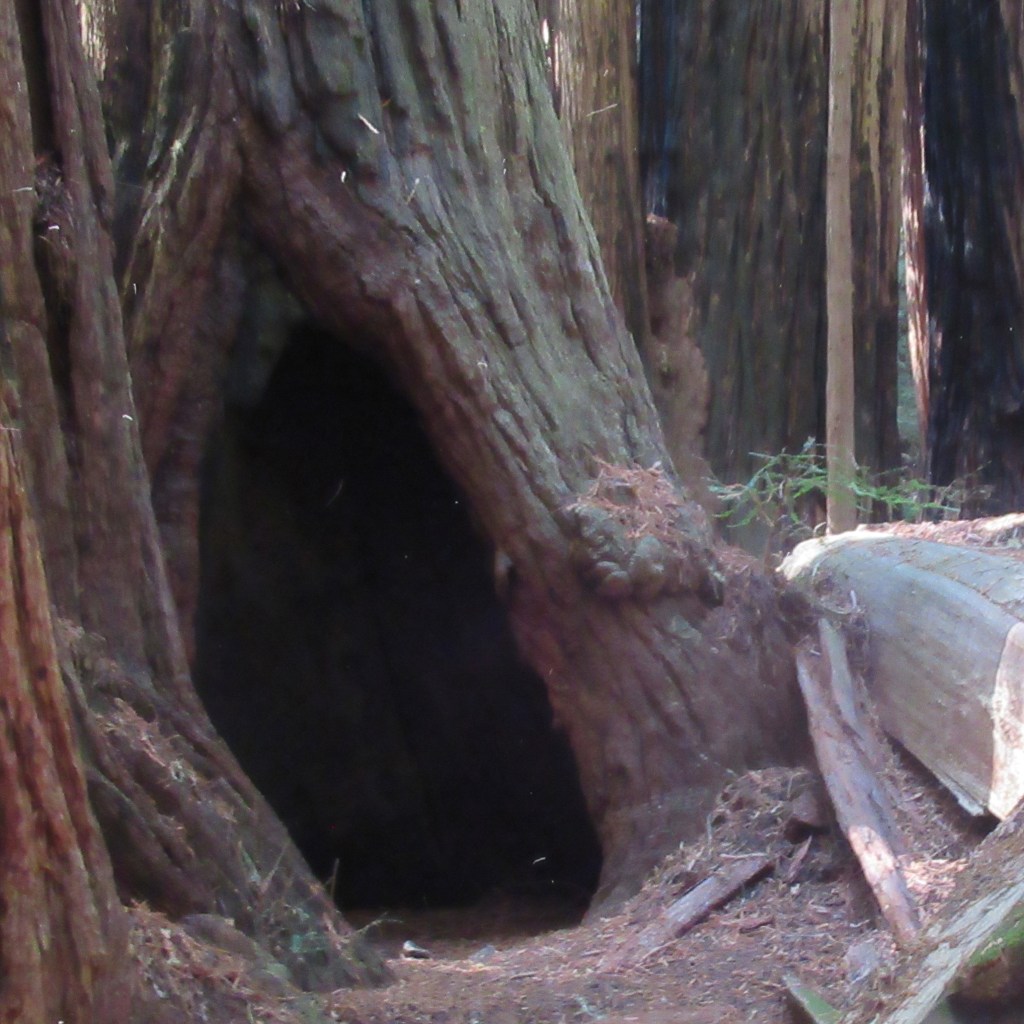
The rich scent of conifers brings back childhood memories of picnicking inside a huge redwood hollowed out by fire. My eyes are constantly drawn upwards, reaching to the heavens. The light filtering through the crowns feels like a blessing.

Though redwoods can survive low intensity fires, extremely hot fires that stem from years of fire suppression, can kill the trees. Climate change is also affecting the trees, as they need moisture from the coastal fogs. We didn’t create this ancient beauty, but I sincerely hope we continue to value and preserve it.

The Balclutha

Sometime in 1965 or 1966, when I was ten or eleven, my father brought home a small sailboat, and I fell in love with sailing. In high school, my interest in history and love of tall ships melded with a field trip to San Francisco’s Maritime Museum and the Balclutha.

At that time, the Balclutha was moored at Pier 41 East. Stepping onto the deck of a ship more than three quarters of a century old fueled my imagination. I closed my eyes and listened to the creak of lines, the groaning deck, and the screech of gulls flying overhead. As the ship rocked gently beneath me, I imagined the crew scrambling up the ratlines, the captain calling out orders. Below decks, the narrow passageways and cramped quarters conjured stories of the life of the sailors. Even the captain’s rooms, though luxurious by comparison, were tiny and dark. In some ways it reminded me of an RV, with every tiny space optimized for storage. 

The Balclutha was launched in 1886, from Glasgow, Scotland. Christened She is square-rigged with three masts and twenty-five sails, and is one of the only two such ships left in the United States. She carried cargo of coal, lumber, salmon, and other goods for over 50 years.

The Balclutha made seventeen trips around the horn in thirteen years. For most of the ship’s history, she was manned by a crew of about twenty-six men. Only the captain of such a ship could bring his wife aboard for the trip around the horn and back again. Her last captain under British registration was Captain Durkee. His wife, Alice, accompanied him on at least one voyage, and gave birth to their daughter on March 11, 1899. The ship was in the Indian Ocean, bound for San Francisco, and so they named the little girl, Inda Frances. 

That same year, the Balclutha joined the Pacific lumber trade as a Hawaiian ship. She carried lumber from the Pacific Northwest for mines in Australia. She was the last vessel to sail under the flag of the Kingdom of Hawaii. In 1901, her registry was officially transferred to the United States of America. She worked the Pacific Coast, transporting salmon from Alaskan canneries to San Francisco, and men and supplies back to Alaska. She was retired in 1930.

Even in retirement, the Balclutha had work to do. She was purchased in 1933 and sailed south to Catalina Island. There she starred along with Clark Gable in the film, Mutiny on the Bounty.

In 1954, the tired, old ship was purchased by the San Francisco Maritime Museum, and renovated. In 1978, ownership was transferred to the National Park Service and she was listed in the National Register of Historic Places in 1985.

Today, the ship is moored at Hyde Street Pier, welcoming tourists aboard and sparking the imagination of writers like me.

A Scenic Train in Oregon

Before automobiles took over transportation throughout the United States, railroads reigned supreme. Before trucks used interstates, highways, and county roads to transport goods cross-country, there were trains. 

This was just as true in Oregon as anywhere else. In fact there were railroads in Oregon in the 1850’s. These mule-powered tramways were often used in the logging industry to move timber.

In 1861, steam-powered trains arrived in Oregon. The first was a five mile stretch of the Oregon Portage Railroad, from Tanner Creek to the Cascade Rapids. The first locomotive was called the Oregon Pony.

Gradually, the southern Pacific Railroad took over operations of most of the rails in Oregon. For a time, Southern Pacific was well known for through service linking California and Washington State.  The SP also had many side branches to smaller communities and was very important for the timber industry along the Oregon coast.

Nowadays, scenic trains for tourists run along sections of the Oregon coast. One such is the Rockaway Beach to Garibaldi round trip route. The outbound leg of the trip is about  30 minutes and  offers magnificent views of the Pacific Ocean, sandy beaches, and rocky cliffs along the way. At the Garibaldi station there are several vintage trains cars and engines to view, and time to catch a great fish and chips lunch at a nearby food truck before the return trip.

Southern Pacific Railroad Depot, built in 1936. It is one of the last one room depots in the US.

Train travel has lost some of its importance over the years and is no longer the most important way to move goods or people. However, the lure of the steam engine, the clacking of wheels on rails, the conductors’ call of ‘all aboard, still bring a sense of adventure. Whenever I hear a distant train whistle, I want to climb on board and see where the journey will take me.