Fricassee

Such a delightful word–it rolls off the tongue with a musical quality and promises of a tasty treat. Used both as a noun (a fricassee) and a verb (to fricassee), the word is relatively old, appearing as early as 1490 in French cookbooks, and by 1568 in England, but its origin and etymology are surprisingly brief. It is speculated that it is a portmanteau word combining the French ‘frire’ -to fry with French ‘casser” to  break. Perhaps that accounts for some rather gruesome connotations the word has acquired.

First, there is Jonathan Swift’s Modest Proposal, which is anything but modest. In his biting satire of the English mishandling of Irish economy, he claims a fricassee or stew of the very young children of the poor would help solve the problem of poverty in Ireland. I can’t help but think of this preposterous idea whenever I hear of a recipe for fricassee.

While real recipes for fricassees usually call for chicken not children, one can’t ignore the giant in Jack and the Beanstalk. Was he thinking of fricassee when he said,  “Fee Fie Foe Fum, I smell the blood of an Englishman, be he alive or be he dead, I’ll grind his bones to make my bread.” You might ask, what does this have to do with fricassee?

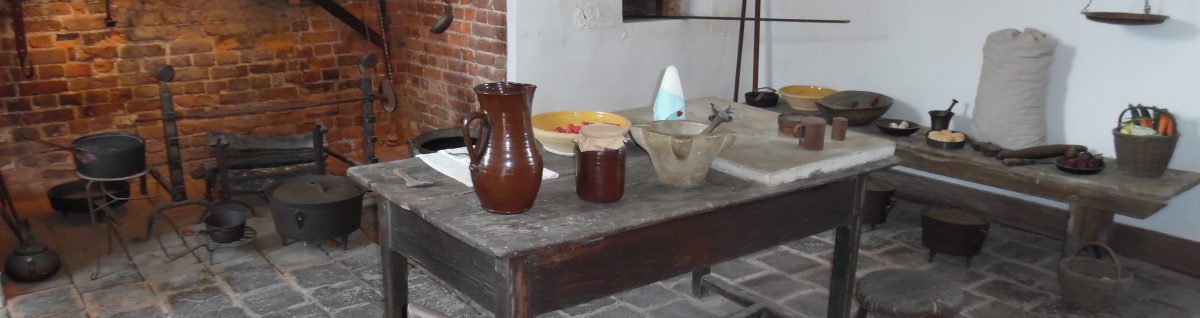
Well, although grinding young Jack’s bones is the more common rendition of the rhyme, I’ve always heard it as ‘break his bones to make my bread.’ The connection becomes clearer when you consider the recipe in Martha Washington’s Booke of Cookery, for Frykecy (40). After killing and flaying the animal hot, the cook is instructed to break the bones of a chicken or hare with a pestle. To be fair, ‘break bones’ in cookery can mean dismember or cut apart, though I’m not sure exactly how that is done with a pestle. It seems a fairly violent method of cooking, rather in line with the giant’s idea.

So what exactly is a fricassee? It is a sort of stew made with cut up meat, and fried before it is stewed (or sometimes stewed before it is fried). It is usually made of chicken or rabbit, with varying spices. Early fricassee recipes use egg yolks to thicken the gravy. Later recipes use flour. In the 17th century fricassees could be made of eggs, lambstones, veal, or sweetbreads, or even chicken-peepers (which are young chickens) and pigeons, head and all. By the 18th century, the more familiar fricassee appeared. These recipes leave out the heads and innards and thicken the gravy with a bit of flour to help stabilize it.

So in spite of all the gruesome connotations, fricassee today is as delightful to eat as it is to say.

A modern fricassee (based on Fricasseed Chicken, Brown from Child, 54)

(Note that often cooked poultry  in the 18th century was meant to be served as white as possible (see turkey blog) This recipe browns the chicken pieces first. It is followed by a recipe called fricasseed chicken, white.)

A modern fricassee (based on fricasseed chicken, brown)
(Note that often cooked poultry  in the 18th century was meant to be served as white as possible (see turkey blog) This recipe browns the chicken pieces first. It is followed by a recipe called fricasseed chicken, white.)

1 chicken or about 8 pieces of chicken
1 onion
About 3 T. butter
About ½ c. flour
1 t. Salt
½ t. Pepper
1 t. Crushed marjoram
2 t. Crushed sage

Cut up a chicken into serving size pieces (legs, thighs, wings, etc.) Wash and dredge the chicken in a mixture of flour, salt, and pepper. Fry them in butter along with 1 chopped onion.
When the chicken is browned, remove it. Add 2 cups of water or broth to the pan, along with marjoram and sage. Bring to a boil. Mix 2 T. of the flour left from dredging with 2 T. water to make a roue. Add the roue to the pan, stirring constantly. Boil 1-2 minutes. Turn the heat down to simmer. Put the browned chicken back in the pan and simmer 20-30 minutes.

Recipes for Fricassee can be found in Martha Washington’s Booke of Cookery (pages 40 and 44) and in The American Frugal Housewife p. 54, among other cookbooks.

Child, Lydia Marie. The American Frugal Housewife. Dedicated to those who are not ashamed of economy. 12th Edition. Boston: Carter, Hendee, and Co. 1833. (First published 1828)

—–. Martha Washington’s Booke of Cookery and Booke of Sweetmeats. (A Family Manuscript, Hand written circa 17th century. Transcribed and annotated by Karen Hess, New York: Columbia University Press, 1995)

On Farming and Foraging

It’s a really good thing I’m not a farmer.

If I were, I’d starve.  

However, I do dabble a bit in gardening, and I love experimenting. So a few years ago, I decided to grow wheat. After all, I bake all my own bread from scratch. Why not try to make a loaf really from scratch–starting with wheat seeds? 

Besides the appeal of trying something new, I had acquired a small packet, about a tablespoon, of einkorn wheat seeds from a gardening program I attended. Einkorn is an ancient grain, thus even more appealing to my sense of food adventure. I couldn’t let such bounty go to waste.

The first step, preparing the ground and planting the seeds was fairly easy. I took out all the weeds and grass shoots from a 6 x10’ patch of ground in our garden, and placed the seeds neatly in 3 rows. The planting instructions said this was winter wheat, so I planted in the fall, and let it rest over winter. I have to admit I wondered if mice, rabbits, or birds would find all the seeds before they were covered in snow, but I needn’t have worried. 

Come spring, tiny green shoots poked up through the dirt in all my rows. Though heartening, this was the beginning of my trouble. Not only did shoots pop up in the rows, but all over the entire patch. At that point, I realized I didn’t actually know what wheat looks like while growing. My knowledge of wheat stemmed mostly from childhood. We had a slender grass-like weed in the backyard in California. This weed developed a lovely, pale green head of seed kernels. My sisters and I called it miniature wheat, because it grew only about 8 “ high. We loved to harvest it and feed it to our dolls and Breyer model horses.( Once, we even tried cooking and eating it ourselves, but that was not worth trying a second time.) In any case, I knew enough to recognize my memories of miniature wheat weren’t an adequate guide. I looked up wheat pictures on the internet, but only found mature wheat. Since I couldn’t tell what was weed and what was wheat among the shoots, I didn’t pull up anything. By the time I actually could tell what was wheat and what wasn’t, the weeds were nearly as tall as the wheat. I worried that I would pull up the wheat along with the weeds. I did the best I could, and the wheat did the best it could under the circumstances.

Eventually, I could see it was getting close to harvest time. The wheat was starting to look rather golden, like the pictures of wheat fields I’d seen. I figured I’d gather it in just a few more days.

Unfortunately, the local birds knew more about wheat than I did. They did their own harvesting before I got there. I did manage to glean a bit of wheat from what the birds left behind. My total harvest: about 2 tablespoons of wheat, perhaps twice the amount that I had sown.  

Obviously this wasn’t enough to make a loaf of bread, but I’m stubborn. I wanted to make at least a little flour. However,  that presented another challenge. I don’t have a threshing floor or a flail to beat the wheat and remove the hulls. I tried crushing it with a mortar and pestle, without success. The seeds just rolled around. Finally, I tried a rolling pin. That worked nicely to crush the hull, but it also crushed the kernel.  I feared winnowing it in a traditional way (tossing the threshed grain into the air and letting the chaff blow away) would lose everything. Instead I sifted the crushed wheat. The result was just over a teaspoon of very fine flour. (No need to grind this wheat- the rolling pin took care of that.)

What to do with one teaspoon of flour? Well, this spring we found only one morel mushroom. There was just enough flour to sprinkle on the mushroom and fry it. My husband and I each had two delicious bites. 

Maybe I should leave both the farming and the foraging to those who know how to do it.

When a plague hits…

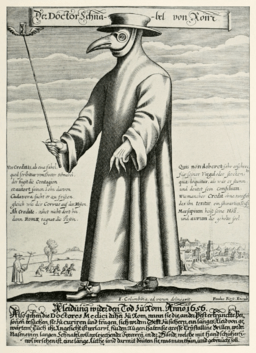
Doctor Schnabel (Doctor Beak)
Copper engraving 1656, Paul Furst
(public domain)

As the world shutters its doors, and people every where practice ‘social distancing’ in a desperate attempt to slow the spread of COVID-19, it might be useful to look back at past pandemics, especially the plague.

            Bubonic plague ravaged the world many times, though perhaps the most well-known is the Black Death, (1347-1351), one of the worst pandemics humans have ever known. This outbreak probably started in Central Asia and was carried both east and west by traders. Estimates of deaths vary from one quarter to one third of the population of Europe. Between 75 and 200 million people throughout Eurasia died. No one understood what caused the disease, how to prevent it, or how to treat it. It spread rapidly, halting business and trade, and ultimately changing society.  

            In reality the plague is caused by bacteria transmitted to humans through rat fleas or from the coughing and sneezing of an infected person. No one knew about bacteria during the Black Death, so there were many false beliefs on what caused the illness. Some people thought it was a sign of God’s wrath against sinners and a generally wicked population. Others thought it was caused by evil spirits who pricked victims with poisoned lances. Some thought you could get sick merely by looking at the sick. They believed the infection was carried from the eyes of the sick to the eyes of the healthy. Scared villagers blamed cats, dogs, Jews, or migrants as carriers. 

Some people looked for more ‘scientific’ explanations. Many believed the infection was spread by the air itself, or from poisonous fumes coming from underground. Others maintained it was due to a thick, stinking mist blown over Italy from the east. At least one physician attributed the illness to the movements of the planets. No one seemed to think the ubiquitous rats and fleas caused it.

            Since no one knew what caused the disease, means of preventing it were widely varied and mostly ineffective. In the Middle Ages, health or lack thereof was seen as a function of the four humours of the body: blood, black bile, phlegm and yellow bile. Following the theory of humours, the Paris medical faculty advised against  eating cold, moist, watery foods or exercising too much. If it rained, they advised taking a dose of fine treacle (a thick syrup like molasses). They also suggested fat people should not sit in the sunshine. 

In the face of this largely useless advice, many folk remedies developed. Perhaps carrying a bunch of flowers, especially lavender, could freshen or purge the bad air. Smoke was also seen as a disinfectant. Cunning advertisers tried to sell special powders to burn. Vinegar was used as a sanitizer. In London markets, coins were dropped in a bowl of vinegar before changing hands. Magic charms were used to ward off the plague. The word ‘abracadabra’ could be written in an inverted triangle, leaving off the first letter in each new line. As the word shrank away, so too would the disease.

Most of these efforts had little effect and more desperate measures set in. The medieval version of ‘social distancing’ meant plague victims might be shunned by family and friends and left to die alone. Public assemblies became illegal. Some households closed themselves up with extra stocks of food and water, hoping to wait out the disease. Others fled, unwittingly carrying the deadly bacteria with them. In many places, infected houses were quarantined by the authorities with all the inhabitants inside. This was different from voluntary isolation because these people rarely had the opportunity or money to buy extra supplies. When the sick were confined with the healthy, nearly everyone died.

Some doctors fled, but many tried to help their patients. They tried bleeding, lancing the swellings, or tying a toad or a live, plucked chicken to the swellings. Victims surviving the illness sometimes died from the cure. 

Doctors today have a lot better idea of how to treat illness and a much better understanding of the spread of disease. But people in general have not changed much. Granted, COVID-19 is nowhere near as deadly as the bubonic plague, but it is new and unknown. People today self-isolate or ‘shelter in place’ after stocking up on toilet paper, flour, and canned goods. Borders are closed and migrants are viewed with suspicion. No one knows how long this will last. 

The bubonic plague re-shaped medieval society in many ways, especially economically.  With so many people dead, worker shortages eventually led to improved conditions for workers. None of us today have lived through such horror like the plague. But our own pandemic has already had far-reaching effects. COVID-19 has shuttered businesses world-wide, closed schools and restaurants, and cancelled weddings and funerals. Time will tell what permanent changes this disease will have on our own society.

frontispiece of Jean-Jacques Manget’s Traité de la peste: recueilli des meilleurs auteurs anciens et modernes, et enrichi de remarques et observations théoriques et pratiques: avec une table très ample des matières. (Geneva: Philippe Planche, 1721).(public domain)
The caption, translated, says: “The costume of doctors and other people who visit those infected with the plague. It is made of levant Morocco (sheep, goat, or seal leather), the mask has crystal eyes and a long nose that is stuffed full of perfumes.”
(This protective gear was not used during the Black Death, but during later epidemics.)

(Note: Large portions of this posting come from my article “The Plague in the Middle Ages,” in Tournaments Illuminated, Summer 1983, published under my SCA name, Taira d’en Farraige Thiar.)

In Search of Ping: A glimpse of the Yangtze River

The Yangtze River is the most important river in China. Starting in the mountains of Tibet and draining into the East China Sea near Shanghai, it is the longest river in China, the  longest river in the world to flow entirely in one country, and the third longest river in the world overall. The Yangtze River is considered the birthplace of the Chinese Civilization. People have been living along its banks for thousands of years, possibly as early as 3000 BCE. Though Westerners call it the Yangtze River, this name, meaning ‘child of the oceans,’ is technically reserved for the area near the mouth of the river. In Chinese the river is called Cháng Jiang (long river) or just Jiang (the river).

The Yangtze River is also the setting for the beloved picture book, The Story about Ping by Marjorie Flack and Kurt Weise (originally published by Viking, 1933). This is the heartwarming tale of a young duck, Ping, who lives in a wise-eyed boat on the Yangtze River with his large family. Each day the duck family forages for food and then returns at night to their home on the boat. But the last duck to return home always gets a spank. One day Ping sees he will be the last duck, so he hides instead of returning home. After a night alone on the river, Ping faces many adventures including an encounter with cormorants and capture by a young boat boy. As  Ping narrowly escapes becoming the boy’s duck dinner, he is thrilled to see his home, the wise-eyed boat. Unfortunately Ping sees that no matter how fast he travels, he will once again be last. But this time he marches up, takes his spanking, and happily rejoins his family. I’ve read the story at least a thousand times and have never met a 3-year-old who didn’t love Ping. 

Ping’s home, “the beautiful yellow waters of the Yangtze River” became for me symbolic of all China. So when I embarked on a Yangtze River cruise, I wondered what I might discover of Ping. 

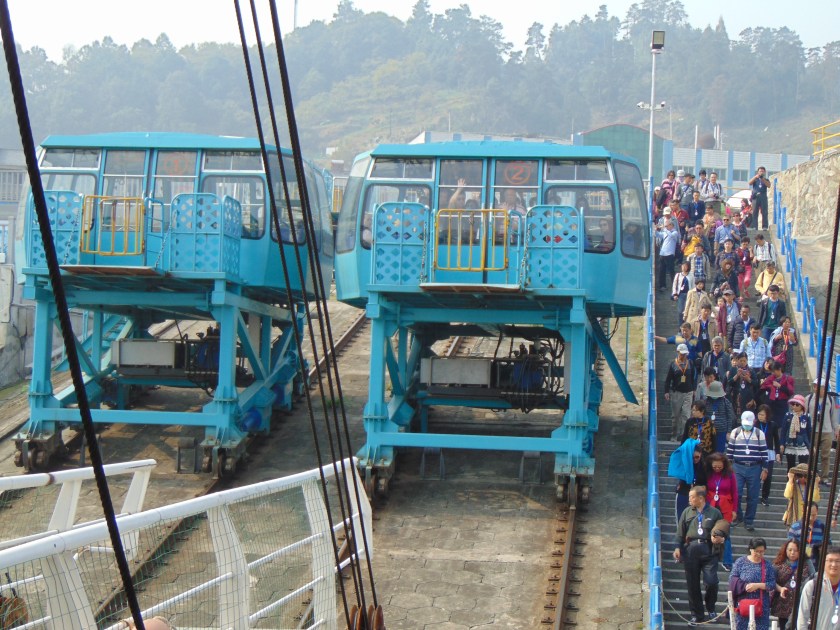
We began our cruise late at night at the dock in Maoping, which is in Zigui County, upstream from Yichang and the Three Gorges Dam. With creaking, clanking, old machinery, a big blue funicular laboriously transported us and our luggage down to the pier. Cruise boats are docked side by side, so that we had to walk through other boats to reach ours. 

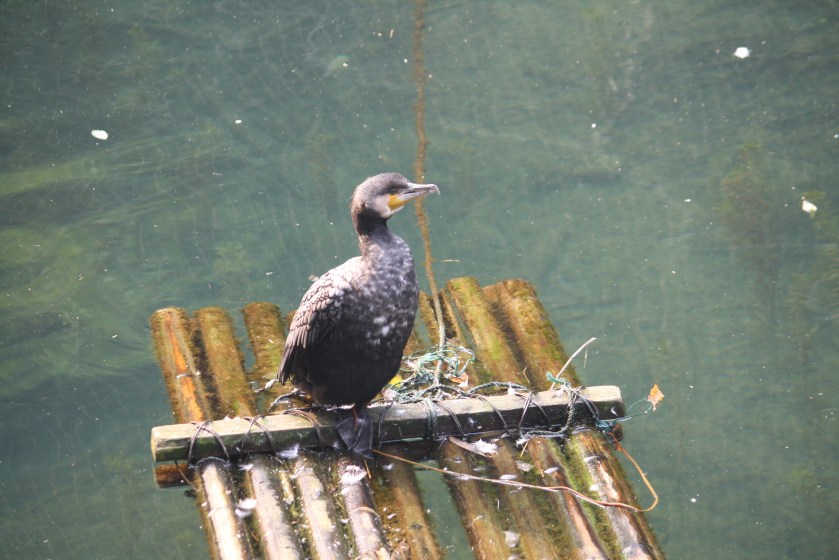
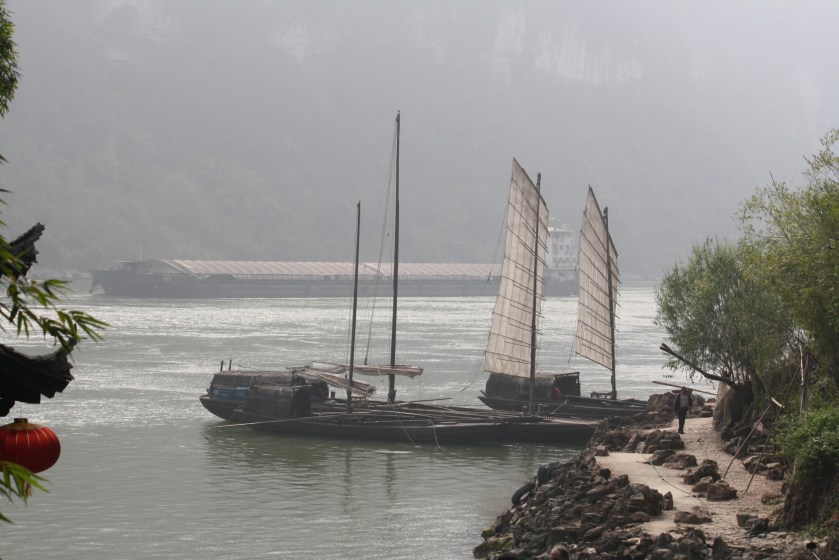
The next morning, eager to see more of the Yangtze, we went on our first shore excursion to visit the Tribe of the Three Gorges, a protected center of culture in the Xiling Gorge. This tourist attraction is located at the junction of the Longjin Brook (Jumping Dragon Brook) and the Yangzte River. It is below the Three Gorges Dam, so this large scenic area has not been affected by the dam. The site features the recreated lifestyle of the Tujia Ethnic minority. There are three “villages” along the path up the gorge: the Village on the Water, the Brookside Village, and the Mountain Top Village. Each set of houses shows traditional building styles, including houses on stilts. Hiking upstream along a paved path offers beautiful views of the river, shrouded with bamboo groves and overhung with graceful willows, surrounded by mist-shrouded jagged mountains. The path follows alongside the brook past a wooden waterwheel up to a gentle waterfall. Along the way, costumed reenactors fish, play the flute, and sing against a backdrop of sampans, junks, and houseboats. A pair of cormorants are tethered to a floating dock, and a few ducks paddle near the mouth of the stream. It could be a scene right out of The Story about Ping, except none of the boats had eyes on them.

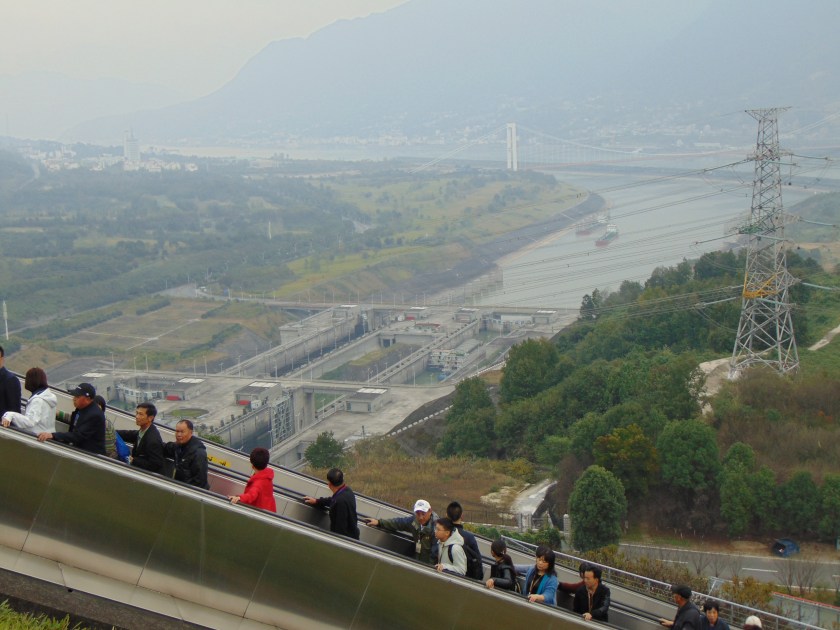
Our next excursion was to the Three Gorges Dam, the biggest hydroelectric dam in the world. The idea of a dam at this point was first put forward by Sun Yet Sen in 1919, but the actual building didn’t begin until 1993. It took 22 years to complete. The dam raised the water upstream 113 meters and required rebuilding ancient cities, moving countless artifacts, and relocating 1.3 million people (and who knows how many ducks).

The dam is big and impressive, but more interesting is the different perspectives on moving so many people and inundating  so many culturally significant areas in order to build it. This huge project has been very controversial. What many people don’t realize is that the Yangzte River was extremely treacherous for thousands of years with difficult navigation and disastrous floods. Millions have died from flooding along the Yangtze. The estimated death toll from the 1931 flood alone ranges from 443,000 to 4 million. Building the dam destroyed many things, but it also is an important source of clean, renewable energy and has greatly improved the lifestyle for millions of people. Our guide today said it was mostly older people who objected and that younger people in the area were glad of the greater opportunities and chance to better their lives.

That night, we cruised through the Xiling Gorge which used to be the most hazardous section of the river, now tamed by the dam. In the morning we docked at Wushan Pier, and took another shore excursion, this time on a smaller, wooden sightseeing boat up the Shennv (Goddess) Stream. This is a narrow gorge, with towering cliffs and spectacular views. A fine mist hung over the river, giving the cliff tops an eerie, magical appearance. Ancient hanging coffins on the towering cliffs added to the sense of mystery. Our guide sang beautiful folk songs as we motored upstream and told a story of a ghost wedding. When a young man died before he could marry, a girl chosen as his bride was killed and buried with him. This gruesome practice seemed at odds with the peaceful mountains surrounding us.

Back on the cruise ship, we continued upriver, drifting through the rest of Wu Gorge and Qutang Gorge. In spite of rising water from the dam, the Three Gorges area is still spectacular. From out of the fog, towering cliffs rise in vertiginous masses, with stratifications tilted in uncanny angles. We passed peaks with lovely names such as Goddess Mountain, Opening Scissors Mountain, Flying Eagle Mountain, Morning Cloud Mountain and Holy Waterfall Mountain.

Our ship docked for the night in Fengjie, a city just west of the Qutang Gorge. Fengjie was the capital of Kui during Spring and Autumn period 722-481 BC and Warring States Period 475-221 BC. A good section of these early period town walls and gates remain. The harbor here provides docking space for many boats, large and small, including one sampan full of ducks and chickens. They were too far away to get a good picture, but they could easily have been Ping’s relatives, though this boat had no eyes.

Our last shore excursion was to Shibaozhou (Stone Treasure Stockade).This twelve-story, 56 meters, wooden pagoda was originally from the  Qing Dynasty Emperor Kangxi (1662-1722).

Before the Three Gorges Dam was built, it was determined that the rising water might undermine the foundation of this building, so a retaining wall was built to protect it. Inside the temple, a series of very steep wooden steps leads past floors with statues dedicated to the Jade Emperor, the Queen of Heaven, and other beings familiar to me from Monkey, Journey to the West

We ended our cruise in Chongqing. As we approached the city, the towering cliffs of the gorges were replaced with more and more cities crowding the banks of the river. Smog mixed with the river fog, and the pollution became noticeable. It turned out that the first excursion was the closest I got to the traditional boat culture depicted in Ping’s story. No one I talked to along the way knew of the tradition of painting eyes on a boat. I’m guessing that Ping’s journey actually took place further downstream, closer to Shanghai. After all, I travelled from the Three Gorges Dam to Chonqing, a distance of about 450 km, or 279.6 miles, only about 7% of the Yangtze’s 6378 km  (3915 miles). 

It’s been over 100 years since The Story about Ping was written, and the Yangtze River has changed a great deal in that time. Today the sampans are motorized, the water is not yellow but green, and the water level is much higher and more stable than before the dam. Cruise ships ply their way up and down the river carrying tourists  instead of ducks. It’s easier to find Ping’s relatives in restaurants than foraging along the banks.

But the Yangtze River is still the lifeblood of China, and I’m confident Ping or his descendents are hiding somewhere in the beautiful emerald waters.

SHAKEN DAYS: Reflections on reading and memory

Place is important in all fiction, and especially so in historical fiction. I learned that in third grade when I first read Shaken Days by Marion Garthwaite (published by J. Messner, 1952). The book presents a story of a young girl’s experience of the 1906 San Francisco Earthquake. As I remembered it, the setting of the story is San Jose, at that time a heavily agricultural area and the actual epicenter of the famous earthquake.

Shaken Days caught my interest immediately when the main character, Megan, talks of the fields of mustard flowers in the orchard. My family had moved to San Jose the year before. For a short time, we lived in a small apartment across the street from an orchard, specifically, an orchard full of mustard flowers, beautiful waves of golden flowers, exactly as described in the book. Unfortunatelly, the orchard was private property and across a busy street, forbidden territory for me and my siblings. No matter how much we begged, we were not allowed to play there. 

When I read about Megan’s secret rooms in the midst of the mustard flowers, I could vicariously experience the tantalizing mustard flower wonderland. Even though the San Jose of 1962 was very different from the San Jose of 1906, I recognized Megan’s long ago world, and easily immersed myself in it. Garthwaite writes of “a green and yellow tunnel” (5) and a “green and gold room”(6). I identified with Megan and her world in many ways. LIke Megan, I had moved from a place I knew (San Bruno) to somewhere new and strange and quite different, although the move didn’t upset me as much as her move upset her. Even more telling was that Megan wanted to be a writer, a vocation I had recently discovered for myself. Reading Shaken Days took me to a time and place that was both familiar and fascinating. 
Except, I got it all wrong. I recently re-read the book, and discovered to my intense surprise that the story does not take place in San Jose at all. Megan’s mustard flower rooms are in San Leandro, and she moves to Oakland. Close, but not San Jose. Even the earthquake is not as much of the story as I remembered, occuring on page 144 of 204 pages.

It seems the book had such an impact on me, I transferred the story to the place I knew. Looking back at it, I see now why it struck a chord. Megan faces many restrictions as a girl in 1906. Her struggle gave me my first awareness of different rules and expectations for boys and girls.  In addition, her encounters with Charlie, a Chinese immigrant, and Mr. Davissohn, a Jewish rag-picker and talented musician, opened my eyes to a world of different people, each with his or her own perspective. Though I didn’t realize it at the time, Megan’s reactions to these people helped shape my own ideas of tolerance and understanding, and whetted my interest in other people and other times. Even though I got it wrong, , Shaken Days found a permanent and cherished  place in my memories.

Black Friday Bread

(This post was originally published on November 27, 2010. Though today is not Black Friday, I’ve kept up the tradition of bread baking rather than shopping.)

Black Friday Bread

Black Friday means different things to different people.  I’m not much of a shopper, so for me the Friday after Thanksgiving was really a great day for baking. I didn’t have to work, and the forecast was for clear skies, and not quite as cold as the day before. My plan was to bake 18 loaves and make this the last major bake before winter sets in.             

Everything started out fine. I fired the oven at 6:00, and catnapped for another half hour before feeding the fire again. After breakfast, I mixed up dough for 6 loaves of sourdough rye, 4 loaves of 2 day multi-grain, 4 loaves of regular whole wheat and four loaves of Italian bread with flax seed.            The tricky part of the day came from trying to match the readiness of the oven to the readiness of the loaves.  The wood was burning really fast, so I was worried the oven wasn’t heating well enough. I added more wood after noon. Meanwhile, the dough was rising more slowly than usual because the kitchen was not as warm as it is in the summer.  I turned the heat up in the kitchen.  Both the oven and the room heated up more quickly than I anticipated.  That meant the dough was ready and the oven was too hot.             

What I should have done, is waited for the oven to cool, but I was impatient. I had company over to see how the oven worked, and a photographer on hand to take pictures.  Everyone had other things to do than wait for the oven. I put in the 6 loaves of rye, figuring I would check them in 5 minutes.              I did, but one look made black Friday take on a whole new meaning. The loaves were a solid black; tops, bottoms, and sides all the color of charcoal, though they were still raw in the middle. I thought about taking them out, but decided to leave them in. After all the crusts couldn’t get any more burned, and the inside needed more time.             

One of the reasons I love baking bread in the outdoor oven is that it’s always an experiment. Most of the time, a hotter oven means a shorter bake time, but the timing doesn’t work if the oven is too hot. I let the oven cool before baking the rest of the bread, which came out beautifully. Even the burned loaves weren’t a total loss. I was able to salvage almost half of each loaf by cutting off all the crusts. The crustless rye made great bread stuffing for the turkey I cooked today for our after Thanksgiving family gathering.             

It just goes to show that it’s all in your perspective. I ruined 6 loaves of bread, but learned a new way to stuff a turkey, and I still have12 new loaves of good bread.  Over all, I’d call my black Friday a success.  And next time, I’ll wait until the oven cools.

Full of Beans

This post starts with a fair warning: I don’t like beans. With the notable exception of various kinds of green beans (that is, beans with minimal seeds and edible pods), I dislike all types of the actual bean seeds. Dislike is perhaps too mild a word. My mother’s famous bean soup, relished by all other members of my family, always made me gag. I know that beans are nutritious, a valuable source of vegetable protein, and fairly easy to grow. They are eaten with gusto in many parts of the world. The fact remains, however, that in spite of years of trying to learn to like them, I still don’t like beans.

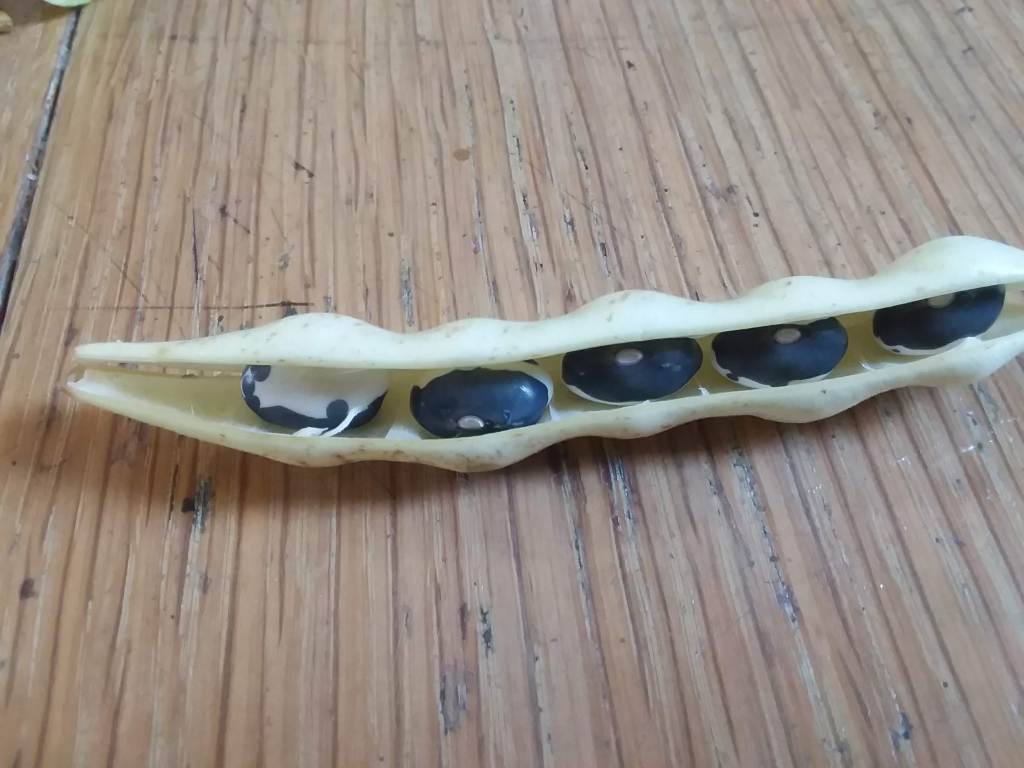
So, you might reasonably ask, why write a blog post about beans? The answer is a bit complicated. Due to vacation travels, benign neglect of the garden, and a misunderstanding, (I thought the beans we planted were green beans) I ended up with a good quantity of beautiful Heritage Calypso Beans. It turns out I hate wasting food even more than I hate beans. So I decided to find a way to cook these beans and enjoy eating them.

Easier said than done. I started by reading up on beans. Beans have been cultivated for thousands of years in both the Old and New Worlds. Broad beans, also called fava beans, were known in Asia, the Middle East, and Europe. The common bean originated in the Americas. Suffice it to say, beans have enjoyed world-wide popularity since ancient times.

With this information in mind, I searched my older cookbooks for bean recipes. Most of the Colonial-era cookbooks suggested cooking beans with pork or bacon. Older, medieval-era books had more variety in method and seasoning.

I settled on three methods of cooking the beans:

1.To Dress Beans and Bacon (18th century)

Mary Randolph suggests using tender, fresh beans (the seed portion), picked in the morning. These are to be boiled with a flitch of bacon, and served with butter. (Randolph p.106-107)

 Child recommends cooking beans with pork, but calls for soaking the beans overnight, and seasoning the pork and beans with pepper. (Child p.51)

Glasse also pairs beans with pork, but insists the two be boiled separately, then served together with butter and parsley, and topped with toasted bread crumbs. (Glasse, p.35-36)

My version: Colonial Pork and Beans

Soak 2 cups fresh Calypso beans overnight. (This step is probably not necessary with fresh beans.)

Boil the beans for 45 minutes, until they are soft.

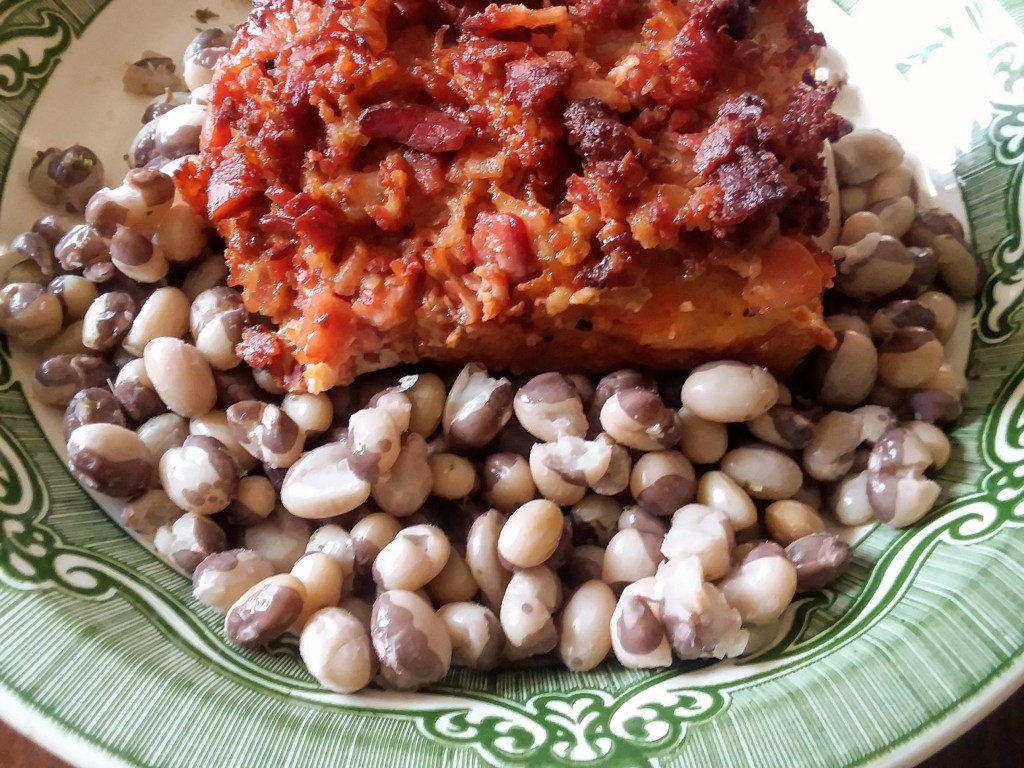
Meanwhile, roast a pork tenderloin or pork tenderloin crusted with bacon for 1-1½ hours (depending on size)(Note- all the colonial recipes called for boiling the chunk of bacon or pork, but I felt that roasting the meat would produce a better flavor.)

Drain the beans. Add butter and salt to taste. Serve them in a dish with the pork.

The result: This dish was very nice to look at, but the beans still tasted like beans to me. I could eat them if the flavor was disguised with enough of the pork. My daughter, who likes beans, thought the beans were fairly bland this way, and suggested they would be better if the beans and pork or bacon were cooked together.

2. For to make drawen benes (14th century)

“Take benes and seethe hem, and grynde hem in a morter, and drawe hem vp with gode broth; & do oynouns in the broth grete mynced, & do therto; and colour it with saffroun, and serue it forth.” (Curye on Inglysch, p. 98)

My version: Medieval Bean Dip

This is very much like a modern bean dip. 

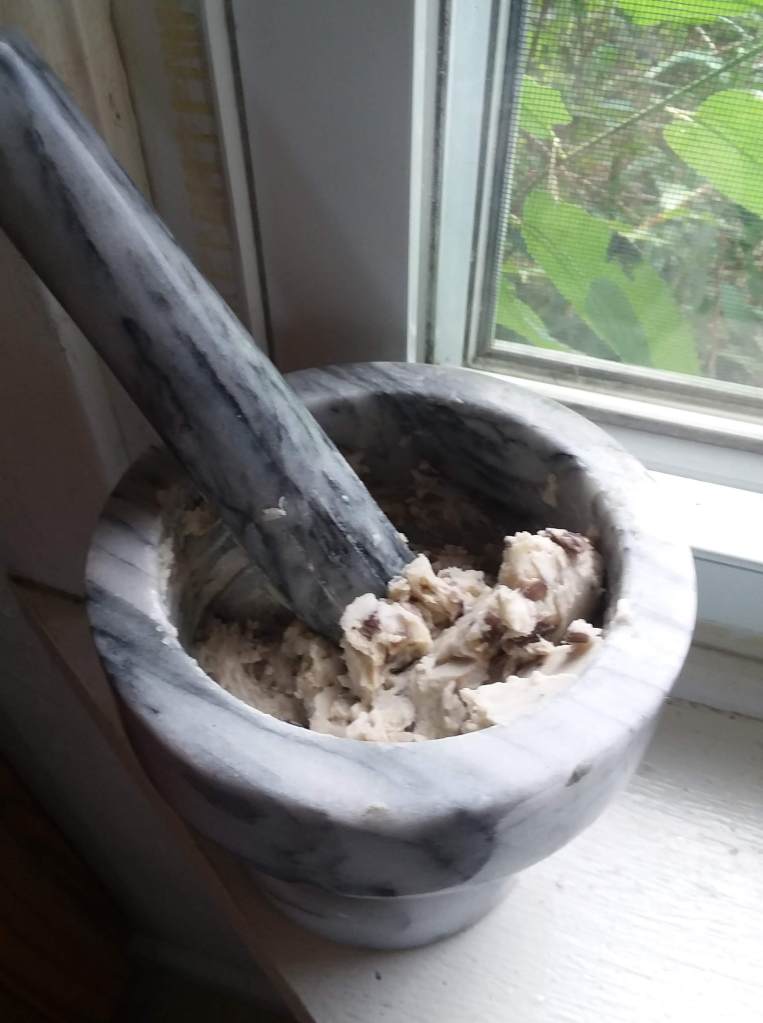
Take 1//2 c. Calypso beans, boiled until they are soft. Mash them well. Simmer ¼ c. chopped onion and a pinch of saffron in 3 T. beef broth. Add the broth mixture to the bean mixture. Season to taste.

The result: This is also a very bland dish with a strong bean flavor.

3. For to make a potage  (14th century)

“Tak wite benes & seth hem in water, & bray the benys in a morter al to nought; & lat them sethe in almande mylk & do therein wyn & hony, & seth reysouns in wyn & do therto & after dresse yt forth.” (Curye on Inglysch, p. 77-78)

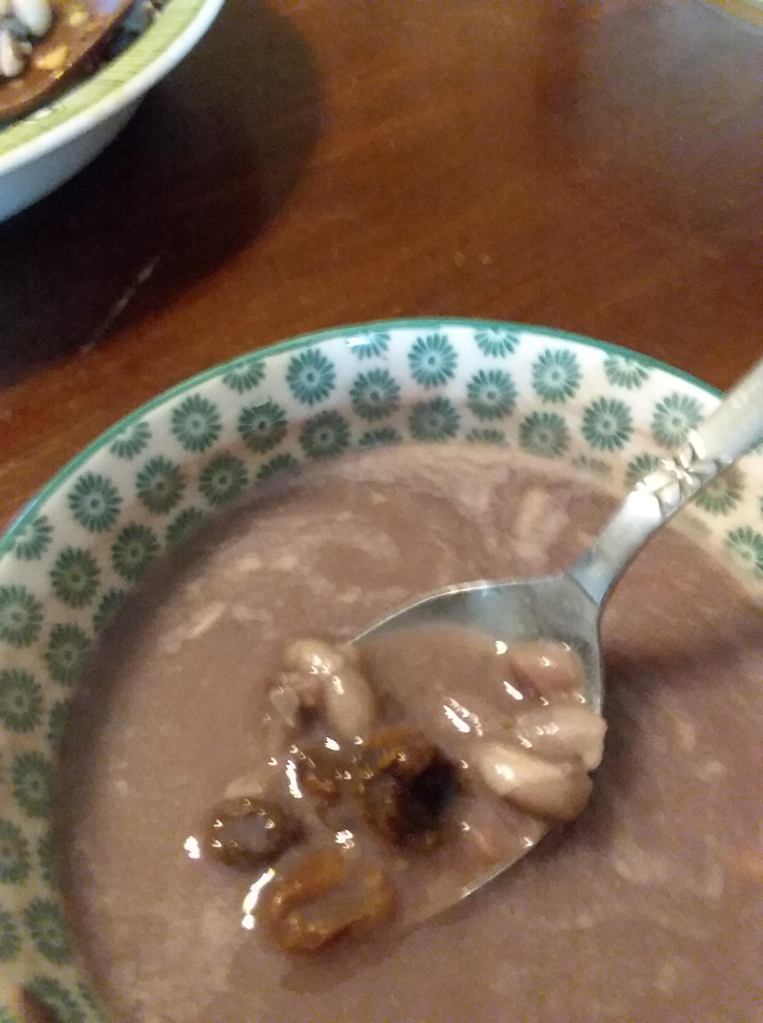
My version: A Sweet Bean Soup

A potage is a soup, so I had serious doubts about this recipe, remembering my experience with my mother’s bean soup. However, this recipe is quite different from any other bean recipe, so I was willing to try it.

Boil ½ c. Calypso beans until they are soft. Mash them. Stir in 1/2 c. almond milk. Soak ½ c. raisins in ½ c. red wine for 10 minutes. Mix the wine and raisins into the bean and milk mixture. Add !/4 c. honey. Heat and serve.

The result: In this recipe, the sweetness of the honey and raisins completely masked the bean flavor, and I actually liked the dish. Unfortunately, no one else did. 

In the end, my experiment with Calypso beans was only partially successful. Although at least one person liked each of the three dishes, no one begged for seconds. I’m happy to say, none of the beans were wasted. 

But next year, I think I’ll plant green beans.

Sources:
Child, Lydia Marie. The American Frugal Housewife. Dedicated to those who are not ashamed of economy. 12th Edition. Boston: Carter, Hendee, and Co. 1833. (First published 1828)

Curye on Inglysch: English Culinary Manuscripts of the Fourteenth Century (Including the "Forme of Cury") Constance B. Heiatt (Editor), and Sharon Butler (Editor). Oxford University Press; 1st Edition edition, 1985.

Glasse, Hannah. The Art of Cookery Made Plain and Easy: Excelling any Thing of the Kind ever yet published. Alexandria: Cottom and Stewart. 1805. (First Edition publishing in London, 1747. This edition reprint of 1st American Edition, 1805, by Applewood Books, 1997).

Randolph, Mary. The Virginia Housewife Or, Methodical Cook. Philadelphia: E. H. Butler & Co., 1860. (Facsimile by Dover Publications, 1993, with introduction by Janice Bluestein Longone).


A Glimpse of Gaudi’s Barcelona

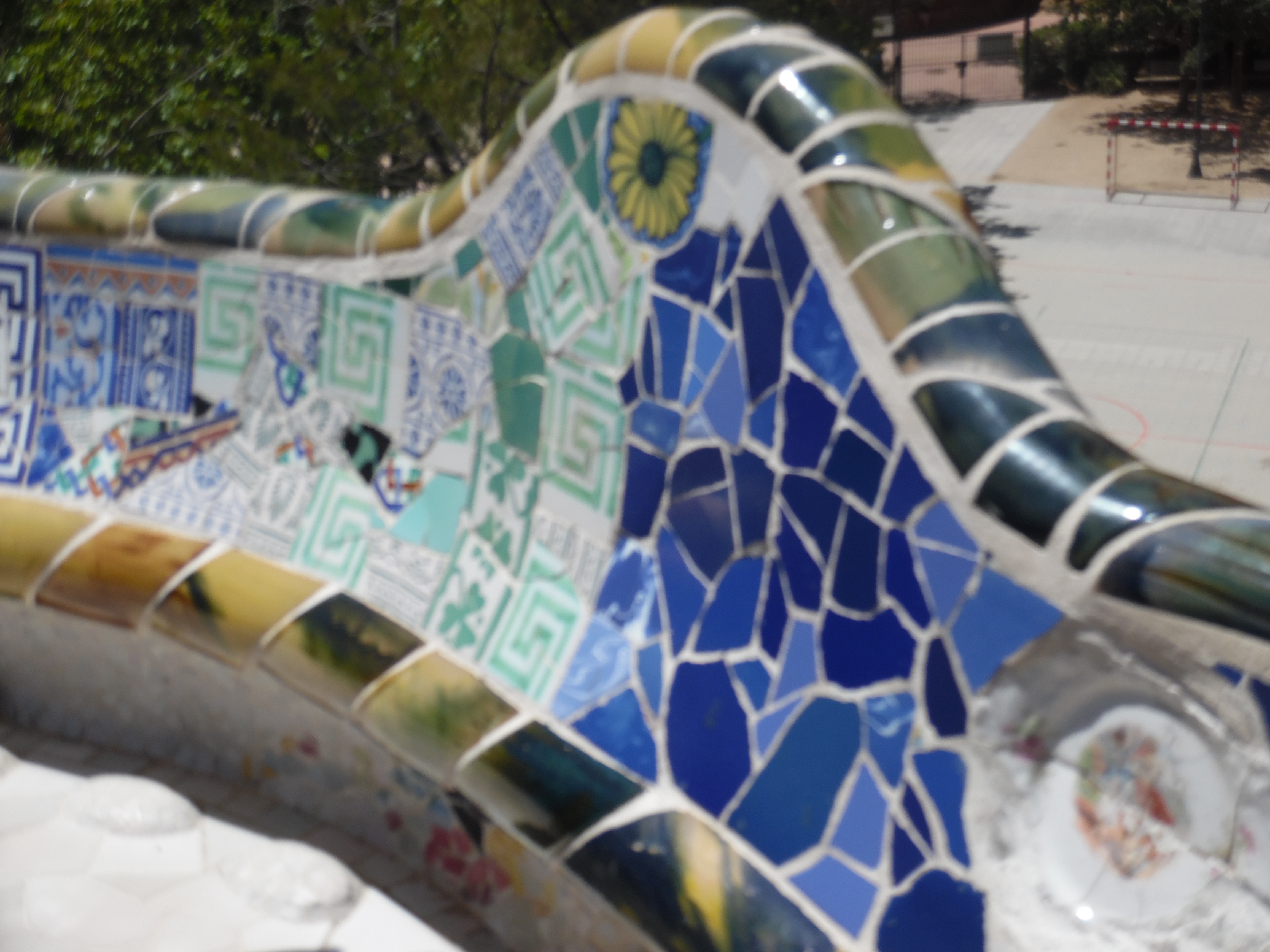
Mosaic Bench in Park Güell

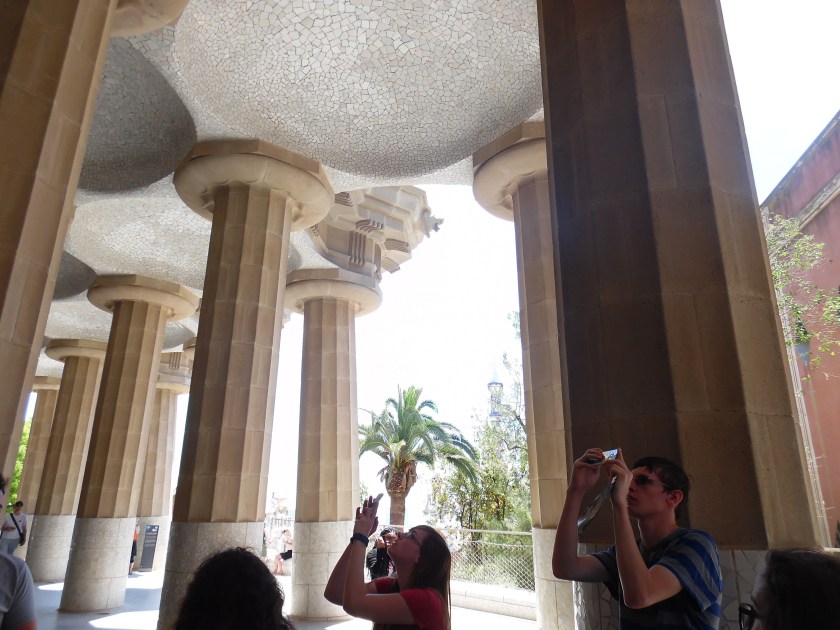
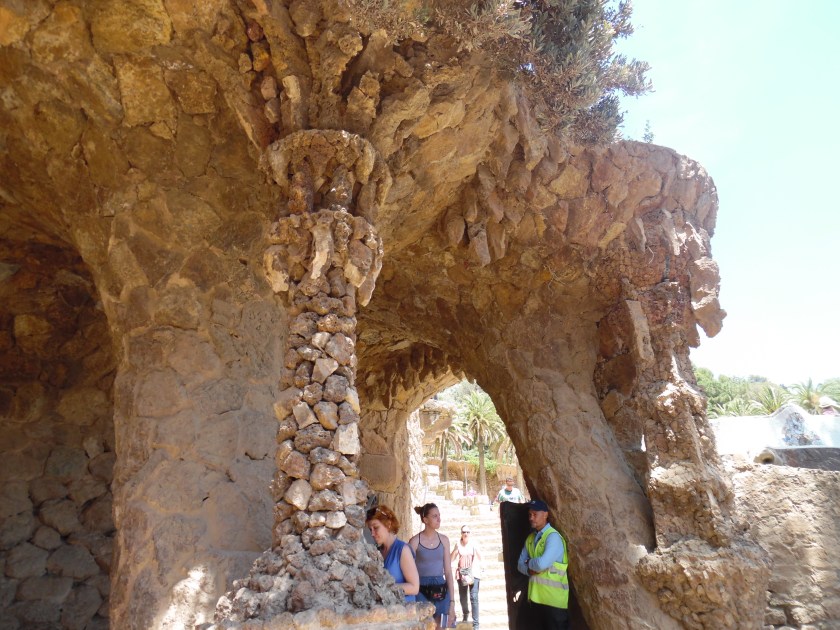
Park Güell in Barcelona is amazing–sort of like Dr. Seuss meets classical Greece. Majestic Doric columns support the roof of the terrace, which features the famous curving mosaic bench, so serpentine it seems almost to writhe and flow. Built to be ergonomically sound and quite comfortable, the loops and curls of the bench invite relaxed conversation. The park startles visitors with irregular shapes, slanted arches, and unusual creatures, such as the huge multi-colored mosaic lizard (known as Drac, the Dragon), descending the stairs near the park entrance. A mixture of the practical and the whimsical, this park is deservedly famous in Barcelona.

Yet fanciful and modern as it seems, the park was built over a hundred years ago. Starting in 1900, Gaudi built this park for M. Güell who was a speculator planning to sell houses in the park. Unfortunately for him, no one bought the houses, thinking the park was too far from the city. Eventually, as partial payment from Güell, Gaudi ended up living in the model house that he had designed there. This park exemplifies many of Gaudi’s important ideas. First, Gaudi’s deep religious convictions are apparent throughout the park. For instance, round balls lining an avenue represent rosary beads. Gaudi was also very innovative, planning for all the rainwater to be collected in great underground cisterns that could water the park for three months. Finally, as a early conservationist, Gaudi created his mosaics from recycled material, like broken wine bottles.

The day we visited Park Güell, firework stands lined the nearby streets in preparation for St. John’s Day, a holiday derived from the ancient pagan summer solstice celebration. Today festival goers unwittingly mingle ancient traditions with newer ones as they strum the guitar and sing, start a fire on the beach, drink warm rum, then jump over the fire and set off fireworks. This seems a perfect magical celebration of this surrealistic park.

Perhaps Gaudi’s work takes us far beyond the borders of this galaxy to the windswept landscapes of Tatooine. Casa Mila, also known as the Stone Quarry, is the last family home designed by Gaudi before he turned to larger projects. It was built between 1906 and 1912. The roof features a maze of bizarre shapes.

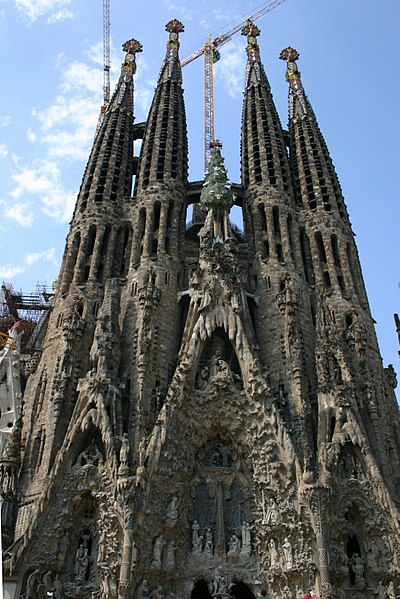
Another great monument to Gaudi’s work is La Sagrada Familia, a huge cathedral which dominates the city skyline and is able to seat over 1000 people. Building this church began in 1882. Gaudi took over the work in 1883, but it is still not finished. (Gaudi planned the entire project, which is due to be finished in 2026).  It has been built from donations and more recently, entrance fees. This remarkable cathedral seems to have been built of liquid stone, like living stone formed into symbolic shapes. When it is finished, there will be 18 spires. The main tower will be 565 feet, the tallest bell tower in the world when it is done. Gaudi’s symbolism covers every inch of the building. For instance, there are 12 pillars for the 12 apostles, each with a fruit at the top, one for each month of the year, and according to the seasons (so figs and oranges in winter). The next higher set of pillars is alternating grapes and wheat for the bread and wine of the last supper.

A great many details make this church one of the most unusual combination of Gothic and inspired surrealism. For instance, there are no completely right angles in the building. The columns inside the church double in size as they go up. They are made to look like tree trunks with branches supporting the ceiling, snd the stonework looks like pale, melting chocolate.

Every detail is symbolic. For instance, the colors of the stained glass windows inside are incredibly brilliant, so translucent they glow. The glass shows sunrise on the east and sunset on the west, so the east starts with oranges and reds and moves toward blue green light of day, and vice versa on the west. 

All three places, La Sagrada Familia, Casa Mila, and Park Güell, have been designated UNESCO World Heritage Sites. Perhaps that’s not surprising since it is not often a place can be securely grounded in the past at the same time it transports the visitor to such other-worldly, mystical experiences more like dreams than reality. All of Gaudi’s works in Barcelona, with their roots in the neo-Gothic and early modernism of the late 19-th century, and their forward-thinking incorporation of nature into architectural forms take visitors beyond the conventional into unearthly regions of the imagination.

The Season for Sparrow Grass

20190605_173744Of all the lovely vegetables that pop up in the spring, my favorite is sparrow grass, more commonly known now as asparagus. This delightful vegetable has been popular since ancient times, appearing in the first known cookbook  (Apicus’s De Re Coquinaria Book III, 3rd Century BCE). It was undoubtedly cultivated even earlier, perhaps even as early as 2000 BCE in Egypt, where asparagus seeds have been found in tombs.
Asparagus was popular  in the Ancient Mediterranean world. Both Greek and Arab writers claimed it was an aphrodisiac, possibly due to the shape. Romans dried it, froze it, cooked it, and ate it fresh, claiming the shoots were good for the digestion. For a time in the late middle ages, asparagus was considered a delicacy, eaten primarily by royalty. However, common people enjoyed it too. In 1677, Samuel Pepys wrote that he had purchased a bundle of sparrow grass from the market in Fenchurch Street, London, for 1s 6d*. (Brunning). Nearly all of my period cookbook (reprints and facsimiles from the 18th and 19th centuries) offer recipes for asparagus.

In addition to the delicious taste, asparagus is also known as a diuretic. Less appealing is the effect asparagus has on the urine of many, but not all eaters. Ben Franklin wrote about the ‘disagreeable odor’ of urine after consumption.

Prior to the Norman Invasion in 1066 CE (Old English) what we know as asparagus, was called eorthnafela (earth navel). The name ‘asparagus’ is Latin, coming from Greek ‘aspharagos’, possibly deriving from the Persian word, ‘asparag’, meaning ‘shoot’. By the14th century (Middle English) it was called asperages. Sometimes, people assumed that ‘asperages’ was plural, and left off the ‘s’ for the singular form, calling a single green spear  ‘aspergy’. By the 16th century (Early Modern English) the word had morphed into ‘sperach’ or ‘sperage’. Around this same time, educated writers went back to the Latin form, asparagus.’ but common folk began pronouncing it ‘sparrow grass’, since that is what it sounds like, and the tall, slender shoots are somewhat grass-like. Though the edible shoots of asparagus do indeed look like some grasess, it turns out that this plant is actually a distant cousin of leeks and onions. Surprisingly, the Latin name won out in the end, so that now ‘asparagus’ is the most common word for this vegetable.

The following recipe is one of many similar examples for cooking asparagus in the 18th and 19th centuries.

Asparagus

Set a stew-pan with plenty of water on the fire, sprinkle a handful of salt in it, let it boil, and skim it, then put in the asparagus prepared thus: scrape all the stalks till they are perfectly clean; throw them into a pan of cold water as you scrape them; when they are all done, tie them in little bundles, of a quarter of a hundred each, with bass,* if you can get it, or tape*; cut off the stalks at the bottom, that they may be all of a length; when they are tender at the stalk, which will be in from twenty to thirty minutes, they are done enough. Great care must be taken to watch the exact time of their becoming tender; take them just at that instant, and they will have their true flavour and colour; a minute or two more boiling destroys both. While the asparagus is boiling, toast a slice of a loaf of bread, about a half an inch thick; brown it delicately on both sides; dip it lightly in the liquor the asparagus was boiled in, and lay it in the middle of a dish; pour some melted butter on the toast, and lay the asparagus upon it; let it project beyond the asparagus that the company may see there is a toast. Do not pour butter over them, but send some in a boat. (Randolph, 100-101)

This recipe seems unnecessarily complicated for the modern cook. Scraping the asparagus may be more useful with garden fresh asparagus, when the little leaves on the stalks are more likely to harbor dirt. Hannah Glasse suggests scraping the stalks so that they look white (35), though she is undoubtedly talking about the white variety of asparagus. In any case, I see no need to scrape well-washed stalks, as scraping makes no real difference in taste, color, or texture.

Likewise, tying the stalks in a bundle seems unnecessary. Perhaps the purpose is to make a neater, nicer-looking vegetable for serving. I boiled the asparagus as suggested, but normally I prefer steaming it in the microwave, a method obviously unknown to Colonial cooks. Again, the taste is the same, but it is easier to make sure the asparagus is crisp-tender, not over-cooked.  Hannah Glasse reiterates the idea that all ‘garden things’ should be cooked delicately:

Directions concerning Garden Things.                                                                                             Most people spoil garden things by over-boiling them. All things that are green should have a little crispness, for it they are over-boiled, they neither have any sweetness or beauty. (Glasse, 35)

Finally, modern consumers are not likely to enjoy slightly soggy toast as a base for the asparagus. Although I found the combination surprisingly tasty, I think toasted bread crumbs as a garnish will prove more palatable to people today.  Here then is a modernized version of asparagus which our forebears would recognize and enjoy as much as we do.

Wash 1 bunch of asparagus thoroughly. Trim the ends so the spears are all the same length. Place in a microwavable dish with a little water and a ¼ t. salt. Cover and microwave on high for 5 minutes. (Microwaves vary so you might check for tenderness after 3 minutes, adding more time as necessary.) Toast some whole wheat bread. Butter it and crumble it.  Lay the asparagus on a dish. Strew the bread crumbs over it, and serve.

___________

Notes:

* 1s 6d (One schilling, six pence) was about a day’s wages for a skilled tradesman in 1670 or almost $11.00 in today’s money.) See National Archives Currency Converter for  more information. http://www.nationalarchives.gov.uk/currency-converter/#currency-result

** ‘bass’ is a type of straw of fiber used for tying, and tape is atrip of cloth for the same purpose. Surgical tape, the first adhesive-backed fabric strip, was invented in 1845)

____________

Brunning, Pam. “Asparagus: Liliaceae-Asparagacease.” Food and Wine. June 2010.page 6-7.

Glasse, Hannah. The Art of Cookery Made Plain and Easy: Excelling any Thing of the Kind ever yet published. Alexandria: Cottom and Stewart. 1805. (First Edition publishing in London, 1747. This edition reprint of 1st American Edition, 1805, by Applewood Books, 1997).

Randolph, Mary. The Virginia Housewife Or, Methodical Cook. Philadelphia: E. H. Butler & Co., 1860. (Facsimile by Dover Publications, 1993, with introduction by Janice Bluestein Longone.)


The Hill of Tara

Tara5-1
Photo by Nemoi, used according to Creative Commons License

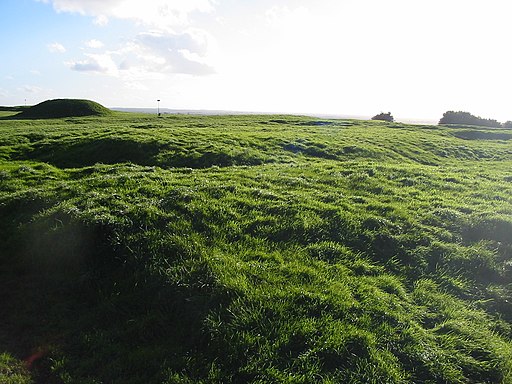
On a clear, summer day, climb to the top of the Hill of Tara. It is said that one quarter of all Ireland can be seen from this vantage point. A meandering line of silver marks the River Boyne in the valley below. To the east the Irish Sea catches the light. With the great sky opening overhead, and the rolling hills tumbling down from the top, the Hill of Tara seems an empty place. On the day I visited, few tourists wandered the hundred-acre site. Most of the ancient buildings are long gone, their timbers rotted and turned to dust over the millennia, their stone walls buried and forgotten for centuries.

And yet, their is a sense of awe about this place. Close your eyes a moment and feel the brisk wind whipping through the grasses, whispering of ancient power and wisdom and magic. It is this whispering that marks The Hill of Tara as sacred. Centuries of human monuments to this mystical feeling lie ruined or buried beneath the sod. From the huge standing stones to theRoman coins found there, the Hill of Tara is one of those places on earth where the aura of the past remains as a powerful force today.

The Hill of Tara, where archeology and mythology are inextricably entwined, has long been famous as an important historical and prehistoric  site in Ireland. Even though most buildings remain unexcavated, archaeologists have found evidence of perhaps a hundred monuments in the Hill of Tara complex. The oldest monument known so far is the neolithic Hill of Hostages, a passage tomb dating to about 3000 BCE.  A bonfire lit on this hill on the holy days (such as the solstices, equinoxes and quarter days) could be seen for miles in any direction. (Indeed, the name of Tara comes from the Gaelic Cnoc na Teamhrach (or Temair), usually translated as the hill of great prospect.)

Tara is considered the seat of the high king of Ireland. One famous upright stone at Tara is the Lia Fail, known as the Stone of Destiny.  The stone is said to cry out when touched by the rightful high king of Ireland. In fact, the Hill of Tara has seen at least 142 kings crowned.

One such king is Cormac Mac Art, who supposedly built a great hall and a palace on the Hill of Tara. Though there are many legends surrounding him and blurring the truth, Cormac is generally considered to have been a real person, living around the 3rd century CE. It is said that his reign was a time of great peace, where even minor crimes were rare. Some legends claim Cormac is the author of the famous Brehon Laws, which comprise some of the fairest law codes of that or any era. These laws, though maintaining a patriarchal society, afforded some protection of women’s rights. Women were free to pursue any profession, and could divorce their husbands. Women also were considered partners, not property, in a marriage and maintained the rights to their own property. (Though Cormac gets credit for these laws, the earliest written forms date from the 8th century, several hundred years after Cormac’s reign.)

There are many legends regarding the settlement of Ireland. In one, the Tuatha de Danaan,  a pre-Celtic people (Children of the Goddess, Dana) defeated the earlier settlers, and made Tara a sacred place to their own gods and goddesses. The Tuatha were in turn defeated by Celtic tribes (ie The Milesians) who took over the sacred places, and some of the old rites of the earlier people. The Tuatha were driven underground, becoming the ‘little people’ of Irish legends. The Hill of Tara remained sacred even into the advent of Christian times. St. Patrick is said to have come to the Hill of Tara in the 5th century CE to preach to King Laoghaire, and convert him and the island to Christianity.

Most of the facts concerning the Hill of Tara are so tangled with legend, we may never know the truth. But this sacred hill where stories live is well worth the visit. All you have to do is listen to the wind and let your imagination soar.

Cnoc na Teamhrach

A moaning wind
Echoes the haunting bagpipes of old
Evoking a procession of long-dead kings

Swirling skirted warriors
Raise shining spears, piercing a cloud-studded sky before
Fading soundlessly beneath the waving grasses.

Sources:

Mark, Joshua J. “Hill of Tara.” Ancient History Encyclopedia. 26 August 2015.Web.

Murphy, Anthony. “Ancient Sites/ Hill of Tara- Teamhair.” Mythical Ireland. February 2019. Web