Cahir Castle, Co. Tipperary, Ireland

Safety was, after all, the main purpose of a castle. Cahir Castle, in County Tipperary, is a prime example of just such a defensive castle.
From the earliest times, roving bands of warriors knew that the high ground, with a commanding view of the region, offered the greatest safety because of its defensibility. The site of Cahir Castle on an elevated island in the River Suir offered such a location. Even better, the rocky formation prevented any possible undermining.
In fact, the Irish word ‘Cahir’ comes from the older word, ‘cathair’ which means ‘fortress.’ Even before a castle was built on the huge rock, there was a circular stone fort there. In 1142, Conor O’Brien, Prince of Thomod, built the first castle there atop the earlier fortifications. A medieval town grew up around the castle.
Over the next 200 years, the Norman Invasion changed the political landscape of Ireland. In 1375, James Butler was awarded the new title of Baron of Cahir, and given the castle as a reward for his loyalty to Edward III. Except for a few brief periods, the castle remained in the Butler family until 1961, when the last heir died and the castle became the property of the state.
James Butler and his descendants enlarged and updated the castle defenses for centuries. During all that time, the castle was lost to Butler family on only three separate occasions, only once by force. The first was in 1599 when most of the Butler family threw in their lot with the Irish against the Earl of Essex Army, sent by Queen Elizabeth. Essex took the castle after a three-day siege, The castle garrison tried to escape. Some did, but many more were slain. The English army took over the castle without further resistance. A year later, 60 Irish rebels took the castle back without gunfire, but they had to re-surrender shortly thereafter. Thomas Butler was charged with treason, but later he was acquitted and regained his family castle. The castle fell a second time in the Irish Confederate Wars to Oliver Cromwell. In this case, the family managed to regain favor with the crown and regain their castle once again. The third time the castle was lost was due to bankruptcy in the early 1800’s. The family was able to buy it back in the 1870’s.

- Batter walls: stout outer walls that are thicker at the bottom than the top. These walls deflect rocks thrown from the battlements and help prevent tunnelling under the castle to gain entrance.
- 2nd layer of defense: an inner courtyard, also protected by strong, stone walls. This inner courtyard is only accessible by traversing a long, narrow passageway with a portcullis, making it possible to trap and shoot invaders.
- Crenellations: Regular rectangular spaces in the stonework along the top of the outer walls, allowing archers to have some protection while shooting. A license from the king was required in order to build crenellations.
- Loop windows: Long, narrow slits in the castle walls with splayed inner sides allow two defensive archers to shoot at different angles, thus protecting more of the castle wall.
- Low doors, narrow passages, and stumble steps: all make it more difficult for strangers to navigate the castle.
- Machicolations: These openings in the floors above gates and doorways allow the castle defenders to thrown down rocks or hot liquids on potential intruders.
- Portcullis: a heavy iron grate, often with spiked posts, that can be lowered in a stone gateway to prevent access. The portcullis at Cahir Castle is one of only three working portcullises in Ireland.
- Spiral Stairs: These narrow stone stairways are built for a right handed-swordsman to defend against anyone mounting the stairs.
The development of cannons, gunpowder and other offensive technology, along with a decrease in general warfare, eventually made the defensive technology of castles obsolete. Rich families moved into more comfortable dwellings that were built more for beauty than for strength. Cahir Castle, built over 800 years ago to protect the O’ Brien and Butler familes, is, an impressive yet stark reminder of a dangerous past.

Sources
DoChara: Insiders Guide to Ireland. Irish Place Names:C. 5/14/2019. https://www.dochara.com/the-irish/place-names/irish-placenames-c/
Irish Tourism. Cahir Castle. 5/14/2019. https://www.irishtourism.com/historic-sites-buildings-in-ireland/cahir-castle/1459
Sweeney, Colm and Susanna. Enjoy Irish Culture. 5/14/2019. https://www.enjoy-irish-culture.com/castles-in-ireland-cahir.html
Photo attribution:
Robert Linsdell from St. Andrews, Canada [CC BY 2.0 (https://creativecommons.org/licenses/by/2.0)]
 Today, anyone who can read can follow a recipe and produce a delicious cake or casserole. Directions are mostly clear, and measurements are standardized. It hasn’t always been that way. One of the great challenges of recreating period recipes is figuring out how much to use of each ingredient. Measurements, when they are given, are often listed in terms we no longer use. While pints, quarts, pounds, and ounces are familiar, other terms are puzzling. Consider:
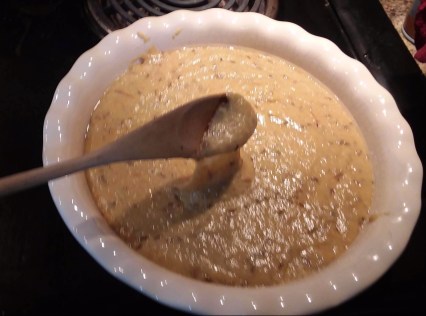 Feel free to adjust the spices in here to suit your own tastes. After all, even Hannah Glasse insists “you may do as you like.” The result is a delicious ‘quick’ bread, suitable for breakfast, tea, or dessert.

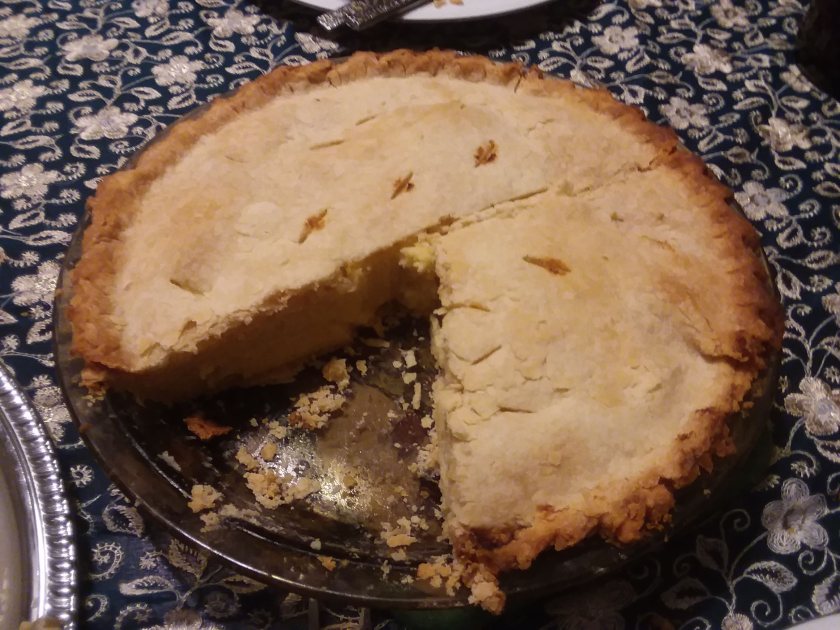 Seafood two thousand miles from the ocean? No problem. Fresh strawberries in the middle of a February snowstorm? Why not? In the modern world of well-stocked grocery stores, world-wide distribution, and a multiplicity of preservation options, we can generally eat whatever we want whenever we want. This hasn’t always been true. For centuries our ancestors relied on highly nutritious root vegetables to get through the winter. Stored in cool, dark cellars, root vegetables keep well for many months. While we still enjoy many root vegetables, like carrots and potatoes, others have become less popular. This week’s recipe focuses on two such vegetables: the parsnip and the skirret.
 The parsnip has an unusual history. Even the name is a bit odd. The word comes from the Latin ‘pastinum’ (fork) through Old French ‘pasnaie’. Parsnips are native to Eurasia, but have spread world-wide. In fact, parsnip’s wild cousin is a dangerous invasive posing problems for hikers. The stems and leaves contain a toxic sap that can cause a bad rash when damp skin that has come in contact with the plant is exposed to sunlight. Cultivated parsnips are harvested the first year of growth, so they are not allowed to develop the tall stems and leaves that cause the problem.
 place in a deep 10” pie pan. Prick all over
(bottom and sides) with a fork.
Bake for 10 minutes, 425 degrees.
place in a deep 10” pie pan. Prick all over
(bottom and sides) with a fork.
Bake for 10 minutes, 425 degrees. When it comes to legends of Irish princesses, don’t expect a happy ending. Their stories are decidedly tragic.
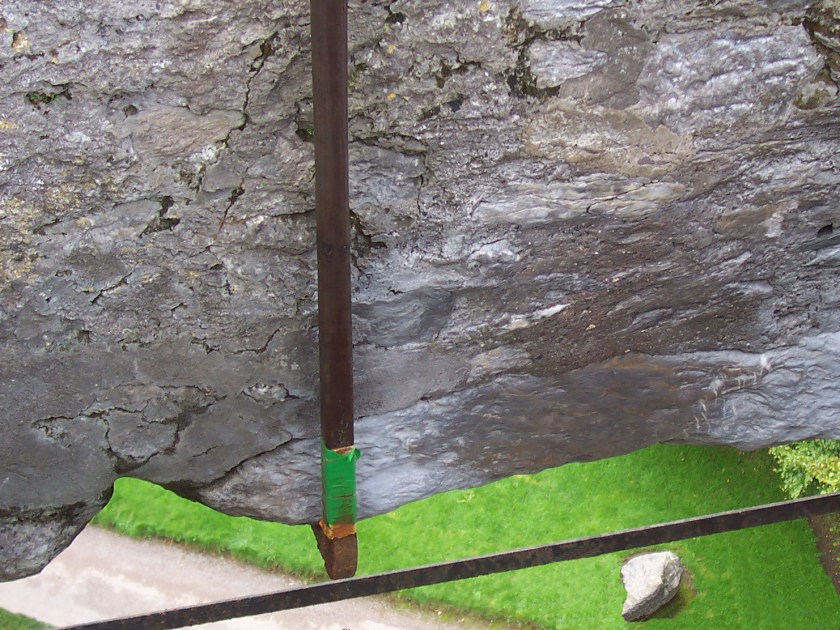
  As legends go, it’s a pretty weird one. The famous blarney stone is a large block of limestone set into the far wall of a machicolation high up in Blarney Castle. (A machicolation is a box-like, floorless opening in the battlements, used to pour hot oil or other nasty stuff on intruders.) They* say that if you climb to the top of the ruined keep of Blarney Castle, lay down and hang over the edge backwards far enough to kiss that block of limestone set into the battlements, you’ll be blessed with the gift of gab. You’ll be able to regale audiences with your silvered tongue and eloquence, with the fluency and perhaps even the loquacity to rival the best orators.


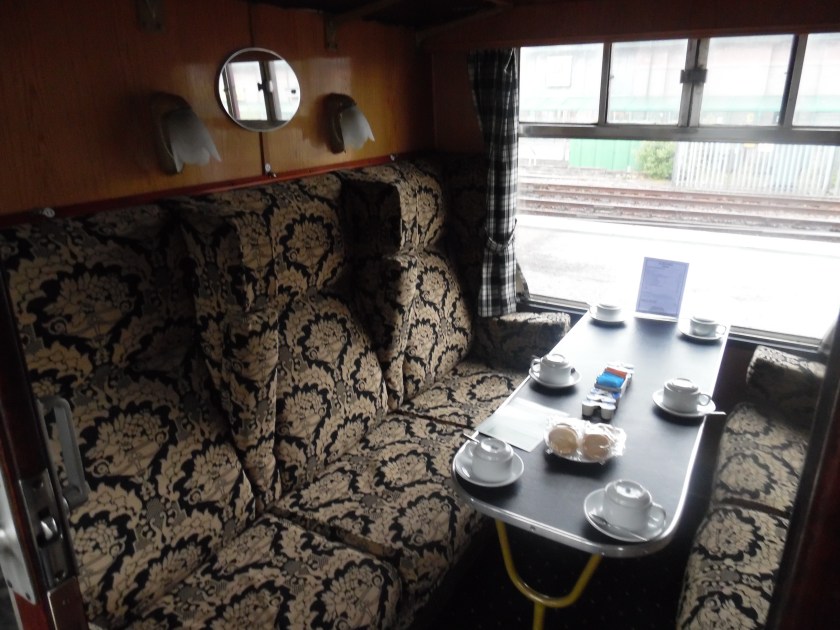
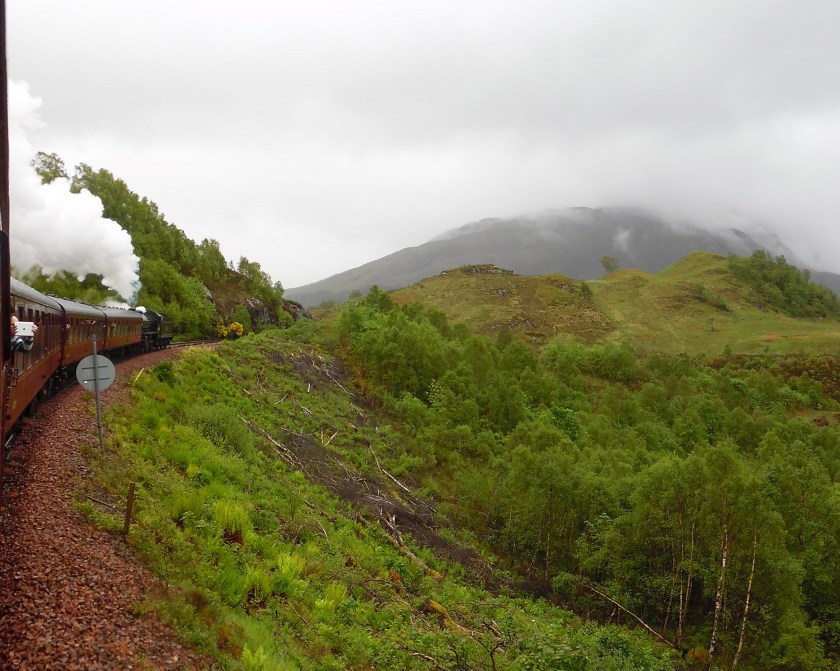
 In past posts, I wrote of train wrecks and disasters, but in most cases, I really do find train travel relaxing. Lest anyone think badly of Scottish trains after my New Year’s day experience years ago, I can share a much better train ride. A few years ago, I returned to Scotland and rode the Jacobite steam train from Glenfinnan to Mallaig. Although Harry Potter and his friends faced the dementors on this train, I had no problems with the ride.


 BRIC-A-BRAC