Sugarplums and ‘Orring pills’

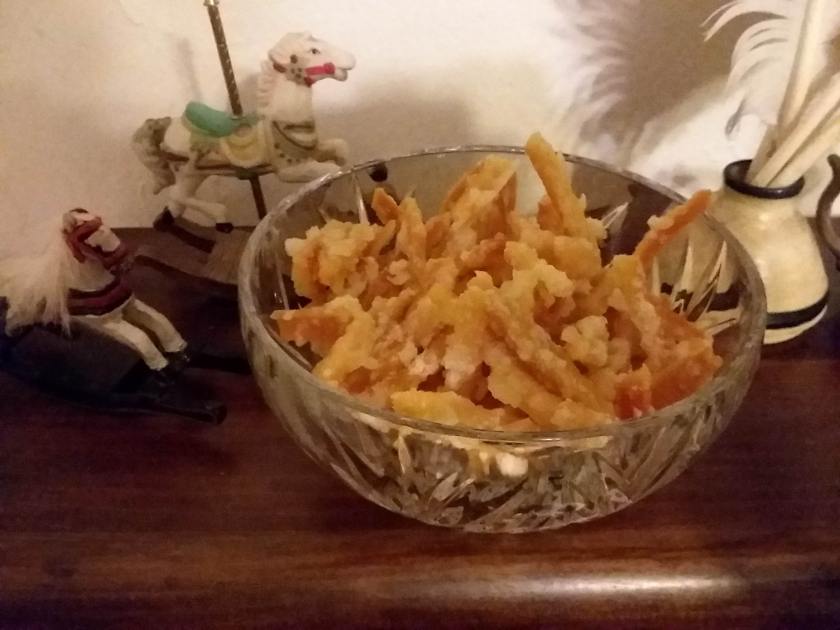
20181228_215210Though the night when “visions of sugar plums danced” has passed, Christmas candy is still plentiful in my house. Christmas is a time of celebration, and celebration most often brings sweet treats. A little investigation shows that traditions of candy go way back.

It seems humans have always had a taste for sweet things. First honey, and later, sugar. Sugar from cane was first cultivated in India, and was kept as a closely guarded secret until Darius of Persia invaded in 510 BC and discovered the ‘reed that gives honey without bees’. Then in 642, Arabs invaded Persia and learned about sugar. As the Arab empire spread through Africa, the Middle East and Spain, so too did the growth and cultivation of sugar. Crusaders in the 11th century brought knowledge of sugar to Europe, where sugar was regarded as another exotic (and expensive) spice.

When Europeans invaded the New World, they discovered the climate in the Caribbean was very good for growing sugarcane. Even though there were over a hundred sugar refineries in Great Britain by 1750, sugar was still a luxury item partly because it was so highly taxed. (The Sugar Act of 1764 angered the Colonists so much that it was repealed in 1765, and contributed to the revolt against the Stamp Act of 1765.)

The earliest candies were comfits, which are seeds or nuts coated with layers of hardened sugar syrup. These first candies were medicines, prescribed by doctors or apothecaries to  treat stomach troubles. (Perhaps this is why candy came to be associated with Christmas — after all, indigestion is common after a hearty Christmas dinner.)

Clement C. Moore’s famous poem strengthened the connection between Christmas and candy with his talk of sugarplums. I always thought sugar plums were candied or sugar-coated plums, but it turns out they aren’t plums at all. As early as 1608, a sugarplum was something sweet or agreeable in nature, not just something to eat.  In the 17th through 19th century, sugarplums were small, flavored candies or comfits, (Some favorite fillings included cardamom, cinnamon, coriander, almonds, walnuts, and fennel.)

Making comfits was often the work of apothecaries since the layering process took time and skill, but colonial housewives made their share of sweet treats. One such treat is candied orange peel.

Like sugar, oranges originated in India, though oranges were known much earlier than sugar cane. By the 1st century, Chinese farmers were cultivating orange groves. Romans brought oranges to Europe around the same time. But these were all bitter oranges which are good for flavorings, marmalades, and perfumes. The sweet orange was brought by Portuguese traders from the Tamil Kingdom in India to Europe in the 16th century. They were quickly brought to the New World. As early as 1513. Ponce De Leon planted orange trees in Florida to help prevent scurvy among the sailors. In today’s world, oranges are one of the most popular fruits, second only to apples. However, in the 18th century, oranges had to be imported from the West Indies and so, like sugar, they  were a luxury for most American colonists.

Many of the cookery books from the 18th century contain recipes for preserving fruit. One very popular way was candying, or boiling the fruit in a sugar syrup. In that way fruit could be enjoyed even in the winter when it was no longer in season.

John Townshend’s The Universal Cook Or Lady’s Complete Assistant  (printed in London, 1773) has a fairly simple recipe for candied orange peels.

Having steep;d your orange peels as often as you shall judge convenient, in water, to take away the bitterness; then let them be gently dry’d and candy’d with syrup made of sugar. (261)

Martha Washington’s Booke of Cookery and Booke of Sweetmeats is older, with more erratic spelling. This manuscript hand-written in the 17th century and was in Martha Washington’s possession from 1749- 1799, and was transcribed and annotated by Karen Hess in 1981. This recipe provides a bit more direction.

To Candy Orring Pills

Take Civill orringes & pare them very thin, then cut them in little pieces, & lay them in faire water a day & a night, & shift them evening and morning, then boyle them, & shift them when the water is bitter into another water, & continew this till the water & boyling hath made them soft & yt theyr bitterness be gon. Then dreyne ye water from them, & make a thin sirrup, in which boyle them a pritty while. Then take them out & make another sirrup a little stronger, and boyle them a while int yt. then dreyne ye sirrup from them, & boyle another sirrup to candy height, in wch put them. Then take them out & lay them on plats on by one. When they are dry, turne them & then they are done. (284)

(Note: All of the early recipes I found for candying oranges used bitter (Seville) oranges. Since modern cooks mostly have sweet oranges, it is not necessary to boil the peels in as many water baths to remove the bitterness.)

A modern cook can use the simpler method for candying orange peels:

  • 1 ½ c water
  • 1 ⅓ c sugar
  • 3 oranges

Score each orange in quarters, and remove the peel. Slice the peels ⅛ to ¼ inch wide.Bring to a boil and simmer these in clear water 10- 15 minutes. Drain and rinse. Mix water, sugar and the boiled orange peels. Simmer for 40-45 minutes, until the water is nearly gone, but before the sugar turns to hard crack stage.

Lay the peels on a flat surface to cool and dry before eating.

I can’t guarantee that candied orange peels will aid digestion, but they surely are a sweet treat for the New Year.

Sources:

Hess, Karen (transcriber and anotater). Martha Washington’s Booke of Cookery. New York: Columbia University Press, 1995.

Rupp, Rebecca. “What are Sugar Plums Anyway?” The Plate. National Geographic. December 23, 2014.  https://www.nationalgeographic.com/people-and-culture/food/the-plate/2014/12/23/visions-of-sugarplums/

Townshend, John. The Universal Cook Or Lady’s Complete Assistant . London: S. Bladon, 1773)
‘Tis the Season–for Chocolate

20181128_212345

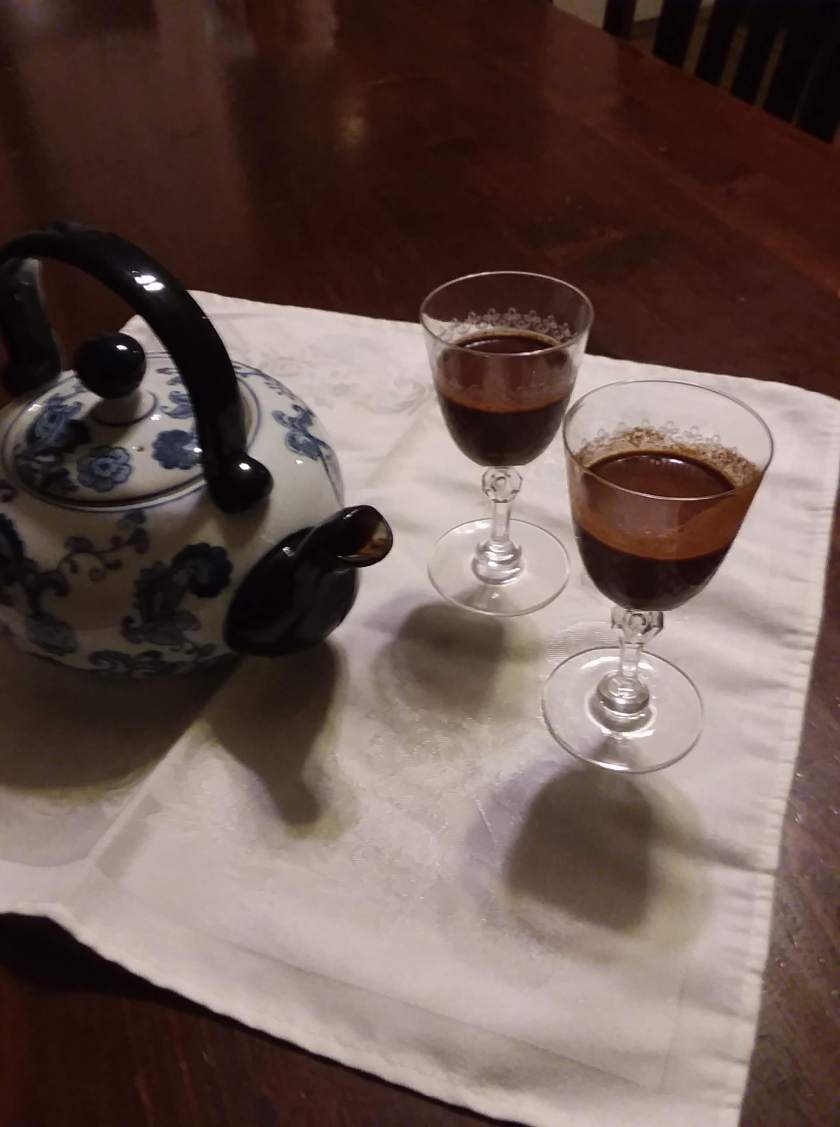
  • A sweet treat after sledding or a hot  drink to warm up with on a chilly evening
  • Foil wrapped in balls or bells, a nearly ubiquitous stocking stuffer
  • Lauded as an aphrodisiac, a way to say “I love you,” or possibly cure smallpox
  • Historically, a form of currency and now 50 Billion dollar industry world-wide with some 50 million people employed globally

DSC00743


How does the humble cacao seed  (also called cocoa beans or nuts) from a tropical evergreen tree, native to the Americas, become all this and more? It turns out chocolate has a very long history.


People have been drinking chocolate beverages for at least 4000 years. There is evidence that the pre-Olmecs, of Central Mexico (predecessors of the Olmec, and later, the Maya and Aztec peoples) had a fermented chocolate drink. The tree was possibly first domesticated in Central America. ( Although now ⅔ of all cocoa beans are grown in Africa.) The Mayans and the Aztec both revered the cacao bean as a gift from the god. A hot spiced, (and very bitter) beverage was used in rituals and to seal agreements. They also used the bean, considered more valuable than gold, as a form of currency. One hundred beans might buy one turkey. (The practice of payment in chocolate was also used during the American Revolution.)

When the Spanish ran into (and over) the Aztec, they learned about chocolate. In 1565, explorer Girolamo Benzoni wrote about his experiences in the new world. He was one of the first describe the spicy beverage called cacahuatl. He was not a big fan, saying, “It seemed more a drink for pigs than a drink for humanity. I was in this country for more than a year and never wanted to taste it, and whenever I passed a settlement, some Indian would offer me a drink of it and would be amazed when I would not accept, going away laughing. But then, as there was a shortage of wine. . . .”(as quoted in Theobald)

He did eventually try it and described the taste as “somewhat bitter”  but conceded that “it satisfies and refreshes the body but does not inebriate.” (as quoted in Theobald).

In spite of the drink’s bitterness, the practice of drinking chocolate spread rapidly through the Spanish court. By 1585, Spain was importing chocolate. Chocolate beverages soon became popular throughout Europe. Europeans generally added some sugar to the drink. In order to melt the sugar, they generally served the chocolate hot. As Europeans spread out to colonize the Americas, they brought their newfound love of chocolate back with them.

By 1682 there were chocolate houses in Boston. In 1773, one ship alone brought in 320 tons of cocoa beans. (All of this cocoa was destined for beverages. Eating chocolate was not invented until 1847.) By the time of the Revolution, there were some 70 chocolate houses in the American Colonies.

This fall, I had the good fortune to discover Captain Jackson’s Historic Chocolate Shop, tucked away behind Old North Church in Boston. It’s named after a colonial merchant who owned a chocolate shop in the area in the 1740’s. Today, interpreters demonstrate the colonial process of turning cacao beans into a delicious and popular drink. The beans arrived in New England fermented and dried. The colonial chocolatiers roasted the beans in shallow pans. The brittle roasted beans were winnowed to separate the paper-thin shells from the chocolate nibs. (Some people, including Martha Washington, bought the shells and brewed a sort of tea from them (Theobald).)

The chocolate nibs (or broken up, roasted beans) are ground on a heated stone to a thick, dark, paste. Next, a variety of spices and flavorings are added. Each house had its own recipes, including combinations of vanilla, nutmeg, chili pepper, anise, annatto, salt, cinnamon, and orange or lemon peel. A bit of sugar might be added at this point also. The mixture is then allowed to dry in hard blocks.

To make the chocolate drink, the block of seasoned chocolate is grated and mixed with hot water. (By 1700, it might also be mixed with milk, brandy, port, or sherry.) The water and chocolate are whipped together to make a delicious, rich frothy drink.

Because of its melting point, chocolate was not produced during the summer, and hot chocolate became associated with colder weather. As an expensive treat, chocolate also became associated with the holiday season.

By the 18th century, chocolate was sometimes shaved or grated into puddings, or made into candies for the wealthy. However, chocolate was much more common as a drink than a food until J. S. Fry and Sons developed the first chocolate bar in the middle of the 19th century. By this time, chocolate prices had dropped and nearly everyone could afford chocolate, at least once in a while. Now it’s hard to imagine a Christmas stocking without a few chocolate bells.

One reason for chocolate’s traditional popularity is that it was believed to have medicinal value. It was thought to aid longevity and digestion, alleviate coughs and lung ailments, and cure hangovers. Both Ben Franklin and Dr. Benjamin Rush even proposed chocolate as a cure for smallpox. (Theobald.) However, chocolate was not without its detractors. As a stimulant for the libido, chocolate was considered dangerous for women and children. (The same was true of novels and romances.)

I’m not sure anyone still considers chocolate dangerous (except to the waistline), but it retains is reputation as the food of lovers. Think of that as you’re indulging in your sweet chocolate treats this year, and enjoy.

20181128_213232
Using research from Colonial Williamsburg, Mars Company has created a chocolate drink to reproduce the flavor of Colonial chocolate. Called American Heritage Chocolate, it is available from various museums and historic sites.


Sources:

Theobald, Mary Miley. A Cup of Hot Chocolate, S’good for What Ails Ya.
CW JOURNAL : WINTER 2012

Traverso, Amy. The History of Chocolate in New England. New England Travel Today. January 11, 2017


Behind the Circus Glamour: A reveiw of WATER FOR ELEPHANTS by Sara Gruen

gruen.190

Who doesn’t dream of running away to join the circus? I know the thought has crossed my mind ever since I saw Disney’s Toby Tyler when I was five or six years ol. Sure, Toby had a few hardships, but everything turned out great in the end. He even got to ride the circus horse in the big show. Why couldn’t I do the same?

But real circuses, especially those of small, struggling outfits of the Depression Era, were not the romantically glamorous places of my dreams. In Water for Elephants,  Sara Gruen recreates the real circus, with all of its sordid backstage drama, cruel practices, and realistic performers. She shows the precarious life of the roustabouts and lower ‘class circus workers, and goes beyond the shining surface glitter of circus life.

The book starts with a prologue and a mystery. The narrator (Jacob Jankowski) witnesses a murder. This tense, chaotic, opening scene shows a circus owner’s nightmare. The animals are loose and the crowd is on the verge of panic. Jacob tries in vain to stop the murderer.  Readers are tantalized, left wondering who was murdered and why. The only clue is the murderer was female.

The action then shifts to more modern times. Jacob is now ninety (or ninety-three), stuck in a nursing home. He’s a cantankerous old man who never talks about his past. Until now, when a circus comes to town. The novel follows Jacob back into his past. Alternating between present day and seventy years earlier, we gradually learn Jacob’s story; how he came to be in the circus, and the terrible things that happened there. In many ways this is a love story; not just of a man and a woman, but also masterfully portraying the depth of love that can exist between humans and animals, even in the most dire circumstances.

In addition to a gripping story, with great characters, Sara Gruen’s book is marvelous historical fiction. Along with the glittering costumes, cotton candy and crowds of rubes, we experience the stink of the big cats, the clacking wheels of the circus train on the move, and  the crumpled horse blanket that serves as Jacob’s bed. Woven into the story is a startling picture of a time when prejudice and abuse were common. Freaks were meant to be in the circus. Animals could be abused with impunity. And circus owners could get by with redlighting- the practice of throwing unwanted workers off the train when the circus no longer needed them — even when the victims died.

Most of us will never really run away to join a circus, certainly not the circus so vividly portrayed here. But Gruen brings those long ago days alive for readers, sweeping us into the Big Top of the past. She lets us dream, for a little while at least, that we could really be there, along with Kinko, August, Marlena, Big Al and all the others. And of course,  Jacob Jankowski, who knows what it means to take care of an elephant.

Alice_the_elephant_loading_the_Wirth's_Circus_train_Sam_Hood_05790h
Circus elephants, like Rosie in Water for Elephants, worked hard. This is Alice, loading Wirth’s Circus train in the 1920’s.


Sharing Ground: The Boston Common

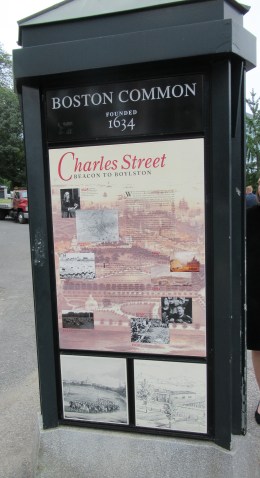
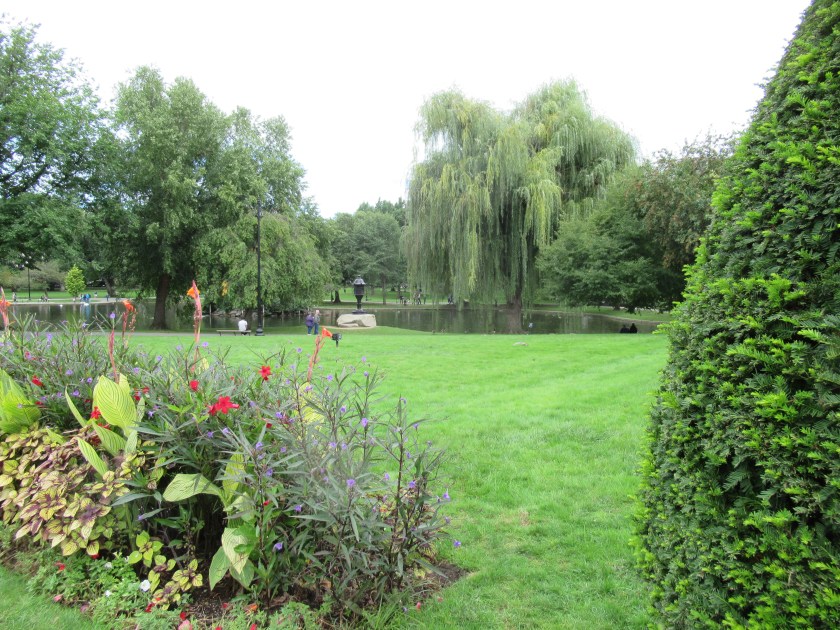
img_0923.jpgOn a crisp fall day in 2018, Boston Common plays host to all sorts of people. Though the sky is overcast, tourists stroll along the winding paths pst the Frog Pond, Children play . and old men park on benches to read the newspaper. Along the north side of the park a musician strums his guitar, the open case in front of him inviting donations. In another corner, several dozen people gather for an ecumenical outdoor church service led by a woman with a microphone. In short, the oldest public park in America is the heart of Boston, providing a free, open, space for the people to use as they will, just as it has done for the last 384 years.
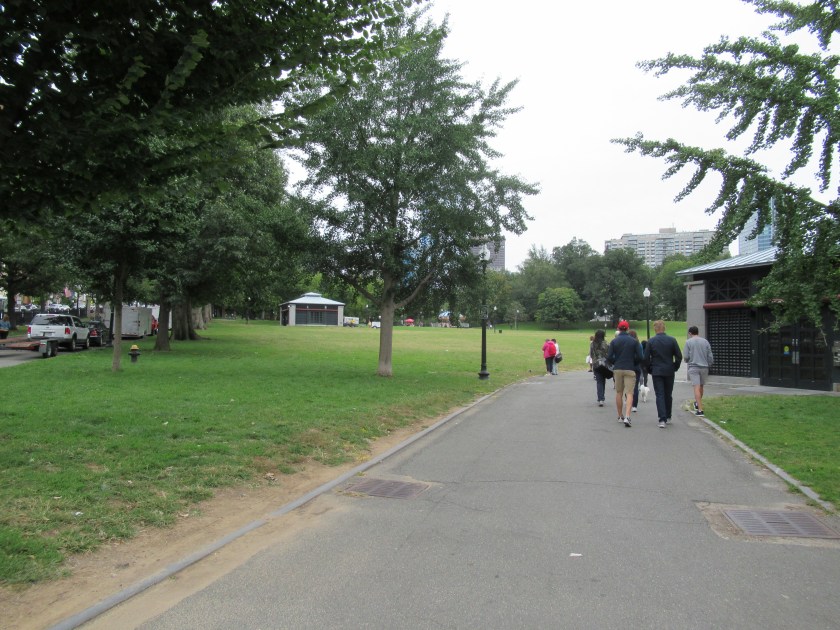
Amidst the modern bustle, it’s hard to believe all that has happened here in this space. The Common began as land held in common by the people of Boston, set aside for common usage, primarily for grazing the animals of the city inhabitants. This idea of common pasturage dates from at least the middle ages. The early inhabitants of Boston brought the practice with them from the old world. But such open land lent itself to other purposes, such as a place for the militia to gather and practice. In fact, The British used the Common for their military camp when they occupied the city in the years before the Revolution. On an even more gruesome note, a huge ancient elm located in the Common became the hanging tree, where miscreants were executed in public view. (In 1769 a gallows was erected, replacing the elm for public executions.)

Over the years, activities in the Common have evolved and the needs and character of the inhabitants has changed. In 1646, twelve years after the Common was established, public grazing was limited to 70 cows at a time. Richer families had acquired too many cows and the area was becoming overgrazed. Public grazing was banned altogether in 1830.

Just over a hundred years later, in 1756, the Central Burying Ground was established  in what is now a shady spot along Boyleston St. The other three burying grounds in the city were overcrowded and this fourth burying ground was meant to alleviate the problem. In 1749, the first corpse was interred here, seven years before the area officially became a burying ground.  From the start Central Burying Ground was not as popular, though some 5000 people are buried there. (There are only 487 tombstones.) Among the few famous people buried there lies Gilbert Stuart, the artist who painted the most famous pictures of George Washington. However, most of the people buried here lie in unmarked graves, mingled with the remains of countless other anonymous dead. The burying ground holds the remains of many French Catholic immigrants, British soldiers who died during the Revolution, and American Revolutionary soldiers from the Battle of Bunker Hill. Some of the victims of hanging (not everyone executed would be considered a criminal today; a law banning Quakers carried with it a death sentence for anyone violating the law.) were buried in here too.

The Common was used for other public gatherings besides hangings. In 1713, two hundred Boston citizens rioted here to protest a food shortage. The Boston Common has kept up the tradition as a place for public protest. In 1965 one hundred people protested the Vietman War and in 1969, one hundred thousand people took up the same cause.

Gatherings of a more peaceful nature have also taken place in the Common. Martin Luther King, Jr., Pope John Paul II, and Mikhail Gorbachev have all given speeches there, and many concerts, including one by Judy Garland, have brought thousands into the Common.

While it is true that many places on earth hold the memories of centuries of human activity, the Boston Common seems particularly steeped in history. You need only to sit quietly in the park, and close your eyes. In the mind’s eye, you can see  the ghosts of all those who have crossed this common ground.

IMG_0924


Making Mincemeat

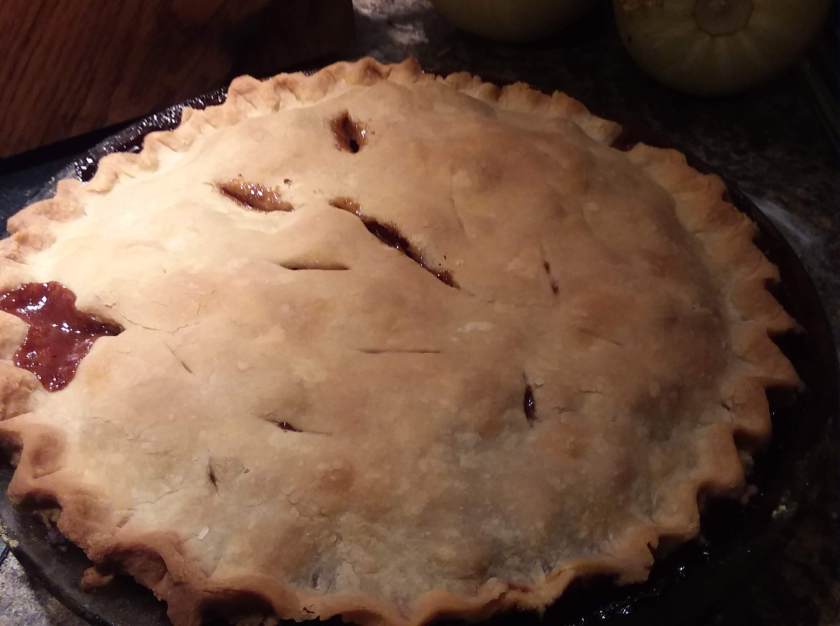
20181027_222419Ask a dozen people about mincemeat and you’ll like get one of two answers. Some will fondly remember how their mother or grandmother made mincemeat pies. Most of the rest will say, “Huh? What’s in that anyway? Does it really have meat in it?”

The answer is … complicated. Modern mincemeat is a spicy mixture of mostly apples and raisins. But if you go back a ways, mincemeat was indeed a pie made with chopped meat.

Some of the earliest recipes for mincemeat I have found date from the 14th century. These heavy, elegant pies were inspired by the Crusaders, bringing home ideas of new, exciting spices like cinnamon and nutmeg from the Middle East. It was common in the Middle East at that time to serve meat sweetened with fruits and spices.  It became popular in England to recreate these exotic dishes, especially for elegant feasts meant to impress the neighbors in the holiday season.

These medieval mincemeat pies could be made from any type of meat, including mutton, veal, pork or venison. Some recipes even call for fish in a mince pie to serve on fish days when the church forbade eating meat.  The mixture usually called for prunes, currants, raisins, and/or dates.

These pies were baked in a coffin, which is a thick, heavy crust, often rectangular shape. (Note: coffin comes from the French word for chest–like the modern word–coffer. The  word ‘coffin’ was used to mean a pie crust from as early as the 14th century. The meaning of a box for burying a dead person came later, from 1520.) Meat pies in the Middle Ages were meant to be kept for months, with the thick crust helping to preserve the pie.

One more confusing note in the history of mincemeat is the word ‘meat.’ Although the earliest mincemeat pies did have chopped veal, pork, or other meat in them, the word ‘meat’ didn’t mean what it means today. Originally, in Old English, ‘meat’ meant food, any type of food. It wasn’t until the 13th century that the sense of the word narrowed to mean flesh meant for eating. Even as late at the 15th century, vegetables might be called ‘grene-meat.’ So the name mincemeat, could easily refer to all the chopped ingredients in a mincemeat pie.

Like meatloaf today, mincemeat over the years has had many variations, in the spices used, the type of fruit, and the crust. By the 18th century, crusts were flakier and apples and raisins were usually included in the recipe. It wasn’t until the late 19th and early 20th century that mincemeat lost the meat. As late as 1941, some mincemeat recipes still cared for meat (usually beef). 

The real change came in 1898 when dried or canned mincemeat (such as Nonesuch) was developed. This mixture of apples, raisins and spices was one of America’s first convenience foods. As with many pre-packaged, prepared foods, people lost track of what exactly was in that jar or box of mincemeat.

Unfortunately, as popular tastes changed, pies were more commonly relegated to the dessert course. Homemade pies have given way to more store-bought desserts. Gradually, the taste for mincemeat has declined. Most people I talk to are leery of a sweet meat and fruit mixture.

But old-fashioned mincemeat is definitely worth trying. The recipe I’ve included here is from 1833. (Mrs. Child, The American Frugal Housewife. Dedicated to those who are not ashamed of economy). The modern version I developed makes 4-5 pies, but can be easily cut in half.

And if you still don’t want meat in your pie? That’s okay. You can omit the meat and make a spicy, apple and raisin pie –perfect for the Holiday season.

1833 Recipes: Mince Pies.

Boil a tender, nice piece of beef–any piece that is clear from sinews and gristle; boil it until it is perfectly tender. When it is cold, chop it very fine, and be very careful to get out every particle of bone and gristle. The suet is sweeter and better to boil half an hour or more in the liquor the beef has been boiled in; but few people do this. Pare, core, and chop the apples fine. If you use raisins, stone them. If you use currants, wash and dry them at the fire. Two pounds of beef, after it is chopped; three quarters of a pound of suet; one pound and a quarter of sugar, three pounds of apples; two pounds of currants, or raisins. Put in a gill of brandy; lemon-brandy is better, if you have any prepared. Make it quite moist with new cider. I should not think a quart would be too much; the more moist the better, if it does not spill out into the oven. A very little pepper. If you use corn meat, or tongue, for pies, it should be well soaked, and boiled very tender. If you use fresh beef, salt is necessary in the seasoning. One ounce of cinnamon, one ounce of cloves. Two nutmegs add to the pleasantness of the flavor; and a bit of sweet butter put upon the top of each pie, makes them rich; but these are not necessary. Baked three quarters of an hour. If your apples are rather sweet, grate in a whole lemon. (66)

Pie Crust.

To make pie crust for common use, a quarter of a pound of butter is enough for a half a pound of flour. Take out about a quarter part of the flour you intend to use, and lay it aside. Into the remainder of the flour rub butter thoroughly with your hands, until it is so short that a handful of it, clasped tight, will remain in a ball, without any tendency to fall in pieces. Then wet it with cold water, roll it out on a board, rub over the surface with flour, stick little lumps of butter all over it, sprinkle some flour over the butter, and roll the dough all up; flour the paste and flour the rolling pin; roll it lightly and quickly; flour it again; stick in bits of butter; do it up; flour the rolling pin, and roll it quickly and lightly; and so on, till you have used up your butter. Always roll away from you. Pie crust should be made as cold as possible, and set in a cool place; but be careful it does not freeze. Do not use more flour than you can help in sprinkling and rolling. The paste should not be rolled out more than three times; if rolled too much it will not be flaky. (69)

Child, Lydia Marie.The American Frugal Housewife. Dedicated to those who are not ashamed of economy. Boston, Carder, Hendee and Co. 1833.

Paste for Tarts
One pound of flour, three quarters of a pound of butter, mix up together and beat well with a rolling pin.

Glasse, Hannah. The Art of Cookery made Plain and Easy. Alexandria: Cottom and Stewart, 1805. 121.

Modern RecipesMincemeat for 4-5 pies

1 ¼ c. shortening (or suet)
21/2-3 lb beef roast (chuck roast is fine)
3 lbs apples (about 9 medium apples)
2 lbs. Raisins ( about 5 cups)
1 ¼ lbs. Sugar (about 2 ¾ c.)
½ c. brandy
¼ c. lemon juice
2 T. cinnamon
4 t. Cloves
1 T. nutmeg
1/4 t. Pepper
1 qt. Apple cider

Freeze the shortening, and dice while still frozen. Keep cold.

Cover beef with water, bring to a boil, then reduce heat and simmer for 30 minutes or until the meat tests 170 degrees. (The amount of cooking time will vary with the thickness of the beef. Let cool, then dice small. Be careful to remove all gristle, but leave in any hard fat (which is like suet.)

Peel, core and dice the apples.

Mix beef, apples, and shortening with the remaining ingredients. Fill unbaked pie shells (3-4 cups of filling per pie.)  Cover with pie crust. Cut vent slits. Bake at 375 degrees for 45 to 55 minutes. Serve warm or cold.

Pie Crust: for 2 pies

4 c. flour (approx. ½ lb.)
1⅓ c. shortening (or butter)
1 t. salt
10 T. cold water

Mix the flour and salt. Rub or cut the shortening into the flour until it resembles coarse meal. Add water. Mix lightly. Gather the mixture into a ball and press solid. Cut into 4 pieces (two for the bottom crusts two for the top crusts.). Roll each out to a circle. The circles for the bottom crusts should be about an inch larger than your pie plate. Carefully place one circle in each pan. Add the filling, and cover with the top crust. It helps to wet the edge of the bottom crust before placing the top crust on the pie. Pince the edge all around to seal the pie.

Ducks and Green Space: Boston Public Garden


Ducks
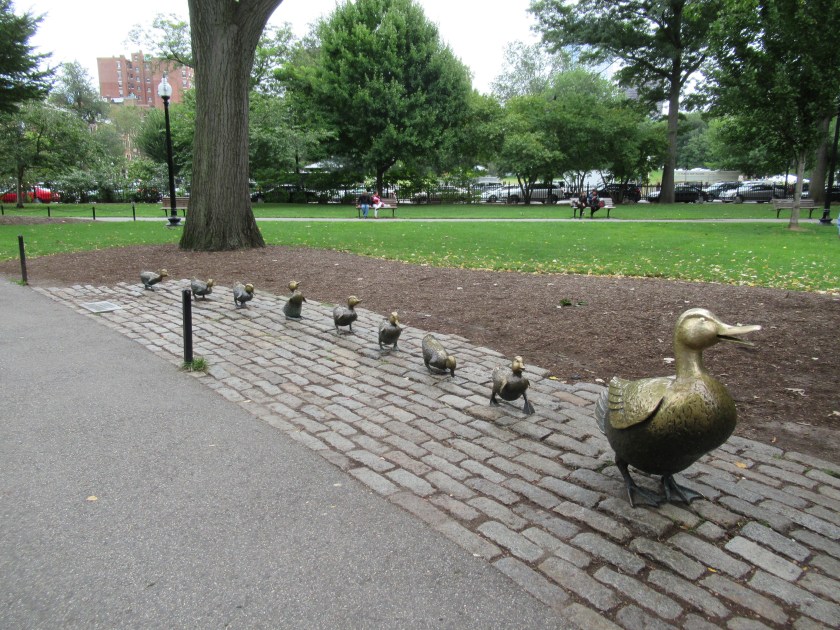
This statue of Mrs. Mallard and her eight ducklings was created by Nancy Schön in 1987. It is so popular I had to wait over 30 minutes for a 15 second gap in the parade of scrambling children to snap a picture.

Since its debut in 1941, Robert McCloskey’s Make Way for Ducklings has delighted millions of readers, both young and old. In the story, Mrs. Mallard must navigate the busy streets of Boston to guide her eight ducklings to their new home in the Boston Public Garden. McCloskey won the Caldecott in 1941 for this book, which remains popular today. While not exactly historical fiction, the story evokes an earlier era, nearly eighty years ago, when the world had time to stop for kindness. One of my favorite illustrations in the book is the one of the portly policeman blowing his whistle and holding up his hand to halt traffic.


It is fitting that the Mallard family finds their new home in Boston Public Garden, a place even more historic than the book. The garden was built on reclaimed land: salt marshes filled in with gravel and dirt taken from a hill in the Beacon Hill area of Boston. In 1837, the land was set aside to become the first public botanical garden in the United States, under the planning and vision of Horace Gray. For many years, the city of Boston, the state of Massachusetts, and private developers argued over what should be done with the land. There were several attempts to build housing there. Finally, in 1859, the 24 acre plot was permanently designated as parkland.


IMG_0903
 The garden is full of statues, the most famous of which is George Washington Equestrian statue, designed and cast by Thomas Ball in 1869. The statue is sixteen feet tall, and rests on a pedestal that is another sixteen feel tall.

The Public Garden features a Victorian landscape design with meandering paths, shady trees, and colorful and exotic plantings. The pond with the small island where the Mallard family finds a home was completed in 1859. Curiously, the island was originally a peninsula, but was detached from the mainland because too many lovers found the soft gas lights and alluring space too tempting. Now countless ducks inhabit the island as part of long-standing tradition.


And so, as part of this tradition, the Mallard family settles on the island in the pond within the very first Public Garden. It seems both Mrs. Mallard and the good people of Boston recognize the value of green spaces, even in big cities. Mr. McCloskey’s timeless story serves as a pleasant reminder of everyone’s need for peaceful shelter in an oft chaotic world.

IMG_0905
Designed by  William G. Preston and completed in 1869, this bridge crosses the lagoon. Originally it was the shortest functioning suspension bridge in the United States until it was converted to a girder bridge in 1921.


IMG_0910
The famous swan boats, featured in McCloskey’s book, have delighted visitors to the Public Garden since 1877. Though the boats had closed for the season when I visited, the swans (inaptly named Romeo and Juliet, thought both are femaie) floated gracefully atop the pond.

IMG_0904


A Place in Time: The Lewis R. French

IMG_1200
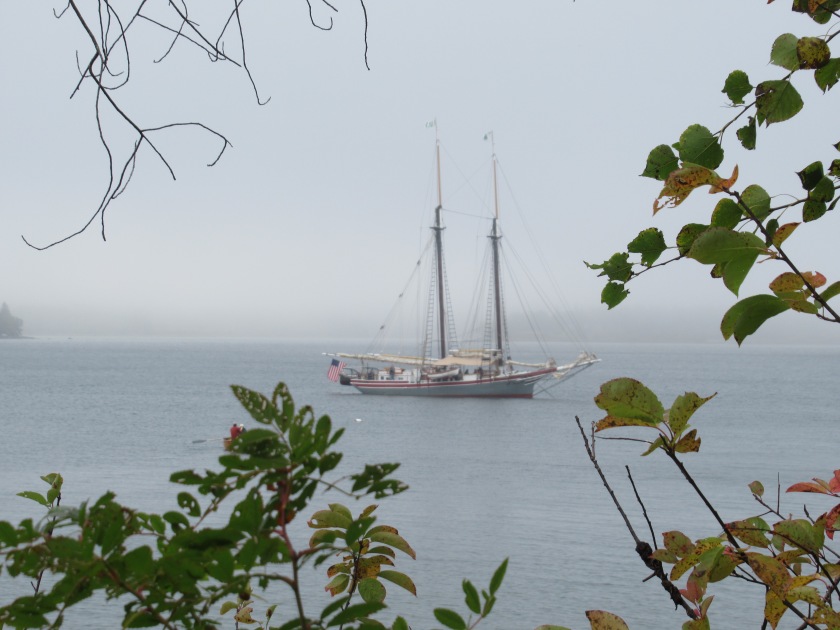
The Lewis R. French at anchor in Smith Cove.

Rain spattered the deck and canvas awning of the schooner. Kerosene lanterns hung fore and aft, their glowing circles of light spreading into the surrounding darkness. The wooden hull groaned and creaked, and the ship rocked gently on the tide, rubbing against the dock as if protesting the lines tethering her to shore. With such a lullaby, I fell asleep easily our first night on board the Lewis R. French, the oldest two masted schooner in the United States.

I woke to the smell of fresh baked muffins from the galley where the cook baked them from scratch on a wood stove. A heavy fog surrounded the ship as we hoisted the sails and eased out of Camden Harbor into Penobscot Bay. In spite of the fog, there was enough wind that we put a reef in the mainsail.


IMG_1161
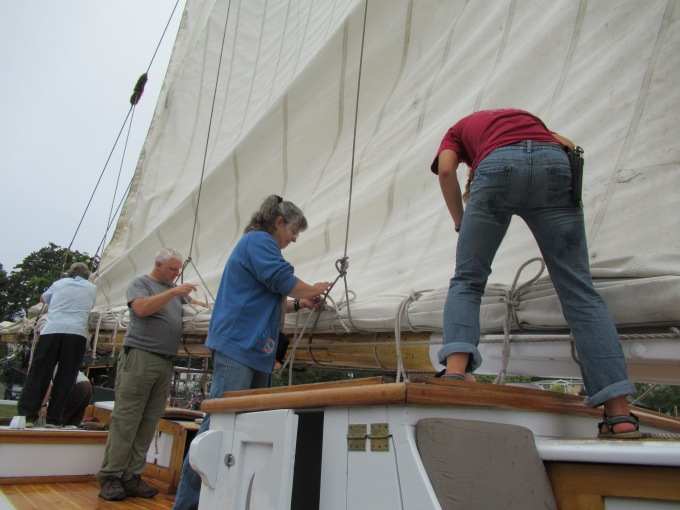
The Lewis R. French operates with a crew of four:  Captain GarthWells, First mate Darcy,  Jason the cook, and Mackenzie, the mess mate. These four can sail her fine by themselves, but often invite the passengers (21 of us) to help with setting and lowering the sails, reefing, or hauling up the anchor. Teamwork and helping out wherever needed makes for smooth sailing. 


Out in the bay, the fog was even thicker. First mate Darcy sat at the bow with a hand-cranked fog horn. She blew a long and two shorts every few minutes as a signal to other boats. We passed another schooner, emerging from the mist like a ghost off the starboard bow. Occasionally the vague shape of a rocky island slid by, and we heard the muffled clang of a buoy’s bell, warning of reefs. Captain Garth used GPS to navigate, but in the fog it was easy to imagine a time when such luxuries were unknown.

In many ways, sailing the French now is like reenacting the past. The ship looks and handles much the same as she did in 1871 when she was first launched. For a hundred years, she worked along the Maine coast hauling many different kinds of cargo from fish to Christmas trees. In 1971, she was rebuilt to carry passengers on pleasure cruises. Here we see the real differences between past and present. Though they are tiny (there is barely enough room for one person to stand beside the bunk with the door closed), each cabin is a model of design ingenuity, using every nook and cranny for storage, and providing far more space than any sailor would ever have.  Each cabin also boasts running water and electric lights, additional luxuries earlier sailors wouldn’t even dream of.

In 1992, the French was designated a National Historic Landmark. Though she is home-ported in one place, the French is unusual in that she is a moving landmark. In our four-day trip, we anchored in Smith Cove, off Burnt Island, and in Rockport Harbor before returning to Camden. As an historic landmark, the French is important not just because of where she is, but what she is: a 147-year-old schooner that still relies on human hands to raise and trim the sails. Even the anchor is raised manually with the aid of a windlass. She’s not just a place, but an experience. Sailing with only wind for power  in fog, rain, or bright sunshine evokes a time-gone-by when life was slower. (Slower, but not easier. A sailor’s life was hard, cramped and cold, alternating between periods of intense activity and boredom.) We saw porpoises, seals, cormorants and eagles, just as sailors have done in these same waters for more than a hundred years.

On the last day of our cruise, we sailed into Rockport Harbor. The wind had died, and we tacked back and forth across the bay to ease closer in, moving at one knot or less instead of the four to five knots we’d sailed the day before. As we lowered the anchor, a sliver of blue sky spread out under the clouds. Gradually the clouds blew off, until by late afternoon, the sun shone in a clear blue sky. Patches of bright red and brilliant orange dotted the hillsides as the trees began showing their fall colors.

That night, as the French swung slowly on her anchor, rocking with the tide, we sat up on deck and saw the Milky Way splashed across a clear sky. With the waves lapping at the hull, and the stars twinkling overhead, I could almost hear the voices whispering from the past, tying this place now to the same place long ago.

Learn more at Lewis R. French Schooner website

IMG_1260
Silhouetted against a mackerel sky,  First mate Darcy climbs the rigging to set the main topsail.


Bountiful Summer Squash

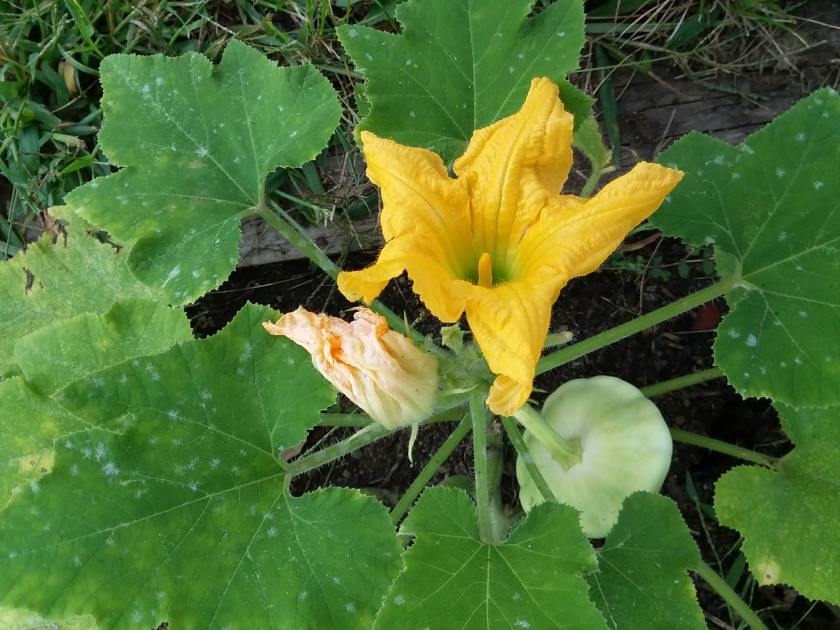
20180907_114408September is the harvest month–the time to gather the abundant bounty from our summer gardens . And nothing demonstrates abundance quite so well as zucchini squash. It’s so easy to grow that even a complete amateur gardener can produce more zucchini than any family can reasonably eat in one season. Zucchini grows well in almost any soil, survives drought and neglect and even produces when choked by weeds left by the lazy gardener.  But zucchini is a relative newcomer to the panoply of summer squashes. It is a hybrid variety of Cucurbita pepo (all summer squashes belong to this family), developed in Italy in the second half of the 19th century. The first records of zucchini in America are not quite a hundred years old, dating from the 1920’s.
So this summer, I decided to explore the summer squashes more likely to appear on Colonial tables. Of course all squashes are native to the Americas, where they have been eaten since prehistoric times. The word ‘squash’ even comes from the native word ‘askutasquash’–which means the fruit eaten green or immature (that is, summer squash).

The earliest European explorers noticed native-grown squash, though they often thought of this novel food as varieties of cucumbers or melons.  Good things travel fast and so by the 16th century, squash was commonly found in European gardens.

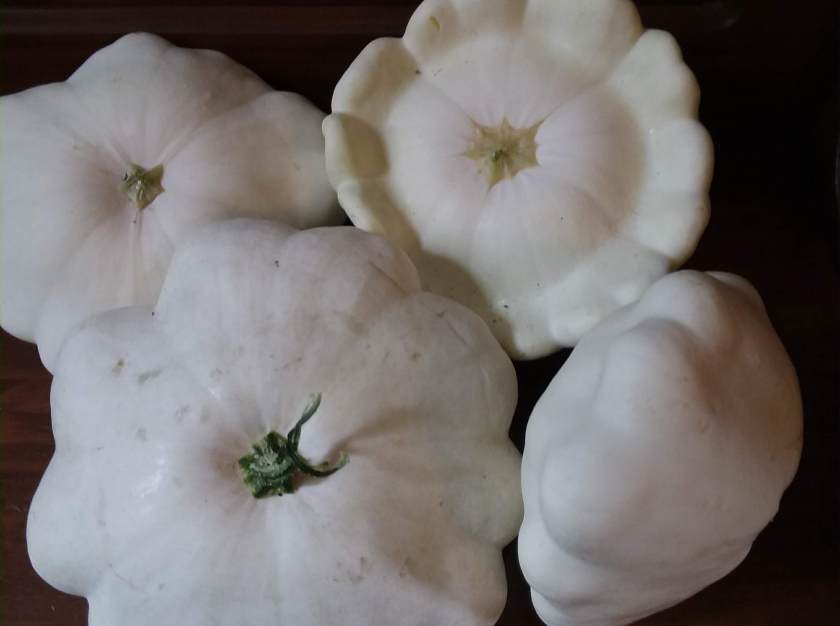
Squash hybrids easily, sharing traits with neighboring squashes, which explains why there are so many varieties. One of the earliest mentions of summer squash I found was in 1562, in Fuch’s Vienna Codex. He described what he called cucumer paniformis, so named because the pale green squash resembled a scalloped-edge baking pan. You might recognize this as patty pan squash.

The patty pan squash was one of Thomas Jefferson’s favorites. He said they were “one of our finest and most innocent vegetables.” (seed packet)  Patty pan squash were grown in Jefferson’s gardens at Monticello, in the gardens of enslaved African-Americans, and in kitchen gardens throughout the colonies.

This popular colonial-era squash had many different names based on its distinctive shape, including buckler squash, for its resemblance to a buckler-type shield. One of the most interesting names I came across was cymling (pronounced sim-lin) and also spelled symnel, simlin, or cimlin. The Oxford English Dictionary lists the earliest recorded use of this word for pattypan squash from 1648, in Beauchamp Plantagenet’s A Description of New Albion. Symnels or simnels were a Lenten cake, made for Mothering Sunday, the fourth Sunday of Lent. The day originated as a day to return to one’s ‘mother’ church, although in recent times it has become more like the American Mother’s Day. So how does a name for a cake get transferred to a squash? It turns out that simnels are a circular cake, with small round balls of almond paste decorating the circumference. Indeed, that’s a good description for a large pattypan squash.

Recipes from the 16th through the 18th centuries use pattypan squash in soups and stews. The most common suggestions are for boiling it and serving it with butter or cream. Pattypans were often harvested and eaten while they are very small, the size of large walnuts. The pattypan squash I used were larger, ranging from the size of an apple to the size of eight inch layer cake (because, like zucchini, pattypan squash seem to grow into giants overnight).

The following recipe comes from The Virgina Housewife (p. 110)

Squash or Cimlin

Gather Young squashes, peel, and cut them in two, take out the seeds, and boil them till tender; put them into a colander, drain off the water and rub them with a wood spoon through the colander; then put them into a stew pan with a cup full of cream, a small piece of butter, some pepper and salt–stew them, stirring very frequently until dry. This is the most delicate way of preparing squashes. (p. 110)

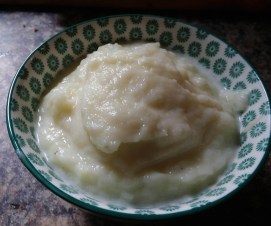
20180905_161449This original recipe calls for peeling the pattypan squash. I found that it is very difficult to peel because of the irregular shape. In the days of modern appliances, peeling the squash is unnecessary. Placing the boiled, unpeeled squash in a food processor and processing it for 2 minutes produces a sauce just as smooth as the colonial method of forcing the cooked squash through a colander.
My modern recipe for Pattypan Squash Puree:

3-4 large pattypan squash                                                                                                                       ¾ c. cream                                                                                                                                              3 T. butter                                                                                                                                                 Salt and pepper to taste

Wash the squash. Remove the seeds and stem ends. Cut into chunks. Cover with water and boil for twenty minutes, or until tender. Drain well. Puree in a food processor for two minutes. Add cream, butter, salt and pepper to the squash and simmer another ten minutes or until the mixture is as dry as you like it. The pureed squash can be eaten as a side dish. It also makes an excellent soup base. 20180810_141421.jpg

I’ve eaten pattypan squash many times, but I’d never grown it before. Using seeds from The Thomas Jefferson Center for Historic Plants, I planted seven hills of cymlings.

They all grew.  They all produced a prodigious number of pale green scalloped edge squash.

Obviously, pattypans are just as abundant as zucchini. Anybody want some?

20180921_113754
Sources:

Cymling or Pattypan Squash. Seed packet from The Thomas Jefferson Center For Historic Plants. 2016

CurcurbitsColonial Williamsburg. The Colonial Williamsburg Foundation, 2018. Colonial Williamsburg: That The Future May Learn From The Past

Randolph, Mary. The Virginia Housewife Or, Methodical Cook. T. E.H. Butler and Co. : Philadephia, 1860.

Simnel. The Compact Edition of the Oxford English Dictionary. 1971.

Climbing Mt. Fuji with my son

256px-Great_Wave_unrestored
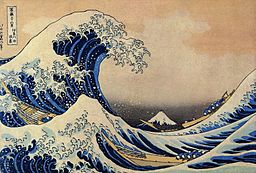
“Behind the Great Wave at Konugawa”-The most famous image from Katsushika Hokusai’s 36 Views of Mount Fuji. (1823-1829)

When my youngest son, Rory, graduated from high school, he wanted to go to Japan. I wasn’t ready for an empty nest, so I decided to take him there myself.

Our biggest goal in Japan was to climb Mt. Fuji, the majestic peak of 12, 388 feet. Mt. Fuji has been a sacred mountain for hundreds of years, with the experience of watching the sunrise from the top of the volcano prized above all. But the mountain is climbable only in the height of summer. So one July evening at 8:00 p. m., we took a bus from Hakone part-way up the mountain to Fifth Station. The night was warm, but we had escaped the oppressive heat of Tokyo.

The route began as a wide, clear path, but within minutes it had deteriorated into little more than an animal track, overgrown with roots and branches and strewn with boulders. It was too dark to see anything clearly. Rory, who was increasingly far ahead of me, had the flashlight. As I stumbled over roots and clambered up the boulders, I knew I was in trouble. Altitude, plus the heat and humidity, had me breathing like I had run a mile at top speed.

After fifteen minutes I caught up to Rory, who was waiting for me at a turning in the path.

“Hey, Mom, you okay”’ he said, real concern in his voice.

“Sure,” I wheezed, immediately taking on my familiar role of Mom– the one never in trouble, never hurt. “I’m just a little slower than you.” I tried to catch my breath, but there didn’t seem to be enough air.

Reassured, Rory asked if I minded if he went on ahead.

“Just give me the flashlight,” I said.

“Great, Mom. I’ll see you at the top.”

So he left. It shouldn’t have surprised me. Kids always leave their parents behind.

I struggled on alone. My heart pounded and my ears throbbed. At first, I worried about Rory. What if he fell without the light? What if he got lost? But as the path grew steeper, I stopped worrying about him, to worry more about myself. By the time I reached the Sixth Station, I was pretty sure I wouldn’t make it to the top by sunrise. Still, Rory was expecting me. I struggled onward.

The flashlight burned out around midnight. Plenty of people had begun the hike at the same time as I had, but I had no idea where any of them were. I stumbled on, apparently alone on this great pile of rock in utter darkness. Somehow I missed the trail, and found myself on a slope of loose gravel scree. I took a step forward and slipped backward two feet. I fell to my knees and crawled, aiming upward, until I found a rope strung along the trail to mark the path.

At the Seventh Station I shared some raisins and chocolate with some other hikers. One of them gave me fresh batteries. It was colder by now, so that each time I stopped, my glasses steamed over. I was drenched in sweat, and the cold breeze cut into me. My legs felt like spaghetti, limp and slow to respond to my attempts to walk. I knew I wouldn’t reach the top. Rory would just have to manage without me. Still, I’m too stubborn to give up, so I kept putting one foot in front of the other.

By 2:00 a.m. the second set of batteries burned out. A pinkish half moon rose and illuminated a barren landscape of dark rock and stunted scrub, far above the treeline. A myriad of stars glittered the sky.

The trail zigzagged back and forth in steep switchbacks. Sometimes it wound between big stone steps, while other times I crunched through rocky gravel. Occasionally a thin rope marked the trail. Mostly, the way followed a narrow path worn smooth by thousands of passing feet.

I stumbled on, refusing to quit. Dizziness made me light-headed. Sometimes I could see the flickering flashlights of other hikers or hear jingling bells on hiking sticks. Sometimes people passed me. Once in a while I passed a group sitting alongside the path, resting. Each encounter brought a brief exchange of greetings, konbanwa, sumimasen, dozo. These conversations were always brief. We had no breath to waste.

I began counting my steps to keep going. Twenty steps I promised myself, twenty steps before resting. I shuffled forward. Always up with the great empty sky arching above me and the great empty mountain embracing me. I felt like a tiny, insignificant speck in the vast universe.

Soon, I couldn’t make twenty steps anymore. I tried ten steps. Ten steps before resting. Each step brought me a few inches closer to the top.

At the Eighth Station I met three Japanese teenagers. We shared water and chocolate cookies, and discussed the merits of Star Wars in a strange mixture of Japanese and English. I thought of Rory, my own teenager, somewhere on this huge mountain, out of reach, but not really too far away. Gradually my breathing eased.

After a brief rest I continued on trembling legs. Overhead, the Big Dipper turned on the axis of the North Star. The moon crossed the sky and set in the West. In the East there grew a pale, curved glow.

As I neared the Ninth Station, the faint light of pre-dawn slowly lifted the eastern edge of night. I could hardly move forward. I took five steps, then a rest. Five more. My steps grew shorter. Two inches forward. A tiny bit closer. I began to think I could make it.

Suddenly, the trail became very crowded. Hundreds of people converged from various paths and we merged to become a long, slow-motion line, a solid snake-like queue of people inching up the mountain. Above and ahead I could see the lights of Tenth Station, the last station. With new hope, I struggled forward, reaching the station with an overwhelming sense of relief.

But it wasn’t the top. The top was another hundred yards, a hiker told me, another hour. I sat on a boulder at the edge of the station, too discouraged to move, too tired to walk another ten yards, let alone a hundred. I could watch the sunrise from here just as well as the top, couldn’t I? Rory wouldn’t mind if I didn’t show up.

I knew I was fooling myself. I didn’t want to disappoint him. Or myself. Whatever the reason, I sighed and stood up. Maybe I couldn’t get to the top, but it wouldn’t be because I had stopped trying. I took a step. Then another. A hundred yards to go. Four hundred steps. A rest between each one.

At last I could see the red torii gate. Two white lions guarded it, and the pillars were wreathed in bells. Tears of exhaustion, of joy, of relief streamed down my face as I stumbled through and rang the bells in the long-standing tradition.

There was Rory, waiting for me. He didn’t say much. He never doubted I would get there. Together we stood on the top of Mt. Fuji and watched the sun creep over the curve of the horizon and finally explode in a sudden burst of daylight.

And I knew it was enough. Rory would leave me behind many times as he went off to college and embarked on his adult life, but he would still be there, ready to share a new dawn, whenever I caught up to him

on top of Mt. Fuji
On top of Mt. Fuji

Hamilton: Historical fiction with a modern twist

1566Earlier this summer I had the very distinct pleasure of attending the popular rap-musical, Hamilton, with my daughter in Chicago. A lot has been written about this show, and its well-deserved popularity. Indeed, the music, the lyrics, the acting, the set, the choreography–all that and more are truly amazing.

Beyond this critical acclaim, what I find most interesting is the fact that this show is historical fiction at its best, the stories of who lived, and who died, and what happened. Lin-Manuel Miranda, who created the show and starred as the protagonist in the Broadway production, based this musical on the Ron Chernow’s biography, Alexander Hamilton (2004), so a lot of research went into the making of the show.

In school, kids study George Washington, Thomas Jefferson, and Ben Franklin. Less attention is paid to Alexander Hamilton, even though he was a prolific writer and of tremendous influence on the establishment of this country. Sure we learn about his stint as the first Secretary of the Treasury and his death from a duel with Aaron Burr. We know he’s the guy on the $10 bill. And some of us wade through excerpts of the Federalist Papers for which he, John Jay, and James Madison are responsible. But we don’t learn much about the man. His life doesn’t become legend the way the lives of others Founding Fathers have.

Lin-Manuel Miranda’s genius is grabbing us by the throat and showing us the story of this remarkable man and his important role in the unlikely founding of the United States of America. Hamilton’s rise to power is the epitome of American opportunity. Miranda opens the show by demanding to know how a bastard, orphaned immigrant can become great. From the very beginning notes, we in the audience care about this young man full of hopes and dreams coming to what will become America. As we follow Hamilton’s story, we witness America itself being born.

For the most part, the show is well-researched and factually correct. Even his emotional turmoils, his dreams and goals, and his scandalous affair are documented through Chernow and Miranda’s study of Hamilton’s extensive correspondence and other writings. Those few departures from historical fact were made with thought and deliberation to enhance the story without losing sight of the truth. For instance, in reality the Schuyler sisters had two brothers, which Miranda left out, probably because they had little effect on Hamilton’s story. Another example is the duel between Aaron Burr and Alexander Hamilton. The shooting actually happened in 1804 after Burr lost the election for governor, not in 1800 after Burr’s failed bid for the Presidency. Though the details of the duel’s timing are inaccurate, the rivalry between Hamilton and Burr is well-documented and clearly portrayed in the musical. The discrepancy doesn’t take away from the story or the shock of Hamilton’s death.

It’s no easy task to make Americans care about history. We tend to be a forward-looking people, too often ignoring the past and forgetting the problems from yesteryear. Yet we can learn a lot from history. Modern Americans still struggle with racial inequities, federal budget deficits, immigration issues, and the of balance work and home life. Miranda’s story of Hamilton entertains, but also reminds us of who we are. Through modern rap, dance, and song, we can see ourselves in this story of our past.

History is told by the survivors. Unlike the other founding fathers, Hamilton’s life was cut short, so he did not survive. But his wife, Eliza, lived for another fifty years after him, and even though her voice was ignored by many for years, she never quit telling Hamilton’s story.  Now Lin-Manuel Miranda has taken up the story and given it to us again. I am grateful.