On visiting history–Surgeon’s Quarters

by Mark Meier, guest blogger

(Today we welcome Mark Meier, author of Ebony Sea: Origins.  Check out Mark’s blog at Meier-writers.com )

I’d like to thank Terri for the opportunity to blog for her. When I read her message the second time I noticed the word “historic.” Only a surprise that ANYONE asked me to write something that qualifies as “historic.”

Pondering that for a while revealed a couple of interesting points.

1 – I’ve written fantasy. Writing about low-tech people in fantasy novels really isn’t that much of a divergence from historic.

2 – Some of my favorite places to visit would qualify as historic.

The “historic” place I’ve visited most often is the Renaissance Festivalin Minnesota. It usually runs from late August through September and is an absolute blast. I highly recommend going if you have the opportunity.

Terri would be more qualified to comment about the authenticity. Because of that . . . questionable . . . accuracy, my post here isn’t about that festival.

There is also a heritage center near where I live called Norskedalen. I’ve been there more than once, and it’s fairly interesting. Not as much funas Ren Fest, but more historically accurate.

Another destination that fits about half-way between the fun of Ren Fest and the accuracy of Norskedalen is Medieval Times dinner theater. Jousting, swordplay, a torture museum, and a meal without forks and knives. Yep. Eat with your fingers.

The place I’ve visited most that actually qualifies as accurate history is Surgeon’s Quarters. While I’ve been to Ren Fest more often, Surgeon’s Quarters is far more compelling for someone interested in history.

There’s a location in Wisconsin where the watersheds to the Saint Lawrence and the Mississippi is close enough to portage from one to the other. Back in the colonial days people used that portage (which is how the City of Portage got its name) so much it became of strategic importance. Fort Winnebago was established to protect that important area.

The original use of Surgeon’s Quarters was a portage company and fur trading venture. It was sold to the Americans, and eventually became the home for the Fort Winnebago army surgeon. Hence the name, “Surgeon’s Quarters.”

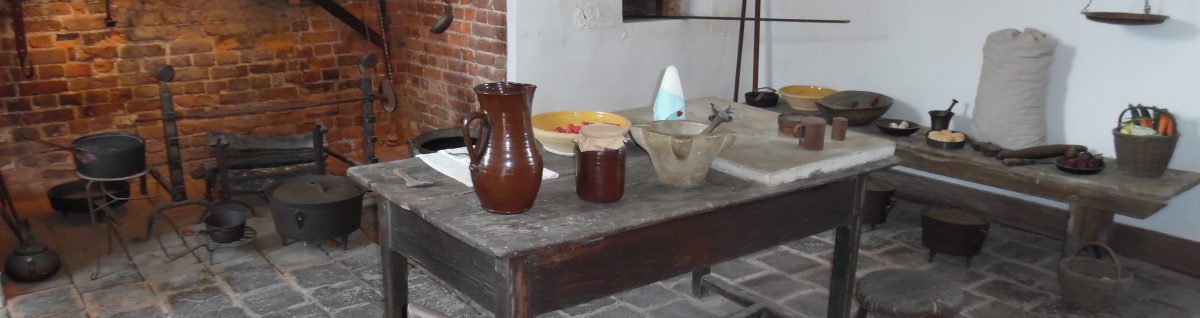
One of the reasons I want to write about this location is to point out how ingenious people were – and are. The simplest example I can give is the multiple uses early pioneers had for things. Take for instance a table at Surgeon’s Quarters. The top is hinged so tipping it up reveals it’s also a chair. With the wide, round back, people could pull it up close to a fireplace and hold in the heat. On the coldest of winter nights that seat would be a relatively warm place to pass the time.

At Surgeon’s Quarters I learned another tidbit of information. The phrase “sleep tight” came from the beds used in that period. Ropes were woven across the wooden frame of the bed, and a tick mattress was placed on top. Occasionally the ropes had to be tightened or a sleeper would sag to the floor. So telling someone to “sleep tight” wished them a good night’s sleep.

On the other side of interesting bits is how people can get history all wrong. There’s a trap door in one of the rooms at Surgeon’s Quarters leading to a dirt hole beneath the building. On one visit the tour guide told my wife and me that it was used to store pelts in a cool place so they wouldn’t “go bad.” On our next visit we were told it was probably used to hide runaway slaves from those hunting them down.

The point of that is what we think we know about history might change. Interpreting what hashappened through the lens of current understanding can lead to inaccurate perceptions. When someone tells you “this definitely happened,” take it with a grain of salt.

I wonder where that aphorism came from.

Terri?

Shakespeare in Love: A Review

Very little is known about William Shakespeare. He was born in Stratford-on-Avon sometime in April, 1564. In 1582, at the age of 18, he married Anne Hathaway, and had three children with her. Then he lived in London without his wife and wrote some of the world’s best dramatic works ever to be produced. What he thought, who he cared about, and how he worked are all unknown. All we have for evidence are his plays. These plays serve as great fodder for the imagination of writers.

For centuries, writers have imagined the real William Shakespeare in poetry and stories. A book I read recently, Fools and Mortals, by Bernard Cornwell, portrays William from the point of view of Richard, his younger brother as William writes A Midsummer Night’s Dream. According to Richard, William is haughty and unfriendly. The story is very well-written and provides a fascinating view of early 17th century London.

A much different picture of a younger, far more likeable William Shakespeare is presented in the play (first a screenplay by Marc Norman and Tom Stoppard), Shakespeare in Love, which I recently saw performed during Winona’s Great River Shakespeare Festival. This tragic romantic comedy or (comedic romantic tragedy) gives the poignant backstory for the creation of one of Shakespeare’s most enduring tragedies, Romeo and Juliet. Both plays (the modern and the Elizabethan) present star-crossed lovers whose story could have been happy, if the forces of the world would only let them be. In Shakespeare in love, young Will falls in love with Viola de Lesseps, a wealthy woman bound by the cultural norms of her time to obey her father and marry a man she does not love (or even like.) Both she and Will want poetry in their lives. In each other’s company, they find both poetry and love.

In a hilarious set of circumstances rivaling Shakespeare own mixed identities, Viola disguises herself as Thomas Kent, an actor, and ends up playing Romeo in Will’s new comedy which he plans to call Romeo and Ethel the pirate’s Daughter. In Elizabethan times, women weren’t allowed to perform on the stage. One particularly funny scene is when Viola, a woman disguised as Master Kent, plays Romeo against a young boy, disguised as a woman, playing Juliet. The comedy deepens when Will, helping to direct the rehearsal, steps in to play Juliet, and sparks fly. But when Will and Viola’s real life comes crashing in and their love is thwarted, the comedy turns dark, and the tragedy of Romeo and Juliet is created.

Shakespeare in Love is marvelous historical fiction. Though full of anachronisms, (ie-Wessex, the nobel suitor to Viola, talks of his tobacco plantation in Virgina. The tobacco culture in Virginia didn’t begin until 1607), the play presents a very believable late 16th century London. We see a credible picture of the life of an actor and playwright, including the constant threat of the theater being closed, the stealing of play manuscripts, and the restrictions on women attending or working in the theater.  Indeed, one of my favorite aspects of this play is the portrayal of Queen Elizabeth played beautifully by Melissa Maxwell. At this point in history, Elizabeth is a cantankerous, powerful woman holding her own in a man’s world. With just the right mix of poignancy and hubris, she says to Viola, “I know something of a woman in a man’s profession. Yes, by God, I do know about that.” At that moment we recognize the struggle of women of all ages for self-determination. Our hearts go out to both the queen, who seems to have succeeded, and Viola, who ultimately cannot.

What makes Shakespeare in Love really stand out are the many connections to Shakespeare’s work and the way events are presented as inspiration for Shakespeare’s plays. Young Will’s friend, Christopher Marlowe, and Will’s feelings of guilt over Marlowe’s death are echoed in the character of Mercutio. Viola De Lesseps’ nurse becomes Juliet’s nurse. Many of Shakespeare’s best plot devices, such as disguised identities, men and women cross-dressing,  jealous lovers, and sword fights find their way into the modern play. Shakespeare in Love is thoroughly peppered with lines from many of Shakespeare’s plays and even from one of his most famous sonnets, “Shall I compare thee to a summer’s day…”

Good historical fiction connects our past with the concerns of today. Shakespeare in Love tells a story that makes us laugh and cry as we recognize the power of love. At this publication, there are still three performances, July 29, Aug. 3 nd Aug.4.  Here’s the link:

GRSF: Shakespeare in Love

If you can’t make the show, there is always the movie. Like Shakespeare’s own work, this is a show well worth seeing, again and again.


Lettuce: As Easy as Pie

a-salad.jpg
Everyone knows lettuce–that mundane, leafy green vegetable. It’s indispensable in fresh salad. It’s center of a BLT. It adds crunch to a tuna sandwich. It’s grown world wide and even in space on the International Space Station. For nearly 5000 years, lettuce has been a part of the human diet.


Egyptians were the first to grow lettuce, originally for the oil from the seeds. Over time, they bred lettuces for tastier leaves. Because of the milky sap and thick, upright stems of these early plants, the Egyptians associated lettuce with sexuality.

The Greeks continued breeding lettuces for more flavorful leaves, but they told various stories of Adonis being killed in a bed of lettuce. For the Greeks, lettuce signified impotence rather than prowess.

The Romans continued the lettuce-growing tradition, siding with the Egyptians on the question of how lettuce affects male stamina. Lettuce was also served before meals and after meals to improve digestion in the first case and sleep in the second. By 77 AD, at least eight different types of lettuce are recorded in Pliny the Elder’s Natural History.

Lettuce cultivation spread into Asia and Western Europe, with many more varieties developing along the way. Early lettuces were all leafy and upright, like romaine. By the 15th century, loose head lettuces were developed. By Elizabethan times, lettuce was popular throughout Europe. Gerard, a notable medieval cook, claims lettuce helps with heartburn, thirst, and sleep problems. He also says that it “maketh plenty of milk in nurses.” (as quoted by Hess, 99).

Europeans settling in America brought along their love of lettuce. Thomas Jefferson, well-known for his interest in gardens and plant varieties, recorded seventeen kinds of lettuce in his garden. This year I grew two heritage varieties of lettuce. Grandma Hadley’s is soft, slightly sweet lettuce with a bit of purple on the leaves. It comes from Emma Hadley of Illinois, stemming from 1915. The second lettuce I grew is called Tennis Ball lettuce. According to the seed saver’s packet, this type of lettuce was “often pickled in a salt brine during the 17th and 18th centuries.” (Weaver)

By this point you may be asking what does all this have to do with pie? Currently in America, we usually eat lettuce raw. Indeed, from ancient times, lettuce was often eaten as a raw salad, perhaps drizzled with oil and vinegar. One such salad is described in The Virginia Housewife or, Methodical Cook. Mary Randolph suggests mixing lettuce with chervil, pepper grass, cress and other greens and tells how to make a dressing of hard boiled egg yolks, salt, sugar, mustard, oil, and vinegar.

This all sounds familiar, but in looking at the history of lettuce, I came across a very unusual recipe for a lettuce pie, in Martha Washington’s Booke of Cookery.

The recipe (from Martha Washington’s Booke of Cookery, 98)  is a follows:

To make a lettis tart

     When you have raised the crust, lay in all over the bottom some butter, & strow in sugar, cinnamon & a little ginger; then boyle yourcabbage lettis in a little water and salt,& when the water is draynedfrom it, lay it in your coffin with some damask pruens stoned;  then lay on the top some marrow& such seasoning as you layd on the bottom.Then close it up and bake it.

Lettuce pieThere are a number of challenges in following this recipe. First I had to figure out what it means to raise the crust. A raised crust is not, as I first thought, made from a yeast dough. Rather, a raised crust is a thicker crust made without a mold. So raising the crust means pushing the sides up to make a free-standing, pie-shaped bowl, often in a rectangular shape.
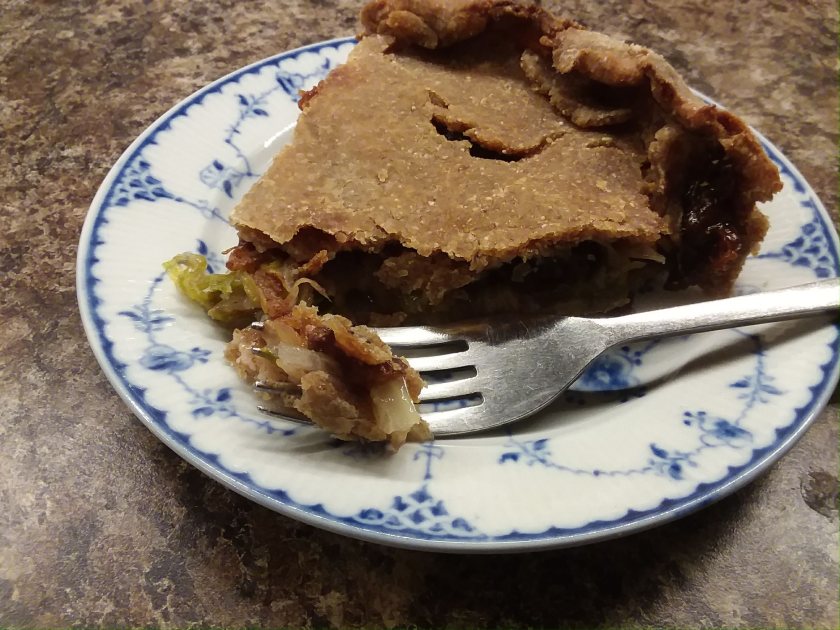
Another challenge for this crust was what recipe to use. The author calls it a tart, but tart crusts were generally rolled thinner and baked uncovered. A tart crust is too thin to be raised. Later in the recipe, the cook calls for a coffin. A coffin is generally a heavier pie crust, rolled thicker, allowing it to be raised.  With this distinction in mind, I used a heavier, thicker paste based on suggestions from Hannah Glasse and Karen Hess.

Alas, it turned out to be beyond my skill to raise a crust. I could roll the crust and form the bow shapel, but it collapsed on itself when baked. I ended up making the crust using a springform pan to hold the sides in place.

The next challenge with this recipe is the term ‘cabbage lettis.’ This is head lettuce. I used iceberg lettuce, though it was not developed until the 20th century. There were head lettuces available in Colonial America, mostly softer, looser and more flavorful than modern iceberg lettuce.

The only challenges remaining were figuring out how much of each ingredient and how long to bake it. My answers to those questions came through trial and error. In the end, I came up with a flavorful, pie unlike anything else I’ve tasted, though the cinnamon makes it slightly reminiscent of apple pie.

Here’s my modern version of Lettuce Pie:

Crust:

Melt 6 Tablespoons of shortening in ½ cup water.
Mix 1 c. rye flour, 1 c. white flour and ½ teaspoon salt in a food 
processor.
Add the melted shortening and water and pulse until well mixed. (Use a spatula if necessary to scrape the sides)
Knead the warm dough a few minutes.  Divide into two balls, one slightly bigger than the other.  Roll the large ball into a circle between ⅛ and ¼ inch thick. 
Place it in a 8” springform pan, and push the edges up the sides. You may have to repair cracks as you do so.
Reserve the smaller ball to form the top crust.

Filling:

Spread 2 T. soft butter over the bottom pie crust.
Mix 4 Tablespoons of sugar, 1 teaspoon cinnamon, ½ teaspoon ginger. 
Sprinkle half of this on the buttered crust in the pan.
Roughly chop one head of lettuce. Boil it in salted water for about 3 minutes, or until limp. Drain thoroughly and place it in the pie 
shell.

Chop ⅓ cup pitted prunes. Strew those over the lettuce. Sprinkle the remaining sugar mixture over the lettuce and prunes. 
Dot with 2 Tablespoons butter (shaved or cut in bits).

Roll out the remaining pie crust to cover the pie. Crimp the edges.

Bake 45- 50  minutes at 400 degrees. Enjoy warm or cold.

lettuce pie sliceP.S. Whoever invented the phrase ‘easy as pie,’ probably never made a scratch pie.

Sources:

Fischer, Nan. The History of Lettuce: From Ancient Egypt to outer space, lettuce is a well-traveled little plant. Heirloom Gardener, Spring, 2018. www.heirloomgardener

Glasse, Hannah. The Art of Cookery Made Plain and Easy. Cotton and Stewart, 1805. (Facsimile Reprint, Applewood Books, 1997.)

Hess, Karen, transcriber. Martha Washington’s Booke of Cookery. Columbia University Press, 1995.

Randolph, Mary. The Virginia Housewife Or, Methodical Cook. (Fascsimile reprint) Dover Publications,1993.


The National Museum of Funeral History

T-shirt

I’m a big fan of museums, especially historical museums. Best of all are quirky historical museums. Recently my husband and I found ourselves in Houston, Texas with a day of leisure. Houston has many wonderful museums to choose from, but the one we found the most intriguing was the National Museum of Funeral History (NMFH).

What? A museum of funerals? Absolutely.

It may be a bit macabre, but it’s not too surprising that we were drawn to this museum. After all, my husband sells monuments (doublespeak for tombstones), and I have several stories about a guy (Roscoe Gordon) (13 Haunting Tales) who talks to ghosts. The museum has several different exhibits including celebrity funerals, a money casket, casket making, funerals of popes and presidents and Japanese funeral customs, to name just a few.

One of my favorite exhibits is Victorian mourning customs. We learned the length of time a widow matte black in full mourning (a year and a day) and how she could add a bit of black satin to her mourning costume for the next nine months.  A widow’s full mourning lasted two years, after which she might go into half-mourning, wherein she wore muted, dull colors. Men did not have such strict customs when it came to grieving, and the length of time of full mourning varied considerably for the death of parents, siblings, grandparents or children

In the 19th century, it wasn’t always easy to tell exactly when someone died. I heard before about coffin bells, which were bells placed on the coffin with a string leading inside so that if the deceased turned out to have been buried alive, he or she could ring the bell, thus calling or help. In the same vein, 19th century wake lasted three days, during which time, mourners kept a close watch on the deceased, just in case he or she woke up. In fact, this practice may be the origin of the word, “wake.”

The largest permanent exhibit is of historical hearses. From horse-drawn carriages of the 19th century to the sleek Packard Funeral Bus of 1916, this is probably one of the best collections of rare funeral vehicles.  A hearse is much more than a car or wagon. Remember the gruesome kid’s song, “Whenever I see a hearse go by…” A hearse leading a funeral procession makes everyone stop and think about death. It’s like the bell in John Donne’s Meditation 17, when he says, “…never send to know for whom the bell tolls; it tolls for thee.”

But lest our reflections become too somber, think about the hearse as a sometimes opulent and always powerful statement honoring the dead.  When I was in Ireland several years ago for my father’s funeral, everyone we saw along the streets and lanes, stopped and removed their caps as the hearse carrying Dad passed by. I was very touched by this sign of respect, as if all these others, strangers though they were, shared in my own mourning.

In spite of its focus on death, the museum has its share of whimsy, especially in the elaborate fantasy coffins of Ghana. In Ghana, death is seen as a transition to a spiritual realm. The coffins are designed to reflect the character of the departed. They include fancy cars, animals such as a crab or chicken, a shallot, and even an outboard motor.

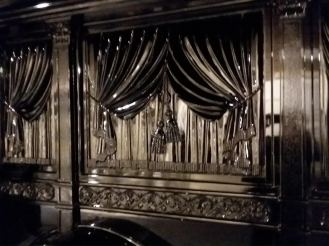
black hearse panelMy favorite kind of history is the exploration of how people in the past dealt with the problems of living. In their fascinating displays about how other people have dealt with the problems of dying, National Museum of Funeral History earns my recommendation. And who knows…another Roscoe Gordon story could come out of our visit there.
On cooking with Pearl Ash

Experiments in cookery

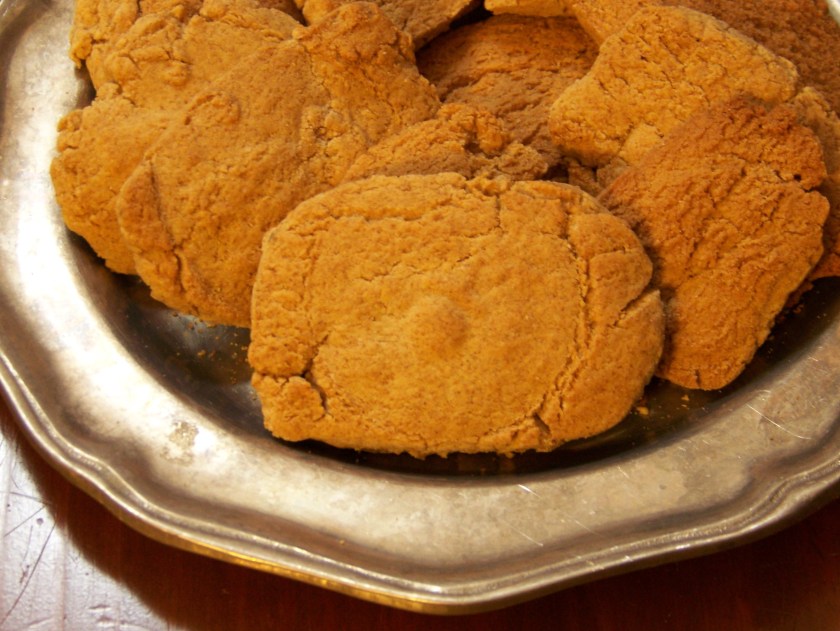
gingerbreadSometime in the middle of the eighteenth century, an adventurous (or careless) housewife added pearlash to her dough and the first chemical leavening was discovered. Before pearlash found its way into food, housewives had to use yeast or egg whites if they wanted their baked goods to rise. But it takes a long time to whip egg whites to a froth, and the resulting mix is not very stable. Yeast also takes a long time to work. Thus with the new chemical leavener, pearlash, cooks could bake ‘quick’ breads, a great convenience in the labor-intense colonial kitchen.  
Historically, pearlash has had many uses including soap and glass making. Various cuisines around the world use pearl ash in traditional dishes. (For instance, German gingerbreads and Chinese mooncakes.) It has also been used in the production of cocoa, wine and mead.

But be aware, pearlash is potassium carbonate,  a caustic substance made by refining potash, which in turn is made by soaking plant-based ash in pot of water. This is the same way that lye is produced. Like lye, pearlash is caustic, and must be used in the right proportions.


While the lye has been used in cooking for a long time, (for instance in ramen, hominy, and lutefisk), pearlash wasn’t used as a leavening agent in dough until about 1740. The potassium carbonate mixed with acid (like sour milk or vinegar) creates pockets of carbon dioxide. These bubbles are trapped,  making the dough rise and the resulting bread lighter.bubble s 2

In fact, pearlash can even be used to freshen yeast. Mrs. Child recommends mixing pearlash in with yeast that has soured, and using it when it ‘foams up bright and  lively” (79) and suggests that “everything mixed with pearlash be put in the oven immediately” (71).

Though pearlash works well enough as a leavening agent, it can leave a bitter taste in baked goods. In fact, many colonial recipes I found using pearl ash, also use molasses, which not only masks the bitterness, but also provides citric acid to activate the pearlash. Of the sixteen colonial recipes I found with pearlash, only two had neither molasses nor some other strong spice like nutmeg, ginger, or coriander. 

As chemistry advanced, new chemical leaveners were developed. Pearlash went out of fashion around 1840, in favor of saleratus, which is closer to today’s baking soda. 

warning.jpg

 With this knowledge, I cautiously began experimenting with pearlash in cooking. Since none of the colonial I found gave directions on making your own pearlash, I purchased some online. (Even the food grade variety comes with a warning label.)  (Food grade potassium carbonate).


First  I made a tea cake, one of the few recipes that did not have a great deal of spice. Add old recipe and my version

Tea Cake

There is a kind of cake still cheaper. Three cups of sugar, three 
eggs, one cup of butter, one cup of milk, a spoonful of dissolved 
pearlash and four cups of flour, well beat up. If it is so stiff it 
will not stir easily, add a little more milk. (Child, 71)

Modern version:
Mix  4 c. flour (half whole wheat)
     3 c. sugar
Cut in 1 c. butter
Add 1 c. milk
     ¼ t. pearlash dissolved in 2 T. water
Bake at 350 degrees until a pick comes out clean.
This makes a heavy loaf cake, similar to a pound cake in texture and taste. Quite delicious!

I had only used a 1/4 of a teaspoon pearlash in this, which may account for the heaviness of the loaf and the lack of any bitter aftertaste. I decided to be a bit bolder in the next attempt and made gingerbread.

Molasses Gingerbread
One tablespoon cinnamon, some coriander or allspice, put to four 
teaspoons of pearl ash dissolved in half pint water, four pound flour, one quart molasses, four ounces butter, (if in summer rub in the 
butter, in winter, warm the butter and molasses and pour to the 
spiced flour,) knead it well 'till stiff, the more the better, the 
lighter and whiter it will be; bake brisk fifteen minutes; don't 
scorch; before it is put in wash it with whites and sugar beat 
together. (Simmons, 36)

A modern version:

Mix: 1 pound flour (approximately 3 1/3 cups)
     1 teaspoon cinnamon
     1/4 teaspoon allspice
Warm: 1 cup molasses with 1 ounce (two tablespoons) butter
Add to the flour mixture
Dissolve one teaspoon pearlash in 1/4 cup water  
Add this to the flour and molasses mixture.
Beat the dough well, then roll it out on a floured board to about 
1/4" and cut in shapes as desired. 
Bake at 425 degrees for 12 to 15 minutes. 
Note: I skipped the egg white and sugar wash, but that could easily 
be added to the modern version of the recipe.

Still cautious, I tasted these the cookies myself before offering them to anyone else.  These had a nice light texture, with a hint of crunch, and a good molasses flavor. Still wary, my husband and I limited our own consumption to one or two a day. When neither of us had any ill effects from eating these cookies, we threw caution to the wind and enjoyed them to our heart’s content.

While I don’t recommend cooking with pearl ash, I do urge you to do your own experiments with historical cookery. Who knows what delights you will concoct?
__________
Child, Mrs. The American Frugal Housewife. Carter, Hendee and Co., 1833 (12th edition)

Simmons, Amelia. The First American Cookbook: A Facsimile of “American Cookery,” 1796. Dover Publications,1984.

On Being Rescued: Assateague Island Adventure

IMG_0830
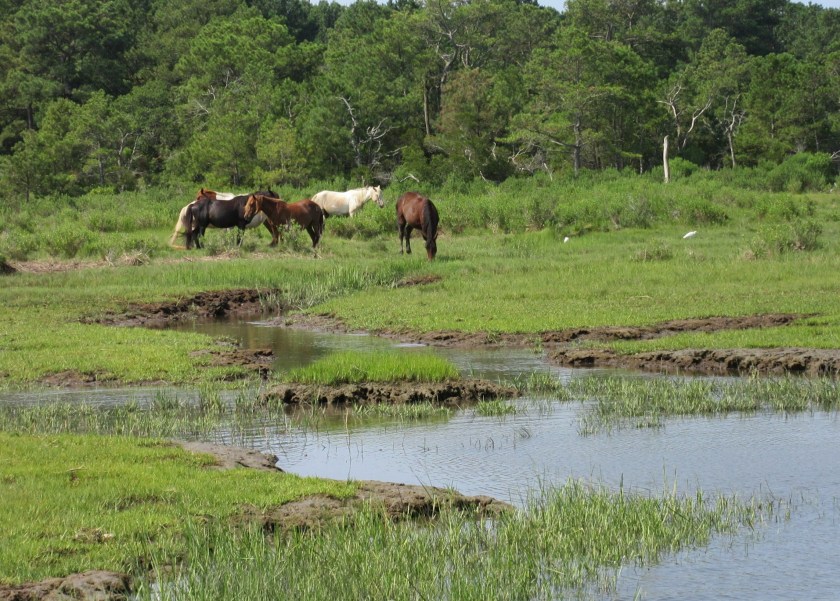
We went to Assateague Island to see the ponies, made famous by Misty of Chincoteague. This shows the salt marsh at high tide.

I know it sounds ungrateful, but really, I don’t much like being rescued. It’s not that I like having trouble or getting stuck, I’d just rather ‘do it myself’.

Of course,I am just as happy as anyone else to accept help with chores or share the work of driving or divide tasks at a campout. But there is a difference between sharing the work and being rescued. There’s a sense of failure when help is absolutely needed.

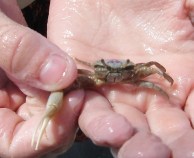
IMG_0893Take for instance my kayaking trip with my great-nephew to Assateague Island from Chincoteague. At eleven years old, Ian was the youngest in the group, and I was clearly the oldest. He and I shared a double kayak. Everyone else, including our guide, was twenty-something. We crossed the bay from Chincoteague to Assateague. Once there, we beached on the mud flats, then walked across the mud and sand to the edge of the salt marsh. We saw the ponies way on the other side of the tall grass, but the real drama was on the mud. At our approach a ‘herd’ of fiddler crabs scuttled sideways to scramble under the driftwood. (The collective term for crabs is ‘cast’, but these creatures resembled a galloping herd or flowing wave more than anything else.)
IMG_0882

After returning to the kayaks, we paddled up one of the drains to get a better view of the ponies. The drain was like nothing else I’ve kayaked through. It was low tide, so we glided through the twisting canal, below the salt grass. On either side, cliff-like banks, crusted with clams and mussels, rose above us. Exposed, tangled roots of the salt grass capped the banks. Herons stalked the marshes and gulls wheeled overhead. There was an eerie remoteness to the place, an otherworldly feeling separating our silent kayaks from the bustle of civilization.

Civilization intruded, however, when our guide’s boss called and said a storm was approaching. It was time to head back.

As we emerged from the drain, we could see the dark sky looming to the west. Now, I like storms. I like the energy in them, the sense of something immense building, the moment when the rains pounds down and the wind howls. I like all of that, but I like it best from some sort of shelter. On the Assateague side of the bay, we had no shelter.

Instead, we had a bay to cross before the storm hit. The black wall of storm with its ‘comb-over’ white top filled the sky. The kayak suddenly felt quite small as the puffs of wind churned up the water  Young Ian and I couldn’t keep up with others as we fought the waves. We paddled hard toward shore while the storm barreled toward us.

About 300 yards from the Chincoteague shore, the wind running ahead of the storm hit us. We stopped, dead in the water. The first splatters of rain hit the kayak and I knew at that moment, we would lose the race. No matter how hard I paddled, we wouldn’t reach land before the full force of the storm hit us.

The others had all reached the shore. Our guide saw our trouble and came back out to help us in. He hooked his kayak to ours, and with all of us paddling hard, we made it to shore just as the sky broke open and the rain poured down.

This is where it gets complicated. I really did appreciate the guide’s help, but I was embarrassed at being ‘hauled’ in. I hadn’t  been afraid as the storm rolled inexorably toward us , though I admit to a surge of adrenaline. But I was keenly aware I wasn’t going to be able to get us in before we were drenched. The thought we might not get in at all didn’t occur to me. Looking back, I realize the force of the wind and rain might have capsized us, and it was a long way to swim.

So the guide’s decision to tow us was the right choice. He did what he needed to do as a responsible guide. The thing is, I’ll always wonder if I could have made it in.  I’m left with a sense I wasn’t strong enough or good enough, a sense that I lost the race.

I didn’t rail or fuss at his help or tantrum like I might have done when I was two. I took what was offered, and I am grateful for his help.  

But I’d still rather do it myself.


On the quest for majesty

Pillars of the Earth by Ken FollettUnknown

Why do people strive for majesty? In some ways, this is really the same questions as why people climb the mountain or why they strive for the gold medal. The answer to any of these questions could be ‘because we can’. But the real answer is much more complex. In his acclaimed novel, Pillars of the Earth, Ken Follett provides a much richer and more nuanced set of answers, exploring our very human desire to achieve and the equally human obstacles to such glory.

Unknown-1Pillars of the Earth is about building a cathedral in Medieval England. The story follows three generations of stone masons, and the people they love, care for, hate, and work with Follett provides clear, accurate detail of how such a magnificent structure could be built. However, the story is more than just a manual on how to build a cathedral. (For that I suggest reading the excellent book, Cathedral, by David MaCaulay.)

Follett’s story digs into the decisions, twists of fate, and accidents of that span decades of cathedral building. Even more importantly, Follett weaves a tale that explores why people are driven to build majesty. It is a story of faith and politics, which are deftly interwoven into the fabric of society today as much as they were in medieval times.

At its core, Pillars of the Earth is the story of ordinary people doing extraordinary things, of good people reaching and achieving beyond what anyone could imagine, in spite of the naysayers, preachers of doom, and obstacles of fate. The novel shows how these lives interconnect, how actions have ripples, and how people go on living their own daily lives, often unaware of the consequences. To me, this is historical fiction at its best.

As I read about Tom Builder’s arrival in the fictional medieval town of Kingsbridge, Prior Phillip’s vision for a glorious cathedral, and Jack Builders’ quest for poetry in stone, I thought of cathedrals I have seen. Each is different in style and design, yet each is a marvelous example of human aspirations. Each is intended to inspire awe, to force the visitor to look up and contemplate divinity.

20180518_104311
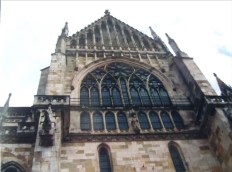
St. Peters Cathedral, Regensburg, Germany
St. Sebolds Nurnberg.jpg
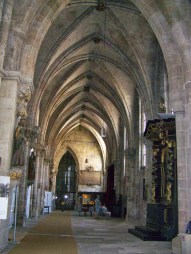
St. Sebold, Nürnberg, Germany
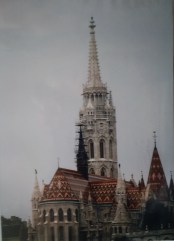
St. Matthias Budapest
Matthias Church, Budapest


Pillars of the Earth is a long book, (over 1000 pages). In some ways, it is Follett’s own reach for majesty. Like the cathedrals of Europe, the temple of the sun in Machu Picchu, and the Torii Gate of Japan, the book celebrates the very human desire to approach God and touch the sky.


The Maple Sugar Scheme in the Early United States: A Failed Plan to End Slavery

20180323_211017Spring is finally here. The ice is off the lake and the trees are budding out. With the end of the sugaring season, it’s time to talk about maple sap.  Maple syrup is one of the uniquely American foods. No one knows for sure when the indigenous people of North America began collecting ‘sweet water’ from maples and other native trees, but it was long before Europeans arrived. Sixteenth century French fur traders described how the natives collected sap in birch-bark baskets. When the sap rose in late winter and other food sources were scarce, Indians drank the ‘sweet water’ straight. They also boiled meat or other foods in it. Using hot rocks they boiled it down to make syrup or sugar.They even molded the sugar into decorative shapes. In other words, maple sap was an important part of the native food culture in North America.
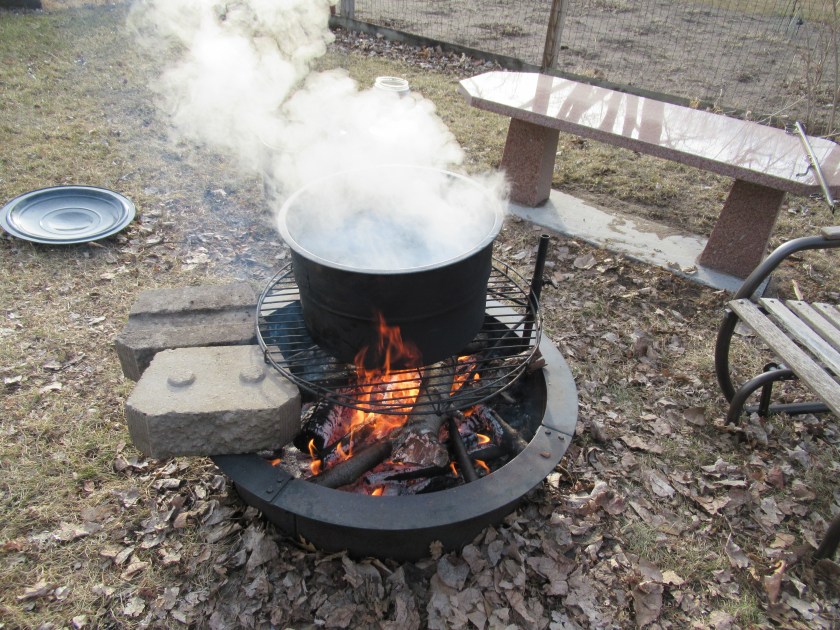
While maple trees grow in Europe, Europeans did not discover the process. One explanation for this has to do with climate. Sap rises in trees in late winter as the temperatures vary between daytime highs of 40 degrees and lows of 20 degrees Fahrenheit. Without this fluctuation of temperature, the sap does not recede and flow. Most of the areas in Europe where maples flourish do not have the right temperature fluctuation.

Interesting, but what does this have to do with slavery?                                                        The answer is both complicated and fascinating.

In Colonial and Early America, one of the most important imports was cane sugar produced in the West Indies by slave labor. After the United States  won independence from British rule, the new nation looked for other ways to assert their self-sufficiency. Maple sugar, produced at home, was cheaper than imported cane sugar, and more patriotic.

Dr. Benjamin Rush, a prominent physician in Philadelphia, spoke out in favor of maple sugar. As an abolitionist, he hated supporting slavery through the use of cane sugar. He argued that maple sugar was both more pure in flavor and morally superior to cane sugar. In 1791, he wrote to Thomas Jefferson, “I cannot help contemplating  a sugar maple tree with a species of affection and even veneration, for I have persuaded myself, to behold in it the happy means of rendering the commerce and slavery of our African brethren in the sugar islands as unnecessary, as it has always been inhumane and unjust.”1 Other patriotic abolitionists also urged citizens to “Make your own sugar, and send not to the Indies for it. Feast not on the toil, pain and misery of the wretched,” 2.

For a time, the scheme to promote maple sugar worked. Frugal farmers found that tapping maple trees was cheaper than buying expensive cane sugar. Abolitionists rallied to support the cause. Thomas Jefferson, who hated slavery though he never figured out how to free his own slaves, joined in the effort. He became a member of the Society for Promoting  the Manufacture of Sugar from the Sugar Maple Tree, and urged farmers to plant maples and develop a large enough business to export the sugar. In this way, the Caribbean stronghold on the sugar market would be broken, and slave labor would no longer be needed. Jefferson even tried growing maple trees at Monticello, though without success.

Maple sugar became a symbol of freedom well into the 19th century. The  Vermont Almanac in 1844 urged readers “suffer not your cup to be sweetened by the blood of slaves.”3

In spite of all these efforts, maple sugar as a commodity never became more economical than cane sugar. All of the schemes to promote maple sugar failed commercially, although production in the northeast did increase. Cane sugar continued to outsell maple sugar, and slavery continued until the Civil War.

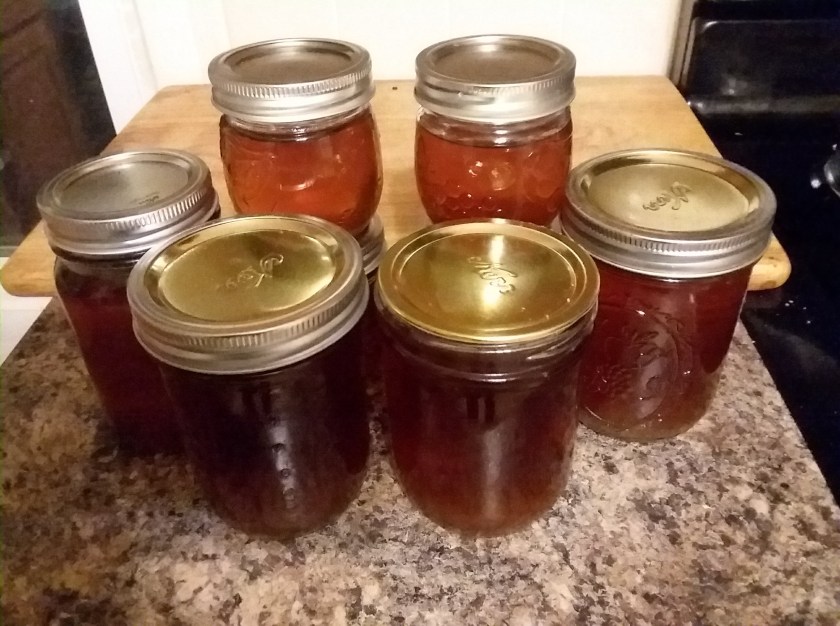
One reason for the failure of the scheme is that maple sugar production is not as easy as Rush and Jefferson suggested. Although it doesn’t require slave labor, it does require a lot of sap and fuel to make. I collected 21 gallons of sap from my maple this year, and made 6 pints of syrup from it– a thinner, less viscous syrup than found in the store.

The process is fairly straightforward. Drill a hole or holes in the tree, collect the dripping sap in buckets. Strain and boil the sap down until it is the consistency of syrup. It took me about two weeks to collect the sap, and about 17 hours to boil it down.

IMG_0553Hannah Glasse gives similar directions for making maple sugar. She claims ”This sugar if refined by the usual process, may be made into as good single or double refined loaves, as were ever made from the sugar obtained from the juice of the West India cane” (Glasse, 141). She also talks about maple molasses, which is really what we would call maple syrup today.
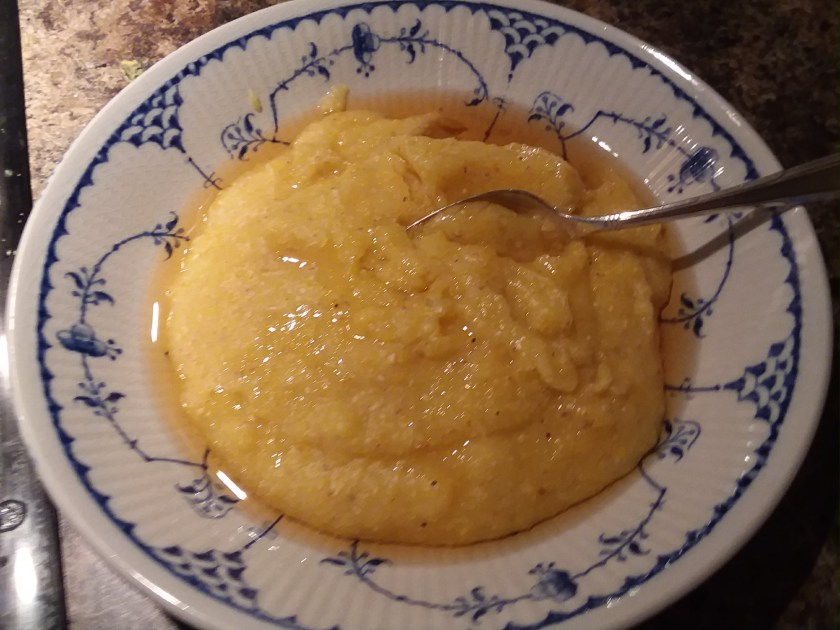
A few pages earlier Hannah Glasse gives directions for mush, made with Indian meal (now called corn meal). She serves the mush with milk or molasses. Surely she meant maple molasses. The scheme for maple sugar to end slavery failed, but the push to use maple had sweet results.

20180504_080318To Make Mush

Boil a pot of water, according to the quantity you wish to make, and then stir in the meal till it becomes quick thick, stirrintall the time to keep out the lumps, season with salt and eat it with milk or molasses. (Glasse, 137)

Modern version

  • 3 c. boiling water                                       
  • 1 c. cold water                                                                 
  • 1 c. cornmeal1 t. Salt
  • Maple syrup to taste

Add the salt to the  boiling water. Mix the cornmeal with the cold water. Stir the mixture into the boiling water. Boil 5 minutes, stirring constantly. (Be careful as the boiling mush tends to spit hot bits out as you stir.) When it is thick enough, take it off the heat and let sit a few minutes. Serve with maple syrup.

1. Rush, Benjamin. An account of the Sugar-Maple Tree, of the United States, and of the methods of obtaining sugar from it, together with observations upon the advantages both public and private of this sugar (Philadelphia, 1792).

2 Farmer’s Almanac, 1803

3 Vermont Almanac 1844

4 Glasse, Hannah. The Art of Cookery Made Plain and Easy. Cotton and Stewart. 1805.


Hatta: Beyond the city of Dubai

A stark mountain retreat

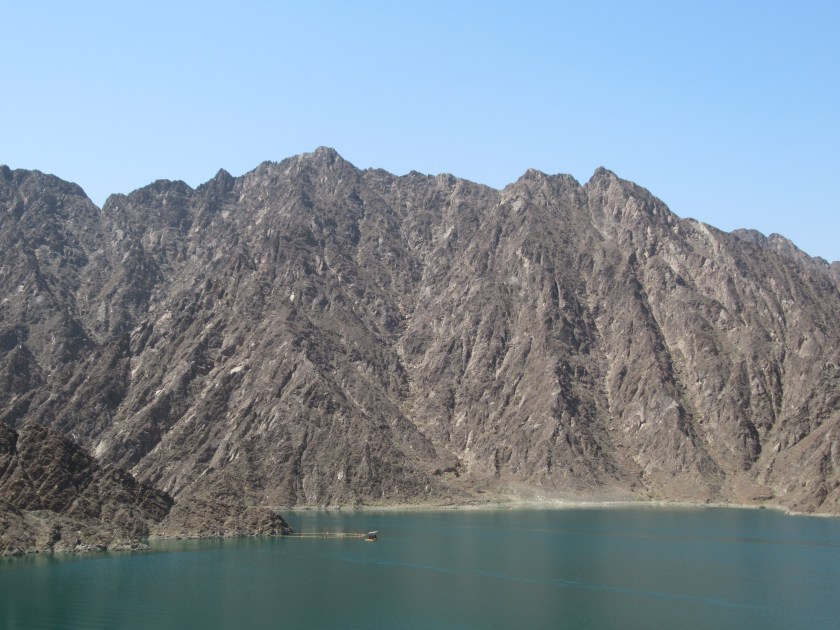
IMG_0712Outside the sprawling city of Dubai lies the rest of the emirate- mostly sweeping sand dunes and scrubland. A few farms (date and camel) and villages dot the landscape. Sparse grasses grow in marginal areas and the occasional acacia or ghaf tree can be found, but for the most part the area is empty desert. About 134 miles east of the city of Dubai lies the ancient village of Hatta in the Hajar mountains. Hatta is unusual in that it is an enclave. That means that although it is part of the emirate of Dubai, it is surrounded by other political entities. The country of Oman curls around to the east and south, while the emirate of Ras al-Khaimah lies to the north, and the emirate of Ajman forms Hatta’s western border.

Hatta is a popular getaway from the city for those who want to see an quieter, more natural part of the emirate. The Hajar Mountains, a chain of sharp, jagged outcrops of red-grey and blackish rock, has periodic water holes, which make village life and mountain farms possible in the area. The small village of Hatta (50 sq. miles)  is best known for two things: Hatta Dam Reservoir and Hatta Heritage village.

Hatta Dam is a beautiful reservoir with sparkling blue-green water surrounded by stunning mountains. The dam was built in the 1990’s and took two years to fill with rainwater. This makes water available year-round for the area. Previously, residents had to rely on deep wells and scattered springs. Although the mountain climate is supposedly cooler than the surrounding desert, it was 102 degrees Fahrenheit on the spring day in March when we visited. In spite of the heat, kayaking or paddle-boating on the reservoir is a great way to spend a morning.

The other major attraction in Hatta is the Hatta Heritage village. Here there are some 30 reconstructed buildings showing centuries-old styles of rural mountain desert life. The buildings are constructed of traditional materials including mud, date palm trunks, fronds, reeds and stone.

Within the Heritage Village lies Al Husan Fort. The fort was built in 1896 for both surveillance and defense. High mud-brick and mountain stone walls surround the fort, which includes a luxurious residence and a large internal courtyard. Ceilings are made of palm trunks supporting fronds and mud.

Outside the fort, stand two round watchtowers, built in the 1880’s.  Each tower has a small door a bit more than 8 feet above ground level. In the old days, the guard would use a rope to climb the tower to reach the door. Once inside, the guard could use the semi-circular staircase to reach the roof.

IMG_0719As I scrambled up the steep, rocky path to the watchtower, I thought about why such a defensive tower was needed in such a remote place. Were they looking out for raiding tribesmen? Or perhaps, hoping for a desert caravan seeking a watering hole before reaching the Gulf of Oman? From the hilltop at the base of the tower, it’s easy to see why Hatta was important. Water is available here, a scarce commodity in such a barren part of the world. For now, the village is quiet and peaceful, Still, though the watchtowers are deserted, they remain standing, a stark reminder that the history of humanity is a story of conflict, even in the most remote places.
 

Dubai: Glittering City in the Desert

by Burj KhalifaTo be honest, I would never have gone to Dubai if our daughter hadn’t moved there with her family. And I would have missed a gem.

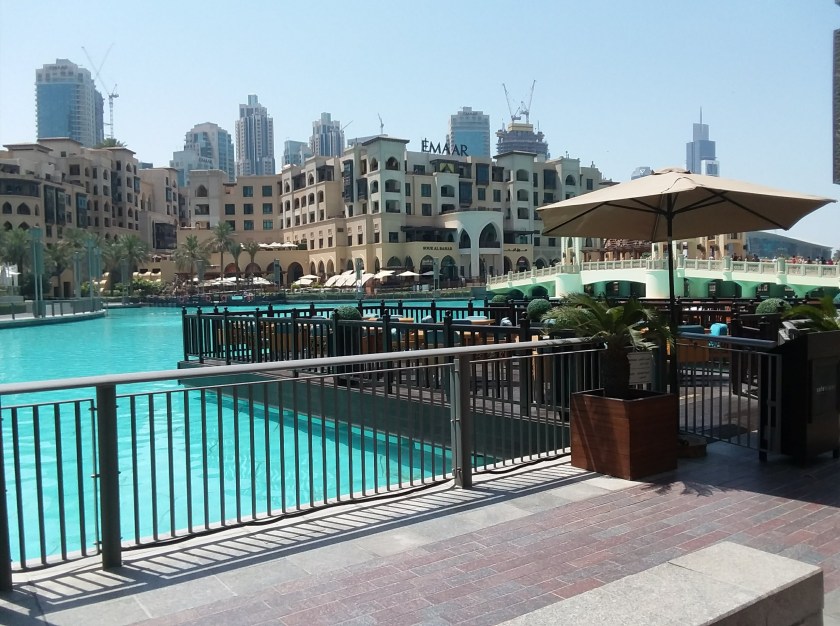
Dubai is one of the seven emirates (think city-state) in the United Arab Emirates. It’s a city of superlatives, built from fantastical imagination: The tallest building. The biggest indoor ski slope. The most unique man-made islands. The world’s only 7 star hotel (Burj al Arab). Dancing fountains pierced with multi-colored laser lights. A city of glitz and glamor, meant to inspire awe in the visitor.

And it does.  On my most recent trip to Dubai, I visited the newly erected Dubai Frame, billed as the world’s largest picture frame. At 150 meters high, with a glass floor, the monument offers stupendous views of both Old Dubai and New Dubai. The Frame provides the perfect context to contemplate Dubai’s history, as remarkable as the city itself.

Frame

The exhibits at the beginning of the Frame show Dubai’s transformation from a village of pearl divers and pirates to a international city of commerce.

Archeological evidence shows there were people growing  date palms in the area since at least 2500 BCE- 4 ½ thousand years ago. But as the area became more desert and less mangrove swamp, population stagnated. It was an important caravan location in the 6th century, but still a small village. In the 7th century the Umayyads introduced Islam to the area and the village became known for fishing and pearl diving. By the 16th century, the village  was trade center, catering to expats, with many Venetians working in the pearl industry.

In 1833, the Al Maktoum dynasty took over, and settled 800 members of the Bani Yas tribe at the mouth of the creek, though border disputes with Abu Dhabi continued for more than a century.  This settlement is considered the founding of Dubai.

By the late 1800’s, the area was rife with pirates, so the British signed several treaties in an attempt to reduce piracy. In 1892, Sheikh Maktoum signed a business deal with the British, turning the area into a British protectorate which granted full tax exemption for foreign trade. Dubai became a major port of call and trading center, boasting some 20,000 residents by 1930, with ¼ of the population foreign.

When oil was discovered in 1966,  Dubai’s ruler, His Highness Sheikh Rashid bin Saeed Al Maktoum, used the increased revenue to begin a frenetic building spree that continues today, developing roads, hospitals, schools, hotels, parks and attractions. In 1971-72 Dubai joined with 6 other emirates (Abu Dhabi, Sharjah, Ajman, Umm Al Quwain, Fujairah and Ras Al Khaimah) to create the United Arab Emirates, which has become one of the richest countries in the world. The current ruler of Dubai, His Highness Sheikh Mohammed bin Rashid Al Maktoum, is considered the inspiration for the modern, forward-thinking city. He says, “We, in the UAE, have no word as ‘impossible’; It does not exist in our lexicon.” It is his vision that has created Dubai not just as a world trade center but also an exquisite tourist destination, with a population of over two million.

For a city to grow so exponentially in less than a 100 years means there are bound to be problems underlying the surface. For all its glitz, Dubai still exists in a desert, with few natural resources other than oil. The city must rely on desalination for all of its water. A dark haze blurs the outline of the city skyscrapers, and dust settles on every surface. Green spaces are all artificial and mostly manicured so that one feels a disconnect from the natural world. And it’s hot. Too hot to spend much time outside, so the city residents rely on air-conditioning. More cars than parking spaces and limited public transportation makes going anywhere a real challenge. Hovering cranes dot the landscape and the sounds of construction vibrate from Sunday morning till Thursday night, pausing only for the weekend.

But there is another side to Dubai, beyond the glamour and the fantasy, beyond the crowds and abuse of natural resources; that is the family side. 90 percent of residents in Dubai are expats–from India, the Philippines, south Africa, Britain, Germany, the United States, and elsewhere.These people look for stores, schools, restaurants and play spaces in their own images, resulting in a curious mix of the familiar and the foreign– English with an Arab veneer (or vice versa).

McDonald’s, Wendy’s, and Starbucks fill the malls, but the menus include McArabia Chicken in pita as well as chicken nuggets. Fancy modern malls and old style souks offer pashminas from India, rugs from Iran, and Dubai souvenirs made in China. In the grocery stores you can find Jello or spaghetti noodles as well as dozens of varieties of olives and dates, and open bins of spice. In the malls, the rich aromas of cardamom, rose, and za’atar spice assault the senses. Perfumes hang in the air: the heavy scent of rosewood, sandalwood, and incense. Women in black abayas, their hair covered with a shayla, stroll alongside their -t-shirt clad children. Arab men in their white dishdashas shake hands with German CEO’s in suit and tie. Tourists in shorts, jeans, or Indian saris amble through the crowds. Strains of music from European and Arabic pop stars mix by the fountains, and overall wafts the periodic call to prayer from the mosques. This is the Dubai where people live and work, not just visit. This is the Dubai our daughter calls home.

Perhaps more than anything else, Dubai offers a vision for the city of the future, a place where cultures mix, imagination soars, and anything is possible.