
You know how some words just mean what they sound like they should mean? I’m not talking about onomatopoeia, where the word imitates a sound. I’m talking about a certain mouthfeel where the sound and the meaning align perfectly. Maybe its just me, but I think steeple sounds pointy and blubber sounds bouncy.
Flummery is such a word. I think it sounds delicious, like a fluffy, sweet treat. But the problem with my whole theory is that such sound and meaning correlations are entirely subjective.
I discovered this with flummery. When I first proposed making it, my friend, without knowing anything about what it is, was decidedly uninterested. She thought it sounded horrible.
So I conducted a very informal survey, asking a little over a dozen people what they thought flummery means.
Answers varied from scam artist and buffoon to a fluffy dessert and a dish with barberries to everything in between. Turns out, most of them were at least partly right. Flummery is one of those words that has acquired a great many diverse meanings. Etymonline says flummerymeant a sour oatmeal jelly (from the Weslh ‘llymru’) in the 1600’s, then a sweet dessert in the 1700’s and flattery or empty talk, also in the 1700’s. Dictionary.com gives several meanings including boiled oatmeal, fruit custard, or foolish humbug.
There are as many variations in flummery recipes as there are in flummery definitions. The main thing all the flummery recipes have in common is that the dish is usually some sort of custardy gelatin, with more emphasis on either the custard or the gelatin, depending on the recipe. Even boiled oats have a custardy, gelatinous or even gooey texture. Flummery may or may not include any of the following ingredients: oatmeal, harsthorn, cream, almonds, jelly, calves feet, isinglass, eggs (yolks and/ or whites), wine, rose water, orange flower water, or sugar.

The first flummery I made was a sort of overnight (or over three days) oatmeal, using a recipe from John Towhnshend (p. 202). It involved soaking oatmeal in water for three days, straining off and replacing the water every day. After this soaking, the oatmeal is boiled until thick, put in molds, and served cold with wine and sugar. (The recipe also suggests beer and sugar or milk.) Even though I never would have associated oatmeal with wine, this dish was surprisingly good. Not great, but good enough to enjoy.
Another simple recipe for flummery is in Mary Randolph’s The Virginia Housewife Or, Methodical Cook (p.119) This is more pudding than jelly, and involves mixing equal measures of cream and jelly with half a measure of wine. This produces a very soft custardy dish that is very rich. I think it is best used as a sauce.
Since I didn’t have hartshorn or calves feet, I decided to try one of the isinglass recipes, such as French Flummery.
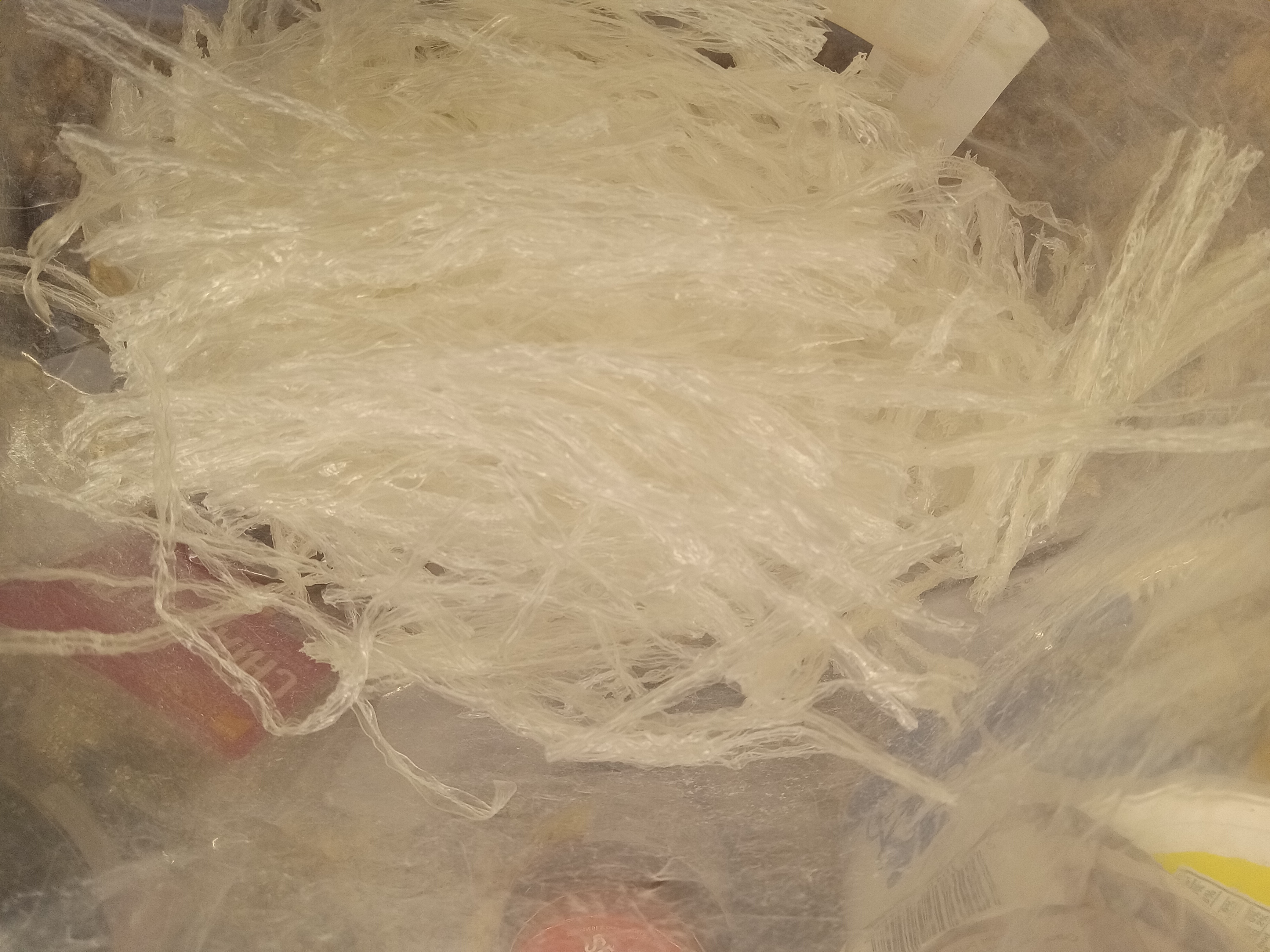
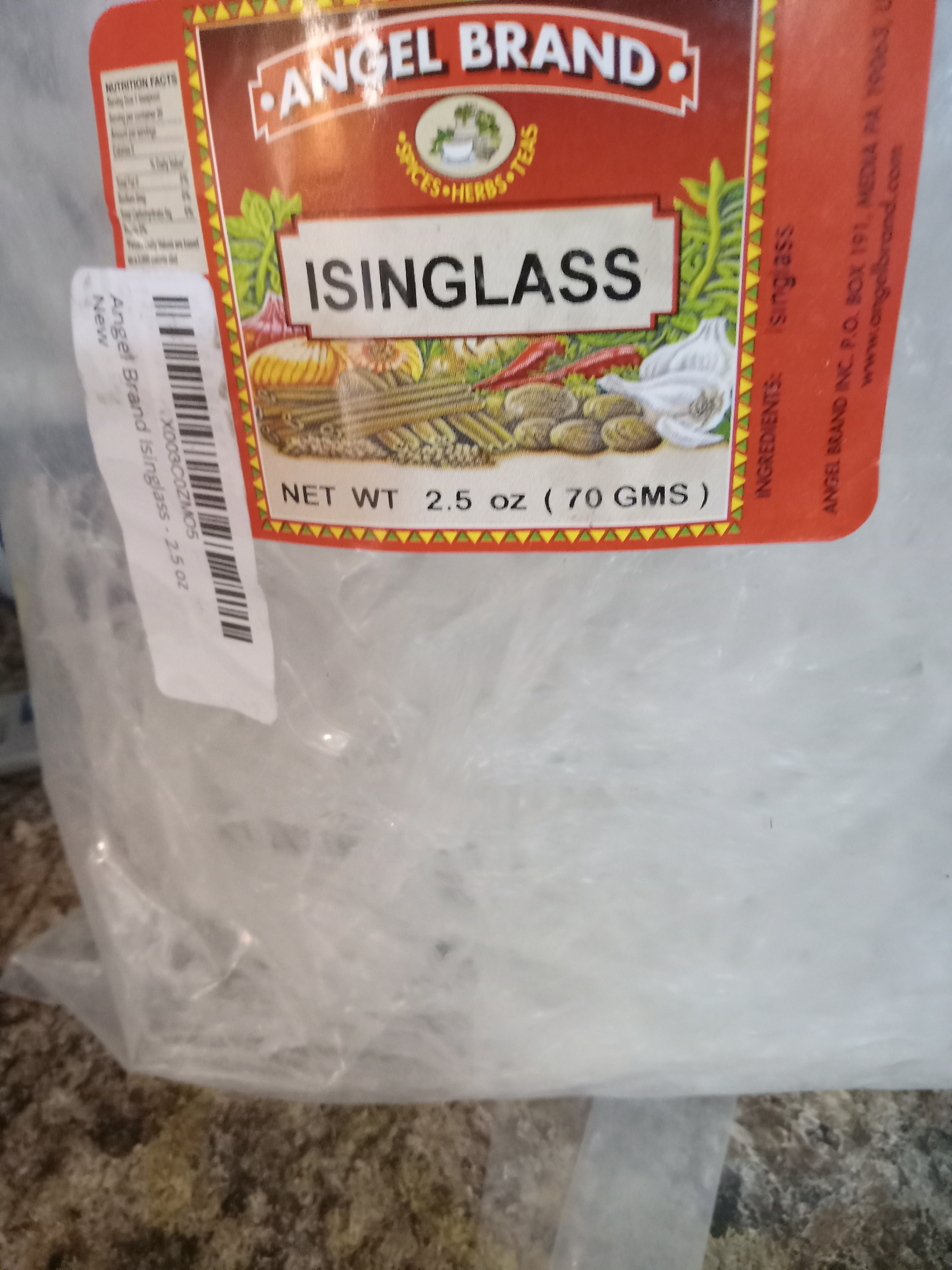
Identical recipes for French flummery appear in both John Townshend’s and Hannah Glasse’s books. (Many cookbooks following Glasse copied her recipes, often word for word, as does Townshend’s recipe) French Flummery is made with isinglass. I had no idea what that was. A little research taught me that isinglass is the dried swim bladders of fish, especially sturgeon. It has been used for centuries in making jellies (and coincidentally, glue). Today isinglass is available from the Amazon marketplace.

To Make French Flummery
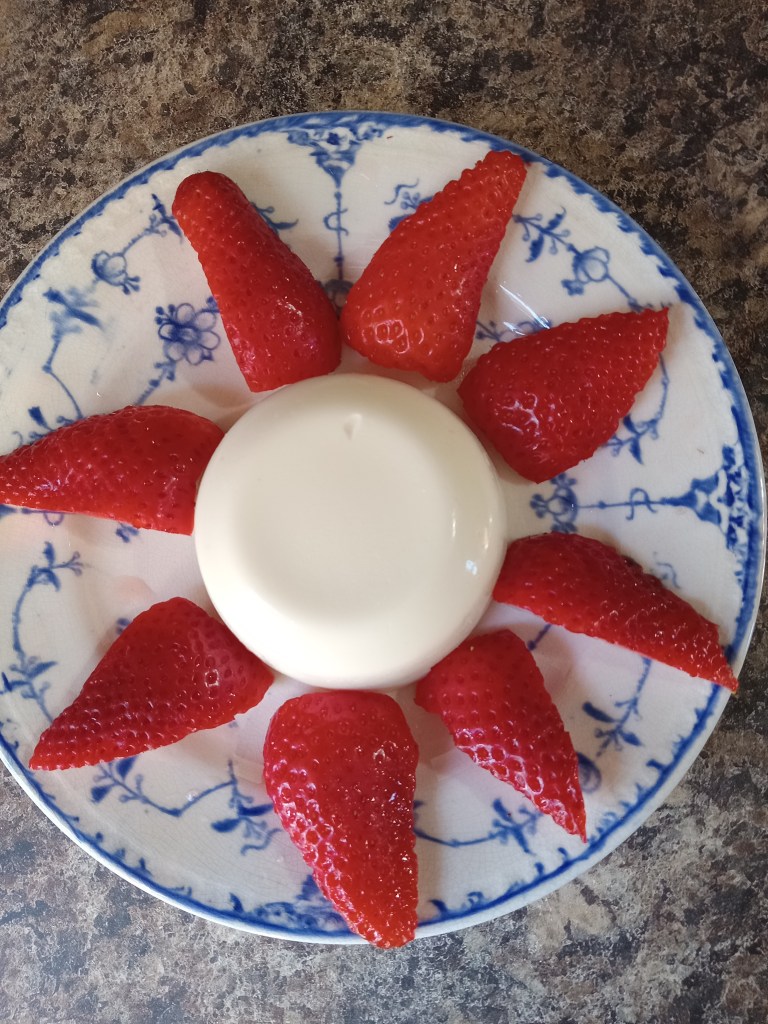
Take a pint of cream and half an ounce of isinglass, beat it fine, and stir it into the cream. Let it boil softly over a slow fire a quarter of an hour, stirring all the time; then take it off, sweeten it to your palate and put in a spoonful of rosewater, and a spoonful orange-flower water; strain it and pour it into a glass or basin, or what you please, and when it is cold, turn it out. It makes a fine side dish. You may eat it with cream, wine, or what you please. Lay round it baked pears. It both looks very pretty, and eats fine. (Glasse, 186, Townshend,203)
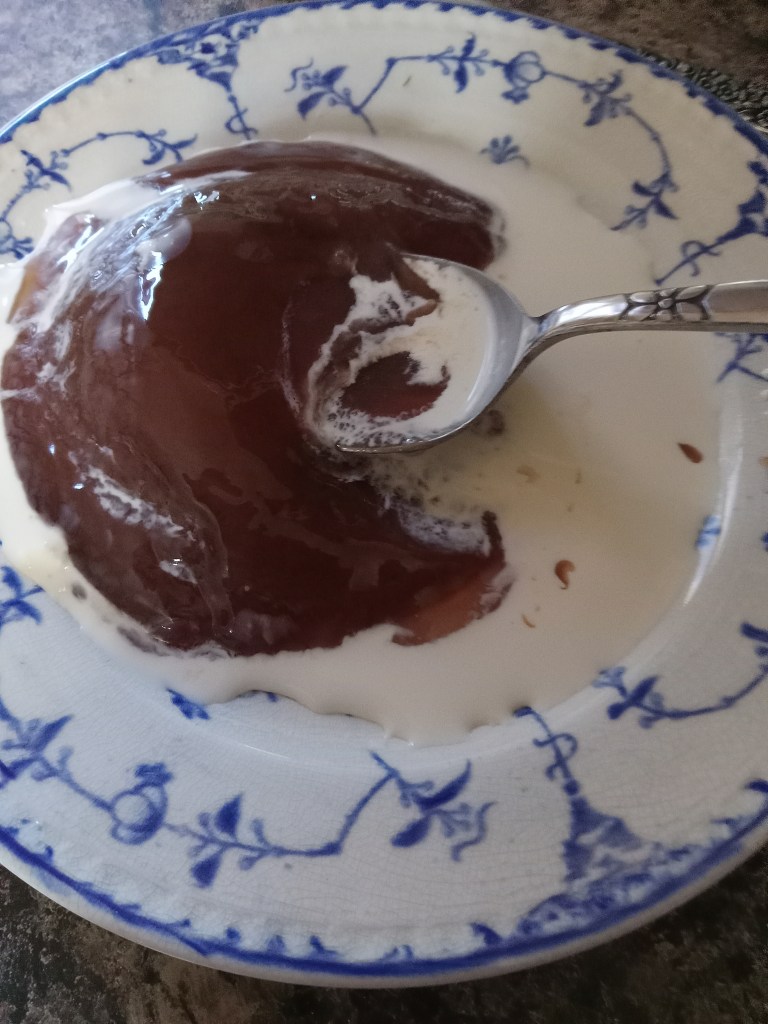
I used 2 cups of cream, ¼ cup of sugar, 1 teaspoon each of rosewater and orange flower water, and ¼ ounce of isinglass. The first step was to powder the isinglass. It comes in 3 -4 inch long translucent ribbons. They are slightly rubbery, which meant that trying to powder them in a mortar was an exercise in frustration. I resorted to using a blender. My ¼ ounce of isinglass made 2 Tablespoons in powdered form. I cooked the cream and isinglass mixture long enough that the powdered isinglass had been absorbed. (about twenty minutes.) Then I added the sugar and waters, and cooked it until the sugar was melted. I put the mixture in custard cups and cooled them. As it cooled, the pudding separated into two layers, making an interesting appearance.
I made this in spring, when strawberries were in their prime, so I used them instead of baked pears. I expect Hannah would approve.
Flummery in many forms graced some fancier tables. Elizabeth Raffald, an English housekeeper who worked in Lady Warburton’s home for many years, gives several recipes for coloring flummery so that it could be used in many decorative dishes. In addition to the Moonshine described below, she has recipes for Eggs and Bacon Flummery, Solomon’s Temple in flummery, and Cribbage Cards in Flummery, among others. In medieval times, this use of food to create an edible centerpiece was called a subtlety.
I decided to make the Moonshine, as the name conjures up a more potent drink rather than a sweet dessert.
Moonshine Note Hannah Glasse has a moonshine recipe that is similar to, but not the same as, the one I made.
To Make Moonshine
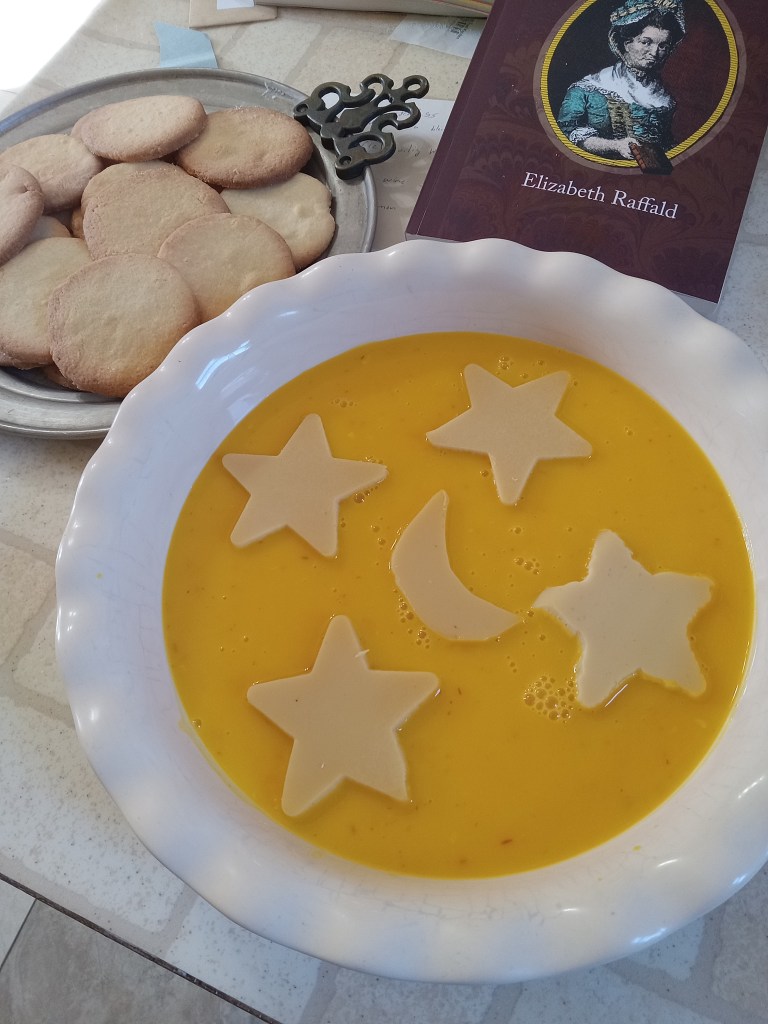
Take the shapes of a Half-moon, and five or seven stars, wet them and fill them with Flummery, let them stand ‘till they are cold, then turn them into deep China Dish, and pour Lemon cream round them, made thus: Take a pint of Spring Water, put to it the juice of three Lemons and the yellow Rind of one Lemon, the Whites of five Eggs, well beaten, and four Ounces of Loaf Sugar, then set it over a slow Fire and stir it one Way till it looks White and thick; If you let it boil it will curdle, then strain it through a Hair Sieve, and let it stand ‘till it is cold, beat the Yolks of five Eggs, mix them with your Whites, set them over the Fire, and keep stirring it ‘till it is almost ready to boil, then pour it into a Bason; when it is cold pour it among your Moon and Stars: Garnish with Flowers.
It is a proper Dish for a second Course, either for Dinner or Supper. (p. 178)
For the Flummery, I used Raffald’s recipe for Yellow Flummery.
Take two Ounces of Isinglass, beat it and open it, put it into a Bowl, and pour a pint of boiling water upon it, cover it up ‘till almost cold, than add a Pint of White Wine, the Juice of two Lemons with the Rind of one, the Yoiks of eight eggs beat well, sweeten it to your Taste, put it in a Tossing Pot and keep stirring it, when it boils strain it thro’ a fine Sieve, when almost cold put it into Cups or Moulds. )p. 172)
Both of these recipes use a lot of eggs, so I cut them down.
First I made the Flummery:
- 1 ounce isinglass (powdered in a blender)
- 1 cup boiling water
- 1 cup white wine (choose a sweet rather than dry white)
- Juice of 1 lemon and the yellow rind of half of it
- 4 egg yolks
- ½ c. brown sugar
Pour boiling water on the isinglass, and stir until the isinglass dissolves. Add the remaining ingredients and bring it slowly to a soft boil. (Don’t let it boil hard.) Strain it through a fine strainer. Pour it into a flat dish, either 8 by 8 or 9 x 13”. Let it cool, then cut it into the shapes of stars and moons. ) Cookie cutters or a drinking glass works well.
While it is cooling, make the lemon cream.
- 2 cups water
- ½ cup lemon juice
- 2 Tablespoons grated lemon peel
- 2 eggs, separated
- 1 cup sugar
- ½ teaspoon saffron (optional)
Mix the water, lemon juice, lemon peel, sugar and egg whites in a saucepan. Cook slowly, stirring constantly until thick. Do not let it boil. Mix a little of the hot mixture into the egg yolks, (to prevent curdling) then add the egg yolks to the saucepan. Cook, stirring constantly, until it is almost ready to boil. Note: in order to make a greater contrast between the flummery moon and stars and the lemon cream, I added a half teaspoon of saffron to the lemon cream along with the egg yolks. Saffron was not included int the original recipe, but it was known and used as a coloring agent in Raffald’s time, so I feel she would approve..
Put your flummery cut-outs in a flat dish or pie plate, and pour the lemon cream around them. Let cool and serve.
This was the tastiest of the flummery dishes, but the flummery shapes were quite rubbery. I think the same recipe with less isinglass would work as well, or better.
In spite of its versatility, I don’t see a resurgence of flummery is likely. All of the flummery dishes I made tasted interesting, and some were even pretty good. However, we have easier methods of making jellied desserts. Still, flummery is such an intriguing word, perhaps its meaning will evolve again. Can you imagine marshmallow flummery?
Sources:
Glasse, Hannah. The Art of Cookery Made Plain and Easy: Excelling any Thing of the Kind ever yet published. Alexandria: Cottom and Stewart. 1805. (First Edition published in London, 1747. This edition reprint of 1st American Edition, 1805, by Applewood Books, 1997).
Raffald, Elizabeth.The Experienced English Housekeeper. Originally published 1769, Manchester, England. This reprint published 2024, Townsends.
Randolph, Mary. The Virginia Housewife Or, Methodical Cook. Philadelphia: E. H. Butler & Co., 1860. (Facsimile by Dover Publications, 1993, with introduction by Janice Bluestein Longone).
Townshend, John. The Universal Cook or Lady’s Complete Assistant. S. Bladon: London, 1773 (facsimile).
 BRIC-A-BRAC