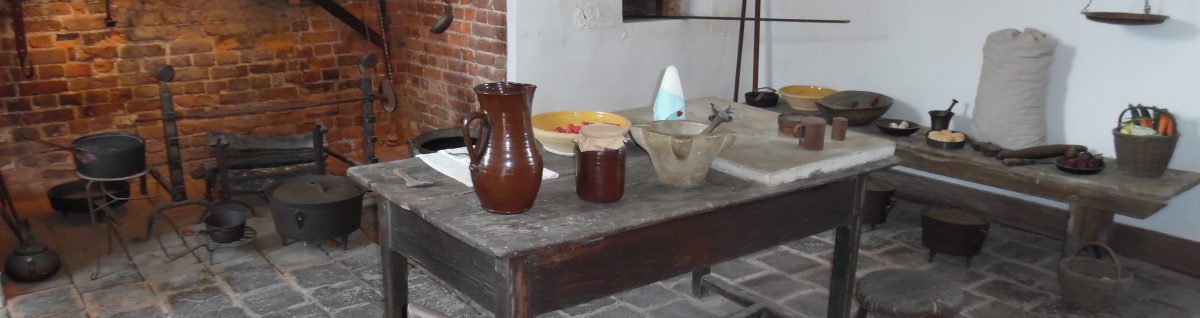

In my mind, few things are more delightful than climbing an old tower, winding up narrow, spiral steps, treading on stones, hundreds of years old, scrambling up creaking wooden staircased , all to reach the top platform and the amazing view spread out below. For centuries, people have built upward, both for better protection from enemies, and for the desire to feel closer to God. Whatever the original purpose, these monuments lure me to them, beg me to climb. And if you, like me, delight in such heights, Prague is the ideal place to visit.
Nicknamed the city of 100 spires, Prague actually has over 500 such steeples and towers reaching toward the skies. Since my recent visit to Prague was only a few days, I can’t claim to have climbed all, or even most of these. Instead, I managed these few.

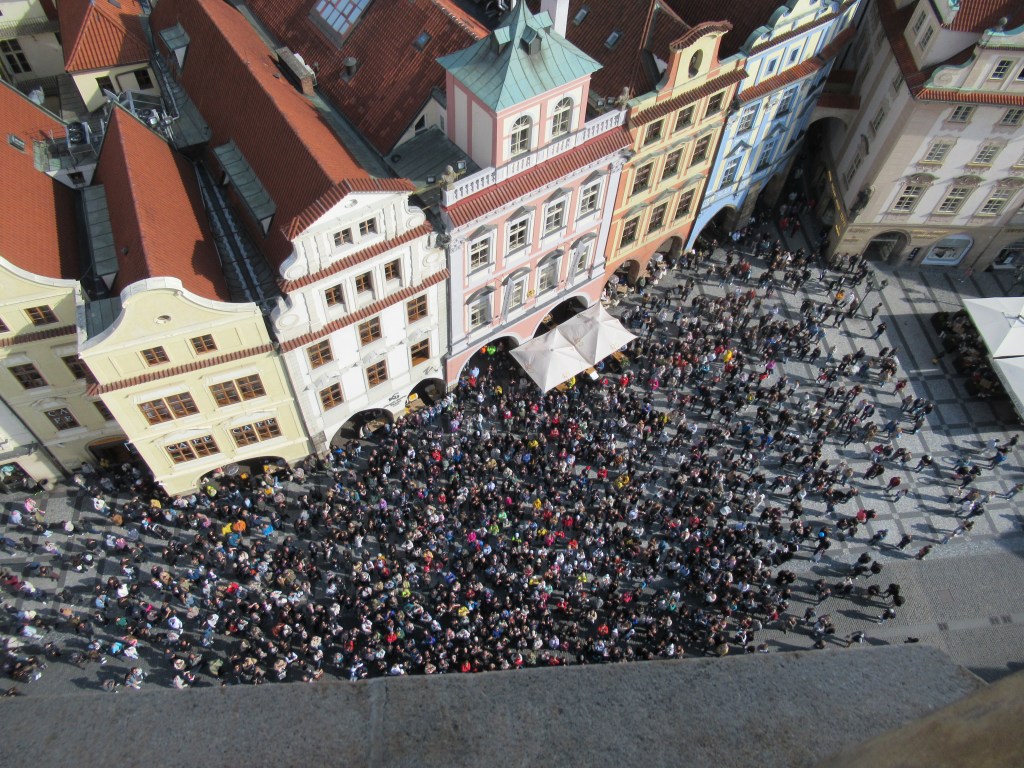
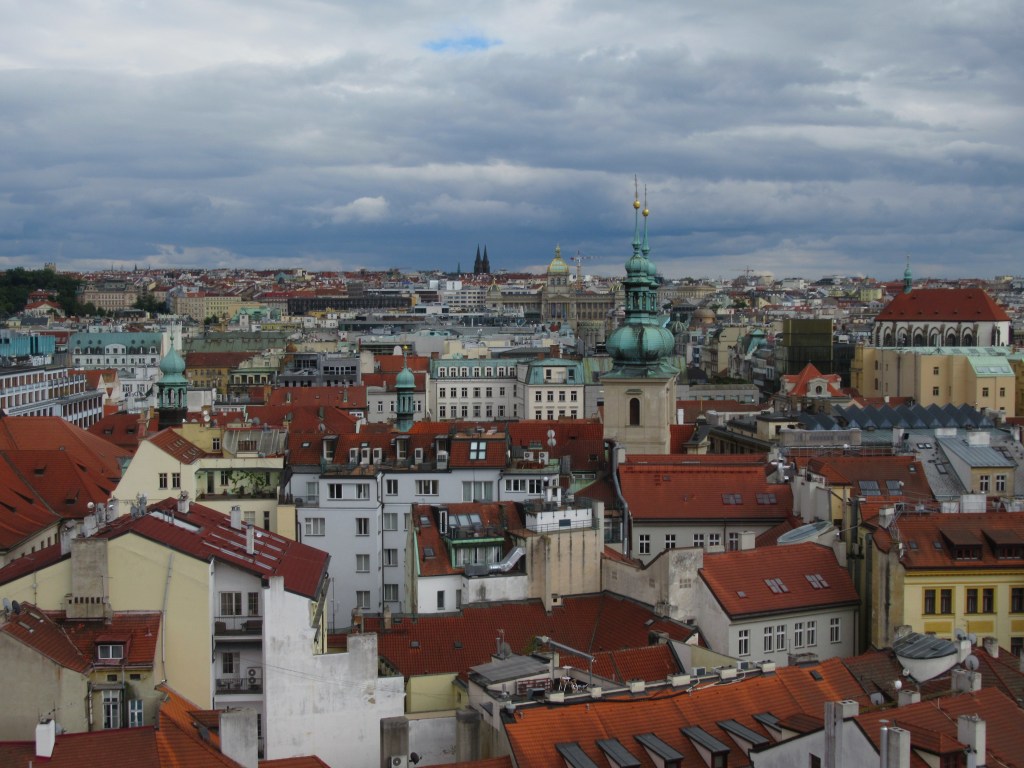
The Old Town Hall is best known for the Astrological Clock, which puts on a show every hour. This tower was built in the 14th century and is about 230 feet tall. The clock, built in the 15th century, is amazing, but the show is rather anticlimatic, lasting only a few minutes. We took a series of elevators to reach the top in time to look down upon the crowd gathered to watch the twelve apostles rotate. The picture on the right is a view of the city from the tower.
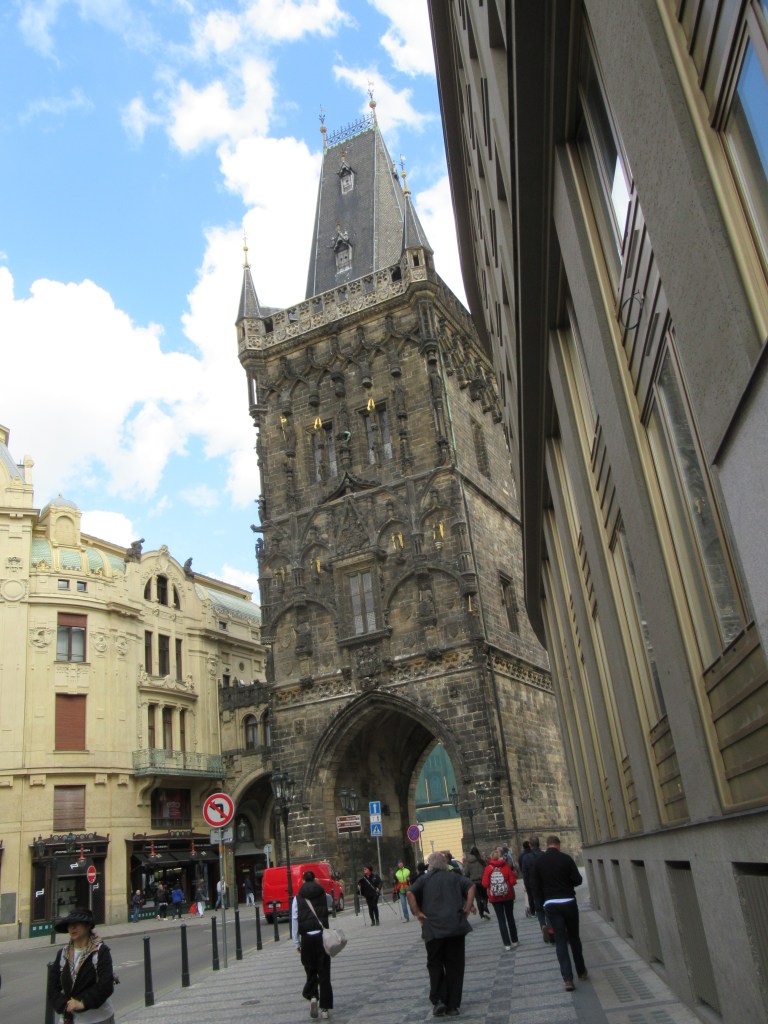
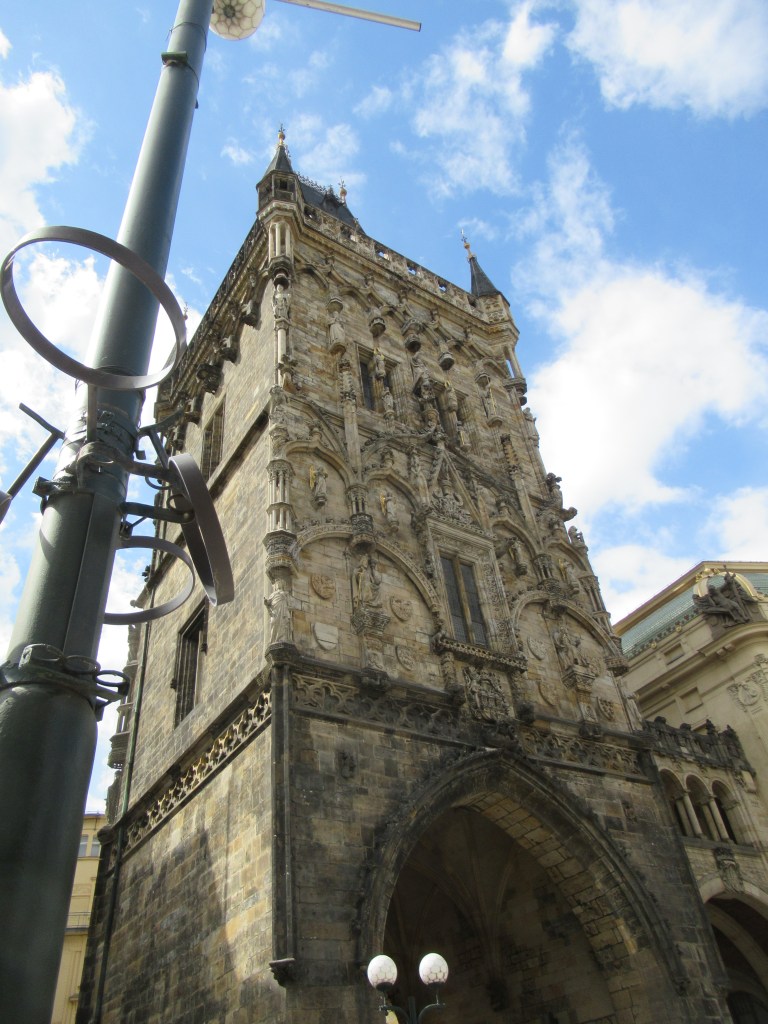
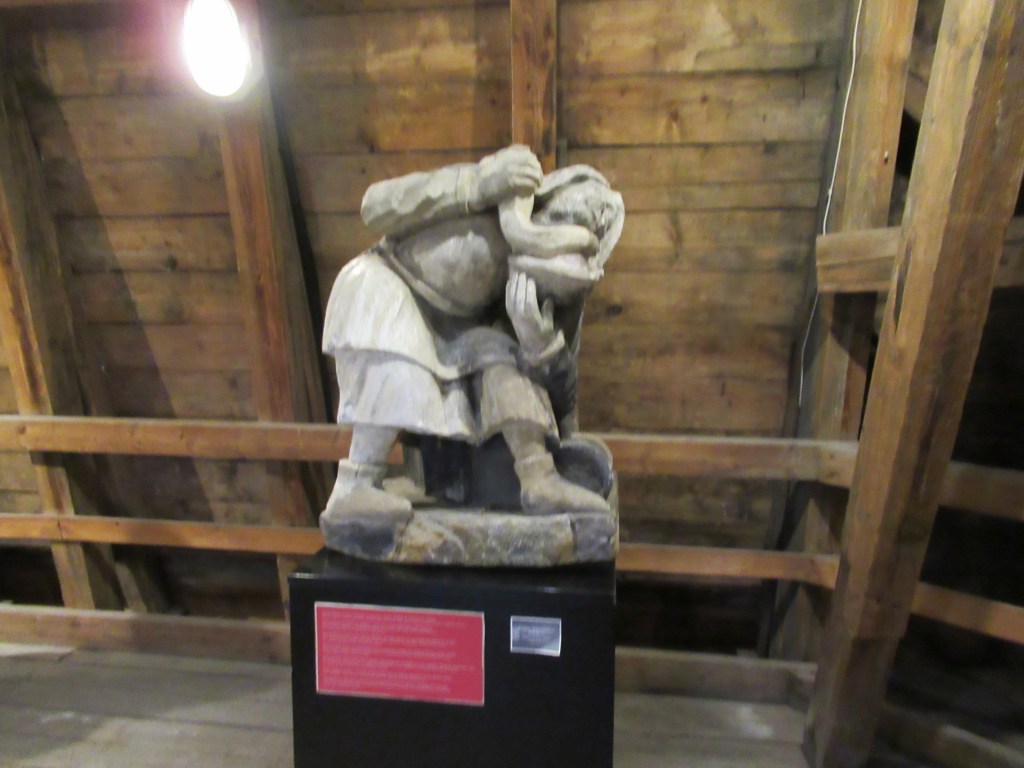

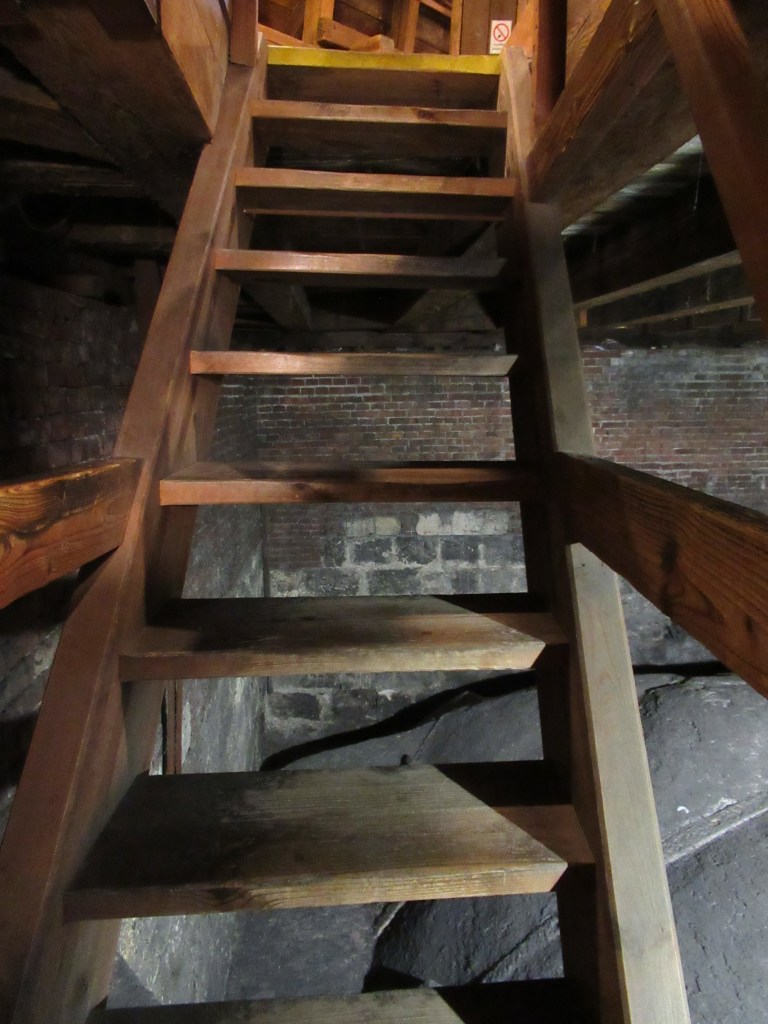
The Powder Tower is one of my favorites. The entrance is a tiny door leading to a spiral stone staircase which you must climb to reach the first floor, where there is a guard/guide to check your ticket. The tower was built in the late 15th century. It stands as the entrance to the Royal Route, leading to Prague Castle. The tower includes wooden stairs as well as the stone steps. Inside there are several unusual statues. The view at the top is magnificent. Pictured here is a view including the Old Town Hall on the left, Our Lady of Tyn Church in the center, and St. Vitus Church at Prague Castle in the distance on the right.
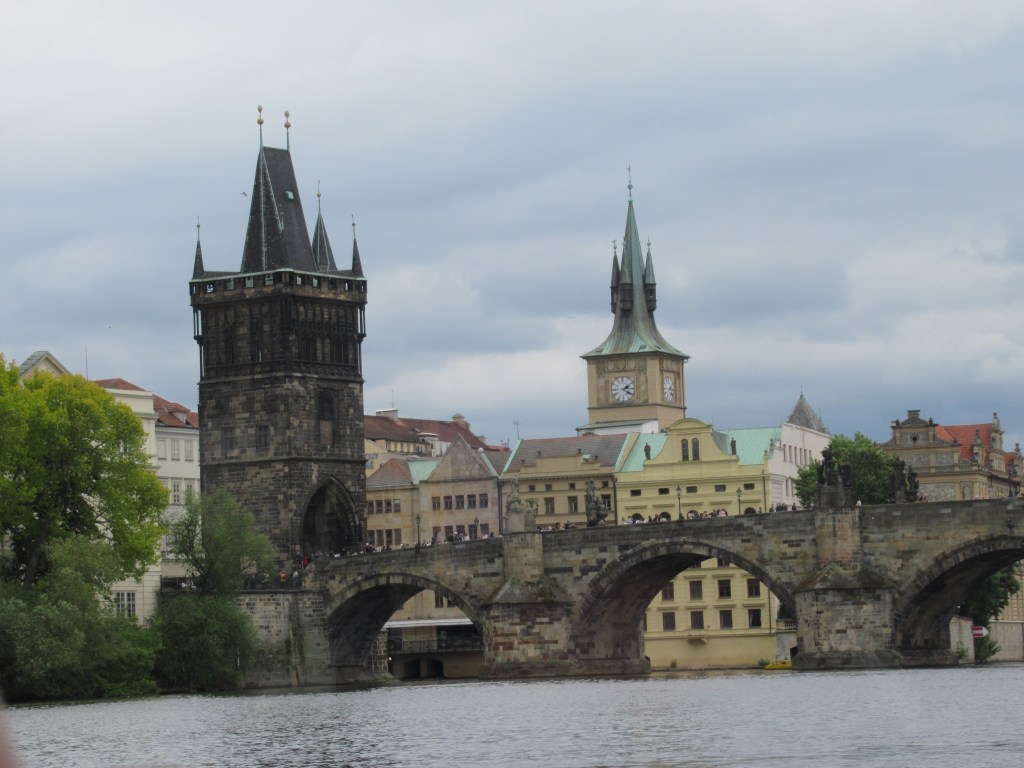


Old Town Bridge Tower is a magnificent Gothic tower from the 14th century at one end of the Charles Bridge. It served as a triumphal arch for the Royal Route and as part of the city’s fortifications. Partway up there is a room decorated with the coats of arms of lands of the Holy Roman Empire. The mysterious statue of an old man, possible a warden is found near the top of the climb up to the viewing platform.


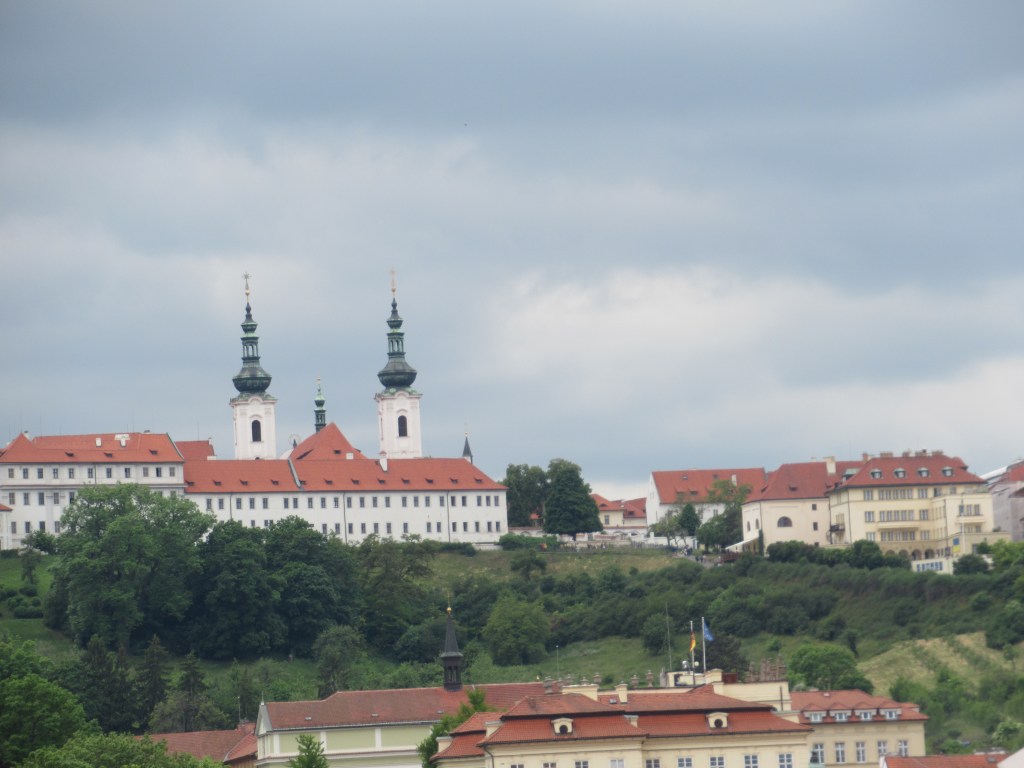
At the opposite end of Charles Bridge is the Lesser Town Bridge Towers. This is a set of two towers, joined by a gallery and battlements. The smaller tower (the Judith Tower) was built in Romanesque style in the 12th century, and remodeled for a Renaissance look in 1591. The taller tower is late Gothic. It originally built in 1464. Together the two towers served as part of the town fortifications until the whole town was encircled by bastion fortifications in the 17th century.

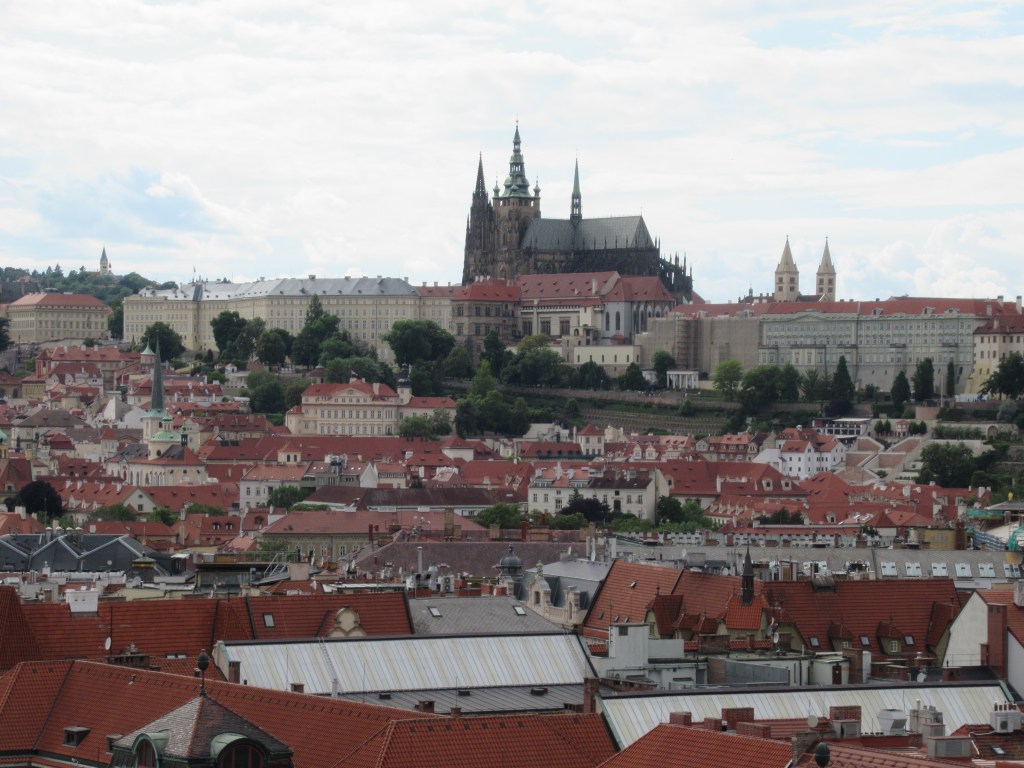
I didn’t climb these towers, but they are visible from almost any other tower in the city. On the left is Our Lady before Tyn, right on the Old Town Square. The church was built in the Gothic style from the 14th to the 16th century. The interior was remodeled in the Baroque style in the 17th century. On the right is St. Vitus Cathedral in the Prague Castle complex. It is the largest and most important religious building in Prague. It was built starting in 1344 in the Gothic style. The main tower is 337 feet tall.
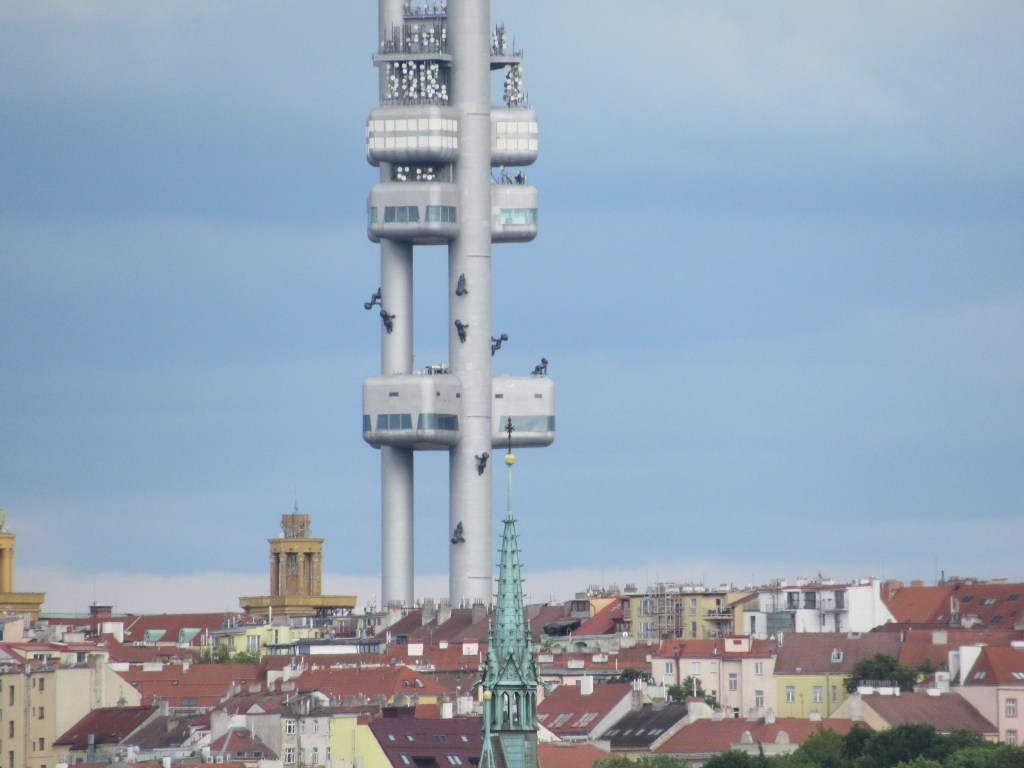
And finally, lest one think all the towers in Prague are centuries old, here is the Žižkov Television Tower, built between 1985 and 1992. At one time it was voted the ugliest building in Prague. In 2000, ten fiberglass babies by the sculptor, David Černý were added. These babies have a bar code instead of a face. The babies were replaced with identical, more permanent sculptures in 2017.
Obviously, these are just a few of the hundreds of spires and towers in Prague. Perhaps I’ll have a chance to go back someday and climb a few more. Afterall, didn’t Robert Browning say, “Ah, but a man’s reach should exceed his grasp, Or what’s a heaven for?”

 BRIC-A-BRAC