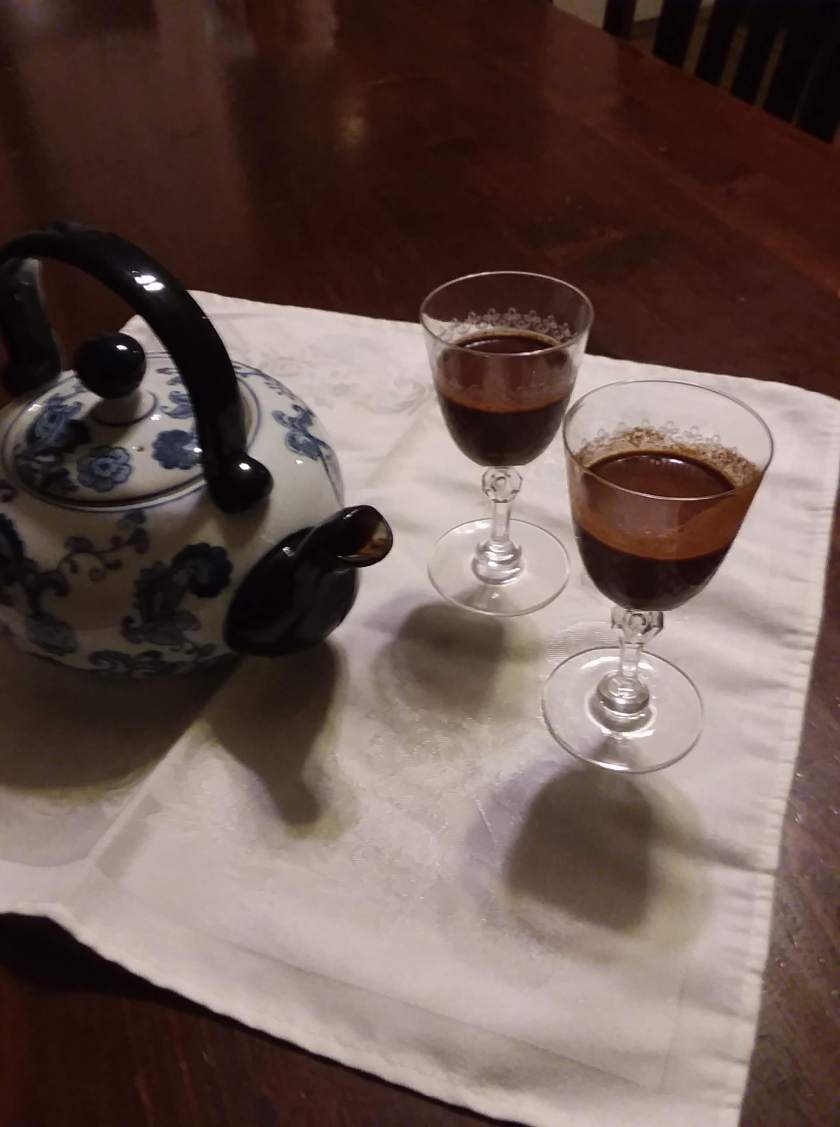
- A sweet treat after sledding or a hot drink to warm up with on a chilly evening
- Foil wrapped in balls or bells, a nearly ubiquitous stocking stuffer
- Lauded as an aphrodisiac, a way to say “I love you,” or possibly cure smallpox
- Historically, a form of currency and now 50 Billion dollar industry world-wide with some 50 million people employed globally

How does the humble cacao seed (also called cocoa beans or nuts) from a tropical evergreen tree, native to the Americas, become all this and more? It turns out chocolate has a very long history.
People have been drinking chocolate beverages for at least 4000 years. There is evidence that the pre-Olmecs, of Central Mexico (predecessors of the Olmec, and later, the Maya and Aztec peoples) had a fermented chocolate drink. The tree was possibly first domesticated in Central America. ( Although now ⅔ of all cocoa beans are grown in Africa.) The Mayans and the Aztec both revered the cacao bean as a gift from the god. A hot spiced, (and very bitter) beverage was used in rituals and to seal agreements. They also used the bean, considered more valuable than gold, as a form of currency. One hundred beans might buy one turkey. (The practice of payment in chocolate was also used during the American Revolution.)
When the Spanish ran into (and over) the Aztec, they learned about chocolate. In 1565, explorer Girolamo Benzoni wrote about his experiences in the new world. He was one of the first describe the spicy beverage called cacahuatl. He was not a big fan, saying, “It seemed more a drink for pigs than a drink for humanity. I was in this country for more than a year and never wanted to taste it, and whenever I passed a settlement, some Indian would offer me a drink of it and would be amazed when I would not accept, going away laughing. But then, as there was a shortage of wine. . . .”(as quoted in Theobald)
He did eventually try it and described the taste as “somewhat bitter” but conceded that “it satisfies and refreshes the body but does not inebriate.” (as quoted in Theobald).
In spite of the drink’s bitterness, the practice of drinking chocolate spread rapidly through the Spanish court. By 1585, Spain was importing chocolate. Chocolate beverages soon became popular throughout Europe. Europeans generally added some sugar to the drink. In order to melt the sugar, they generally served the chocolate hot. As Europeans spread out to colonize the Americas, they brought their newfound love of chocolate back with them.
By 1682 there were chocolate houses in Boston. In 1773, one ship alone brought in 320 tons of cocoa beans. (All of this cocoa was destined for beverages. Eating chocolate was not invented until 1847.) By the time of the Revolution, there were some 70 chocolate houses in the American Colonies.
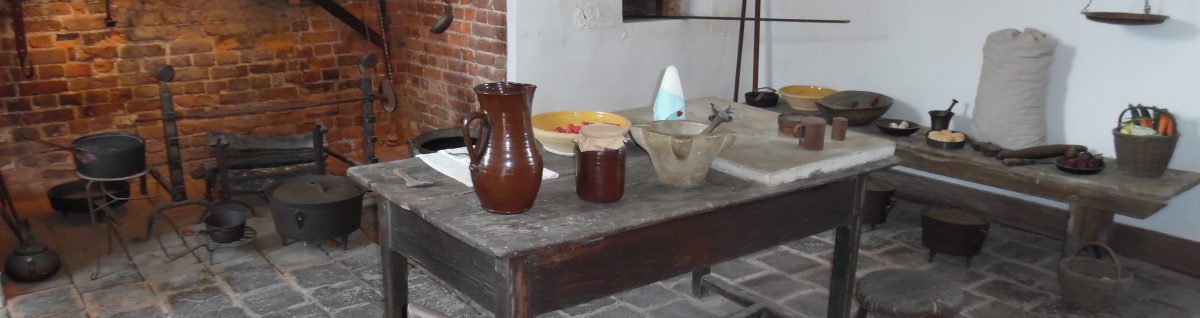
This fall, I had the good fortune to discover Captain Jackson’s Historic Chocolate Shop, tucked away behind Old North Church in Boston. It’s named after a colonial merchant who owned a chocolate shop in the area in the 1740’s. Today, interpreters demonstrate the colonial process of turning cacao beans into a delicious and popular drink. The beans arrived in New England fermented and dried. The colonial chocolatiers roasted the beans in shallow pans. The brittle roasted beans were winnowed to separate the paper-thin shells from the chocolate nibs. (Some people, including Martha Washington, bought the shells and brewed a sort of tea from them (Theobald).)
The chocolate nibs (or broken up, roasted beans) are ground on a heated stone to a thick, dark, paste. Next, a variety of spices and flavorings are added. Each house had its own recipes, including combinations of vanilla, nutmeg, chili pepper, anise, annatto, salt, cinnamon, and orange or lemon peel. A bit of sugar might be added at this point also. The mixture is then allowed to dry in hard blocks.
To make the chocolate drink, the block of seasoned chocolate is grated and mixed with hot water. (By 1700, it might also be mixed with milk, brandy, port, or sherry.) The water and chocolate are whipped together to make a delicious, rich frothy drink.


Because of its melting point, chocolate was not produced during the summer, and hot chocolate became associated with colder weather. As an expensive treat, chocolate also became associated with the holiday season.
By the 18th century, chocolate was sometimes shaved or grated into puddings, or made into candies for the wealthy. However, chocolate was much more common as a drink than a food until J. S. Fry and Sons developed the first chocolate bar in the middle of the 19th century. By this time, chocolate prices had dropped and nearly everyone could afford chocolate, at least once in a while. Now it’s hard to imagine a Christmas stocking without a few chocolate bells.
One reason for chocolate’s traditional popularity is that it was believed to have medicinal value. It was thought to aid longevity and digestion, alleviate coughs and lung ailments, and cure hangovers. Both Ben Franklin and Dr. Benjamin Rush even proposed chocolate as a cure for smallpox. (Theobald.) However, chocolate was not without its detractors. As a stimulant for the libido, chocolate was considered dangerous for women and children. (The same was true of novels and romances.)
I’m not sure anyone still considers chocolate dangerous (except to the waistline), but it retains is reputation as the food of lovers. Think of that as you’re indulging in your sweet chocolate treats this year, and enjoy.

Sources:
Theobald, Mary Miley. A Cup of Hot Chocolate, S’good for What Ails Ya.
CW JOURNAL : WINTER 2012
Traverso, Amy. The History of Chocolate in New England. New England Travel Today. January 11, 2017
 BRIC-A-BRAC
For more chocolate history, check out this blog from the British Museum: https://blog.britishmuseum.org/the-18th-century-chocolate-champions/
LikeLike