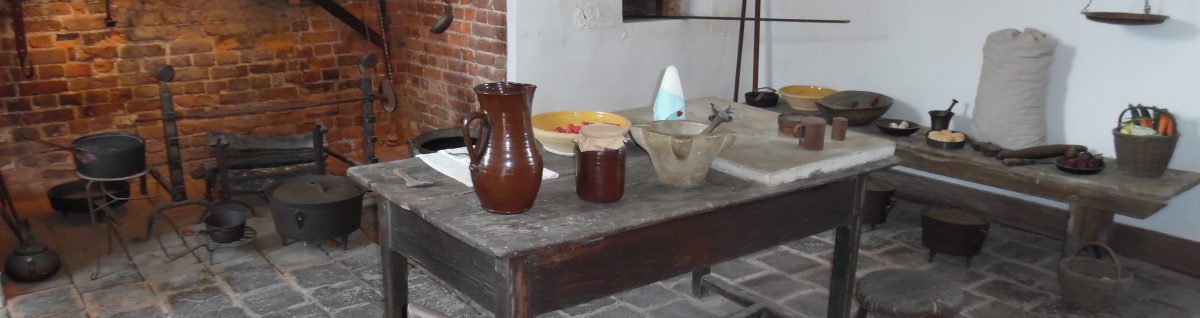
 Today, anyone who can read can follow a recipe and produce a delicious cake or casserole. Directions are mostly clear, and measurements are standardized. It hasn’t always been that way. One of the great challenges of recreating period recipes is figuring out how much to use of each ingredient. Measurements, when they are given, are often listed in terms we no longer use. While pints, quarts, pounds, and ounces are familiar, other terms are puzzling. Consider:
A half drachm of cardamom seeds
Three blades of mace
A good piece of butter
Half a gill of sack
A pennyworth of cinnamon *
To follow a recipe using these terms, the cook needs a dictionary, a good understanding of the desired result, and a bit of lucky guesswork.
Today’s example is an experiment from The Art of Cookery Made Plain and Easy, by Hannah Glasse.
To make a fine Seed or Saffron Cake
You must take a quarter of a peck of fine flour, a pound and a half of butter, three ounces of caraway-seeds, six eggs beat well, a quarter of an ounce of cloves and mace beat together very fine, a penny-worth of cinnamon beat, a pound of sugar a penny-worth of rose water, a penny-worth of saffron, a pint and a half of yeast, and a quart of milk; mix it all together, lightly with your hands thus: first boil your milk and butter, then skim off the butter, and mix with your flour and a little of the milk, stir the yeast into the rest and strain it, mix it with the flour, put in your seed and spice, rose-water, tincture of saffron, sugar, and eggs, beat it all up well with your hands lightly, and bake it in a hoop or pan, but be sure to butter the pan well. It will take an hour and a half in a quick oven. You may leave out the seeds if you choose it, and I think it rather better without it, but that you may do as you like. (164)
There are a number of difficulties with this recipe, including the odd order to the directions. First we are told to mix everything together. Then the author seems to back up and give us more specific directions on which ingredients to add and in what order. Then there’s the matter of the tincture of saffron, which the author assumes you know how to make. The advice at the end, that the cake is better without the caraway seeds, is particularly charming as Mrs. Glasse leaves that decision up to you.
To recreate this recipe for a modern cook, several things need to be explained. First a peck of flour is about 37 cups of flour. That is enough for a very large cake. I decided to make a third of a recipe, mostly because it is easy to divide 6 eggs into thirds. The recipe calls for ¼ peck of flour, or about 9 ⅓ cups. A cake using only 3 cups of flour seemed much more manageable.
The cloves, mace and cinnamon must be beaten in a mortar because they were purchased whole, not ground. Yeast is measured in pints because the yeast of this time period is most likely a moist starter, like sourdough starter, rather than cake of powdered yeast. And a tincture of saffron at this time meant the saffron should be soaked in the milk.
Finally we come to the penny-worth of cinnamon, rose-water, and saffron. A penny-worth is a variable term, meaning a small amount or as much as a penny can buy. Saffron, then as now, is one of the most expensive spices available, and costs much less than cinnamon, so a penny-worth of cinnamon is likely much more than a penny-worth of saffron. For this recipe, I decided to estimate the actual small amount for each ingredient based on my own personal tastes and experiences. Ultimately, each cook must do the same here. We don’t know exactly what tastes were fashionable and expected in Colonial America. Cooks today, like those of yesterday, must create dishes that taste good according to their own likes and dislikes.
A Modern Seed or Saffron Cake

1 c. milk ½ lb. butter
¼ t. saffron 1 T. dry yeast
3 c. Flour ⅔ c. sugar
¼ t. Ground cinnamon ½ t. each ground mace and cloves
1 t. Rose water 2 eggs
2 T. caraway seed (optional)

Warm the milk and butter until the butter melts. Add the saffron to the warm milk and let sit for 5 minutes. When the milk has cooled to lukewarm, add the yeast. Let sit 5 more minutes.

Mix the flour with all the dry ingredients (sugar, seeds, and spices). Then add the milk mixture, eggs, and rose water. Mix well. This should be a sticky batter, wetter than bread dough but thicker than cake batter. Grease a 10 inch dish or cake pan. Pour in the batter, cover with a damp cloth, and let rise for 15 to 20 minutes. Bake 35-40 minutes (or until a wooden pick inserted comes out clean) in a ‘quick’ oven (375-400 degrees).
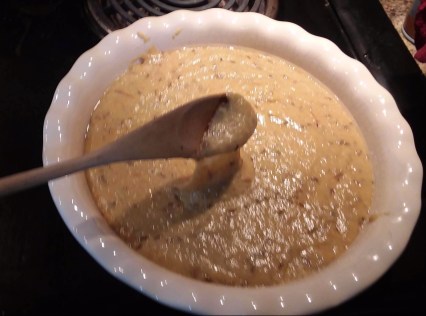 Feel free to adjust the spices in here to suit your own tastes. After all, even Hannah Glasse insists “you may do as you like.” The result is a delicious ‘quick’ bread, suitable for breakfast, tea, or dessert.
___________________________________________________
*A few definitions:
A half drachm of cardamom seeds: a drachm (pronounced /dram/) is 60 grains or ⅛ ounce or ¾ teaspoon
Three blades of mace: mace is the outer, petal-like covering of the nutmeg. These reddish pieces are dried and called blades. Crumbled or ground, each blade makes about an ⅛ teaspoon
A good piece of butter: your guess is as good as mine. I usually figure a ‘good piece’ to mean about a quarter of a cup
Half a gill of sack: Sack is an alcoholic beverage, similar to sherry. A gill (pronounced like the name, Jill) is also called a teacup. It is equivalent to ¼ pint or ½ cup, equivalent to 4 ounces (or 5 imperial ounces). An interesting side note is that ½ gill is sometimes called a jack, and in Scotland a nip is ¼ imperial gill, half a jack, or about 1 ½ ounces.
 BRIC-A-BRAC
I find reading period recipes, depending on my mood, either hilarious, intriguing, or infuriating! I don’t have the patience to suss out the modern equivalents, so I am delighted that you do!
LikeLike
I love looking up old words! I’m glad you enjoy the results.
LikeLike