Most people I know, know the day as Mardi Gras, the last day to feast and use up forbidden foods before the privations of Lent begin. Mardi Gras is French for ‘fat Tuesday.’ It is most often associated with the wild parades and parties of New Orleans.
Of course, there are other traditions surrounding this important day. Some people know it as Shrove Tuesday. ‘Shrove’ is an archaic form of ‘shrive’, which means to confess one’s sins and receive absolution from a priest. In times past, many Christians felt it was important to go to confession on the last day before Lenten fasting begins.
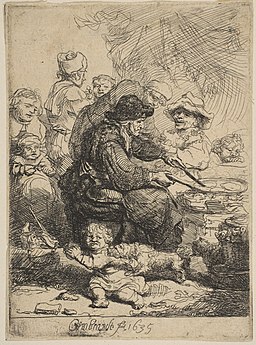
Still another name for this day is Pancake Day. Why pancakes? Well, in some places it became the tradition to serve pancakes on this day as a way to use up eggs and other rich foods which were not allowed. Some of the traditions associated with Pancake Day include Pancake flipping contests, Pancake races, and various other games.
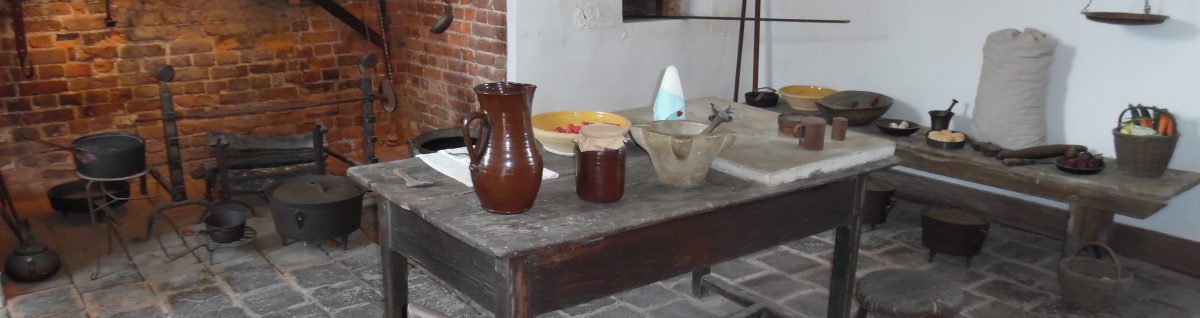
In the Middle Ages, pancakes were very popular. They are quick and easy to cook over a fire, requiring few special utensils or any great skill. Various types of pancakes graced the tables of the rich nobles in their manor houses and castles, as well as the poor serfs who worked the land.
Most of us today have a fairly universal idea of a pancake—generally a mixture of flour, milk, and eggs, with a bit of baking powder and perhaps a few added ingredients. The batter is poured onto a hot skillet or griddle, flipped, and served with melted butter and maple syrup. It is most often considered proper fare for breakfast. In England, pancakes are usually very thin, similar to crèpes. However, in times past, many other combinations were also thought of as pancakes . Some of these included such ingredients as cheese, fruit, breadcrumbs, or wine.
So, on Tuesday, February 22 try something new and celebrate Pancake Day. The recipes below are from the 17th century. Both are a delicious treat, unlike any more modern concept of pancake. The first offers the harried cook of a big house an easy option. Note that in the 17th century ‘meate’ meant food of any sort.
A Fryed Meate [Pancakes] in Haste for the Second Course
Take a pint of Curds made tender of morning milk, pressed clean from the Whey, put to them one handful of flour, six eggs, casting away three whites, a little Rose-water, Sack, Cinnamon, Nutmeg, Sugar, Salt, and two Pippins minced small, beat this all together into a thick batter, so that it may not run abroad; if you want wherewith to temper it, add Cream; when they are fryed scrape on Sugar and send them up; if this curd be made with Sack as it may as well as Rhennet, you may make a pudding with the Whey thereof. (Rabisha, as quoted in Lorwin, 140)
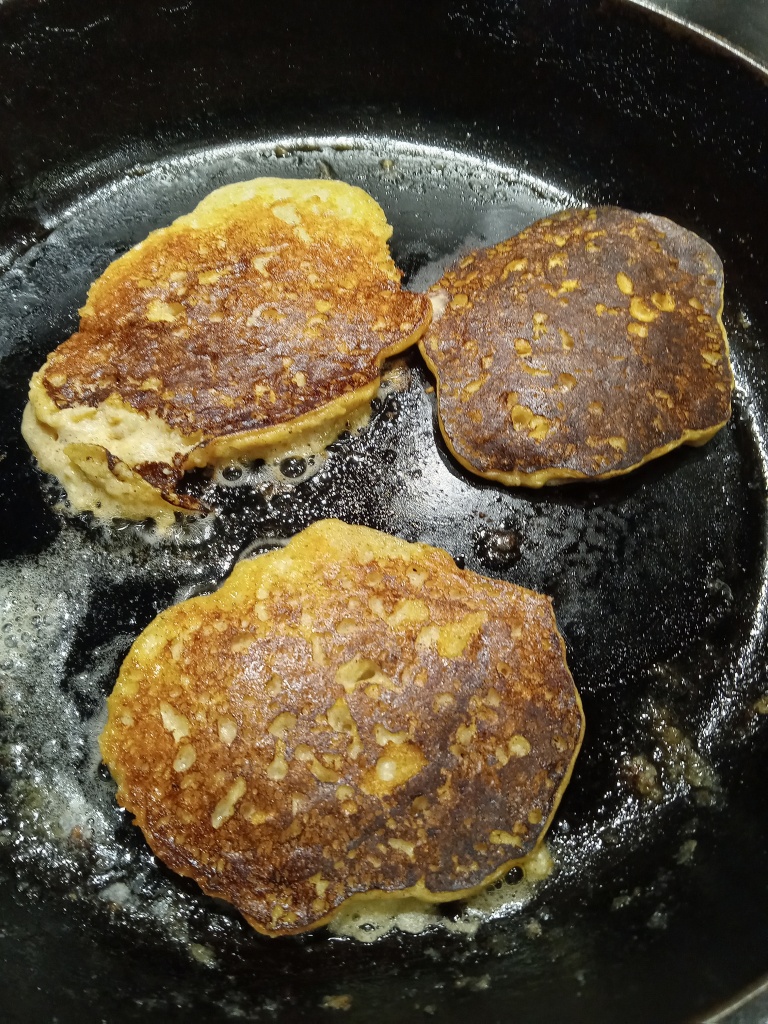
Modern Version : Apple pancakes (Fritters)
- 1c. Cottage cheese
- 1 egg plus 2 egg yolks
- 1 apple, peeled and grated
- 2 T. brown sugar
- 1 T. sherry
- ½ t. Salt
- ½ t. Nutmeg
- ½ t. Cinnamon
- ¼ c. flour
- Approx. ¼ c. butter for frying
Puree the eggs and cottage cheese in a blender, then add the mixture to the remaining ingredients, except for the butter. Melt the butter in a skillet and drop the pancake batter by spoonfuls into it. As bubbles rise and pop, flip the pancakes to fry on the other side. These will be a soft, moist pancake, quite delicious without any extra syrup or sugar.
The second pancake recipe is also quite different than what we are used to. This one is a sort of fried cheese fritter. (Note I made a small recipe, about one third of what is suggested here, because I didn’t want to have too many egg whites leftover.)
How to Fry a Dish of Cheese
Take quarter of a pound of good Cheese, or Parmysant, and grate it and put to it a little grated bread, a fewCaraway seeds beaten, the yolks of as many eggs as will make it into a stiff batter, so it will not run, fry it brown in Butter, and pour on drawn Butter with Claret wine when they are dished. (Rabisha, as qtd. in Lorwin, 330.)


A modern Version: Cheese Pancakes
- 1 ½ cups grated sharp Cheddar cheese
- 1 t. Caraway seeds
- 2 egg yolks
- ¼ t. Salt
- ¼ c. bread crumbs, plus 1 T.
- 3 – 4 T.. butter
- ⅓ c. red wine
Grind the caraway seeds and salt in a mortar. Mix them with the cheese, egg yolks, and bread crumbs and form into patties about ½” thick. Fry in butter until slightly browned on both sides. Set the pancakes aside to keep warm. Add remaining butter (at least 1 T.) to the skillet. When it is melted, add bread crumbs and then the wine. Stir until thickened. Then spread this over the pancakes to serve. This makes a lovely lunch dish.
Whether you want to flip them, race with them, or just eat them, enjoy your pancakes this season.
Sources:
Castelow, Ellen. Pancake Day. Historic UK, Ktd. Accessed 2.20.23023. https://www.historic-uk.com/CultureUK/Pancake-Day/
Rabisha, William. The whole Body of Cookery Dissected. Printed by R. W. for Giles Calvert, at the sign of the black Spread Eagle, at the West end of Pauls, 1661. Quoted in Lorwin, Madge. Dining with William Shakespeare. New York: Atheneum, 1976.


Some great ideas here, thank you!
LikeLike
I’m glad you enjoyed it. Let me know if you try one of the pancake recipes.
LikeLiked by 1 person
Will do. I’ll be doing a blog post around Pancake Day so watch this space. Thanks for following!
LikeLike